MILLIONS EVENTUALLY KNEW MARTY ROBBINS THROUGH SONGS ABOUT MEN WHO RODE TOWARD DEATH. BUT IN REAL LIFE, HE KEPT RACING STOCK CARS UNTIL ONE MONTH BEFORE HIS OWN. In “El Paso,” a cowboy rides back toward the woman he loves even though he knows armed men are waiting. Marty sang that final ride with such calm that listeners could almost forget how frightened the man should have been. Perhaps that was because Marty understood the pull of danger himself. Away from country music, he spent years racing stock cars, competing against professional drivers on tracks where one mistake could change everything. Even a serious heart attack and bypass surgery did not permanently keep him away. He returned to racing because speed was not a publicity stunt for him. It was another part of who he was. In November 1982, at 57, Marty competed in what became his final NASCAR race. On December 8, following another heart attack, he died. The man who wrote so many endings never seemed interested in living cautiously. He sang about riders moving toward the inevitable, then spent his own life pressing the accelerator. Maybe Marty Robbins understood those men because he was never standing safely outside their stories. – Country Music
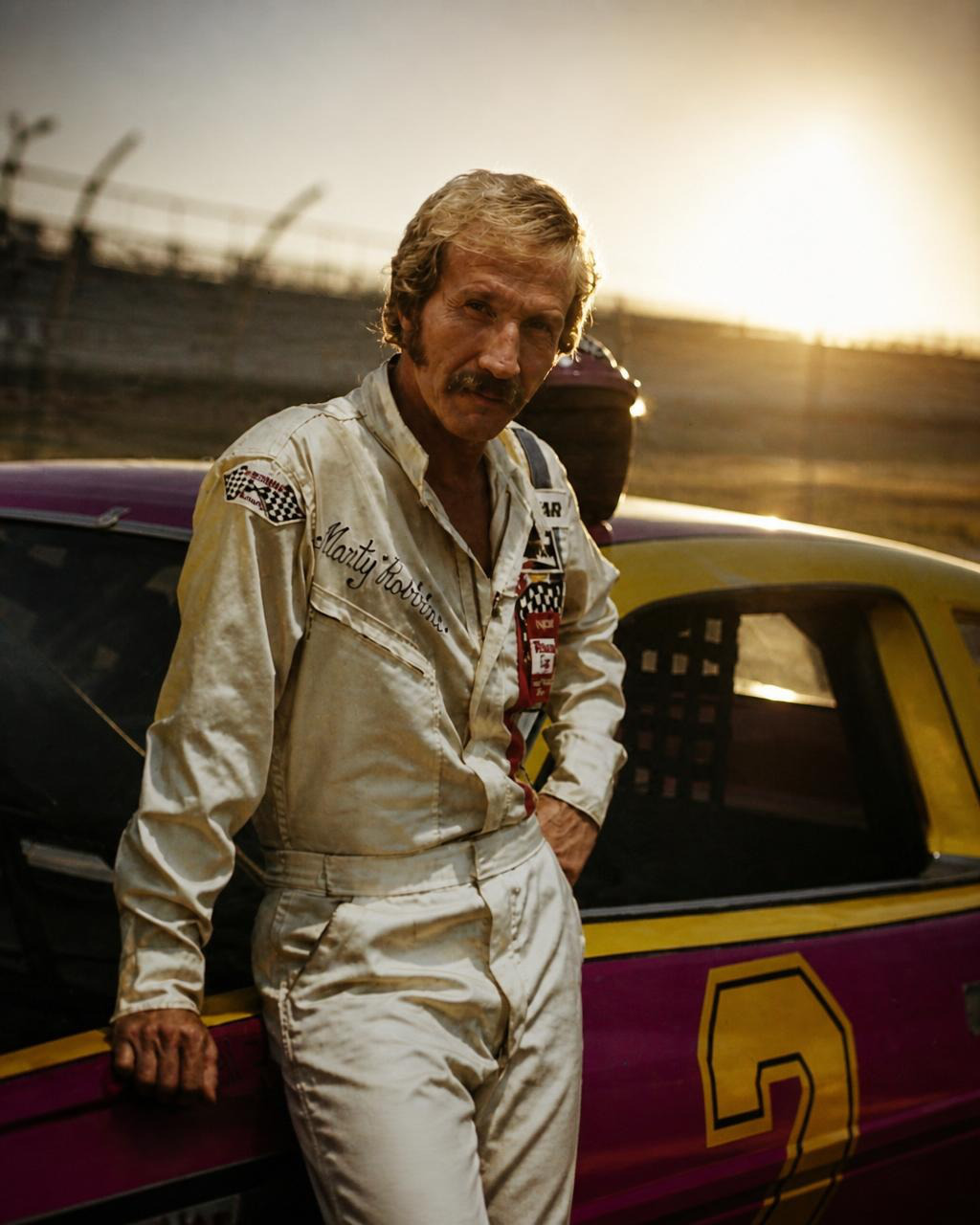
Millions of listeners came to know Marty Robbins through songs about men who rode straight toward danger. In El Paso, the cowboy does not turn back from the life he has chosen, even when he knows the end may be waiting for him. Marty Robbins sang that story with a calm voice that made the journey sound almost peaceful, even though it was anything but.
That contrast feels even more striking when you look at Marty Robbins’s own life. He was not only a country star and songwriter; he was also a stock car racer. Long before nostalgia softened the image, Marty Robbins was the kind of man who seemed drawn to speed, risk, and the physical thrill of testing himself on a track. Country music history remembers him as a rare figure with a wide career, but racing was never just a side hobby for him. It was part of his identity.
A singer with a racer’s instinct
Marty Robbins became famous for songs that blended storytelling, longing, and danger. His signature hit, El Paso, helped define the sound of Western balladry and made him one of the most recognizable voices in country music. Yet the same man who wrote and performed those dramatic tales also spent years getting behind the wheel in stock car competition.
He raced seriously enough that injuries and health scares did not permanently end his interest. Even after major cardiac problems and surgery, Marty Robbins returned to the track. That decision says something important about him: speed was not theater. It was a pull he felt deeply, even when it came with real consequences.
For Marty Robbins, the danger in a song was not separate from the danger in life.
The final turn
In November 1982, Marty Robbins made what would become his final NASCAR start. He was 57 years old. Just weeks later, on December 8, 1982, he died after another heart attack. The timing gives his story a haunting shape: the singer who so often wrote about men moving toward fate was still chasing speed almost to the very end.
That does not make his life tragic in a simple way. It makes it human. Marty Robbins seems to have understood that some people are never fully satisfied watching life from a safe distance. Some people want the road, the noise, the engine, the open question of what happens next.
Why Marty Robbins still matters
What keeps Marty Robbins memorable is not only the beauty of El Paso or the strength of his voice. It is the feeling that the songs and the man belonged to the same world. He did not merely sing about riders headed toward the unknown. He lived with a similar appetite for motion and risk.
That is why his story still resonates. Marty Robbins did not build his legacy by standing apart from the lives he sang about. He stepped into them, both on the stage and on the track, and kept going until the end.
Post navigation
Alan Jackson never seemed interested in playing Nashville’s louder games. He did not build a career on shocks, reinventions, or big public stunts. Instead, he built songs that felt like they had lived somewhere real: in small towns, on front porches, in long marriages, in family kitchens, and in the quiet ache of memory. That plainspoken honesty became his signature, and it is a big reason so many listeners stayed with him for decades.
There was something steady about the way Alan Jackson carried himself. He wrote about fathers, heartache, home, and the everyday details that make a life recognizable. The music never felt dressed up to impress; it felt lived in. For many fans, that was the charm. Alan Jackson sounded like someone telling the truth without raising his voice.
A Career Built on Restraint and Trust
That kind of staying power does not happen by accident. Alan Jackson found a lane and stayed honest inside it. While country music changed around him, he kept returning to the simple human themes that made people feel seen. The result was not just success, but trust. Listeners believed him because he never seemed to be pretending to be anyone else.
That trust mattered even more when life became harder behind the scenes. Alan Jackson has lived with Charcot-Marie-Tooth disease, a hereditary nerve condition he has said came from his father. As the years passed, balance and movement became more difficult, especially on stage. But he kept going, continuing to sing for audiences who had grown up with his voice in the background of their own lives.
The Final Full-Length Concert
On June 27, 2026, Alan Jackson gave his final full-length concert at Nashville’s Nissan Stadium. It was called Last Call: One More for the Road – The Finale, and it became far more than a farewell show. It turned into a public thank-you, a celebration, and a reminder of how deeply one artist’s work can shape a genre.
Artists including Carrie Underwood, Luke Combs, Miranda Lambert, and Eric Church were among those who honored him that night, joining a lineup of friends and admirers who understood what Alan Jackson meant to country music. According to reports from the event, the evening was emotional but unforced, much like the songs that made him famous. Alan Jackson then stepped up and closed the chapter on touring in his own way: calmly, proudly, and without spectacle.
Maybe that is what lasting fame really looks like: not becoming something artificial, but remaining the real thing long enough for people to notice.
Why the Goodbye Mattered
What made the night powerful was not only the size of the crowd or the names on the stage. It was the feeling that Alan Jackson had earned the kind of farewell most performers only hope for. He never chased the spotlight, yet it found him anyway — because authenticity has a way of outlasting trends.
In the end, Alan Jackson’s legacy is not just a list of hits or awards. It is the rare comfort of hearing songs that tell the truth plainly and gracefully. He gave people music they could carry through weddings, losses, road trips, and long ordinary days. And that may be the most lasting accomplishment of all.
Some artists try to become icons. Alan Jackson simply stayed himself, and the world made room for that.