THE STATLER BROTHERS WROTE THE MOST BELOVED CLASS-REUNION SONG IN COUNTRY MUSIC ABOUT A GRADUATING CLASS THAT NEVER EXISTED. Don Reid didn’t graduate in 1957. He finished high school in the early 1960s, a few years behind the year in the title, so when he and his brother Harold wrote “The Class of ’57,” they weren’t remembering anyone — they invented the whole class. They handed those imaginary classmates ordinary American lives: some became teachers, factory hands, people who ran a small business back home; some found steady happiness; others hit hard turns, a marriage that fell apart, a life that lost its way, a classmate the song simply loses track of by the final verse. None of them were real, and that was the point. When the record came out in 1972, people everywhere started recognizing their own classmates in it. It won a Grammy, and Kurt Vonnegut loved it enough to say it should be the national anthem. Everyone leaves school certain life will follow the plan, and then the years pass and almost no one turns out to be exactly who they meant to become. The Statler Brothers wrote that truth into a class that never sat for a single yearbook photo, and somehow it became everyone’s. – Country Music
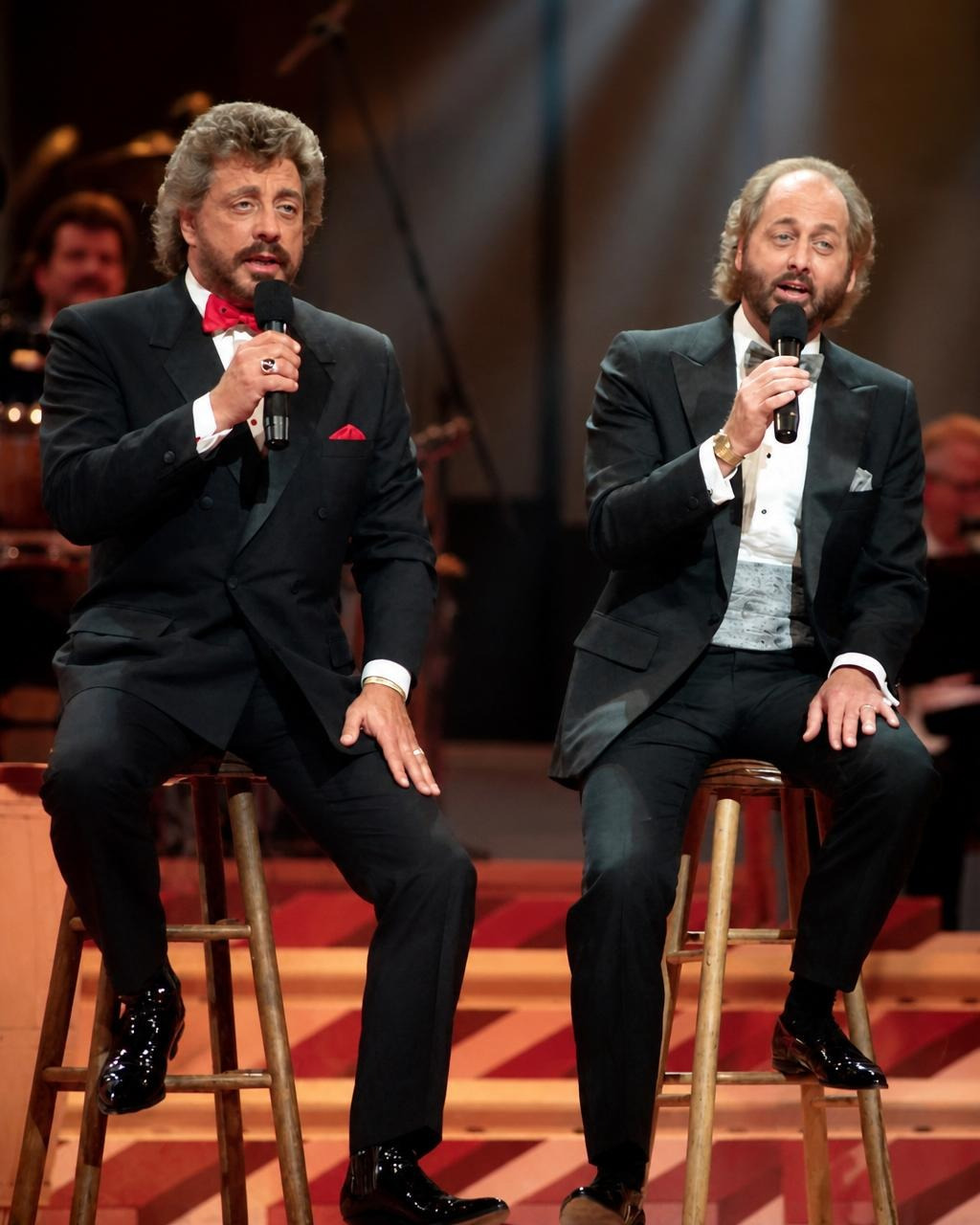
There is something hauntingly familiar about The Statler Brothers’ “The Class of ’57.” It sounds like a real reunion song, full of names, hometown hopes, and the quiet ache of time passing. But the truth behind it is even more interesting: the class was never real. Don Reid and Harold Reid did not write from their own graduating year. They imagined an entire group of classmates and gave them lives that felt ordinary, specific, and heartbreakingly believable.
A Song Built From Memory, Even If the Memories Were Invented
Don Reid did not graduate in 1957. He finished high school in the early 1960s, years after the title year in the song. That distance matters, because it shows what the brothers were doing. They were not simply recalling old friends. They were creating a small American world: teachers, factory workers, people who stayed close to home, people who built steady lives, and people who ran into pain, drifted apart, or disappeared from the story altogether.
The genius of the song is that none of those characters needed to be real. They just needed to feel true. In that way, “The Class of ’57” became larger than a single graduating class. It became a mirror for anyone who has ever looked back and wondered what happened to the people they once knew, and what happened to the person they used to be.
Why Listeners Heard Their Own Lives in It
When the record came out in 1972, it connected immediately. Country music fans recognized the details, but they also recognized the emotional pattern. School ends with the illusion that life will follow a neat plan. Then the years begin to scatter everyone in different directions. Some people settle into the life they wanted. Some take harder turns. Some simply vanish from easy contact.
That quiet truth gave the song its power. It was not flashy. It did not need to be. It spoke with the kind of honesty that makes people stop and listen.
Success, Recognition, and a Lasting Echo
The song went on to earn major acclaim, including a Grammy Award for The Statler Brothers. It also drew admiration from outside country music. Kurt Vonnegut was said to love the song so much that he praised it in unforgettable terms, calling it something that should stand for the country for a while. That reaction makes sense. The song is more than nostalgia. It is a story about expectation, disappointment, resilience, and the long, surprising path between graduation day and adulthood.
“The Class of ’57” works because it never tries to be perfect. It simply tells the truth about how life unfolds, one person at a time.
More than fifty years later, the song still feels close to home. The Statler Brothers wrote about a graduating class that never existed, and in doing so, they gave voice to the one that lives in all of us: the class of people we used to know, the class we imagined becoming, and the class history quietly reshaped along the way.
Post navigation
Harold Reid, Staunton, and the Quiet Goodbye That Felt Like a Song
There was no public funeral. In April 2020, there could not be one. People were separated, plans were changed, and the kind of gathering that should have filled a church or a town hall never happened. So four days after Harold Reid died on April 24, 2020, the mayor of Staunton walked to the Statler Brothers monument and laid a wreath. It was a small act, but in that moment it carried the weight of a whole community saying goodbye.
Harold Reid was 80 years old when he died. He had spent his life as the bass voice of the Statler Brothers, one of country music’s most decorated groups and a Country Music Hall of Fame and Gospel Music Hall of Fame act. He was also one of the group’s most memorable personalities: warm, funny, steady, and impossible to mistake once his voice entered a song.
What made Harold Reid remarkable was not only what he achieved, but what he never left behind. Fame came, awards came, national recognition came, and still he remained in Staunton, Virginia. He stayed in the same town, kept close to the same church, and built a life that was rooted more deeply in home than in celebrity. For many fans, that was part of the magic. Harold Reid did not seem like a star who passed through Staunton. He seemed like Staunton itself, carried into living rooms across the country every time the Statler Brothers sang.
The Voice Behind the Harmony
Harold Reid sang bass on the group’s classics, helped shape much of the humor that made the Statler Brothers so beloved, and gave the songs a foundation that listeners could feel even when they did not know his name. Kyle Young of the Country Music Hall of Fame described Harold Reid’s voice as the underpinning of dozens of classics, and that is exactly how many fans remember him: not as a man trying to stand apart, but as the deep center holding everything together.
Jimmy Fortune shared his grief publicly that night, writing that hearts were broken and that he would miss his brother until they met again. The Statler Brothers also released a statement saying that Harold Reid had taken a piece of their hearts with him. Those words mattered because they sounded like the truth. They were simple, direct, and full of affection.
But perhaps the most unforgettable tribute came from Harold Reid’s own family in his obituary. They wrote that when Harold Reid met his Lord and Savior, they knew exactly what he said: “We ain’t even started yet!” It was the kind of line that feels funny at first, then moving the longer you sit with it. It sounded like Harold Reid, the man who could ease a room with a joke and then floor it with a voice that seemed older than time.
“We ain’t even started yet!”
That final punchline said something lasting about Harold Reid. Even at the end of a long life, even after decades of music and memory, he still belonged to the kind of personality that turns sorrow into a smile without erasing the sorrow itself.
In Staunton, the wreath at the monument stood for more than mourning. It stood for gratitude. It stood for a hometown that never lost one of its own. And it stood for a wife of fifty-nine years, children, bandmates, and fans who knew they had lost a man who helped make American country music richer, funnier, and deeper.
Harold Reid is gone, but the sound he left behind still feels alive. In every deep note, every joke between songs, and every memory tied to Staunton, he remains exactly what he always was: unforgettable.