COUNTRY MUSIC DIDN’T JUST TOP THE COUNTRY CHARTS. IT CLAIMED AMERICA’S MOST-STREAMED SONG AND THE TWO BIGGEST ALBUMS AT THE SAME TIME. For years, country music was treated like a separate lane with its own radio stations, charts and audience. Luminate’s 2026 midyear report shows how much that has changed. Ella Langley’s “Choosin’ Texas” earned 570.9 million U.S. on-demand audio streams during the first half of the year. No song from any genre earned more. Country also claimed the top two albums across all genres. Morgan Wallen’s *I’m the Problem* led with 2.035 million album-equivalent units, while Langley’s *Dandelion* followed with 1.638 million. R&B and hip-hop remain America’s largest streaming category, but their share of Billboard 200 consumption has fallen from 41% in 2023 to 30% in 2026 as genres including country and Latin gain ground. Country has not become America’s largest genre overnight. But during the first half of 2026, the biggest song and the two biggest albums in America all belonged to country artists. – Country Music
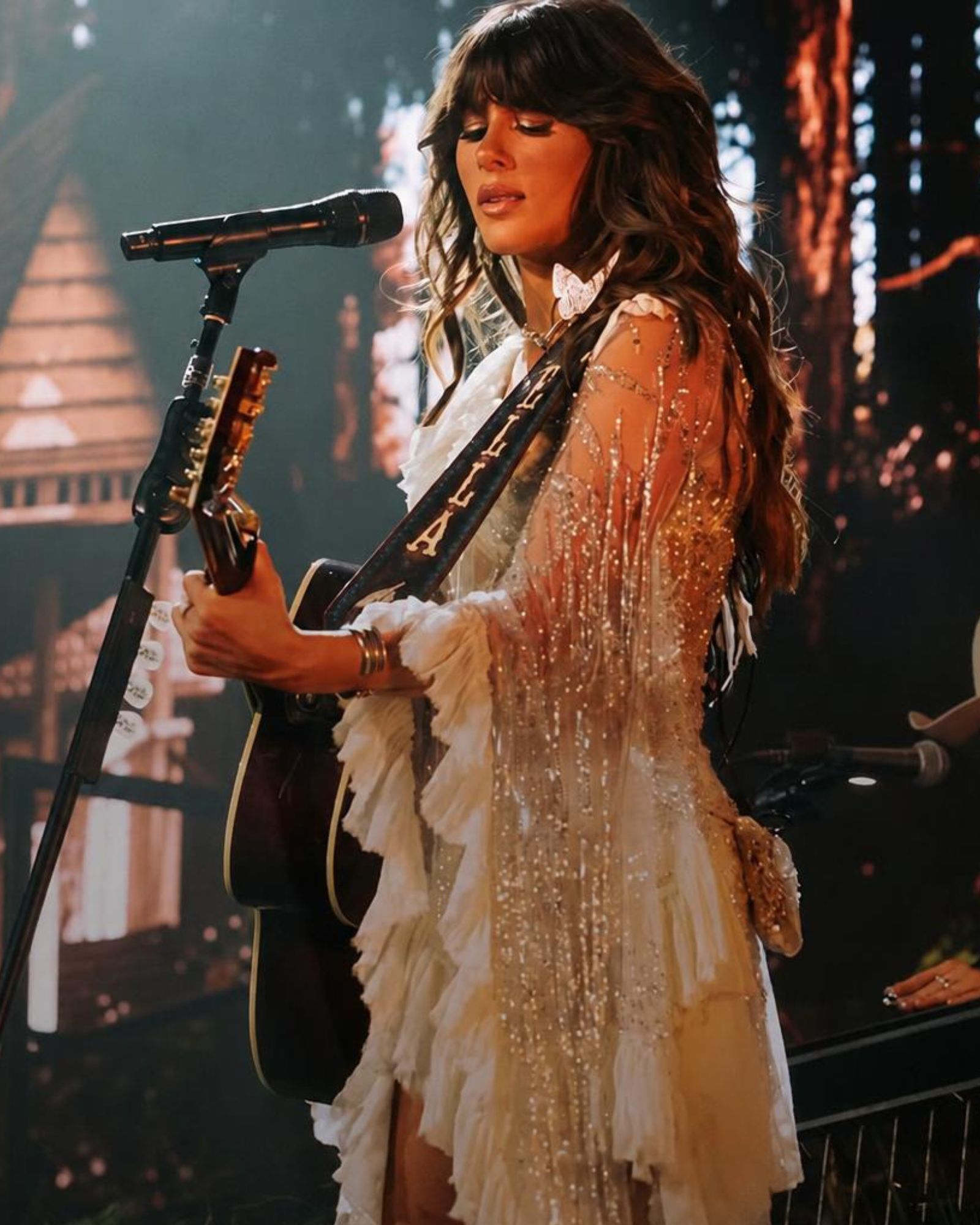
Country Music Didn’t Just Top the Charts. It Took Over the Conversation.
For years, country music was often treated like its own world: a separate radio lane, a separate chart lane, and, for some listeners, a separate habit. It was admired, debated, and sometimes underestimated. But the first half of 2026 told a much bigger story.
According to Luminate’s 2026 midyear report, country music did something that would have sounded unlikely just a few years ago: it delivered America’s most-streamed song and the two biggest albums across all genres at the same time. That kind of crossover does not happen by accident. It reflects a shift in what listeners are choosing, replaying, and carrying with them through the year.
The song that kept climbing
Ella Langley’s “Choosin’ Texas” emerged as the most-streamed song in the United States for the first half of 2026, earning 570.9 million U.S. on-demand audio streams. That put it ahead of every other song in any genre. The number is striking on its own, but the larger point is even more important: a country song was not just performing well inside country music. It was leading the entire American streaming landscape.
That kind of reach suggests more than a hit. It suggests momentum, repeat listening, and a broad emotional connection that crosses audience lines. In a year full of competition from pop, rap, Latin, and global hits, “Choosin’ Texas” stood at the front.
Country did not stop with one breakout song. It also claimed the top two albums in the country across all genres. Morgan Wallen’s I’m the Problem led the field with 2.035 million album-equivalent units, while Ella Langley’s Dandelion followed closely behind with 1.638 million.
That matters because album success usually reflects more than a single viral moment. It points to fan commitment, sustained attention, and the kind of artist loyalty that keeps building long after release week ends. In this case, the same genre that once lived in a clearly defined corner of the music business was now sitting at the center of the national picture.
Country music did not become America’s largest genre overnight. But during the first half of 2026, it made a powerful argument that the old boundaries no longer hold the same power they once did.
A broader shift in listening habits
The report also showed that R&B and hip-hop remain the largest streaming category in America, but their share of Billboard 200 consumption has fallen from 41% in 2023 to 30% in 2026. At the same time, genres like country and Latin have continued to gain ground.
That decline does not mean one genre disappeared. It means the audience has widened. Listeners are no longer moving in one straight line, and the biggest winners are the artists and genres that meet them where they are.
Why this moment feels different
Country music has had major stars before, and it has had crossover success before. What feels different now is the scale. When the biggest song and the two biggest albums in America all belong to country artists, the message is impossible to ignore.
This is not a story about one genre replacing another. It is a story about country music breaking out of the box people once put it in. For the first half of 2026, it was not just part of the American music conversation. It was leading it.
Post navigation
When Loretta Lynn first sang “Fist City,” she was not trying to sound polite. She was trying to sound heard. The song came from a place that country music had rarely let women speak from in 1968: anger, suspicion, and a refusal to smile through betrayal. It was sharp, funny, and unmistakably personal. In the world Loretta Lynn came from, that kind of honesty was risky. It was also unforgettable.
A song that felt like a warning
“Fist City” was written as a warning to another woman, but the emotional center of the record was much bigger than a feud. Loretta Lynn had built a career by singing about her own life without smoothing off the rough edges. She was a young mother, a working woman, and a songwriter who had learned that the microphone could be a form of self-defense. By the time “Fist City” arrived, she had already proven that country music listeners were willing to follow her into uncomfortable truth.
Not everyone was ready. Some radio stations refused to play the song, and the title alone sounded like trouble to listeners who expected women in country songs to stay quiet, sad, or forgiving. But Loretta Lynn never seemed interested in asking for permission. She turned domestic hurt into a public performance, and that made the record feel larger than gossip. It became a statement about dignity.
What Doolittle Lynn heard at the Grand Ole Opry
One of the most famous stories around the song says that Loretta Lynn’s husband, Doolittle Lynn, heard “Fist City” for the first time at the Grand Ole Opry and told her it would never be a hit. That reaction makes sense. The song was bold, confrontational, and written with a bite that could unsettle anyone who recognized themselves in it. But the marketplace did not agree with him. The record rose to No. 1, proving again that country audiences often know exactly when a singer is telling the truth.
The irony is hard to miss. A song that sounded too raw for radio ended up becoming one of Loretta Lynn’s defining hits. The more people tried to frame it as scandal, the more it sounded like survival.
Not just anger, but authorship
Modern listeners often hear the song and ask why Loretta Lynn aimed her fury at the other woman instead of at Doolittle Lynn. That reading is fair, but it is only part of the story. Loretta Lynn was writing inside the emotional rules of her time, while also pushing against them. She had four children before she was twenty and stayed in a marriage that was complicated, painful, and impossible to ignore. She could not control every part of that life, but she could control the words.
“Fist City” was not just a threat. It was a claim to voice.
That is why the song still lands. It is not clean, and it is not gentle, but it is alive with a woman refusing to be erased. Loretta Lynn once summed up the marriage in a line that carries her usual dry wit: her old man was sleeping out on her, and he ended up making her a lot of songwriting money doing it. That sentence says almost everything. Pain became material. Humiliation became rhythm. And a record that people thought might cause a scandal became a hit anyway.
What do you call that?
Some people call “Fist City” bitter. Others call it fearless. Maybe it is both. Maybe it is the sound of a woman taking the one thing she had and making it unignorable. Loretta Lynn did not wait for Nashville to approve her voice. She used it to tell the truth she knew best. That is why the song still matters: it is messy, human, and alive, just like the life that made it.