AT 74, VERN GOSDIN WAS PREPARING HIS TOUR BUS FOR ONE MORE CMA MUSIC FESTIVAL. HE DIED 44 DAYS BEFORE THE FESTIVAL OPENED. By the spring of 2009, Vern Gosdin had already survived the kind of setbacks that end most careers. He had once walked away from music and made his living in the glass business. He returned, earned 19 Top 10 hits, scored three No. 1 songs, and became known across Nashville simply as “The Voice.” Then a stroke in 1998 weakened him. But Vern kept writing and recording. Reports from his final weeks said he was working on his tour bus and preparing to appear at the CMA Music Festival in June. At 74, he was not planning a farewell. He was preparing for another stage. Then another stroke came in early April. Vern died in a Nashville hospital on April 28, 2009. The CMA Music Festival opened on June 11. He missed it by 44 days. The bus never carried him back onto the road. There was no final set, no last song and no chance for the crowd to welcome “The Voice” home. But the unfinished bus revealed something important about Vern Gosdin. Even near the end, he was not looking backward. He was still getting ready to sing. – Country Music
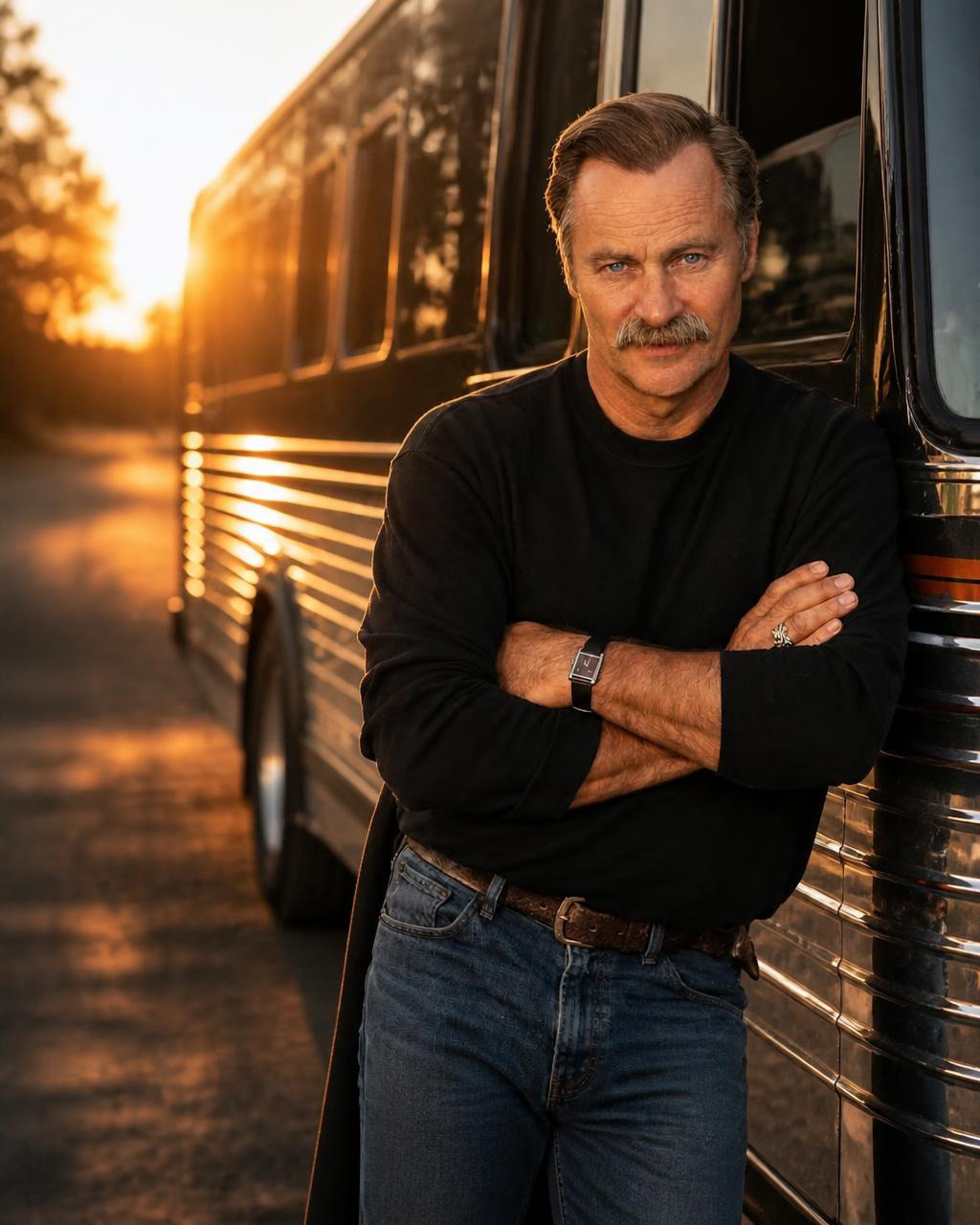
By the spring of 2009, Vern Gosdin had already lived through more than one ending. He had stepped away from music, built a life in the glass business, and then found his way back to the stage. When he returned, he did not return quietly. He earned 19 Top 10 hits, collected three No. 1 songs, and became known in Nashville as “The Voice.”
That reputation was not built on flash. It was built on feeling. Vern Gosdin sang like someone who had spent time in the hard places and came back with the truth still in his throat. Fans did not just hear the songs; they believed them.
Life had tested him again in 1998, when a stroke weakened him. Even then, Vern Gosdin kept moving forward. Reports from his final days described a man still working, still thinking about music, still planning for the road. According to those accounts, Vern Gosdin was preparing his tour bus and looking ahead to an appearance at the CMA Music Festival in June 2009. At 74, he was not talking like a man finished. He was acting like a man with one more chapter left to write.
Then came another stroke in early April. Vern Gosdin died in a Nashville hospital on April 28, 2009, and he was 74 years old. The CMA Music Festival opened on June 11, 2009. He missed it by 44 days.
A Career That Refused to Quit
Part of what made Vern Gosdin so memorable was the path he took to get there. He did not follow a tidy story. He left music, tried to live a normal life, and then found himself drawn back to singing anyway. That decision gave his career an unusual kind of weight. When Vern Gosdin sang about regret, hope, or heartbreak, it sounded earned.
Even after health problems and years in the business, Vern Gosdin kept writing and recording. That persistence matters because it shows who he was at the end: not a performer looking back at what had been lost, but a working musician still looking ahead.
The Bus That Never Rolled Out
The unfinished tour bus became its own quiet symbol. It suggested motion, preparation, and the ordinary tasks that keep a career alive. There was no grand final bow attached to it. No dramatic goodbye. Just a man getting ready to travel again, as if another stage were waiting.
Even near the end, Vern Gosdin was not looking backward. He was still getting ready to sing.
That is what lingers. Not only the hit records, not only the awards, and not only the nickname. It is the image of Vern Gosdin preparing for one more festival, one more crowd, one more chance to do what he had always done best.
There was no last song at the CMA Music Festival. The audience never got to welcome Vern Gosdin home. But the story still says something important about him: The Voice never stopped being a working singer, right up to the final miles.
Post navigation
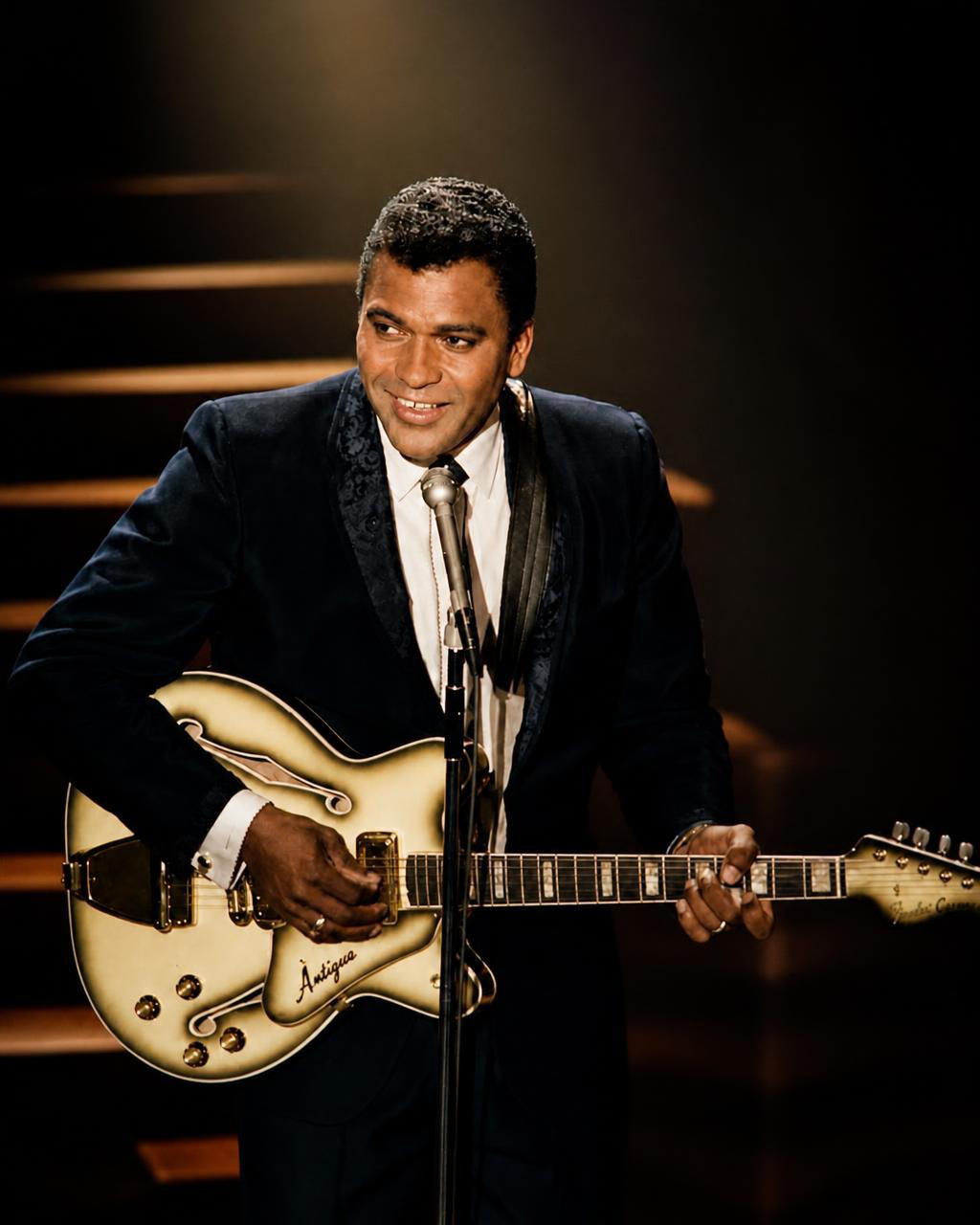
Charley Pride and the Year Country Music Finally Said His Name
When Charley Pride first began recording for RCA in 1966, the label understood one thing very clearly: Charley Pride had a voice that could sell records. What the label did not know was how country radio would react once listeners learned that the singer behind that warm baritone was Black.
So the first releases came out without publicity photographs. For many fans, the voice arrived first and the face came later. That choice protected Charley Pride at a moment when Nashville was still unsure how to present him to the country audience. But it also created a quiet kind of suspense. The songs were doing the work, and the name was spreading faster than anyone expected.
By the time “Just Between You and Me” climbed into the country Top 10, the secret could no longer be kept. Some listeners had already fallen in love with the music before they saw the man singing it. When they did see him, Charley Pride met the moment with calm dignity. He did not turn the surprise into a speech. He simply stepped onstage, acknowledged the room, and began to sing. The reaction often changed almost immediately.
That steady confidence came from a life that had already tested him. Charley Pride had grown up in Mississippi, worked in a Montana smelting plant, and even chased a baseball career before Nashville offered him a different future. By the end of the 1960s, he was no longer an experiment. He was becoming one of country music’s biggest stars.
Then came 1971.
That year, the Country Music Association named Charley Pride Male Vocalist of the Year and Entertainer of the Year. It was a striking milestone for any artist, but especially for a singer who had once been released to the public without a photo because the industry was afraid of how people might respond.
The contrast was powerful. The same business that had once hidden Charley Pride’s image was now placing one of its highest honors in his hands. His success was not symbolic in a shallow sense. It was built on hit records, touring, and the kind of audience loyalty that cannot be manufactured. Charley Pride earned his place by doing what he always did best: singing with honesty, strength, and grace.
Charley Pride did more than open a door. He stood in the center of the room and made it clear that he had already belonged there all along.
In that sense, 1971 was not just a career peak. It was a correction. Country music finally honored the artist it had already been listening to for years.