JOHN PRINE SAT IN HIS LIVING ROOM AND RECORDED ONE LAST SONG ABOUT REMEMBERING EVERYTHING. THE WORLD DID NOT HEAR IT UNTIL AFTER HE WAS GONE. In 2019, Prine gathered with producer Dave Cobb and engineer Gena Johnson inside his Nashville home. There was no large studio and no audience. Just John, his guitar and a song he had written with his longtime friend Pat McLaughlin. It was called “I Remember Everything.” Prine sang about the towns, hotel rooms and imperfect guitars that had filled his long life on the road. No one in the room knew it would be his final recording. John died on April 7, 2020, from complications of COVID-19. He was 73. Two months later, his family released the song. It became the highest-charting single of his career as a performer and later won two Grammy Awards: Best American Roots Performance and Best American Roots Song. John Prine spent nearly 50 years writing about ordinary people and the memories they carried. In the final song he left behind, he did not sing about forgetting. He told the world he remembered everything. – Country Music
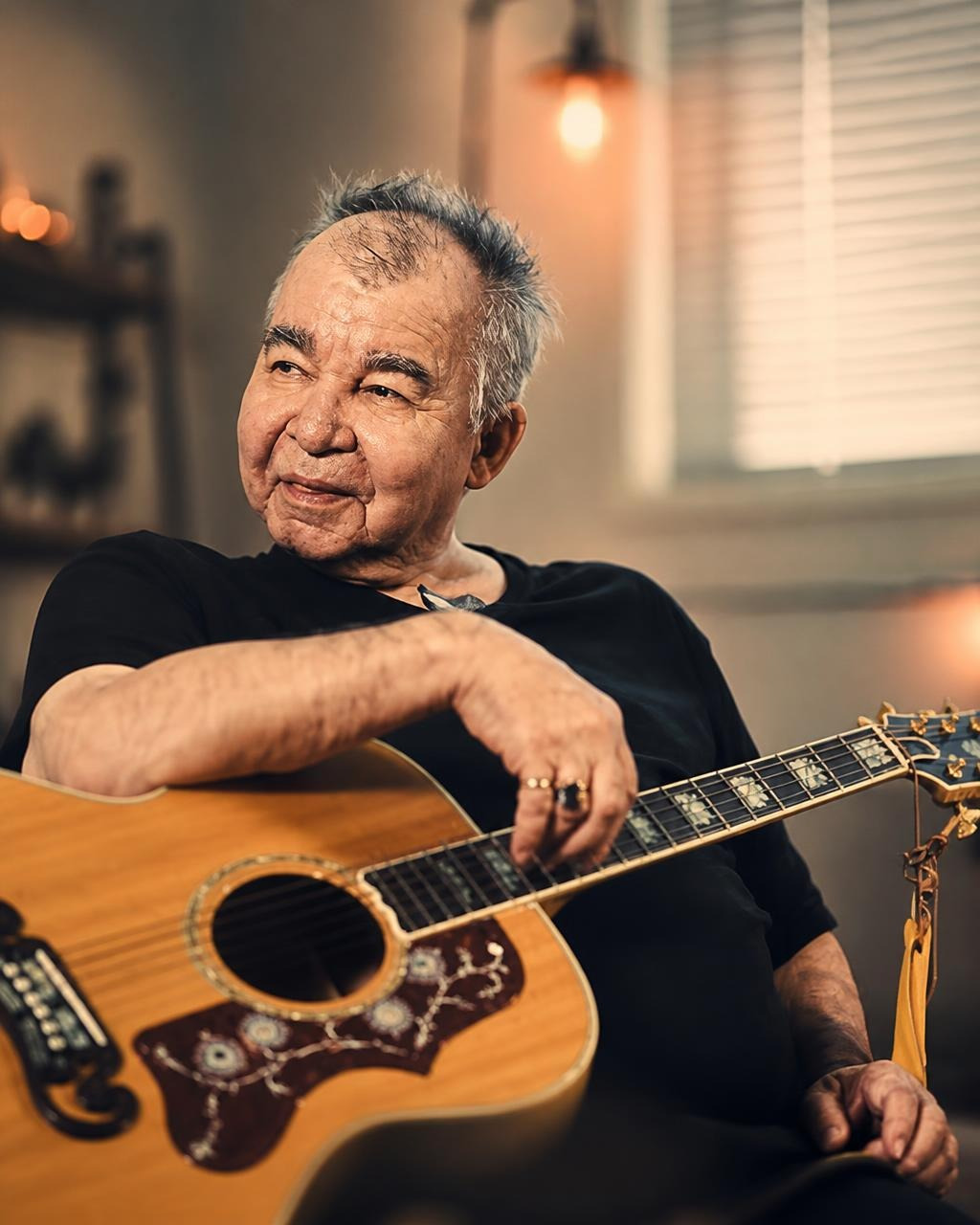
In 2019, John Prine sat in the comfort of his Nashville home and recorded what would become his last song. There was no crowded studio, no bright wall of glass, and no sense that history was being made. Just John Prine, his guitar, producer Dave Cobb, engineer Gena Johnson, and a song he had written with longtime friend Pat McLaughlin. The track was called “I Remember Everything.”
That setting fit John Prine perfectly. For decades, he had built a career out of turning small details into something lasting. He wrote about motel rooms, worn highways, awkward love, and the kind of memories that live quietly in everyday people. He never needed to shout to be heard. His songs did the work for him.
A quiet recording with a lasting weight
When John Prine sang “I Remember Everything,” he was looking backward with a clear eye. The song moved through the landscape of a long life on the road: towns passed through too fast, guitars that were never quite perfect, and the kind of moments that seem ordinary until years later when they become precious. It was tender, direct, and unmistakably his.
John Prine had a gift for making memory feel human, not grand. In this final recording, that gift became even more moving because no one in the room knew it would be the last time the world would hear his voice on a new song.
John Prine died on April 7, 2020, at age 73, from complications of COVID-19. His death sent a wave of grief through music fans, fellow songwriters, and everyone who had grown up with his warm, observant writing. Two months later, his family released “I Remember Everything.”
The final release that found its audience
When the song arrived, it landed with special force. It was not just another posthumous release. It felt like a final postcard from an artist who had spent nearly 50 years giving voice to ordinary lives. The song went on to become the highest-charting single of John Prine’s career as a performer, a remarkable reminder of how deeply his music still connected with listeners.
Its later recognition was just as meaningful. At the 63rd Annual Grammy Awards, “I Remember Everything” won Best American Roots Performance and Best American Roots Song. For a songwriter who spent so much of his life honoring the overlooked corners of the world, the tribute felt especially fitting.
What remained after the last note
John Prine did not leave behind a dramatic farewell or a polished final statement. He left a song that sounded like honesty. He remembered the places, the faces, and the life that shaped him, and he trusted those memories to carry the story.
That is why “I Remember Everything” still feels so powerful. It is not only a final recording. It is a closing thought from an artist who understood that memory is one of the most enduring forms of love. John Prine spent his career singing for the rest of us, and in the end, he gave us one more reason to listen closely.
Post navigation
On July 24, 2020, the first game ever played at Globe Life Field in Arlington felt unlike any ballgame most fans had ever seen. The stadium was brand new, but the stands were empty. Pandemic restrictions kept the crowd out, leaving roughly 40,000 seats silent as the Texas Rangers opened a strange, historic night in a season unlike any other.
Then Charley Pride walked out.
He was 86 years old, dressed with the calm confidence of someone who had spent a lifetime earning moments like this. Pride did not arrive by accident. Long before the bright lights of Major League Baseball, he had pitched in the Negro Leagues for the Memphis Red Sox in the 1950s, chasing a baseball dream while working through a segregated era that kept the path narrow and difficult. At the same time, he was building the voice that would later make him a country music pioneer.
His first album in 1966 introduced him to the public in a way that said plenty about the times. His face was left off the cover so listeners could hear the music first and confront the man second. Charley Pride kept going anyway. He became one of the biggest stars in country music and, over time, one of the most recognizable figures in the Rangers family as well.
A Dream That Took Decades
Charley Pride’s connection to baseball never disappeared. In 2010, he became part of the ownership group that acquired the Texas Rangers. That meant the same man who once rode buses and fought for a chance to play now had a stake in a Major League club. It was a full-circle story, one shaped by patience, talent, and persistence.
On that night in July 2020, he stood on the mound not only as a guest, but as one of the people tied to the team’s future. The symbolism was hard to miss. The ballpark may have been empty, but the moment was crowded with history.
He closed his eyes and sang the national anthem into the silence, then threw out the first pitch.
There were no fans to cheer, no wave moving through the seats, no roar rising from the concourses. Still, the moment carried a kind of power that did not need noise. Charley Pride had brought his own presence, and that was enough.
The Last Big Spotlight
Less than five months later, Charley Pride was gone. He died on December 12, 2020, at age 86. For many people, the Globe Life Field ceremony became one of the final vivid images of his life: a trailblazer standing alone on a mound, singing through the quiet, then tossing a baseball as if closing a long and remarkable circle.
For fans who only knew the hit records, the scene offered something deeper. It was a reminder that Charley Pride was never just one thing. He was a singer, a former ballplayer, a pioneer, an owner, and a man who kept showing up for the game that shaped him. And on that empty July night in Arlington, he gave the ballpark its first unforgettable memory.