THEY HELD HIS FUNERAL AT THE GRAND OLE OPRY. FANS LINED UP BEFORE SUNRISE. George Jones gave country music one of its most wounded voices — even while his own life was falling apart behind the curtain. He had No. 1 hits across four different decades, drank through marriages, missed so many concerts they called him “No Show Jones,” and once drove a lawn mower to the liquor store. But when he opened his mouth, all the wreckage somehow turned into truth. On April 26, 2013, the Possum was gone at 81. Nashville did not just lose a singer. It lost a man who had made heartbreak sound almost holy. Six days later, they held his funeral at the Grand Ole Opry House, open to the public. Fans arrived hours before sunrise just to say goodbye. Former First Lady Laura Bush spoke. Alan Jackson stood near the casket and sang “He Stopped Loving Her Today,” the song that had followed George like a second shadow. But the moment nobody forgot came when Vince Gill stood beside Patty Loveless to sing “Go Rest High on That Mountain.” He made it only so far before grief took his voice. Patty carried the song while Vince played through tears. For a few minutes, the greatest heartbreak singer in country music was mourned by a room too broken to sing. Nashville had spent decades calling him impossible. That day, it could barely say goodbye. – Country Music
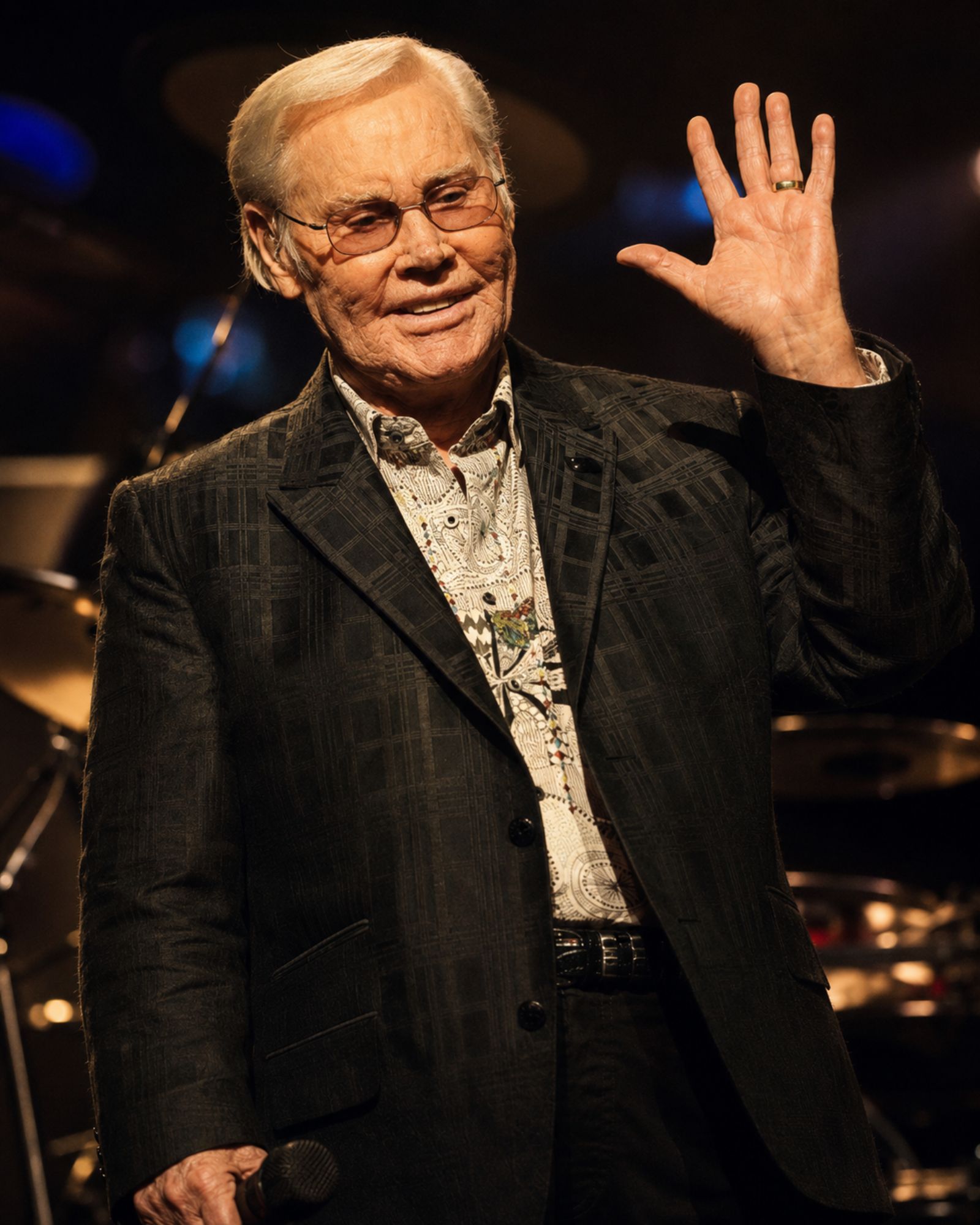
George Jones was one of those rare artists whose voice seemed to carry every broken promise, every long night, and every regret a person could survive. He gave country music a sound that felt bruised and honest, even when his own life was falling apart behind the curtain. He had No. 1 hits across four different decades, but he also earned a reputation for missed shows, hard living, and public battles that made him sound less like a legend and more like a man barely holding on.
People called him “No Show Jones” for the concerts he missed, and stories about his wild behavior became part of his folklore. He once drove a lawn mower to buy liquor, a tale so strange it sounded made up until country music fans repeated it with the same weary smile they reserved for all his famous disasters. George Jones was messy, flawed, and unforgettable. And when he sang, all of it somehow became truth.
The man behind the myth
To understand why George Jones’s funeral mattered so much, you have to understand what he meant to country music. He was not polished. He was not perfect. He did not look or sound like a man who had his life under control. But that was exactly why people believed him. When George Jones opened his mouth, heartbreak did not sound decorative. It sounded lived in.
His songs did not just entertain listeners. They reflected them. For anyone who had loved badly, lost deeply, or tried to start over one too many times, George Jones gave those feelings a voice. He could sing about misery in a way that made it feel almost sacred.
George Jones did not just sing country songs. He seemed to carry the weight of every one of them.
That is why, when he died on April 26, 2013, at the age of 81, Nashville felt the loss in a different way. The city did not simply lose a famous performer. It lost a singer who had turned struggle into art and made that art last for generations.
Fans came before sunrise
Six days later, the Grand Ole Opry House became the place where country music said goodbye. The funeral was open to the public, and fans began lining up hours before sunrise. Some came quietly, holding photographs or small flowers. Others just came with the look people wear when they know they are witnessing a final chapter in a story that shaped their lives.
It was not a crowded spectacle. It was something more personal than that. The long line outside showed how deeply George Jones had entered people’s lives. These were not only fans of a singer. They were people who had carried his songs through weddings, divorces, lonely drives, and late-night memories. They came because they felt they owed him one last listen.
Inside the Opry House, the mood was heavy with respect. The room held grief, gratitude, and the strange stillness that comes when a voice larger than life is suddenly gone for good.
The songs that filled the room
Former First Lady Laura Bush spoke during the service, offering a reminder that George Jones’s influence reached far beyond the world of country radio. But the music carried the deepest emotion.
Alan Jackson stood near the casket and sang “He Stopped Loving Her Today,” the song most closely tied to George Jones’s legacy. It was the kind of performance that can stop a room cold, not because it is technically perfect, but because everyone knows what it means. In that moment, the song felt less like a hit record and more like a final goodbye.
Then came the moment that many people still talk about with a catch in their voice. Vince Gill and Patty Loveless stood together to sing “Go Rest High on That Mountain.” Vince Gill began, but grief overtook him before he could finish. His voice broke. He could not push through it. Patty Loveless carried the song while Vince Gill played through tears.
It was not polished. It was not easy. It was real. And that is why it mattered so much. For a few minutes, the room was filled with the sound of country music mourning one of its greatest heartbreak singers. The people who had spent their lives listening to George Jones now sat in silence while the music tried, and failed, and tried again to say goodbye.
A farewell Nashville will not forget
Nashville had spent decades calling George Jones impossible. It had laughed at his missteps, whispered about his chaos, and watched him disappear into the kind of trouble that ruins lesser careers. But on that day, the city could barely speak without emotion. The laughter was gone. The jokes were gone. What remained was gratitude.
George Jones was remembered not because his life was tidy, but because his voice told the truth about being human. He made heartbreak sound holy. He made regret sound beautiful. And in the end, the Grand Ole Opry House became the right place to say goodbye, because no venue in country music better represented the life he lived and the sound he left behind.
Fans lined up before sunrise because they knew they were not just burying a singer. They were honoring a man who had given shape to pain and turned it into songs that will outlive all the stories about how wild he was. That day, Nashville mourned George Jones with the same honesty he had brought to every note.
Post navigation
After the Statler Brothers retired in 2002, Harold Reid went home to his 85-acre farm in Virginia and stepped into a quieter life than most people could imagine. No more arena lights. No more tour buses. No more rushing from city to city. No more standing beside Johnny Cash, making crowds laugh, or hearing thousands of voices rise up in familiar song. Just silence, open land, and a front porch.
That kind of silence can be peaceful, but it can also be unsettling. For Harold Reid, it eventually became the kind of quiet that made him look back on everything he had lived through and wonder if it had all really happened.
A Life That Started Far from Fame
Harold Reid never built his career by chasing the spotlight in Nashville. He stayed close to home in Staunton, Virginia, the town he knew best and never truly left behind. That choice became part of his story. While many artists moved away in search of opportunity, Harold Reid and the Statler Brothers stayed rooted in the place that shaped them.
And somehow, that made the rise even more remarkable. From those small-town beginnings came nearly 50 years of music, harmony, humor, and success. The Statler Brothers became one of country music’s most beloved groups, known for their tight vocals and their warm, witty stage presence. Their songs reached millions of people, and their performances became part of country music history.
Along the way, Harold Reid won Grammys, helped write unforgettable songs, and became part of the Country Music Hall of Fame. He worked with legends and stood in the same circles as some of the biggest names in the genre. Still, he never seemed to lose the plainspoken honesty that defined him.
The Quiet After the Applause
When the Statler Brothers retired, the noise of the road stopped. For many performers, retirement can feel like a fading echo. For Harold Reid, it was something else: a return to the life he had always known, but now seen from a very different angle.
One morning, sitting on his beautiful front porch in Staunton, Virginia, Harold Reid said something that caught people off guard:
“Some days, I sit on my beautiful front porch, here in Staunton, Virginia… some days I literally have to pinch myself. Did that really happen to me, or did I just dream that?”
It was not a statement of regret. It was not sadness either. It sounded like wonder mixed with disbelief, the kind that comes when a man who has spent decades living a public life suddenly has time to sit still and take it all in.
That porch became more than just a place to sit. It became a place of reflection. It held the memory of everything Harold Reid had seen: the laughter, the awards, the travel, the friendships, the long years of performing, and the strange reality of becoming a legend without ever fully leaving home.
Why It Felt So Unreal
Part of what made Harold Reid’s life feel so unusual was how natural it all seemed to him. He did not build a career around reinvention. He did not present himself as larger than life. He was a Virginia man who stayed in Virginia, even as the world opened its doors to him.
That is what makes his porch reflection so powerful. He had spent almost half a century doing extraordinary things, but he never talked like someone above the rest of the world. He talked like someone who knew exactly where he came from and was still surprised by how far life had carried him.
There is something deeply human in that feeling. Many people spend their lives chasing success, then discover that the quiet afterward can be the most surprising part. When the music stops, the memories get louder. A porch becomes a front-row seat to a lifetime.
The End of the Story, and the Meaning It Left Behind
In April 2020, Harold Reid passed away at home after a long battle with kidney failure. He was 80 years old. By then, his words about sitting on the porch and pinching himself carried even more weight. They no longer sounded like a passing thought. They sounded like the honest reflection of a man looking back on an impossible journey.
Harold Reid’s story was never only about fame. It was about staying grounded while the world celebrated you. It was about building a life from a small town and letting talent, humor, and heart carry that life farther than anyone could have predicted.
And maybe that is why the porch mattered so much. On that quiet porch in Staunton, Virginia, there were no cheering crowds, no flashing lights, and no tour schedule. There was only a man, a memory, and the startling realization that a dream life had truly happened.
For Harold Reid, the shock was not that his life had been real. The shock was that it had happened to him, all while he remained exactly who he was.