THEY HELD DON WILLIAMS’ MEMORIAL AT THE COUNTRY MUSIC HALL OF FAME. LATER, HIS ASHES WERE SCATTERED IN THE GULF OF MEXICO. EVEN HIS GOODBYE FELT QUIET. Seventeen No. 1 hits. Five decades. A voice so unhurried it made the rest of country music sound like it was trying too hard. They called him the Gentle Giant — six foot one, calm, steady, and soft-spoken enough to quiet a room without ever raising his voice. On September 27, 2017, family, friends, and music industry guests gathered at the CMA Theater inside the Country Music Hall of Fame to remember him. There was no need for noise. Kyle Young said Don Williams offered calm, beauty, and a kind of peace the world was short on. That was exactly what his songs had always done. They did not chase you. They waited for you. And when life got heavy, they sounded like a chair pulled close beside you. That same year, artists from Garth Brooks to Chris Stapleton, Alison Krauss, Dierks Bentley, Jason Isbell, and Trisha Yearwood honored him on Gentle Giants: The Songs of Don Williams. At the 2017 CMA Awards, Carrie Underwood sang “Softly and Tenderly” during the In Memoriam tribute, and Don’s face appeared among the country voices the year had taken. Nashville had spent years calling him understated. Only after he was gone did that understatement feel enormous. – Country Music
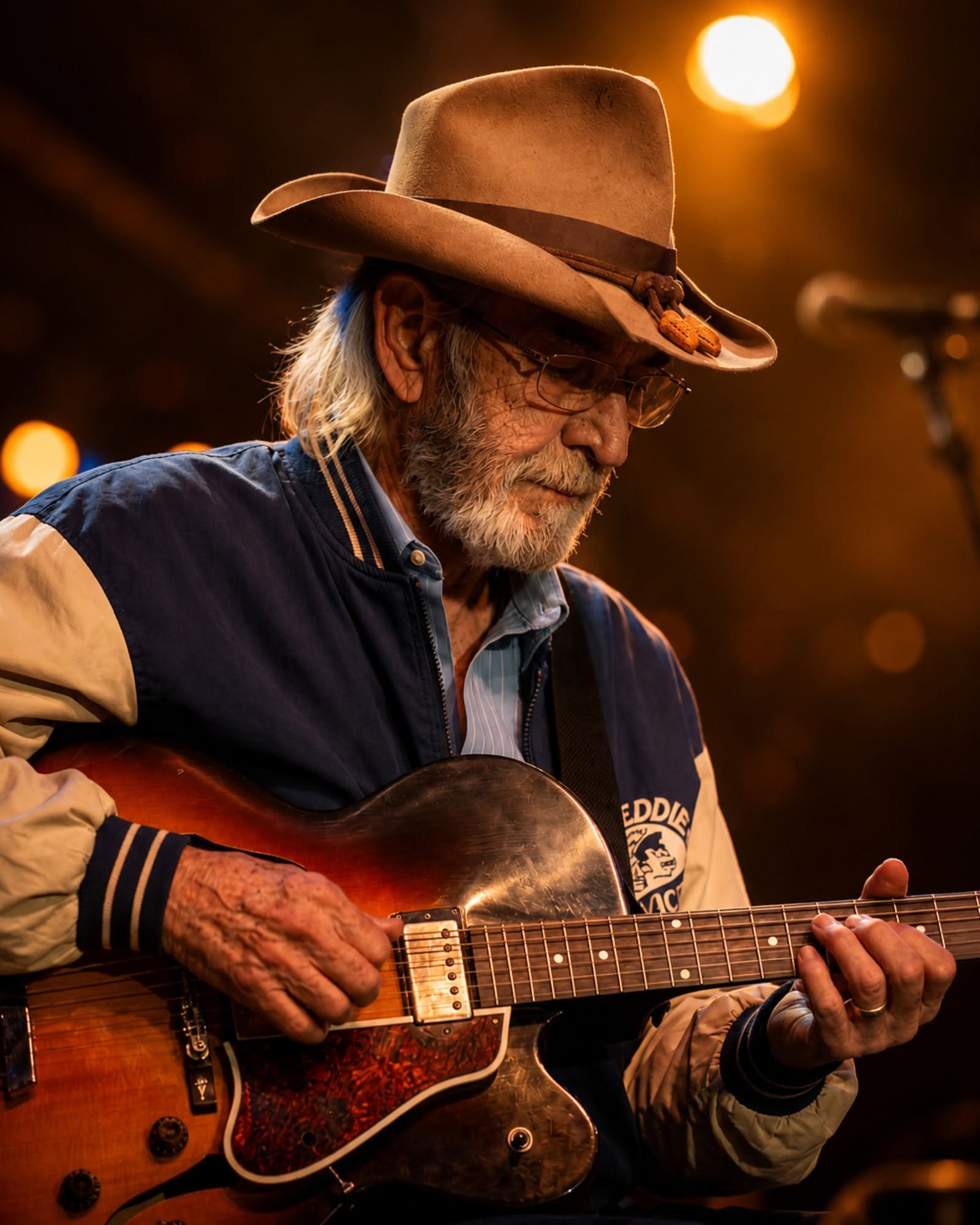
Don Williams never needed to raise his voice to be heard. For more than five decades, his smooth baritone and steady presence gave country music something rare: calm. With 17 No. 1 hits and a reputation as one of the most easygoing men in the business, he became known as the Gentle Giant. At six foot one, he was physically imposing, but his personality was soft-spoken, warm, and deeply grounded. Even after he was gone, the farewell matched the life he had lived: simple, respectful, and unhurried.
On September 27, 2017, family, friends, and music industry guests gathered at the CMA Theater inside the Country Music Hall of Fame in Nashville to remember Don Williams. The setting was fitting. Nashville had long known Don Williams as a singer who never chased attention, and the memorial reflected that same spirit. There was no dramatic spectacle, only gratitude, tears, and stories shared by people who understood what his music meant.
A Voice That Felt Like Comfort
Country music has never lacked for powerful performers, but Don Williams offered something different. His songs did not rush. They settled in. They sounded like wisdom delivered with patience. For listeners who found themselves worn down by life, Don Williams often felt less like a star and more like a trusted friend.
During the memorial, Kyle Young of the Country Music Hall of Fame and Museum spoke about what Don Williams gave the world. He described a rare kind of calm, a beauty in the way Don Williams carried himself and sang, and a peace that seemed to reach people exactly when they needed it most. That description fit the man as well as the music. Don Williams had a way of making the world feel a little less sharp around the edges.
Don Williams did not chase you with a song. He waited for you to come to him, and when you did, the song stayed with you.
That was part of his power. His songs did not demand your attention. They earned it quietly. Whether he was singing about love, longing, or the passage of time, Don Williams sounded steady in a world that rarely is.
The Industry Took Notice, But Don Williams Never Needed the Spotlight
In the months after his death, the country music community continued to honor him. Artists across generations paid tribute to Don Williams on the 2017 album Gentle Giants: The Songs of Don Williams, including Garth Brooks, Chris Stapleton, Alison Krauss, Dierks Bentley, Jason Isbell, and Trisha Yearwood. Their participation said a lot about Don Williams’ reach. He was not simply admired by fans of classic country. He was respected by artists who understood how much control, restraint, and honesty it takes to sing with that much ease.
At the 2017 CMA Awards, Carrie Underwood performed “Softly and Tenderly” during the In Memoriam tribute, and Don Williams appeared among the artists remembered that night. It was one more reminder that his influence stretched far beyond chart positions. His music belonged to the emotional history of country music itself.
Still, even in tribute, Don Williams remained true to form. There were no grand gestures attached to his farewell. The attention was sincere, but the mood stayed gentle. People spoke about him the way they had always described him: kind, calm, and consistent.
A Final Resting Place in the Gulf of Mexico
After the memorial in Nashville, Don Williams’ ashes were scattered in the Gulf of Mexico, a quiet final act for a man whose life had always seemed anchored in simplicity. It was an ending that felt personal rather than public, private rather than theatrical. For someone whose music often carried the hush of a late evening breeze, the Gulf offered a peaceful goodbye.
There is something deeply moving about a farewell that matches a life so closely. Don Williams did not live loudly, and he did not leave the world loudly either. His goodbye was soft, but it was not small. It carried the weight of a remarkable career, a devoted family, and millions of listeners who found comfort in his voice.
Why Don Williams Still Matters
Years later, Don Williams remains one of country music’s most beloved figures because he represented something many people still crave: sincerity without performance, emotion without excess, and grace without effort. His songs continue to feel timeless because they were built on feeling, not fashion.
That is why the memorial at the Country Music Hall of Fame mattered so much. It was not just a remembrance of a great artist. It was a recognition of a way of being in the world. Don Williams showed that calm can be powerful, that understatement can leave a lasting mark, and that a quiet life can still echo loudly through music history.
In the end, Don Williams’ farewell was as steady as his songs. No thunder. No spectacle. Just family, friends, music, and the sea. Even his goodbye felt quiet, and somehow, that made it unforgettable.
Post navigation
There are music stories that entertain, and then there are music stories that stay with people for years. Randy Travis has lived one of the most powerful of all. He was once one of country music’s most beloved voices, the man behind timeless hits that felt warm, honest, and deeply human. Then, in 2013, everything changed in a single terrifying moment.
A massive stroke nearly took his life. The situation was so serious that doctors gave him only a slim chance of surviving. Randy Travis did survive, but survival was only the beginning of a long and painful road. Aphasia took away his ability to speak and sing the way he once had. For a man whose life had been built around music, the silence was devastating.
For more than a decade, the silence remained. Fans wondered whether Randy Travis would ever return to music in any form. Some people thought his story had already reached its final chapter. But Randy Travis never seemed interested in being remembered as someone who simply disappeared. He kept showing up in the ways he could, even when the stage no longer looked the same.
A Voice Lost, But a Legacy Still Alive
Randy Travis did not have the easy comeback story people often hope for. There was no dramatic overnight recovery, no sudden return to the microphone, no effortless victory. Instead, there was patience, hard work, and a quiet kind of courage that can be harder to notice but far more powerful.
In 2024, Randy Travis made a remarkable return to music with “Where That Came From”, his first new song in 11 years. The release used AI trained on his classic recordings to help bring the sound of his voice back to life in a respectful and carefully crafted way. The song did more than make headlines. It reminded listeners why Randy Travis mattered so much in the first place. The track debuted on Billboard’s Country Airplay chart, proving that even after everything he had been through, people were still listening.
That moment felt bigger than a comeback. It felt like a bridge between the past and the present. Randy Travis was not pretending the hard years never happened. He was showing that music could still move forward, even after loss.
The More Life Tour and a Different Kind of Stage Presence
Randy Travis then launched the More Life Tour, and it became one of the most moving chapters of his story. He appeared on stage in his wheelchair while James Dupré sang his 16 number ones. Randy Travis could not sing the songs the way he once did. He could not stand in front of the crowd and belt out the notes that made him a country legend.
But he showed up anyway.
That choice mattered. In a world that often values performance above perseverance, Randy Travis offered something rarer: presence. He reminded audiences that an artist’s worth is not only measured in how many notes they can hit. Sometimes it is measured in whether they keep going when the easiest thing would be to stay home.
Most artists would have disappeared. Randy Travis kept returning to the light, even when all he could give was the strength of showing up.
The Opry Moment No One Forgot
Then came March 2025, a night that country music fans will likely remember for a long time. At the Opry’s 100th anniversary, Carrie Underwood performed “Forever and Ever, Amen”, one of Randy Travis’s signature songs. The performance alone was enough to stir emotion in the room. But what happened next turned the moment into something unforgettable.
After she finished, Carrie Underwood walked off stage and handed Randy Travis the mic. The room held its breath. Randy Travis, who had spent years living with the loss of his voice, sang one single word: “Amen.”
That one word landed like a wave. The entire room wept.
It was not about perfection. It was not about volume. It was about the meaning carried inside that tiny moment. One word was enough to remind everyone who Randy Travis was, what he had fought through, and why his presence still mattered so deeply.
Why Randy Travis Still Inspires So Many People
Randy Travis’s story resonates because it is not polished in the usual way. It is fragile, honest, and deeply human. He has lived through loss that would have ended many careers and broken many spirits. And yet, he continues to return to the stage, to the fans, and to the songs that shaped generations.
He did not let silence erase his legacy. He did not let disability define the end of his story. He kept moving, kept appearing, and kept reminding people that music is not only about what is heard. Sometimes it is about what is felt in the room when a beloved voice returns, even briefly.
They said he’d never make music again. Maybe some people believed that. Maybe some did not. But Randy Travis never seemed interested in proving doubters wrong with speeches. He answered with action, with presence, and with one unforgettable word: Amen.
Were you one of the doubters — or did you never stop believing in Randy Travis?