IN HIS FINAL SEASON, DON WILLIAMS LIVED THE QUIET LIFE HE HAD SPENT DECADES SINGING ABOUT. No stage. No spotlight. No crowd leaning in for that low, gentle voice. Just quiet days, home, and the kind of peace a man spends forty years on the road trying to find. In March 2016, Don Williams stepped away from touring with one simple line: “It’s time to hang my hat up and enjoy some quiet time at home.” Most legends say goodbye, then let the applause pull them back. Don meant it — because Don Williams always seemed to mean what he said. He had built a career by making stillness feel powerful. “I Believe in You,” “Lord, I Hope This Day Is Good,” “Tulsa Time” — even when the songs moved, his voice never rushed. He sang like a man who trusted quiet more than noise. So his final chapter did not need a grand farewell. No dramatic last speech. No attempt to turn retirement into theater. Just the man behind the voice finally stepping away from the road and into the peace his songs had promised. On September 8, 2017, Don Williams passed away at 78. Afterward, that retirement statement no longer sounded like a career ending. It sounded like a man who had already found his way home. – Country Music
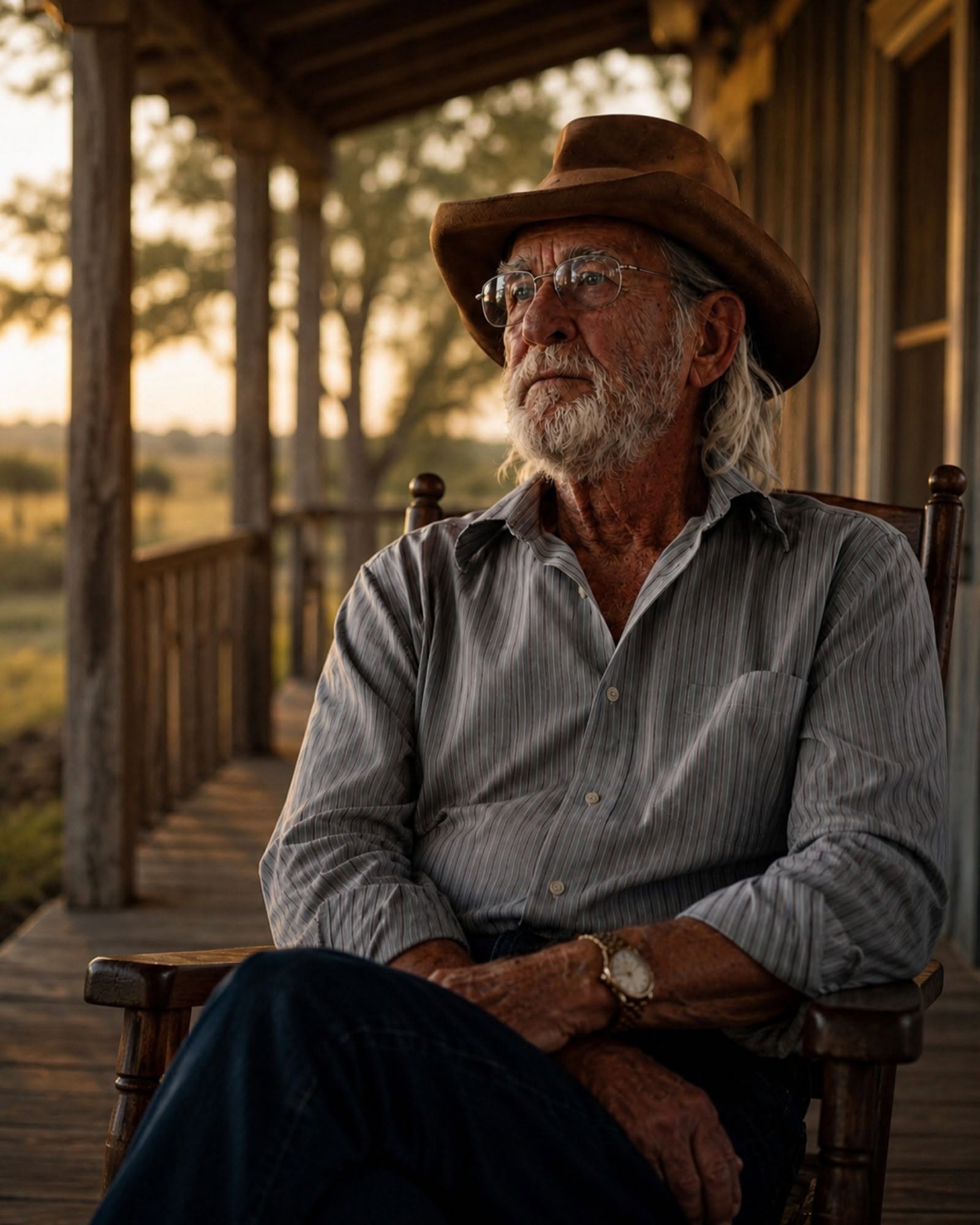
No stage. No spotlight. No crowd leaning in for that low, gentle voice. In the final chapter of his life, Don Williams chose something far rarer than fame: peace. For a man who had spent decades on the road, filling arenas and hearts with songs about calm, faith, and simple truth, that choice felt almost like a final verse written in real time.
In March 2016, Don Williams stepped away from touring with one simple line: “It’s time to hang my hat up and enjoy some quiet time at home.” There was nothing dramatic in the statement, and that was exactly why it fit him so well. Don Williams never seemed interested in making noise just to be noticed. He let the songs do the talking.
A Voice That Never Had to Shout
Don Williams built a career on restraint. While many artists chased bigger sounds and louder moments, Don Williams stayed faithful to a gentler approach. His songs moved with an easy confidence, as if they already knew where they were going. “I Believe in You,” “Lord, I Hope This Day Is Good,” and “Tulsa Time” all carried a kind of calm strength that felt rare, even then.
He sang like a man who understood that quiet could be powerful. He did not push his voice to prove anything. Instead, he trusted its warmth, its steadiness, and its ability to make listeners feel less alone. That was the magic of Don Williams: he made peace sound personal.
“It’s time to hang my hat up and enjoy some quiet time at home.”
For most artists, retirement can feel like a pause before one more comeback. For Don Williams, it sounded more like a completion. He had already spent years living the kind of life that many of his songs described — humble, reflective, and grounded. When he finally stepped away from touring, it did not feel like he was abandoning something. It felt like he was returning to something he had always valued.
The Man Behind the Music
Don Williams was beloved not only because of his songs, but because of the way he carried himself. He never gave the impression that he was above the audience or separate from ordinary life. He seemed like someone who could sit on a porch, watch the sun go down, and be perfectly content with the silence.
That image mattered, because it made his music feel honest. When Don Williams sang about hope, patience, love, or the simple wish for a better day, listeners believed him. He was not selling a fantasy. He was sharing a way of looking at the world.
By the time he reached his final season, that outlook had become part of his legacy. He did not need a grand farewell concert or a dramatic goodbye tour. The quiet life he chose was its own statement. It said that success had not changed the values he carried from the beginning.
A Final Chapter Without Spectacle
On September 8, 2017, Don Williams passed away at 78. Afterward, his retirement announcement took on a deeper meaning. What once sounded like a simple decision to step away from the road now felt like a man gently closing the door on a long and meaningful journey.
There was no need to force drama onto his story. Don Williams had already given the world enough. He had spent years singing about comfort, faith, and the dignity of an unhurried life. In the end, he lived those values with quiet grace.
That is why his final season continues to resonate. It reminds us that not every ending has to be loud to matter. Sometimes the most moving farewell is the one that comes softly, with no applause, just gratitude.
The Peace He Sang About
Don Williams left behind more than hit records. He left behind a feeling. His music still offers a kind of shelter, especially for people who are tired of noise and looking for something steady. The calm in his voice still feels like a hand on the shoulder, a reminder that life does not always need to be rushed to be meaningful.
In the end, Don Williams lived the quiet life he had spent decades singing about. That is what makes his final chapter so unforgettable. He did not merely perform peace. He found it.
After all the miles, the applause, and the songs, Don Williams went home quietly. And somehow, that made the legend even stronger.
Post navigation
In 1998, Vern Gosdin was 63 years old when a stroke changed the way he moved through the world. For most people, that headline would have been enough. For country music fans, it felt personal. Vern Gosdin was not just another singer. He was “The Voice”, a man whose songs carried ache, regret, tenderness, and truth in a way few others could match.
What made the moment so painful was not only the health scare itself. It was the quiet, private battle that followed. Vern Gosdin did not turn his recovery into a public performance. He did not chase sympathy or make grand announcements. He went quiet, and in that silence, he faced the fear that sits at the center of every singer’s life: What happens when the body stops obeying the soul?
A Voice Built on Honesty
Before the stroke, Vern Gosdin had already earned a reputation as one of country music’s most emotionally precise singers. He could sing about heartbreak without sounding theatrical. He could make a line feel lived-in, like it came from a real kitchen table conversation at the end of a long night. That was his gift. He did not simply perform songs. He inhabited them.
For a singer like Vern Gosdin, the voice is not just an instrument. It is identity, memory, and livelihood all at once. That is why the stroke mattered so deeply. It was not only a medical event. It was a direct challenge to the thing that made Vern Gosdin who he was.
The Cruelty of Recovery
The cruel part was not that Vern Gosdin lost everything at once. It was that he had to learn, piece by piece, how to trust his own mouth again. That kind of recovery is invisible to most people. There is no spotlight for the daily struggle of relearning control, rebuilding strength, and accepting that the old ease may never return in exactly the same form.
Fans who heard Vern Gosdin later sometimes noticed the difference. The voice could sound rougher, heavier, more weathered. But that change did not erase its power. If anything, it deepened it. There was a new gravity in the sound, as if every note had passed through more than talent. It had passed through survival.
Some listeners heard damage. Others heard truth.
He was no longer just singing heartbreak from memory. He was singing with a body that had betrayed him and a spirit that refused to quit.
He Kept Working Anyway
What stands out most about Vern Gosdin’s later years is not fragility. It is persistence. He kept writing. He kept recording. He kept showing up for the music as long as he could. That matters because it reveals something essential about craft. A true craftsman does not demand perfection from time. When time starts taking pieces away, he works with what remains and tells the truth with it.
That is what makes Vern Gosdin’s later work so affecting. It does not pretend nothing happened. It does not hide the marks left behind. Instead, it carries them openly. The songs feel shaped by experience in a way that goes beyond technique. They sound like someone who has looked at loss directly and decided not to surrender his gift.
Why Vern Gosdin Still Moves People
There are plenty of singers who can impress a crowd. Fewer can make a listener feel the weight of a life. Vern Gosdin did that before the stroke, and somehow he did it after too, even if the sound had changed. That is why he still hurts to hear. The pain in his voice is not just sadness. It is endurance. It is the sound of a man staying with his art when the easy path would have been to step away.
His story is not only about what was lost. It is about what remained. Breath. Will. Truth. A kind of hard-earned grace.
When you hear Vern Gosdin’s later voice, do you hear loss — or do you hear a man who refused to let the music leave him?