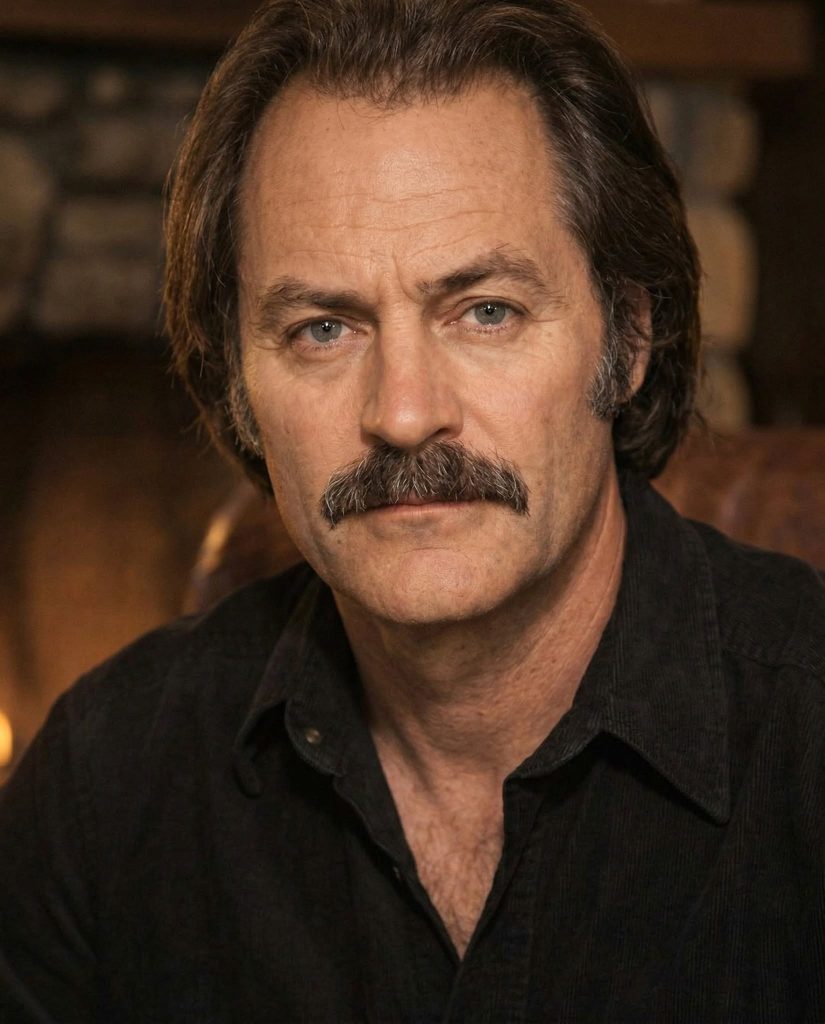
THEY CALLED HIM “THE VOICE.” NOT A PUBLICIST — OTHER SINGERS. AND THE COUNTRY MUSIC HALL OF FAME STILL DOESN’T HAVE HIS NAME ON A WALL. Here’s the easy dismissal, the one that let Nashville look past him for decades: Vern Gosdin was a George Jones knockoff. Same aching baritone, same barroom heartbreak, a man who sounded like the master without being him. A tribute act with good songs. Why enshrine the echo when you’ve already got the voice? There’s a sliver of truth in the comparison. He did sound like Jones. They were cut from the same Southern cloth, and Vern opened shows for George in the early eighties. But the people who actually knew singing never treated him like a copy. They gave him a name of his own — “The Voice” — and they meant it as a peer, not an imitation. Tammy Wynette, who was married to George Jones, is the one who reportedly said Vern was the only singer who could hold a candle to him. George Strait says Gosdin helped him when he was still a nobody on his first tour. Nineteen Top 10 hits. A CMA Song of the Year. A seat in the Songwriters Hall of Fame. And still, year after year, the Country Music Hall of Fame leaves him off the ballot. He got his biggest hits in his fifties, in a business chasing younger faces, and by the time the world caught up he was easy to overlook. He died in 2009, still waiting. George Jones has his plaque. The one singer his own wife said could stand beside him doesn’t. – Country Music
In country music, some singers are remembered for the size of their hits. Others are remembered for the sound of their voice when the room goes quiet. Vern Gosdin belonged to that second group. Long before streaming algorithms and nostalgia tours, other singers were calling him “The Voice,” and they did not mean it as a joke. They meant it as respect.
For years, Vern Gosdin carried the easy comparison that Nashville liked to make: he sounded a lot like George Jones. The resemblance was real. Both men sang with ache, gravity, and a kind of bruised honesty that could make a simple lyric feel lived-in. But imitation is the lazy reading of Vern Gosdin. What separated him was control, emotion, and the way he could make heartbreak sound plain instead of theatrical.
A Career Built on Feeling, Not Hype
Vern Gosdin’s catalog included nineteen Top 10 country hits, and his 1989 classic “Chiseled in Stone” won the CMA Song of the Year award. He was also inducted into the Nashville Songwriters Hall of Fame, a sign that the people who work closest to songs understood his value. He did not just perform stories; he made them believable. That is a rare gift, and it has a way of outliving trends.
There are also stories from inside the business that show how much his peers admired him. George Strait has said that Vern Gosdin helped him early in his career, when Strait was still building momentum. And Dean Dillon, one of country music’s most respected songwriters, helped write Vern Gosdin material including “Set ’Em Up Joe” and “Is It Raining at Your House?” That kind of company matters. It tells you that Vern Gosdin was not simply a singer with a strong tone. He was part of the craft’s inner circle.
And yet, the frustration around Vern Gosdin is easy to understand. The Country Music Hall of Fame is country music’s highest honor, but election is controlled by the Country Music Association, not the museum itself. That makes every omission feel even heavier, because it is not just about history; it is about who gets officially remembered.
Vern Gosdin died in 2009, and he never received that honor. For fans, that absence still stings. He had the voice, the songs, the respect of other artists, and the kind of emotional truth that country music claims to prize above all else. Still, the room never quite opened for him in the same way it did for some others.
Some singers are praised in their time. Others are understood only later. Vern Gosdin was one of the latter.
That is what makes his story linger. He was never just an echo of George Jones. He was Vern Gosdin — a singer whose voice carried sorrow, dignity, and truth in equal measure. If the Hall of Fame is meant to preserve the soul of country music, then his absence remains one of its most noticeable gaps.
Waylon Jennings spent his career acting like the rules were optional. He did not sound like a polished Nashville product, and he never dressed like one either. He built his legacy on instinct, grit, and a stubborn refusal to let the industry tell him who he was supposed to be. That is what makes the latest honor feel so powerful: nearly 25 years after his death, Hollywood has finally decided to place his name where millions of tourists will see it.
The Hollywood Chamber of Commerce has selected Waylon Jennings for the Hollywood Walk of Fame’s Class of 2027 in the Recording category. He is the only posthumous honoree in the class, which also includes names such as the Ramones, Grandmaster Flash, and Sia. Sam Elliott is part of the same class too, a pairing that feels right for anyone who has ever loved country music with a little dust on its boots.
A Long Wait for a Familiar Name
This recognition arrives after a long delay, but not because Waylon Jennings needed permission to matter. He already mattered. Waylon Jennings was inducted into the Country Music Hall of Fame in 2001, a formal acknowledgment of a career that had already changed the shape of country music. He died on February 13, 2002, following complications related to diabetes, leaving behind a catalog that still carries his voice, attitude, and emotional weight.
There is something bittersweet about the timing. The crowd will gather. The speeches will be made. The photographs will be taken. But the man at the center of it all will not be there to shrug it off, smile in that familiar way, or turn the moment into something more human than ceremonial.
Fans never waited for Hollywood to validate Waylon Jennings. They already knew he belonged.
The Outlaw Who Kept His Distance
Waylon Jennings earned his outlaw reputation by demanding creative control and refusing to be boxed in. He wanted the songs he wanted, the studio he wanted, and the musicians he wanted. That independence helped define outlaw country and gave generations of listeners a model for how an artist could stay true to himself without sounding defensive or distant.
That is why this star feels larger than a sidewalk tribute. It is a late recognition of a man who spent his life pushing back against the idea that success had to look a certain way. He never needed Hollywood’s approval to become an icon. He became one by staying unmistakably himself.
A Fitting Honor, Even If It Comes Late
There is real grace in the fact that Waylon Jennings is finally being added to the Walk of Fame. The honor does not change his story, but it does place him in a new frame for a new generation. It says that the music industry, and the entertainment world around it, still has room to catch up to people who were ahead of their time.
In the end, the star on Hollywood Boulevard will not be about arrival. Waylon Jennings arrived long ago. The star is simply Hollywood admitting it, at last.