HE WAS THE THIRD OF TWELVE PARTON CHILDREN, AND HE IS THE FIFTH OF THEM TO BE BURIED. Coy “Denver” Parton died on Thursday, July 23, at 82, in Sevierville, Tennessee, in the county where he was born in August of 1943. Dolly came next, about two and a half years behind him. She left for Nashville, and Stella and Randy eventually followed her onto stages. Denver never did. He ran a crane and spent years building bridges across East Tennessee. He kept a homestead. He hunted. Taste of Country once called him perhaps the most private of all the Partons, noted there was almost nothing on the record about him at all, and guessed that was how he preferred it. He had already buried his wife, Carolyn. The family had already buried Larry, Floyd, Randy, and David, and in March of last year Dolly buried her husband of nearly sixty years. Denver’s service was held privately. No cause of death was given. Then came the one public request. Instead of flowers, the family asked that people give to Dolly Parton’s Imagination Library, the program that has mailed free books to small children since 1995, when it began right there in Sevier County. A man almost nothing was ever written about will now be remembered by strangers putting books into the hands of children in the county where he was born. – Country Music
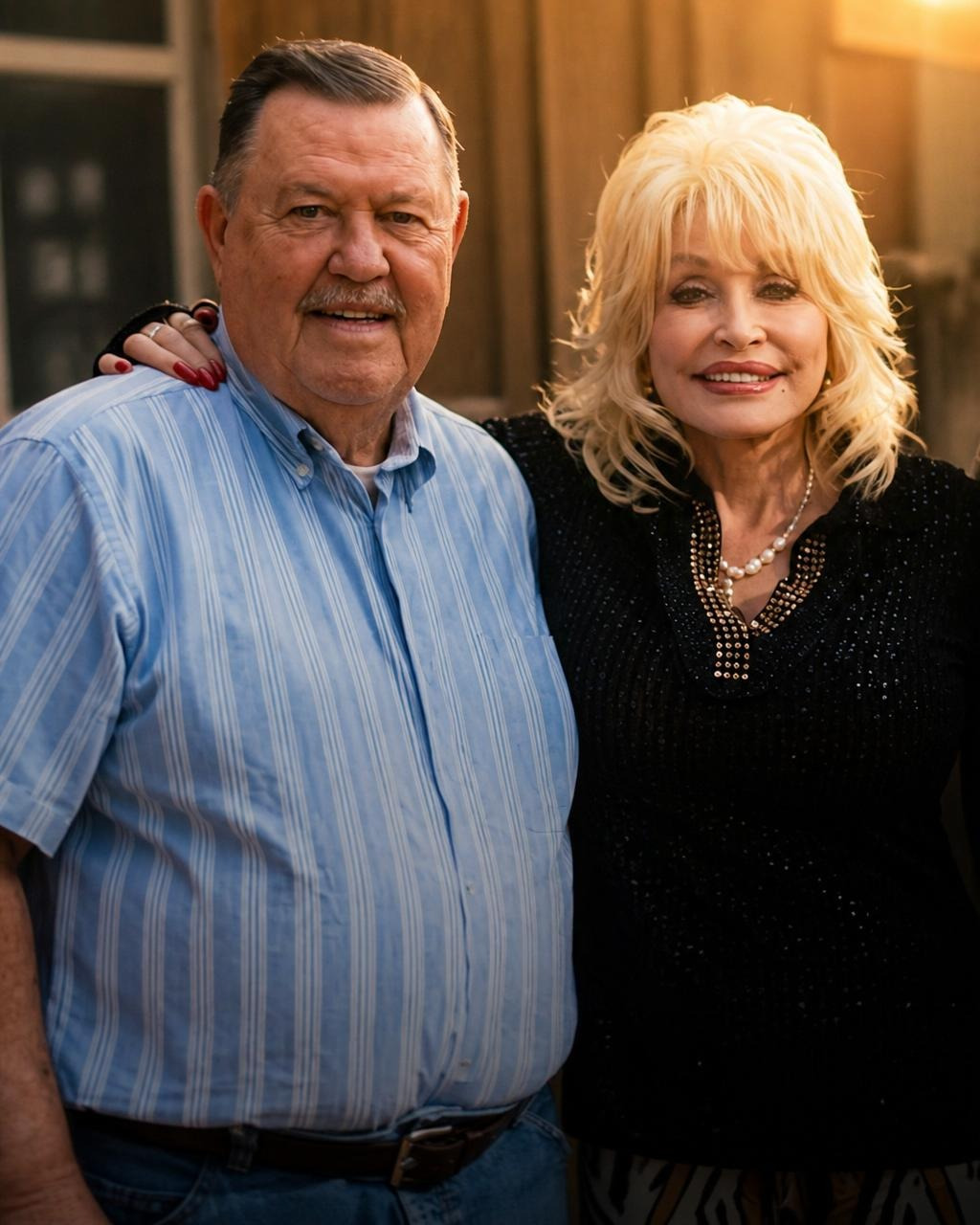
Denver Parton’s Quiet Life, and the Family Memory He Leaves Behind
When Coy “Denver” Parton died on Thursday, July 23, in Sevierville, Tennessee, the news carried a rare stillness with it. He was 82. In a family known around the world, Denver Parton lived mostly out of view, choosing work, land, and privacy over the stage lights that later defined some of his siblings’ lives.
Denver Parton was the third of twelve children born into the Parton family in Sevier County, the same part of East Tennessee where he spent his life. Dolly Parton came after him, and over the years other siblings, including Stella and Randy Parton, also entered public life. Denver Parton did not. He stayed close to home, built bridges as a crane operator, kept a homestead, and hunted. For many people, that would have been enough of a life. For Denver Parton, it appears to have been exactly the life he wanted.
A Family Marked by Loss and Loyalty
The Parton family has known more than its share of grief. Denver Parton had already buried his wife, Carolyn Parton. The family had also lost Larry Parton, Floyd Parton, Randy Parton, and David Parton. In March 2026, Dolly Parton buried her husband of nearly 60 years, Carl Dean. Against that backdrop, Denver Parton’s passing felt like another heavy chapter in a long family story shaped by love, work, and endurance.
His service was held privately, and no cause of death was given. That privacy fit the life Denver Parton seemed to prefer. He was, by many accounts, one of the most private members of the Parton family, a man whose name was known to relatives and neighbors long before it reached the wider public.
More Than a Public Figure’s Brother
It is easy, when a famous family loses someone, to reduce that person to a family label. But Denver Parton’s life was built on something sturdier than recognition. He helped build bridges across East Tennessee. He kept a home. He lived where he was born. In a world that often celebrates visibility, Denver Parton represented another kind of dignity: the dignity of steady work and a life lived without applause.
The public request that followed his death was simple and thoughtful. Instead of flowers, the family asked that people donate to Dolly Parton’s Imagination Library, the book-giving program that began in Sevier County in 1995 and has since become a lasting symbol of Dolly Parton’s commitment to children and literacy. It was a request that turned grief into something gentle and useful.
In the end, Denver Parton may be remembered by many strangers not for what he put on a stage, but for what his family asked for in his honor: books, learning, and a little more hope for children in the place where he was born.
That feels fitting. A private man who lived quietly in East Tennessee is now part of a public act of generosity. And in that gesture, Denver Parton’s memory continues in the county that shaped him, among the people who knew that a life does not need to be loud to matter.
Post navigation

The Night Audrey McGraw Sang Faith Hill’s “Stronger” and Made the Song Feel New Again
There are some songs that quietly wait in the background until the right voice brings them back to life. Faith Hill’s “Stronger” was one of those songs. Released on the album Cry in 2002, it became part of a deeply personal moment in the family story of Faith Hill and Tim McGraw, because their youngest daughter, Audrey McGraw, was still very young at the time. Over the years, the song stayed familiar to fans, but it also carried a private meaning inside the McGraw household.
Then, on July 24, at Jones Beach Theater in Wantagh, New York, Tim McGraw surprised the crowd by bringing Audrey McGraw onstage. He stayed beside her while she sang, giving her the space to take the room in a way that felt both tender and powerful. For fans who had spent years hearing about Faith Hill stepping back from performing, the moment landed like a small miracle: a daughter stepping into a song her mother helped make memorable, and doing it in front of a live audience that understood the weight of it.
The next day, Audrey McGraw shared a black-and-white clip and wrote about how honored she felt singing her mama’s song at her daddy’s show. She described it as an infinite gift to be their daughter, and that sentiment matched the emotional tone of the performance itself. It was not a flashy stunt. It felt like family, memory, and music meeting in one bright moment.
A song that grew up with the family
“Stronger” has long been part of Faith Hill’s catalog, and it has now taken on a new life in the hands of Audrey McGraw. The reason the moment resonated so deeply is simple: songs change when the people connected to them change. A line sung by a mother in one season of life can feel completely different when sung years later by her daughter, especially when that daughter has grown up hearing the song from the other side of the stage.
Martina McBride added a warm and playful note to the conversation when she commented on Audrey McGraw’s post. She said Audrey McGraw had “it” since she was about six, remembering karaoke in the Bahamas years earlier. That detail turned the story into something even sweeter: the Long Island crowd may have just discovered Audrey McGraw in that role, but a few people had apparently known for a long time.
Some moments do more than entertain. They remind people that talent can be inherited, nurtured, and finally revealed at exactly the right time.
That is what made this performance feel special. It was not only about Faith Hill’s catalog or Tim McGraw’s concert. It was about Audrey McGraw standing in a song that once lived in the background of her childhood and turning it into her own moment. For fans, that is the kind of performance that lingers long after the lights go down.