THEY CALLED GLEN CAMPBELL TOO POLISHED TO BE REAL COUNTRY. THEY DIDN’T KNOW THEY HAD ALREADY HEARD HIS GUITAR ON HUNDREDS OF RECORDS. Nashville’s country purists barely accepted him. Too smooth. Too pop. Too polished. But here’s what none of them realized. That guitar on Sinatra’s “Strangers in the Night”? Glen Campbell. The session behind the Ronettes’ “Be My Baby”? Glen Campbell. When the Beach Boys needed someone to replace Brian Wilson on tour in 1964 — they called Glen Campbell. As part of the Wrecking Crew, he played on hundreds of the biggest hits of the 1960s. Almost no credit. And before any of that — he was the seventh of twelve children born to a dirt-poor sharecropper in Billstown, Arkansas. A town so small it wasn’t on any map. His father bought him a $5 Sears guitar at four. By six, he was on local radio. They said he wasn’t country enough. But the musicians who dismissed him had already been listening to his guitar for years without knowing it. Jimmy Webb called him “a secret weapon in the armory of Sixties record producers.” When Glen finally stepped to the microphone, the world thought he appeared out of nowhere. He didn’t — and there’s far more to that story than most people have ever heard. – Country Music
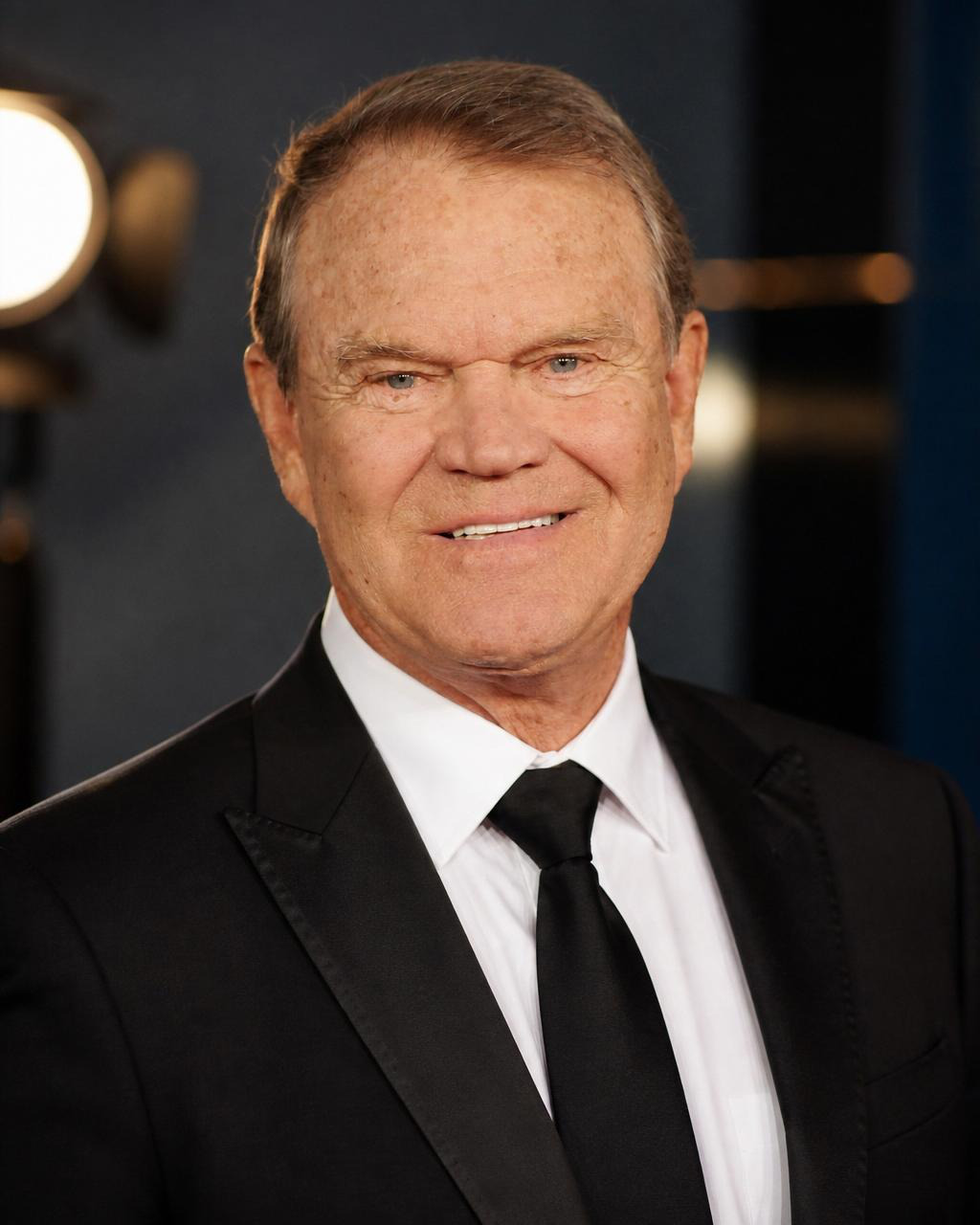
For a long time, Glen Campbell carried a strange burden: people heard the shine in his voice and the polish in his records, and they assumed they knew the whole story. In Nashville, some purists decided he sounded too smooth, too close to pop, too carefully put together to count as the real thing. But that judgment missed the larger truth. Glen Campbell had already spent years helping shape the sound of American music before most listeners even knew his name.
Before the spotlight, there was Billstown
Glen Travis Campbell was born on April 22, 1936, in Billstown, Arkansas, to a poor sharecropping family. He was one of twelve children, and the family life was hard, practical, and deeply tied to the land. At age four, his father bought him a five-dollar Sears guitar, and by the time he was six, Glen Campbell was already performing on local radio. That early start mattered: long before the stage lights, Glen Campbell had learned how to turn raw instinct into musical discipline.
The guitarist people heard without noticing
In the 1960s, Glen Campbell became part of the Los Angeles session world known as the Wrecking Crew, a group of musicians whose playing helped define countless hits. He played on major recordings while remaining largely uncredited, which is why so many people later realized they had been hearing Glen Campbell all along. He is widely associated with guitar work on records such as Frank Sinatra’s “Strangers in the Night” and with the broader session sound that backed the Ronettes and many other artists of the era. The Beach Boys also called on Glen Campbell in 1964 when Brian Wilson stopped touring, bringing Glen Campbell on the road as a replacement.
Jimmy Webb later described Glen Campbell as a kind of secret weapon, and that phrase fits because Glen Campbell could step into almost any arrangement and make it feel effortless.
Why the country gatekeepers got it wrong
What some critics heard as polish was actually range. Glen Campbell could sing with clarity, play with precision, and still carry a hard-earned sense of place in his voice. He was never just one thing. He was an Arkansas kid, a session player, a road musician, a pop star, and a country artist all at once. That is why the “too polished” criticism feels so incomplete now. It treated versatility like a weakness when it was really Glen Campbell’s greatest strength.
When Glen Campbell finally stepped to the microphone as a star in his own right, it may have looked sudden to the public. It was not sudden at all. It was the result of years of invisible work, long miles, and the kind of musicianship that can hide in plain sight. The world thought Glen Campbell appeared out of nowhere. In reality, Glen Campbell had been there the whole time, tucked inside the records everybody already knew.
Post navigation
Miranda Lambert’s Tearful Night at Alan Jackson’s Final Nashville Show
Miranda Lambert had already done her part that night. She had stepped onto the stage at Nissan Stadium and sung “Dallas” as part of a star-filled tribute to Alan Jackson, helping salute the man whose songs shaped generations of country listeners. For a moment, it felt like she had already reached the emotional peak of the evening. Then George Strait walked out.
Alan Jackson’s final full-length touring concert, billed as Last Call: One More for the Road — The Finale, took place in Nashville on June 27, 2026, and it drew some of the biggest names in country music. The night was built around gratitude, memory, and the kind of respect that only comes when one era is quietly coming to a close. Miranda Lambert was there not just as a star, but as someone who had clearly come to witness something rare.
When George Strait joined Alan Jackson onstage, the mood shifted. Two legends stood together, singing in front of a crowd that understood exactly what it was seeing. Karen Fairchild of Little Big Town was beside Miranda Lambert at the time, and Miranda Lambert turned to her and admitted what everyone around her could feel: “I can’t handle this.”
She said it again, almost as if the words themselves were not enough to contain the moment. Then the tears came.
Karen Fairchild later said Miranda Lambert cried several times during the evening, a detail that says less about weakness and more about honesty. Miranda Lambert was not trying to play the role of the tough veteran who has seen everything. She was watching two men whose songs had helped define modern country music stand side by side on a night that already carried the weight of farewell.
A fan in the middle of history
Miranda Lambert has performed in stadiums, headlined major tours, and spent years living inside the machinery of country stardom. But some nights cut through the polish. This was one of them. The image of Alan Jackson and George Strait sharing the stage was powerful not because it was flashy, but because it felt final in a way that fans rarely get to experience.
For Miranda Lambert, the tears seemed to come from recognition. She was seeing not only two icons, but also the closing of a chapter that had influenced her own career. That kind of moment can strip away the distance between performer and audience. Suddenly, Miranda Lambert was not the one being watched. She was simply someone in the crowd, overwhelmed by the sight of history unfolding in real time.
“I can’t handle this.”
It was a small line, but it carried the whole feeling of the night. Some concerts entertain. Some concerts impress. Every once in a while, a concert becomes a shared memory. Alan Jackson’s final Nashville show was that kind of night, and Miranda Lambert’s reaction made it feel even more human.
By the end, the tears were not the story because they were dramatic. They were the story because they were sincere. Miranda Lambert did what so many fans would have done in that same stadium: she looked up, watched the legends sing, and let the moment hit her all at once.