HEART DISEASE TOOK HIS STRENGTH. IT OPENED HIS CHEST TWICE. BUT FOR NEARLY 13 YEARS, IT COULDN’T MAKE MARTY ROBBINS STOP LIVING. He had his first heart attack in 1969. Doctors told him to slow down. He did the opposite — and it lasted 13 more years. Marty Robbins — the voice behind “El Paso,” one of country music’s greatest story songs — was one of the first patients in America to undergo bypass surgery. He shouldn’t have had much time left. But here’s what he did with it: he went back on stage. He kept recording. And he kept doing something almost no other star of his stature would risk. He raced stock cars. Professionally. Competed at Daytona and ran dozens of NASCAR events, climbing behind the wheel with a repaired heart, at speeds that could kill a healthy man. Friends begged him to quit. He didn’t. He once said he’d rather live fully than carefully. In 1981 he underwent a second open-heart surgery. Still he returned to the Grand Ole Opry, still he sang, still he smiled at crowds who had no idea what his body had endured. Marty died in December 1982, weeks after his final surgery. – Country Music
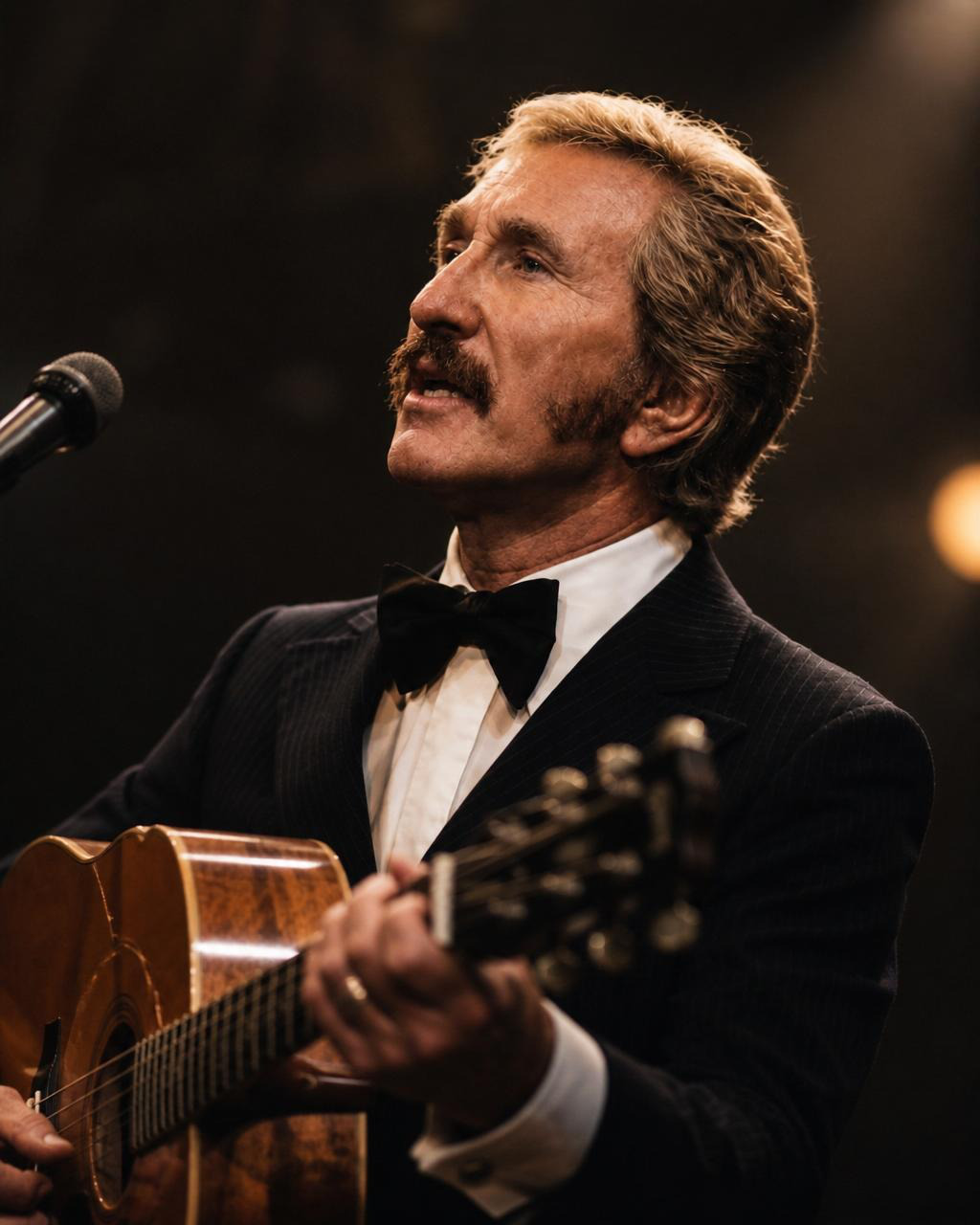
By the time Marty Robbins suffered a heart attack in 1969, doctors had every reason to tell him to slow down. He did hear them. He also did something far more typical of Marty Robbins: he kept moving. He returned to work, returned to the stage, and returned to the kind of life that made him one of country music’s most recognizable voices. His story was never only about survival. It was about refusal.
Born Martin David Robinson, Marty Robbins built a career on songs that felt larger than life, especially “El Paso,” the story song that became one of country music’s classics. But while audiences heard the smooth voice and the steady confidence, his body was fighting a private battle. In August 1969, he suffered a heart attack, and on January 27, 1970, he underwent bypass surgery. At the time, that surgery was still considered experimental. For many people, it would have meant a permanent retreat. For Marty Robbins, it became a hard pause, not a full stop.
He came back to performing, and he came back to racing too. That part of the Marty Robbins story still surprises people who only knew him from radio. He raced stock cars professionally and made starts at major tracks, including Daytona. Friends worried. Fellow drivers respected him. He was not pretending the danger was small; he simply chose to live inside it. That choice made him unusual, even in a sport built on risk.
“I’d rather live fully than carefully.”
The quotation above is often repeated in retellings of Marty Robbins’s life, and whether remembered exactly or paraphrased, it fits the image he left behind: a man who kept showing up. He recorded. He performed. He entertained crowds who had no idea how much strain his heart had already carried. In 1981, he underwent another open-heart operation, yet he still returned to public life and kept his place at the Grand Ole Opry, where he had long been one of the most beloved names on the stage.
Then came December 1982. After his final heart attack and surgery, Marty Robbins died on December 8, 1982, at age 57. The ending was heartbreakingly close to the same thing he had been outrunning for years. But the larger truth is not that heart disease defeated him. It is that, for nearly 13 years after that first heart attack, it could not make him stop being Marty Robbins: singer, racer, showman, and a man who kept choosing the next mile.
Post navigation
Merle Haggard never seemed interested in ordinary names for ordinary things. For years, he gave every tour bus he owned the same name: the Super Chief. The choice was not random. It carried the memory of the Santa Fe Super Chief, the famous passenger train that once ran between Chicago and Los Angeles and became known as the “Train of the Stars.” For a boy who grew up near Bakersfield with a life shaped by railroads, that name meant something deeper than style. It meant distance, motion, and the pull of the horizon.
Haggard built one of his buses to match that dream. The interior carried Santa Fe-inspired details, with a master bedroom in the back and bunks for the band. Even more striking was the train horn mounted on the front, a real piece from the old Santa Fe Railway, with the pull handle placed beside the front passenger seat. It was the kind of detail that turned a tour bus into a rolling tribute. On long drives between shows, Merle Haggard could sit up front and watch the road like a man still chasing something just ahead of him.
That bus became part of the story people told about him. It was not just transportation. It was a moving memory, a private museum, and a symbol of the life Merle Haggard made out of grit and imagination. The train theme fit the artist who spent his career honoring where he came from while refusing to stay in one place for long.
A Final Morning in Palo Cedro
On April 9, 2016, after Merle Haggard’s death at age 79, the Super Chief was parked at the edge of a clover pasture in Palo Cedro. It stood sideways to block the wind for the mourners gathered nearby. The image was simple, but it carried a quiet force: the bus that had once carried him across the country now stood watch at the end of his life.
The private funeral drew a final line between the public legend and the private man. Fans gathered at a distance, while family and friends said goodbye in a setting that felt both small and enormous. The bus did not speak, of course. But it did what it had always done for Merle Haggard. It held a story in place.
He had spent decades naming his bus after a train, decorating it like a tribute, and riding it like a second home. In the end, the Super Chief was still there, keeping its place beside him.
More Than a Bus
There is something moving about the way a person’s obsessions can become part of their farewell. For Merle Haggard, the train image was never just decoration. It was a thread running from childhood to stardom, from the boxcar outside Bakersfield to the final gathering in Palo Cedro. The Super Chief did not merely belong to Merle Haggard’s career. It helped define it.
And maybe that is why the scene lingers. Not because it was dramatic, but because it was faithful. The bus that once carried his name, his memories, and his road life stood guard one last time. The boy who had once looked at trains with wonder was gone, but the symbol he chose remained, steady and silent, at the edge of the pasture.