THE WHOLE WORLD REMEMBERS LORETTA LYNN… BUT THE ONE WHO FELT IT DEEPEST WAS THE DAUGHTER WHO CARRIED HER NAME AND HER LAST SONGS. Patsy Lynn Russell — Loretta’s youngest daughter, named after Patsy Cline, the friend her mother never stopped mourning. Patsy wasn’t just family. In Loretta’s final years, she became her producer, her co-writer, and the one who kept her mother’s music alive. Together they recorded Full Circle, Wouldn’t It Be Great, and Still Woman Enough — all made at Cash Cabin Studio in Tennessee. But behind those sessions, Patsy watched her mother grow fragile. A stroke in 2017. A broken hip in 2018. Fifty-seven years of touring, silenced. On October 4, 2022, at the ranch in Hurricane Mills, Tennessee, Loretta passed away peacefully in her sleep. Patsy’s twin sister Peggy later wrote that she kissed their mother goodbye and could barely tear her arms away. On their first birthday without her, Patsy wrote that she woke up sad, missing the one thing no recording could replace — Loretta’s voice singing Happy Birthday over the phone. The audience lost a queen. But Patsy lost the voice that sang her to sleep. The full story of what those final albums cost them both is something few people have ever heard. – Country Music
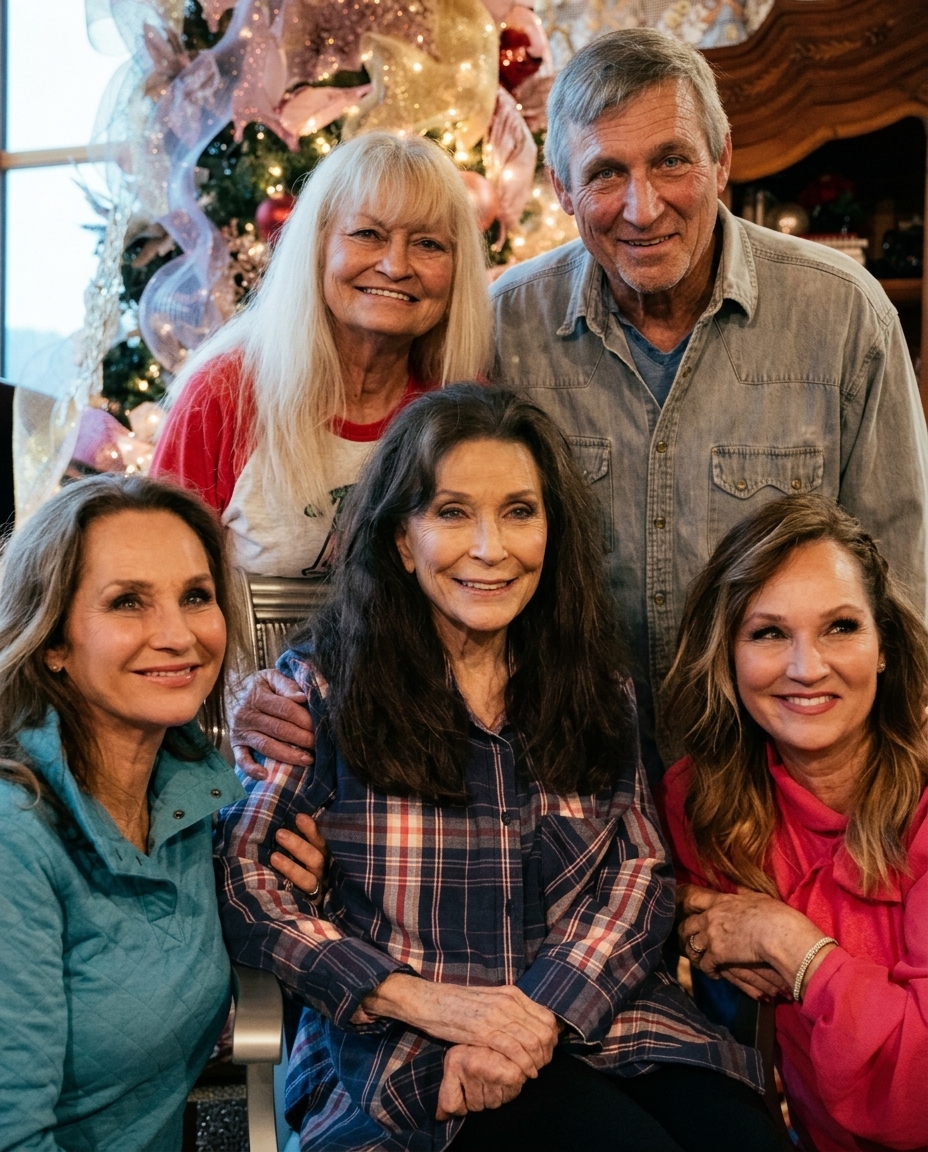
When the world remembers Loretta Lynn, it usually remembers the legend first. The rhinestones. The mountain voice. The fearless songs that told the truth before the truth was fashionable. People remember the icon who stood on stage for decades and made country music sound tougher, sadder, funnier, and more alive.
But inside the family, memory worked differently.
For Patsy Lynn Russell, the loss was never only about country music history. It was about a mother. It was about a voice that had always been there. It was about the woman who sang through heartbreak, who filled rooms without trying, and who somehow remained both larger than life and deeply personal at the same time.
The Daughter Who Carried More Than a Famous Name
Patsy Lynn Russell was not just Loretta Lynn’s youngest daughter. Patsy Lynn Russell also carried a name that meant something sacred in the family story. Loretta Lynn named Patsy Lynn Russell after Patsy Cline, the friend whose loss stayed with Loretta Lynn for the rest of her life. That alone gave the name weight. But over time, Patsy Lynn Russell built her own place beside her mother, not as a symbol, but as a steady creative partner.
In Loretta Lynn’s final years, Patsy Lynn Russell became something rare in the life of a legend: both witness and collaborator. Patsy Lynn Russell was there not only as family, but as a producer, co-writer, and protector of the music itself. While many people saw Loretta Lynn as an untouchable icon, Patsy Lynn Russell saw the daily effort behind the art. Patsy Lynn Russell saw what it took for Loretta Lynn to keep going.
The Final Albums Were Acts of Love
Together, Loretta Lynn and Patsy Lynn Russell helped shape a remarkable final chapter. Full Circle, Wouldn’t It Be Great, and Still Woman Enough were not just albums. They were evidence that the fire was still there. Recorded at Cash Cabin Studio in Tennessee, those projects felt warm, intimate, and deeply rooted in who Loretta Lynn had always been.
To listeners, those records sounded like strength. They sounded like endurance. They sounded like a woman still fully herself.
But families hear things differently.
Behind the microphones and the songs, Patsy Lynn Russell was watching her mother change. The sessions carried beauty, but they also carried the heaviness of time. Loretta Lynn had already given almost everything to music. Fifty-seven years of touring had left their mark. Then came the harder blows: a stroke in 2017, a broken hip in 2018, and the quiet realization that the stage would not always wait.
The records preserved the voice, but they could not stop time from moving around it.
What the Public Could Not See
That is the part many fans never fully hear. The final albums were not simply comeback stories. They were also family stories. Every finished line, every session, every moment of Loretta Lynn still singing with clarity and conviction came with effort, care, and emotional cost. Patsy Lynn Russell was helping the world hold on to Loretta Lynn a little longer, even while knowing how fragile that time had become.
There is something both beautiful and heartbreaking in that. To help preserve a voice while slowly realizing you may one day have to live without it.
On October 4, 2022, at the family ranch in Hurricane Mills, Tennessee, Loretta Lynn passed away peacefully in her sleep. The news traveled fast, as news like that always does. Fans mourned. Fellow artists paid tribute. The country music world stopped for a moment and looked back at everything Loretta Lynn had built.
But in the middle of that public grief was a private one that cut deeper. Patsy Lynn Russell and the family were not losing a symbol. They were losing the center of their lives.
The Silence That Followed
Later, Patsy Lynn Russell’s twin sister Peggy shared a moment that said more than any grand tribute could. Peggy wrote that she kissed their mother goodbye and could barely tear her arms away. It was the kind of sentence that stays with you because it does not sound crafted. It sounds lived.
And then came the first birthdays, the first holidays, the first ordinary mornings that no longer felt ordinary at all.
On the first birthday Patsy Lynn Russell faced without Loretta Lynn, the ache returned in the smallest, most human way. Patsy Lynn Russell wrote that she woke up sad, missing the thing no album, no archive, and no memory could truly give back: Loretta Lynn calling to sing “Happy Birthday.”
That detail says everything. The world lost a queen. Patsy Lynn Russell lost the voice that once made childhood feel safe, adulthood feel connected, and every birthday feel like home.
People will keep celebrating Loretta Lynn for the songs, and they should. But somewhere beneath the applause is another story, quieter and more tender. It is the story of Patsy Lynn Russell standing beside her mother through the final albums, helping keep the music alive while knowing that one day the singing would stop. And when it did, what remained was not only legacy. What remained was love, and the silence that follows when the voice that raised you is suddenly gone.
Post navigation
Before the awards, before the standing ovations, before the bronze and the history-making headlines, Loretta Lynn was just a little girl growing up in a hard world in Butcher Hollow, Kentucky. The house was small, the money was scarce, and the walls were covered with pages from a Sears catalog because that was what the family had. It was not a glamorous beginning. It was not the sort of place people imagined when they thought about future legends. But sometimes the most powerful stories begin in rooms that seem too humble to hold them.
That is what makes Loretta Lynn’s journey feel so unforgettable. She did not come from comfort. Loretta Lynn came from coal country, from long winters, from a family that understood survival before it ever understood applause. Yet even in that rough setting, there was something forming that could not be boxed in. Loretta Lynn was watching, listening, remembering. The struggles around her were becoming the truth she would later pour into song.
A Voice Built from Real Life
When Loretta Lynn began writing and singing, she did not sound polished in the way the industry often preferred. Loretta Lynn sounded real. That mattered. Loretta Lynn sang about marriage, work, pride, heartbreak, motherhood, frustration, love, and female independence with a directness that was unusual for her time. Loretta Lynn did not ask permission to tell the truth. Loretta Lynn simply told it.
That honesty became the center of her legacy. Audiences heard something in Loretta Lynn that went beyond performance. They heard a woman who had lived what she was singing. They heard somebody who understood small-town judgment, family pressure, and the stubborn strength it takes to keep going when life keeps testing you. Loretta Lynn was not inventing a character for the stage. Loretta Lynn was bringing lived experience into country music and forcing the genre to make room for it.
Breaking Through Every Wall in Front of Her
The milestones tell one version of the story, and they are remarkable on their own. In 1973, Loretta Lynn became the first country star ever to appear on the cover of Newsweek. That was not just a magazine cover. It was a signal that country music, and especially a woman from rural Kentucky, could no longer be treated as a side note in American culture.
Decades later, Loretta Lynn proved again that her story was still evolving. In 2004, Van Lear Rose, produced by Jack White, won the Grammy for Best Country Album. It was not a nostalgia prize. It felt alive, daring, and deeply rooted in Loretta Lynn’s identity. The album also earned extraordinary praise far beyond country radio, even being voted the second best album of the year by Rolling Stone. That moment mattered because it showed that Loretta Lynn was not just a legend from the past. Loretta Lynn was still an artist capable of surprising the present.
A Place No Woman Had Stood Before
Then came another symbol of just how far Loretta Lynn had carried herself and everyone who saw part of their own story in her. In 2020, Loretta Lynn was honored with a statue on the Icon Walk at Ryman Auditorium, becoming the first woman ever represented there. Think about that for a moment. The girl from the cabin with catalog-paper walls became the first woman placed on one of the most respected grounds in American music.
There is something especially moving about that image. The Ryman is not just another venue. It represents tradition, memory, and the sacred weight of country music history. For Loretta Lynn to stand there in bronze meant more than recognition. It meant permanence. It meant that the voice once dismissed by some as too blunt, too rural, too female, had become impossible to overlook.
Loretta Lynn’s life was proof that truth, when sung without fear, can outlast every doubt placed in its way.
Why Loretta Lynn Still Matters
Loretta Lynn’s story was never only about fame. It was about speaking when silence would have been easier. It was about carrying the dignity of working-class women into spaces that were not built for them. It was about refusing to soften the edges of real life just to make other people comfortable. That is why Loretta Lynn still reaches people. The songs endure because the woman behind them never tried to become less than who she was.
From a Kentucky cabin to the first woman on the Ryman Icon Walk, Loretta Lynn built one of the most extraordinary journeys in American music. Not because the road was smooth, but because Loretta Lynn kept walking it with courage. That is the kind of legacy that does not fade. It only grows louder with time.
Which Loretta Lynn song hits you the hardest — and why?