“THE GRAND TOUR (1974) IS WIDELY SEEN AS ONE OF THE SADDEST RECORDS IN COUNTRY MUSIC — A STORY THAT NEVER TRIED TO HEAL.”In 1974, George Jones didn’t just release The Grand Tour — he walked into it already broken. His marriage to Tammy Wynette had collapsed, and the album didn’t try to hide that. It didn’t reach for drama. It just let the emptiness sit there.“It felt less like music… and more like a house after someone leaves.”That’s what people heard. Rooms that echoed, silence that carried more weight than any instrument. And as the world started calling him the greatest voice in country music, something else was happening offstage. The nights got longer, the habits heavier, the line between pain and performance harder to see.And somehow, the voice only got stronger.Which leaves the question no one can answer — did the music keep him going… or take the last of what he had left? – Country Music
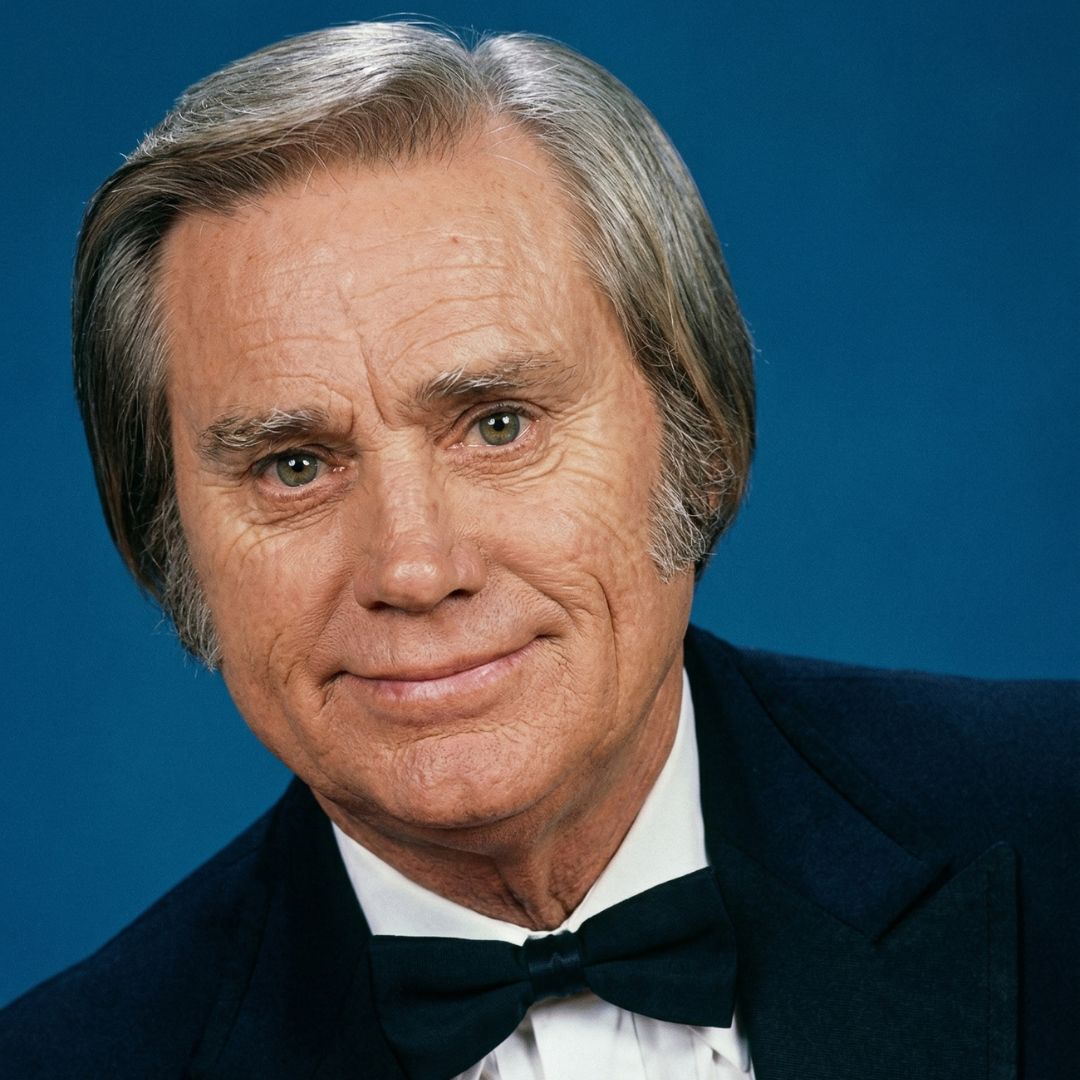
George Jones, The Grand Tour, and the Sound of a Heart Still Breaking
In 1974, George Jones released The Grand Tour, and from the first moments, it felt clear that this was not just another country album built to chase radio play. It felt personal. Heavy. Quiet in the way a room feels quiet after an argument, or after a door closes and does not open again.
By then, George Jones was already carrying more than fame. His marriage to Tammy Wynette had fallen apart, and that heartbreak seemed to hang over the record like weather. The Grand Tour did not sound like a man trying to explain himself. It sounded like a man walking through the remains of something he once believed would last.
“It felt less like music… and more like a house after someone leaves.”
That may be why the album has stayed with people for so long. It never pushes too hard. It never begs for sympathy. Instead, it lets the sadness breathe. The songs move carefully, almost as if George Jones knew that anything louder would break the spell. There is pain in the record, but it is not wild pain. It is settled pain. The kind that has already unpacked its bags.
The title track, especially, has lived on because it captures something country music has always understood better than most genres: heartbreak is not always dramatic. Sometimes it is slow. Sometimes it is domestic. Sometimes it is just one person standing in a room, noticing what is missing. George Jones did not need grand speeches to make that feeling real. His voice did the work. It carried the ache, the resignation, and the strange dignity of someone still standing in the middle of loss.
That voice is one reason so many people began to speak of George Jones in almost mythic terms. By the mid-1970s, more and more listeners were calling George Jones the greatest voice in country music. And the truth is, it is hard to argue with that when hearing The Grand Tour. The control was there. The phrasing was there. But more than technique, there was something else in it — a bruised honesty that could not be faked.
And yet what made the album so powerful also made it unsettling. Because while the music sounded strong, the man behind it was living through chaos. Offstage, the nights were growing longer. The drinking was becoming part of the story. The habits were getting heavier. Success and collapse were starting to travel side by side, and George Jones seemed caught somewhere in between them.
That contradiction is part of what gives The Grand Tour its lasting shadow. Here was an artist who sounded more emotionally precise than ever, even as his personal life was becoming harder to hold together. The songs did not hide that tension. If anything, they seemed to feed on it. The deeper the hurt went, the more unforgettable the performances became.
A Record That Never Pretended Everything Would Be Fine
What makes The Grand Tour so affecting is that it never tries to rush toward healing. There is no easy redemption built into its mood. No neat lesson. No bright ending waiting around the corner. The album simply stays with the feeling, and that choice gives it a rare kind of power. It trusts the listener to sit with grief instead of escaping it.
That is why the record still feels so intimate decades later. It does not sound polished into safety. It sounds lived-in. Worn. Human. George Jones was not singing as a symbol. George Jones was singing as a man who knew that some wounds do not close just because the song ends.
The Question That Still Follows the Music
In the years that followed, George Jones would continue to build one of the most legendary careers in country music. But The Grand Tour remains one of those albums people return to when they want to hear what heartbreak really sounds like when no one is trying to soften it. It stands there, almost untouched by time, still echoing with absence.
And maybe that is why the record continues to stir the same uneasy question. When George Jones sang those songs, was the music saving him by giving his pain somewhere to go? Or was it drawing from the same wound, taking more each time he opened his mouth to sing? No one can answer that completely. But you can hear why people still ask.
The Grand Tour did not try to heal. It did something harder. It told the truth as George Jones heard it in 1974. And sometimes, in country music, that truth lasts longer than comfort ever could.
Post navigation
Long before Kris Kristofferson became a respected name in American music, Nashville had already made up its mind about him. Kris Kristofferson did not look like the polished country stars the industry was comfortable with. Kris Kristofferson did not sound smooth. Kris Kristofferson did not walk into town with the kind of voice that made executives lean back and smile. What Nashville heard was roughness. What Nashville saw was a writer with long hair, restless ambition, and a sound that refused to fit neatly inside the rules.
So the city dismissed Kris Kristofferson in the easiest way possible. People called Kris Kristofferson a hippie. People said Kris Kristofferson could not sing. People acted as if Kris Kristofferson was just another dreamer standing outside a locked door, hoping talent alone would somehow matter.
But while others were deciding what Kris Kristofferson was not, Kris Kristofferson kept doing the work. Kris Kristofferson swept floors at Columbia Recording Studios. It was humble work, the kind that placed Kris Kristofferson close enough to the music business to watch it operate without being invited into it. There is something unforgettable about that image: a Rhodes Scholar, a man with enormous intelligence and uncommon discipline, pushing a broom while carrying songs that would later live for generations.
The Writer Nashville Nearly Missed
Kris Kristofferson was never just chasing fame. Kris Kristofferson was chasing a chance to be heard. That is what makes the story so compelling. There were easier reasons to quit. The rejection was not subtle. The criticism was not kind. Yet Kris Kristofferson kept writing with the kind of honesty that could not be manufactured. The songs were not built to impress a room full of executives. The songs were built to tell the truth.
And eventually, the truth found the right ears.
Johnny Cash heard “Sunday Mornin’ Comin’ Down” and understood immediately what many in Nashville had missed. Johnny Cash did more than record the song. Johnny Cash gave the song a stage large enough for the whole country to hear it. When “Sunday Mornin’ Comin’ Down” won CMA Song of the Year in 1970, it was more than an award. It felt like an answer. Nashville had called Kris Kristofferson unworthy, yet one of the city’s highest honors was now attached to Kris Kristofferson’s writing.
The Songs Went Further Than the Doubts
That should have been enough to silence the critics, but Kris Kristofferson’s rise did not stop there. Janis Joplin took “Me and Bobby McGee” and turned it into something unforgettable. The song became a number one hit and carried Kris Kristofferson’s writing into another world entirely. Ray Price brought deep elegance to “For the Good Times,” transforming it into a standard that still lingers in the heart long after the music fades. Other artists followed. Gladys Knight. Al Green. Elvis Presley. So many voices, so many styles, and yet they kept returning to the same source: Kris Kristofferson’s words.
That is one of the most remarkable parts of the story. The people who doubted Kris Kristofferson’s voice could not stop other legendary voices from singing Kris Kristofferson’s songs. The industry may have questioned the singer, but the songwriter became impossible to deny.
Kris Kristofferson kept writing until the songs spoke louder than every insult.
A Victory Bigger Than Approval
There is a quiet kind of justice in that. The executives who rejected Kris Kristofferson had titles, offices, and opinions. Kris Kristofferson had songs. Time tends to reveal which one matters more. Decades later, most people do not remember the names of the gatekeepers who said no. But they remember “Me and Bobby McGee.” They remember “For the Good Times.” They remember “Sunday Mornin’ Comin’ Down.”
Kris Kristofferson’s story is not simply about success after rejection. It is about what happens when real writing outlasts shallow judgment. Kris Kristofferson did not win because Kris Kristofferson became what Nashville wanted. Kris Kristofferson won because Kris Kristofferson stayed exactly who Kris Kristofferson was.
That may be the most moving part of all. A man called too rough, too raspy, too strange, and too outside the mold ended up writing songs that became part of the culture itself. Kris Kristofferson did not force the world to change its taste overnight. Kris Kristofferson just kept creating work so honest that the world eventually had to catch up.
And in the end, that is the kind of victory that lasts. Not approval. Not trend. Not image. Just songs that refuse to disappear.