ON APRIL 6, 2016, AT TWENTY MINUTES PAST NINE IN THE MORNING, A MAN DIED IN HIS OWN HOUSE IN PALO CEDRO, CALIFORNIA, ON THE SEVENTY-NINTH ANNIVERSARY OF THE DAY HE WAS BORN. He came into the world in a converted boxcar outside Bakersfield, to parents who had driven west out of Oklahoma ahead of the dust. His father died when he was nine. Everything after that was an institution he got out of early. He ran from reform school again and again. Then came a drunken burglary of a Bakersfield roadhouse he and a friend believed was closed for the night. It was still open. San Quentin. On New Year’s Day, 1958, Johnny Cash played the prison. Merle Haggard was in the audience. He said afterward that music was the only thing that kept him from making a career of crime. Paroled in 1960. Thirty-eight number one records. Songs about men who could not get out, written by a man who barely had. In 1972 the governor of California pardoned him outright. A week before the end, he told his family which day it would be. He was right, to the day. He got out of everything early. He served that last one in full. – Country Music
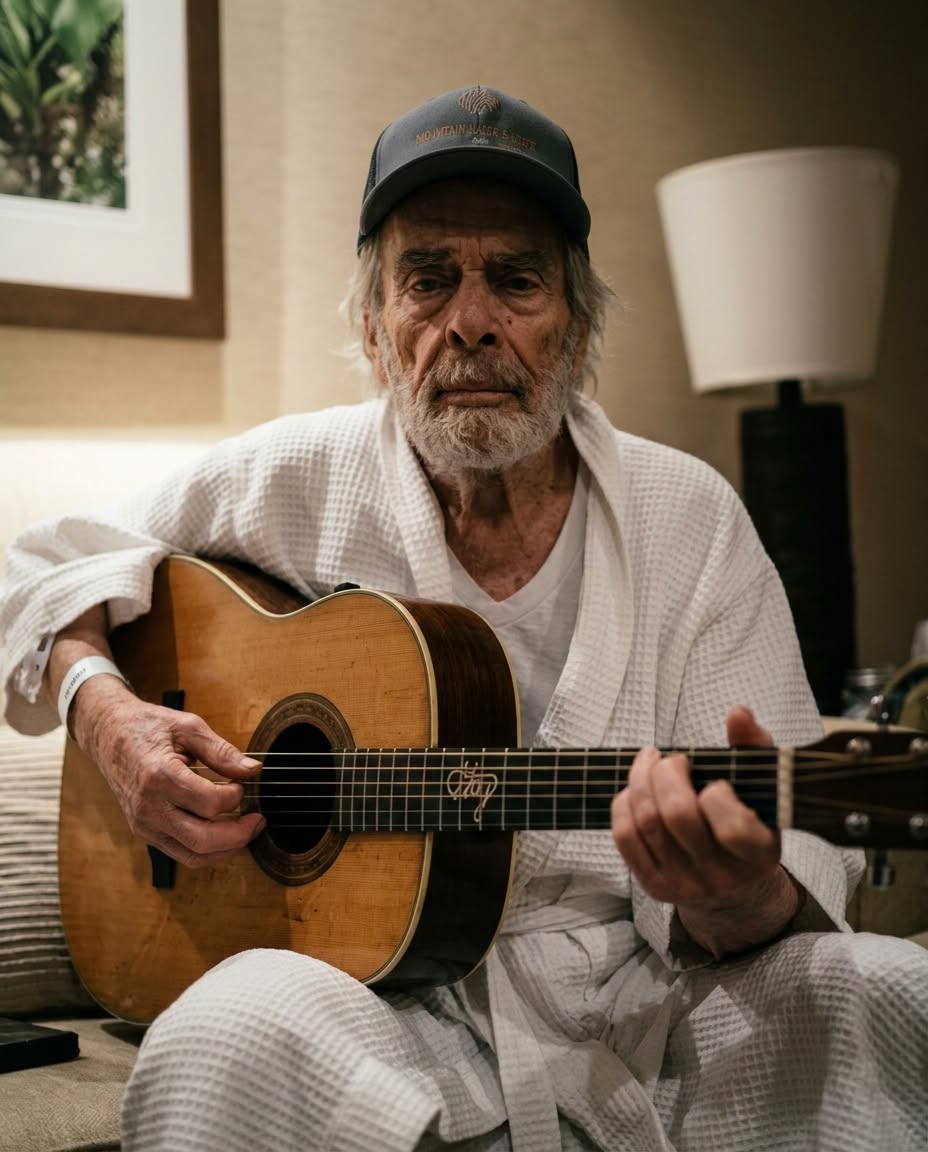
Merle Haggard’s Final Date in Palo Cedro
On April 6, 2016, at twenty minutes past nine in the morning, Merle Haggard died at his home in Palo Cedro, California, on the very day he was born seventy-nine years earlier. It was a quiet ending, but it felt like the last line of a life that had never been quiet for long.
Merle Haggard came into the world in a converted boxcar outside Bakersfield, California, after his parents had left Oklahoma and followed the Dust Bowl west. His childhood began in hard times, and it only got harder when his father died when Merle Haggard was nine. After that, the rules of ordinary boyhood seemed to slip away. Merle Haggard ran from reform school more than once, and for years his life kept drifting toward trouble before it ever found its footing.
The turning point came with a drunken burglary of a Bakersfield roadhouse that Merle Haggard and a friend believed was closed for the night. It was not closed. The arrest sent Merle Haggard to San Quentin, and that prison became one of the defining chapters of his life. Years later, Merle Haggard would turn that damaged past into songs that sounded honest because they were honest.
A Prison, a Song, and a Future
On New Year’s Day in 1958, Johnny Cash played San Quentin. Merle Haggard was in the audience. Merle Haggard later said that music was the only thing that kept him from making a career of crime. That moment matters because it shows how close Merle Haggard came to losing himself completely, and how close music came to saving him instead.
After parole in 1960, Merle Haggard began building a career that would become one of the great country music stories of the twentieth century. Over time, Merle Haggard earned 38 number one records and wrote songs about men who could not get out, which made sense coming from a man who barely had. In 1972, the governor of California pardoned Merle Haggard outright.
The Long Echo of a Difficult Life
What made Merle Haggard unforgettable was not only the success, but the tension underneath it. Merle Haggard sang about regret, labor, pride, and survival with a voice that carried dust and steel in equal measure. The music never sounded polished in a way that erased the wounds. Instead, it sounded like a man telling the truth as plainly as he could.
Merle Haggard got out of everything early.
That sentence fits his life in a way no slogan could. Merle Haggard got out of bad places early, out of institutions early, out of old mistakes through music, and, in the end, out of life itself on the exact day the story began. He served that last one in full.
Post navigation
Ronny Robbins was born in Nashville in 1949, and for a long time his life seemed to move in the shadow of a name everyone already knew. In the seventies, Columbia released a record under the title Columbia Records Presents Marty Robbins Jr. The joke, if anyone thought it was one, was right there on the front: the famous father got the spotlight, while the son was left to carry it.
That kind of burden can make a young singer disappear, or it can harden him. Ronny Robbins did a little of both. He was in his twenties when that record came out, and the name on the cover had already been famous for twenty years. The comparison was impossible to avoid. Still, Ronny Robbins kept moving, even when the world seemed more interested in the family story than in the person standing inside it.
His father, Marty Robbins, had become one of country music’s most recognizable voices. “El Paso” arrived in 1959 and became the song that people never quite forgot. It won a Grammy, and it helped define Marty Robbins as more than just a singer with a smooth voice. He was a storyteller, a personality, and a star who could make old-fashioned country feel bigger than the room it was playing in.
But the end came fast. Marty Robbins suffered a third heart attack on December 2, 1982, then went into bypass surgery and died six days later at age 57. Earlier that same year, he had made his last film appearance in Honkytonk Man, a Clint Eastwood movie about a country singer facing the end of the road. It is one of those details that feels almost too neat, except life rarely waits around for a cleaner script.
In 1984, Ronny Robbins was named Star of Tomorrow by The Nashville Network, a sign that people still saw something in him beyond inheritance. But he eventually stepped away from the stage. He did not quit because of tragedy. He quit because he did not like touring. That is a simple reason, and sometimes simple reasons are the truest ones.
By the late eighties, Ronny Robbins was running Marty Robbins Enterprises. The work was practical, even protective: guarding the name, guarding the likeness, and making sure both stayed out of the cheap merchandise churn that can swallow a legacy whole. He understood something about Nashville that many people only learn after years inside it. History can be selective. Sometimes it remembers only the parts that still sell.
Ronny Robbins was not trying to audition for history. He was trying to make sure history did not get lost.
That may be the quiet truth at the center of his story. Ronny Robbins was never just the son in the frame. He was the one left to carry the frame, clean it, and decide what belonged inside it. And when he still sings “El Paso” now and then on television, it does not feel like a performance chasing approval. It feels like a check-in with something durable. The song still carries. The name still carries. And so does the memory behind it.