MIRANDA LAMBERT HAD ALREADY SUNG HER TRIBUTE TO ALAN JACKSON. THEN GEORGE STRAIT WALKED OUT, AND SHE TURNED TO KAREN FAIRCHILD: “I CAN’T HANDLE THIS.” Miranda had performed “Dallas” earlier that night at Nissan Stadium, joining some of country music’s biggest names to honor Alan before the final full-length concert of his touring career. But the moment that overwhelmed her came later. Karen Fairchild of Little Big Town was standing beside Miranda when George Strait joined Alan onstage. The two legends began singing together, and Miranda quietly repeated: “I can’t handle this. I can’t handle it.” Then the tears came. Karen later estimated that Miranda cried about four times during the evening. She was not laughing at herself or trying to hide what the moment meant. She was watching two men whose songs helped shape country music stand beside each other during the closing night of an era. Miranda Lambert has performed in front of stadiums and lived through some of country music’s biggest nights. But that evening, she was not watching as a star. She was watching as a fan who understood that she might never see Alan Jackson and George Strait share a stage like that again. – Country Music
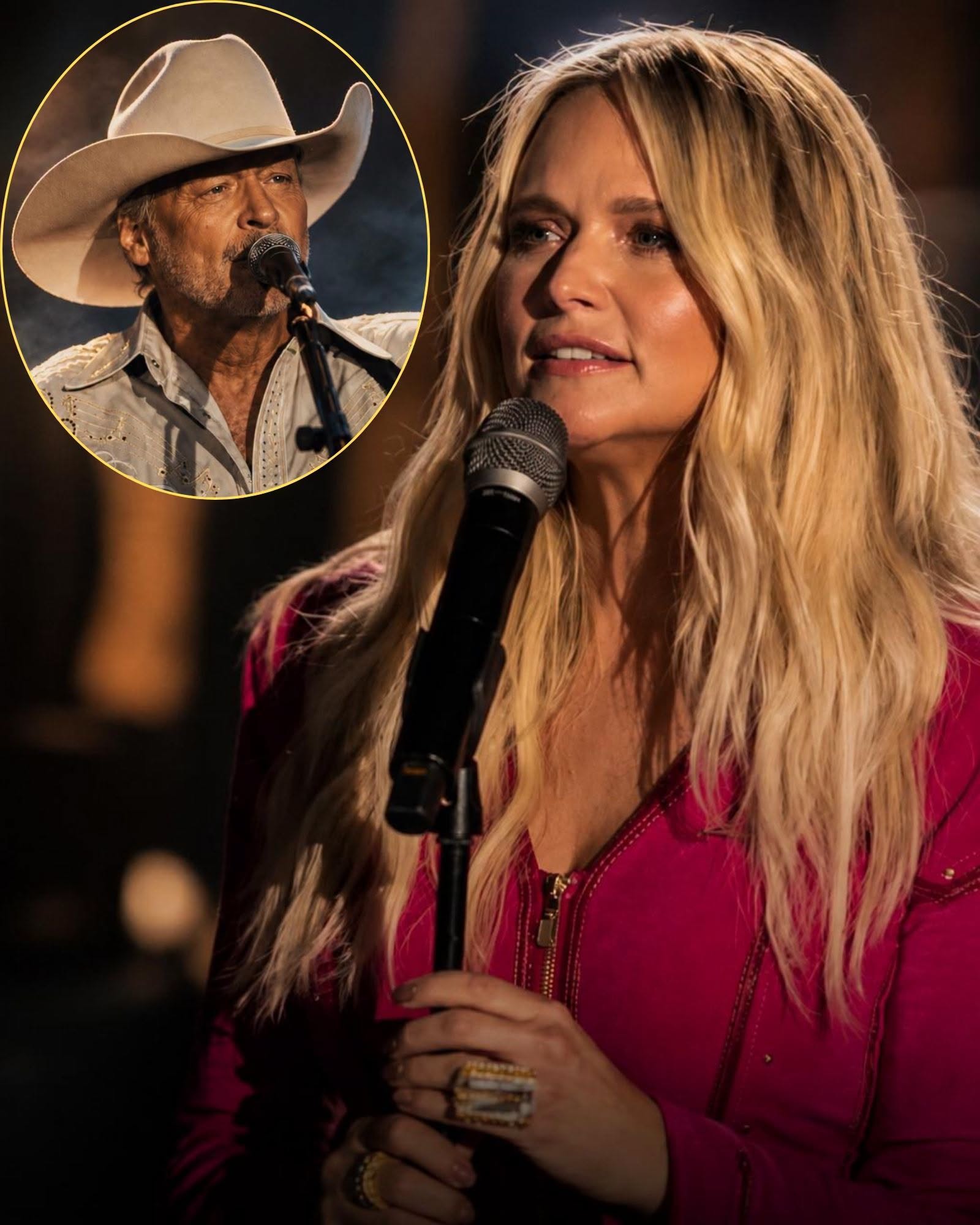
Miranda Lambert’s Tearful Night at Alan Jackson’s Final Nashville Show
Miranda Lambert had already done her part that night. She had stepped onto the stage at Nissan Stadium and sung “Dallas” as part of a star-filled tribute to Alan Jackson, helping salute the man whose songs shaped generations of country listeners. For a moment, it felt like she had already reached the emotional peak of the evening. Then George Strait walked out.
Alan Jackson’s final full-length touring concert, billed as Last Call: One More for the Road — The Finale, took place in Nashville on June 27, 2026, and it drew some of the biggest names in country music. The night was built around gratitude, memory, and the kind of respect that only comes when one era is quietly coming to a close. Miranda Lambert was there not just as a star, but as someone who had clearly come to witness something rare.
When George Strait joined Alan Jackson onstage, the mood shifted. Two legends stood together, singing in front of a crowd that understood exactly what it was seeing. Karen Fairchild of Little Big Town was beside Miranda Lambert at the time, and Miranda Lambert turned to her and admitted what everyone around her could feel: “I can’t handle this.”
She said it again, almost as if the words themselves were not enough to contain the moment. Then the tears came.
Karen Fairchild later said Miranda Lambert cried several times during the evening, a detail that says less about weakness and more about honesty. Miranda Lambert was not trying to play the role of the tough veteran who has seen everything. She was watching two men whose songs had helped define modern country music stand side by side on a night that already carried the weight of farewell.
A fan in the middle of history
Miranda Lambert has performed in stadiums, headlined major tours, and spent years living inside the machinery of country stardom. But some nights cut through the polish. This was one of them. The image of Alan Jackson and George Strait sharing the stage was powerful not because it was flashy, but because it felt final in a way that fans rarely get to experience.
For Miranda Lambert, the tears seemed to come from recognition. She was seeing not only two icons, but also the closing of a chapter that had influenced her own career. That kind of moment can strip away the distance between performer and audience. Suddenly, Miranda Lambert was not the one being watched. She was simply someone in the crowd, overwhelmed by the sight of history unfolding in real time.
“I can’t handle this.”
It was a small line, but it carried the whole feeling of the night. Some concerts entertain. Some concerts impress. Every once in a while, a concert becomes a shared memory. Alan Jackson’s final Nashville show was that kind of night, and Miranda Lambert’s reaction made it feel even more human.
By the end, the tears were not the story because they were dramatic. They were the story because they were sincere. Miranda Lambert did what so many fans would have done in that same stadium: she looked up, watched the legends sing, and let the moment hit her all at once.
Post navigation
Chiseled in Stone Was Never a No. 1 Hit, but It Became Something Harder to Shake
“Chiseled in Stone” never reached No. 1. It stalled at No. 6 in 1988, which is exactly why some people still bring it up like a quiet argument waiting to happen. In country music, chart position can tell one story, but it does not always tell the whole one.
The first thing listeners hear is a man in pain. He is drinking, complaining, and sounding like someone who expects the room to agree with him. That is where a lesser song would stop. Vern Gosdin did not stop there. He let the sorrow hang in the air, then turned the whole thing over with one of the sharpest reminders in country songwriting: some heartbreak is bigger than wounded pride.
That turn is what made the song last. The narrator’s self-pity is not treated as wisdom. It is exposed. An older stranger steps in with the kind of hard-earned truth that only life, loss, and time can deliver. By the end, the song is no longer about a man feeling sorry for himself. It is about perspective, grief, and the way real sorrow changes the room around it.
Why Vern Gosdin’s Voice Mattered
Vern Gosdin never sang “Chiseled in Stone” like a man trying to impress anybody. He sang it low and worn, almost like he knew the song would land better if he did not push it. That restraint gave the record its power. It sounded less like a performance and more like a confession somebody could not take back.
That is why admirers still point to the song when they talk about Vern Gosdin’s greatness. Jamey Johnson once summed up that feeling plainly: if anyone wants to know whether Vern Gosdin was really that good, they can listen to “Chiseled in Stone.”
Even now, listeners describe the same reaction in different words. A bar. A father. A funeral. A memory they had not expected to reopen. That is the strange strength of a song like this: it does not just entertain people. It finds the places they already carry.
In 1989, the Country Music Association named “Chiseled in Stone” Song of the Year. That mattered, not because it changed the chart history, but because it confirmed what many fans already knew. Some songs arrive loudly. Others arrive honestly. The second kind often lasts longer.
What Would You Say to the Doubters?
To people who say old country has not aged well, the honest answer is simple: it depends on what you wanted from it in the first place. If you only wanted polish, maybe this song feels rough. If you wanted truth, it still cuts deep.
“Chiseled in Stone” was never built to be flashy. It was built to tell the truth about regret, loss, and the difference between feeling broken and being truly broken. That is not a dated idea. That is human. And human stories do not expire just because the radio moved on.