MARTY ROBBINS HIT A CONCRETE WALL AT NEARLY 160 MPH TO KEEP FROM CRASHING INTO ANOTHER DRIVER. SIX DAYS LATER, HE WAS BACK ON THE GRAND OLE OPRY STAGE. October 6, 1974. Charlotte Motor Speedway. A crash ahead of Marty Robbins had left several cars blocking the track. Richard Childress’ car sat sideways directly in his path. Marty was approaching at nearly 160 miles per hour. He had only seconds to choose. Hit Childress broadside—or turn into the concrete wall. Marty turned the wheel. His No. 42 Dodge slammed into the wall. The impact left him with broken ribs, a broken tailbone, facial injuries and dozens of stitches. Childress later said he believed Marty’s decision had saved his life. Most people would have disappeared for weeks. Marty Robbins waited six days. On October 12, he returned to the Grand Ole Opry House and hosted the final half hour of the Saturday-night show. His face still carried the evidence of Charlotte, but his humor had survived with him. He joked that movie stars left their handprints in wet cement. He had decided to leave his face in a wall that was already dry. Country fans knew Marty as the voice behind “El Paso.” That night, they saw the race-car driver beneath the rhinestone suit—a man who had chosen the wall rather than risk another man’s life, then returned to sing before the bruises had even faded. – Country Music
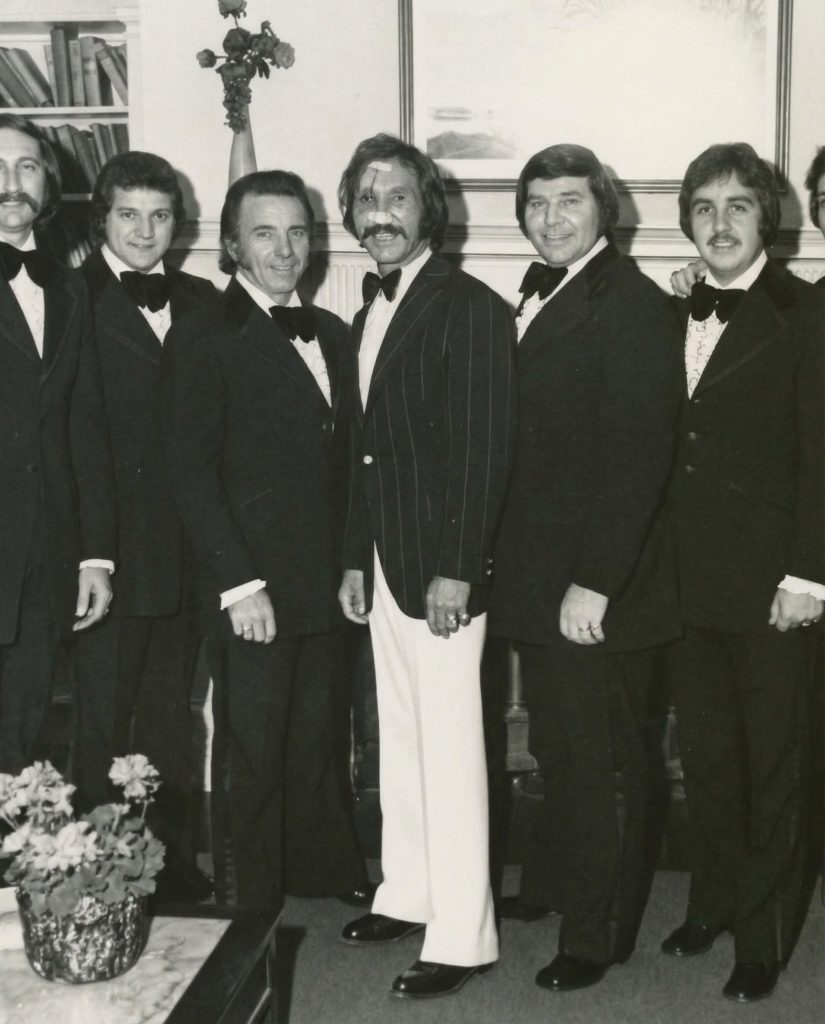
On October 6, 1974, at Charlotte Motor Speedway, Marty Robbins found himself in the kind of split-second moment every driver fears. A crash ahead had left cars scattered across the track, and Richard Childress was stopped sideways in his path. Robbins was closing fast, and there was no time for hesitation.
He made a choice that would become part of racing history. Instead of striking Childress broadside, Marty Robbins turned his car into the concrete wall. The impact was violent, and the damage to his body was serious. He suffered broken ribs, a broken tailbone, facial injuries, and dozens of stitches. Yet the move likely spared another driver from a far worse outcome.
That was the side of Marty Robbins many fans never saw first. They knew the singer with the rich voice, the man behind “El Paso” and a long list of country classics. But he was also a racer who treated danger with a strange mix of courage, stubbornness, and calm. He did not race like a celebrity playing a hobby. He raced like someone who understood the risks and accepted them.
The story might have ended there, with an ambulance ride, a painful recovery, and weeks away from the public eye. Instead, Marty Robbins surprised everyone again.
Just six days later, on October 12, 1974, he returned to the Grand Ole Opry House and hosted the final half hour of the Saturday-night show. His face still showed the marks of the crash, but his attitude had not changed. He joked with the audience, carrying himself with the same easy humor that had long made him such a memorable performer.
There was something deeply human about that moment. Marty Robbins did not arrive as a larger-than-life legend trying to appear untouchable. He came back as a man who had been hurt, had kept going, and had chosen to meet the crowd with a smile anyway.
Country music fans remember Marty Robbins for his songs. Race fans remember him for a moment of quick judgment that may have saved a life. In both worlds, he left behind the same impression: a man who faced danger head-on and still found his way back to the stage.
That October week captured something rare. Marty Robbins was not only a star in rhinestones and spotlight. He was also a driver who chose the wall over another human being, then returned to sing before the bruises had even faded. It was the kind of story that sounded almost unreal, except that it happened exactly as it did.
Post navigation
Long before the awards, the hit records, and the quiet recognition of history, Johnny Rodriguez was just a teenager with a strong voice and very little certainty about where life was taking him. He did not arrive in Nashville with a polished image or a powerful manager. He arrived after singing in a Texas jail, then working for tourists at Alamo Village, the movie set built for John Wayne’s The Alamo. It was an unlikely beginning, but it was real, and it changed everything.
From a jail cell to a tourist stop
Johnny Rodriguez was about 18 when a Texas Ranger heard him sing while he was in jail in Texas. The story sounds almost too dramatic to believe, but that moment led to an introduction to promoter Happy Shahan, who offered the young singer work entertaining visitors at Alamo Village. There, Johnny Rodriguez performed country songs for tourists in a place designed to look like the Old West, even though he still had no record deal and no Nashville connection.
What made Johnny Rodriguez stand out was not only his voice. It was also the fact that he was a Mexican American teenager singing country music in a world that was not always ready for him. He did not hide his heritage, and he did not try to smooth away his Spanish accent. That honesty would become part of his power.
The break that brought him to Nashville
Tom T. Hall eventually heard Johnny Rodriguez and recognized something special. Hall brought him to Nashville and gave him work singing with his band. That was the turning point. Johnny Rodriguez was no longer just a local performer in a tourist attraction; he was now entering the center of country music.
In 1972, at age 21, Johnny Rodriguez signed with Mercury Records. His first single, “Pass Me By (If You’re Only Passing Through),” became a country hit and reached the Top 10. For a young artist who had started with almost nothing, that kind of success was more than encouraging. It was proof that listeners were ready to hear his voice.
A first major award, and a bigger meaning
The following year, the Academy of Country Music named Johnny Rodriguez Most Promising Male Vocalist. That was his first major award, and it came only about three years after those early paid performances at Alamo Village. The timeline is part of what makes his rise so striking: a few years earlier he was singing for tourists, and now he was being recognized by one of country music’s major institutions.
Johnny Rodriguez’s first award was not just about promise. It marked a wider change in who country music could include, and who could be heard without apology.
His success did not erase the obstacles he faced, but it did challenge them. Johnny Rodriguez became one of the first major Mexican American stars in country music, and he did it by sounding like himself. That was his quiet revolution. The award confirmed what his early performances had already suggested: a young singer from Texas had found a way into Nashville, and in doing so, he helped open a door for others to follow.