LESS THAN SIX YEARS AFTER RCA RELEASED HIS FIRST RECORDS WITHOUT A PUBLICITY PHOTO, CHARLEY PRIDE WAS NAMED COUNTRY MUSIC’S ENTERTAINER OF THE YEAR. When Charley Pride began recording for RCA in 1966, the label knew his voice could sell country records. What it did not know was how country radio would react when people learned that the singer was Black. His first singles were therefore released without publicity photographs. Many listeners heard the warm baritone before they ever saw the man behind it. By the time Pride’s third single reached the Top 10, the secret could no longer be kept. Charley did not ask audiences to forget his race. He simply walked onstage, acknowledged their surprise and began singing. The silence usually disappeared as soon as they heard the voice they already knew from the radio. Then came 1971. Pride was no longer an experiment Nashville was cautiously protecting. He was one of country music’s biggest stars. That year, the Country Music Association named him Male Vocalist of the Year and Entertainer of the Year—the award decided not by what someone had accomplished over a lifetime, but by who stood at the top of country music at that moment. The son of Mississippi sharecroppers had worked in a Montana smelting plant and chased a baseball career before Nashville gave him a chance. Now the same industry that once feared showing his face was placing its highest competitive honor in his hands. Charley Pride did more than open a door that night. He stood in the center of the room and proved he had already earned his place there. – Country Music
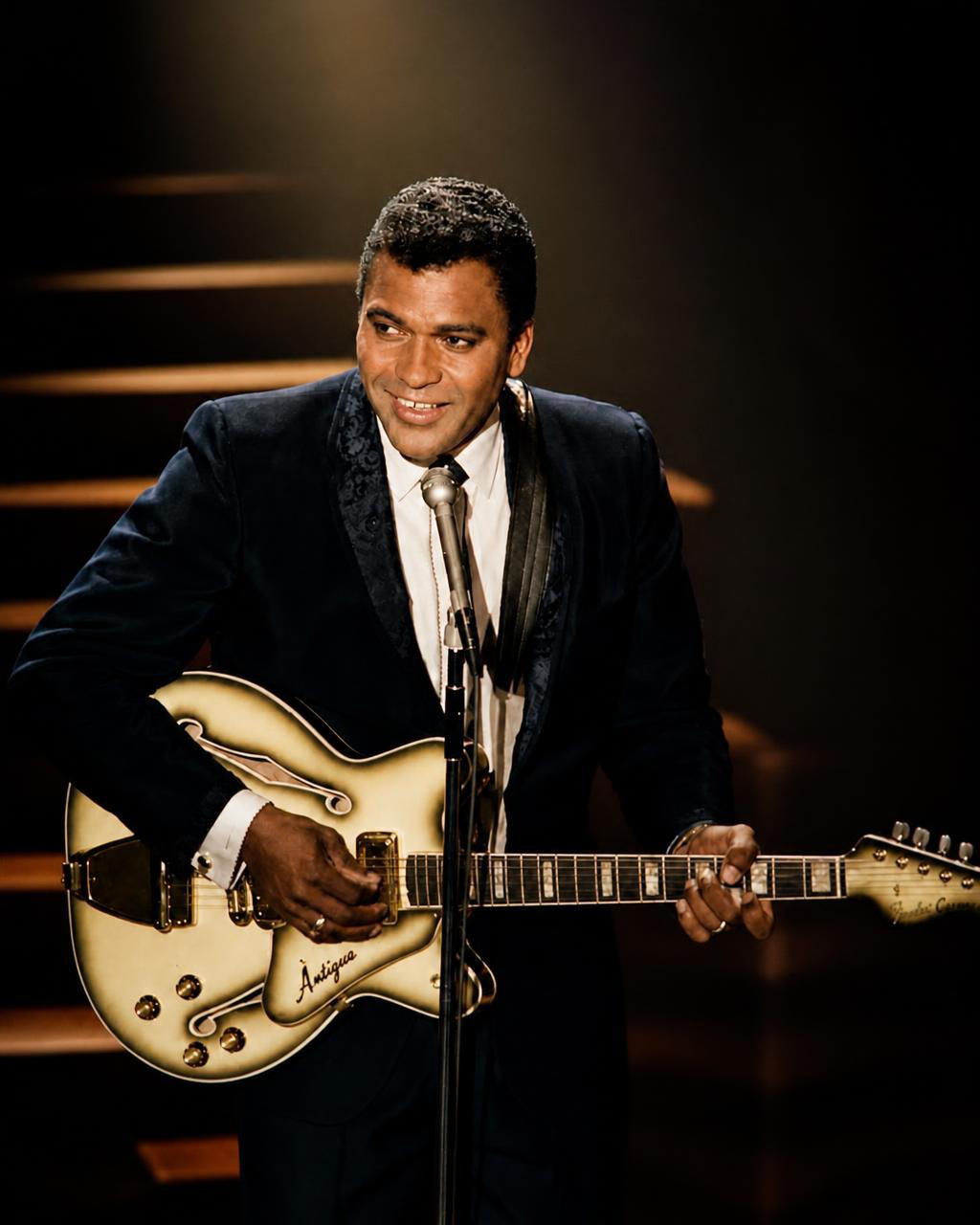
Charley Pride and the Year Country Music Finally Said His Name
When Charley Pride first began recording for RCA in 1966, the label understood one thing very clearly: Charley Pride had a voice that could sell records. What the label did not know was how country radio would react once listeners learned that the singer behind that warm baritone was Black.
So the first releases came out without publicity photographs. For many fans, the voice arrived first and the face came later. That choice protected Charley Pride at a moment when Nashville was still unsure how to present him to the country audience. But it also created a quiet kind of suspense. The songs were doing the work, and the name was spreading faster than anyone expected.
By the time “Just Between You and Me” climbed into the country Top 10, the secret could no longer be kept. Some listeners had already fallen in love with the music before they saw the man singing it. When they did see him, Charley Pride met the moment with calm dignity. He did not turn the surprise into a speech. He simply stepped onstage, acknowledged the room, and began to sing. The reaction often changed almost immediately.
That steady confidence came from a life that had already tested him. Charley Pride had grown up in Mississippi, worked in a Montana smelting plant, and even chased a baseball career before Nashville offered him a different future. By the end of the 1960s, he was no longer an experiment. He was becoming one of country music’s biggest stars.
Then came 1971.
That year, the Country Music Association named Charley Pride Male Vocalist of the Year and Entertainer of the Year. It was a striking milestone for any artist, but especially for a singer who had once been released to the public without a photo because the industry was afraid of how people might respond.
The contrast was powerful. The same business that had once hidden Charley Pride’s image was now placing one of its highest honors in his hands. His success was not symbolic in a shallow sense. It was built on hit records, touring, and the kind of audience loyalty that cannot be manufactured. Charley Pride earned his place by doing what he always did best: singing with honesty, strength, and grace.
Charley Pride did more than open a door. He stood in the center of the room and made it clear that he had already belonged there all along.
In that sense, 1971 was not just a career peak. It was a correction. Country music finally honored the artist it had already been listening to for years.
Post navigation
On July 5, 2003, Johnny Cash arrived at the Carter Family Fold in Hiltons, Virginia, carrying more than a lifetime of songs. He was 71, grieving, and visibly frail. Seven weeks earlier, June Carter Cash had died, and the loss still hung over him like a shadow. But he still came to sing.
People in the room remembered a quiet determination in him. Pat Jones, a resident of Hiltons, later recalled that Johnny Cash insisted on walking into the Fold that night, even though he needed help. Two men assisted him to the chair waiting beneath the microphone. It was a small moment, but it said everything about his resolve.
When he spoke, he gave the crowd the words they had known for decades: “Hello, I’m Johnny Cash.” The room answered with love. Then he sang for about thirty minutes, leaning on the same voice that had carried him through heartbreak, fame, faith, and reinvention. This was not a grand comeback. It was something more intimate: a final act of devotion.
A Performance Shaped by Love and Loss
Before singing “Ring of Fire,” Johnny Cash spoke about June Carter Cash and said her spirit was with him, giving him courage. That moment gave the performance its emotional center. This was not just a concert. It was a conversation with memory.
June’s cousin, Janette Carter, helped soften the sadness with a line June had once used: “Johnny Cash was already plugged in when she met him.” The audience responded with laughter, tears, and applause. It was the kind of room where grief and humor could sit beside each other without contradiction.
Johnny Cash also performed “Understand Your Man,” a song he had not sung live in twenty-five years. That detail made the moment feel even more remarkable. The crowd did not know they were witnessing his final public performance, and Johnny Cash did not announce it that way. He simply sang.
The End of an Unplanned Farewell
The set ended, and the night moved on like any other show at the Fold, except that it was not ordinary at all. It would become known as Johnny Cash’s last public performance. Sixty-nine days later, he died on September 12, 2003.
Looking back, the July 5 performance feels like a closing chapter written in real time: a man in pain, still choosing music; a husband still singing toward the woman he loved; an artist refusing to let frailty have the final word.
Some nights do not feel historic while they are happening. They become historic because of the heart that carried them.
At the Carter Family Fold, Johnny Cash gave one last gift to the audience and to June Carter Cash. It was not perfect, polished, or easy. It was honest. And sometimes that is what lasts the longest.