LORETTA LYNN WROTE 9 VERSES ABOUT HER CHILDHOOD IN ONE SITTING — THEN HAD TO CUT 3 BECAUSE THE SONG WAS TOO LONG. WHAT REMAINED BECAME THE MOST AUTOBIOGRAPHICAL HIT IN COUNTRY HISTORY AND MADE HER MOTHER’S BLEEDING HANDS IMMORTAL. Loretta Lynn didn’t plan to write her life story. She just sat down in 1969 and started with the truth: “Well, I was borned a coal miner’s daughter.” Nine verses poured out — the cabin in Butcher Hollow, her daddy shoveling coal, her mommy’s fingers bleeding on the washboard, reading the Bible by coal-oil light, going barefoot because their shoes had holes stuffed with pasteboard that fell out halfway to school. She had to cut three verses because the song was too long. “After it was done, the rhymes weren’t so important,” she wrote. What mattered was that every word was real. Her mother Clara had named her after Loretta Young — picked from a movie magazine pasted on the cabin wall the night before she was born. The same Clara who once told her children Santa couldn’t come because the snow was too deep, then drew a checkerboard and used white and yellow corn for pieces. “Coal Miner’s Daughter” hit No. 1 in 1970. The Library of Congress added it to the National Recording Registry. It became a book, then an Oscar-winning film. Loretta once said: “I didn’t think anybody’d be interested in my life.” But she also said the song changed how people saw her — “It told everybody that I could write about something else besides marriage problems.” So what were the three verses she had to leave behind — and what part of Butcher Hollow was too painful even for Loretta Lynn to sing out loud? – Country Music
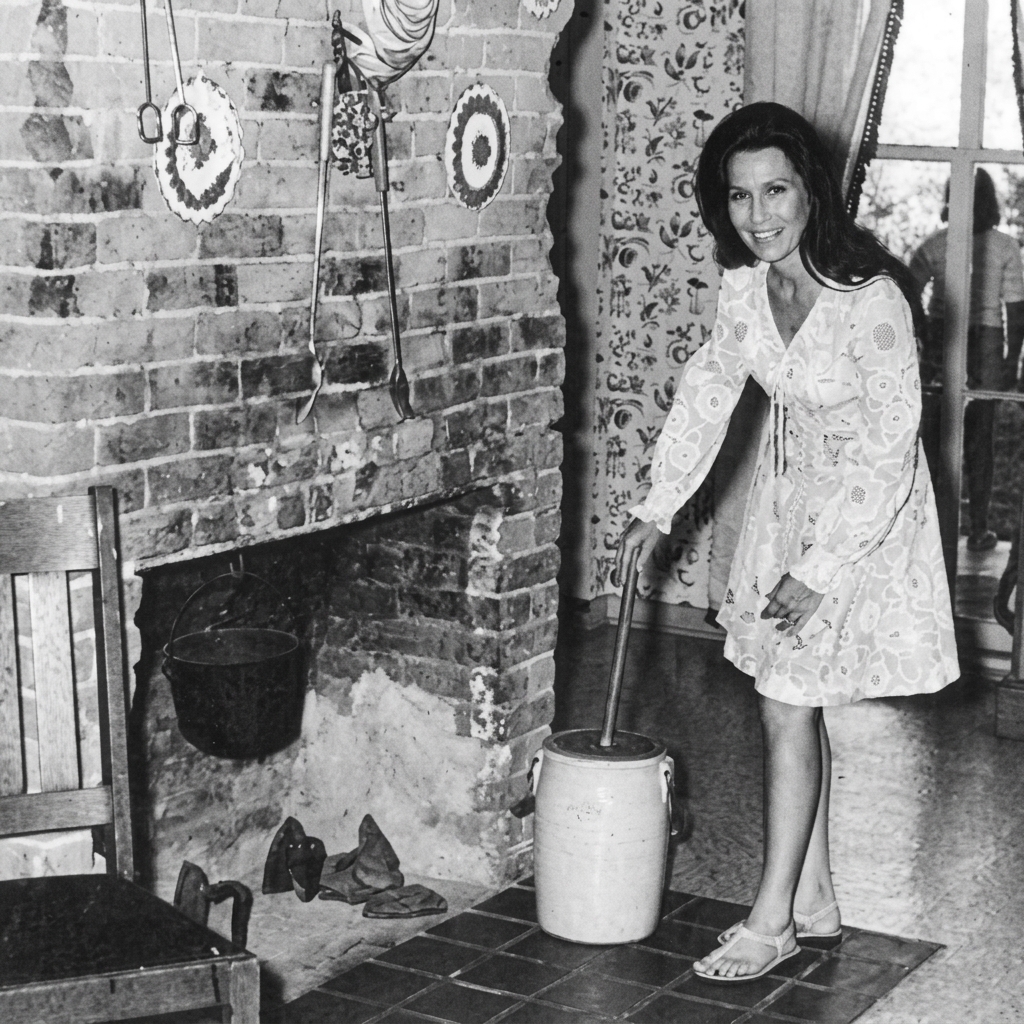
Loretta Lynn Wrote Her Childhood in a Rush of Memory — and Turned Poverty Into Country Music History
There are songs that sound true, and then there are songs that are true. When Loretta Lynn sat down in 1969 to write what would become “Coal Miner’s Daughter,” Loretta Lynn was not trying to build a legend. Loretta Lynn was reaching backward into memory, pulling out the images that had never really left: the cabin in Butcher Hollow, the smell of coal dust, the ache of hunger, the glow of a coal-oil lamp, and the sight of Clara’s hands worn raw from washing clothes.
It began with one plain, unforgettable line: “Well, I was borned a coal miner’s daughter.” From there, the song came fast. Loretta Lynn later said that nine verses poured out in one sitting. The rhymes did not matter as much as the feeling. The polish did not matter as much as the truth. What mattered was that every line carried the weight of a real childhood, one lived far from glamour and long before fame ever found its way to Kentucky.
The story Loretta Lynn told in those original verses was bigger than the final recording. There was simply too much life in it. Too many details. Too many small heartbreaks that, stitched together, formed the world that raised Loretta Lynn.
There was the one-room cabin in Butcher Hollow, where George Webb worked long days in the mines and came home exhausted, bringing in what little money he could. There was Clara, steady and inventive, doing everything possible to stretch almost nothing into enough. There were children running barefoot because shoes wore out faster than a poor family could replace them. There were holes stuffed with pasteboard. There was a Bible read by dim light after dark. There was the hard kind of laughter families learn when they cannot afford the luxury of falling apart.
Loretta Lynn wrote all of it with the eye of someone who had not forgotten a single texture. Not the cold. Not the dust. Not the weariness. And not the tenderness either.
Clara’s Hands Never Left the Song
If one image from “Coal Miner’s Daughter” has survived more vividly than almost any other, it is the one Loretta Lynn gave her mother: “We were poor, but we had love / That’s the one thing that Daddy made sure of / He shoveled coal to make a poor man’s dollar / My mommy rocked the babies at night / And read the Bible by the coal-oil light / And everything would start all over come break of morn.”
But behind those graceful lines was a harsher picture. Clara’s fingers bled on the washboard. That detail mattered because it was not decorative. It was not written to make the song sound more dramatic. It was written because Loretta Lynn had seen it. In a song full of memory, that image became almost sacred. It turned her mother’s labor into something permanent. Long after the clothes were washed and the years had passed, the world would remember those hands.
Clara also gave the family more than physical care. Clara gave imagination to children who had very little. One winter, when money was tight and expectations had to be softened gently, Clara told the children Santa could not make it because the snow was too deep. Then Clara drew a checkerboard and used white and yellow corn for the pieces. It was the kind of small act that reveals a whole person: practical, loving, proud, and unwilling to let deprivation have the final word.
The Verses That Never Made the Record
Loretta Lynn had to cut three verses because the song was too long. That fact says something important about “Coal Miner’s Daughter.” Even in its finished form, the song feels rich with detail. So imagine how much more Loretta Lynn carried in the first draft.
Those missing verses have always invited curiosity because they represent the private edge of an already personal song. Maybe they held more hardship. Maybe they named moments too specific, too bruised, too close to the bone. Maybe they slowed the song down in a way radio could not afford. Whatever they contained, Loretta Lynn made the hard choice every songwriter eventually faces: to protect the song, even if it meant trimming part of the story.
And yet the mystery of those missing verses only deepens the power of what remained. You can feel, while listening, that the song comes from a larger river of memory than the recording could contain. The finished hit is not the whole childhood. It is the part Loretta Lynn could carry into the world and still call a song.
The Song That Changed Everything
When “Coal Miner’s Daughter” reached No. 1 in 1970, it did more than become a country hit. It changed the way people saw Loretta Lynn. Until then, many listeners knew Loretta Lynn for sharp, honest songs about marriage, heartache, and womanhood. But this one opened a different door. It showed that Loretta Lynn could take autobiography and turn it into something universal without smoothing out its rough edges.
Loretta Lynn once said that she did not think anybody would be interested in her life. That may be the most revealing part of the whole story. Because the reason people cared was not that Loretta Lynn came from poverty. It was that Loretta Lynn wrote about it without self-pity, without grand speeches, and without pretending that hardship erased love. That balance is what made the song endure.
From there, “Coal Miner’s Daughter” became more than a record. It became a book. It became a film. It became one of the defining self-portraits in American music. What started as nine verses written in a burst of memory became a cultural landmark.
What Butcher Hollow Still Holds
Maybe the most haunting question is not only what Loretta Lynn cut, but what Loretta Lynn never wrote down at all. Every childhood has rooms that stay closed, even in the most honest telling. Every family has griefs that are easier to circle than to name directly. Perhaps Butcher Hollow held memories too tangled for melody, too private for radio, too painful to sing plainly.
But even with those silences, Loretta Lynn gave the world something rare: a life story told from the inside, in the language of someone who had lived every inch of it. “Coal Miner’s Daughter” did not become immortal because it was polished. It became immortal because it remembered. And in remembering, Loretta Lynn made sure the people who shaped that life — George Webb, Clara, the children, the cabin, the lamp, the bleeding hands — would never disappear.
Post navigation
Johnny Cash once said there was no greater country singer than Marty Robbins.
That is the kind of sentence that becomes part of history. Marty Robbins had everything a country artist could dream of: more than 500 recorded songs, two Grammy Awards, crossover success, and a voice that could sound tough, lonely, tender, and dangerous all in the same verse.
Marty Robbins sang about gunfighters, heartbreak, highways, and regrets. Songs like “El Paso”, “Big Iron”, and “A White Sport Coat” did more than become hits. They became part of American culture.
Then, on December 8, 1982, Marty Robbins died after years of heart trouble. He was 57 years old.
Nashville stopped for a moment. There were tributes, speeches, headlines, and old records playing on the radio. People talked about the loss of a legend.
Then, like Nashville always does, it moved on.
One person never could.
The Son Who Inherited More Than a Name
Ronny Robbins had spent most of his life being introduced as Marty Robbins’ son.
Even before Marty Robbins died, the music business had already decided who Ronny Robbins was supposed to be. Columbia Records signed him, but not simply as Ronny Robbins. The label promoted him as “Marty Robbins Jr.”
It sounded like a compliment. In reality, it became a trap.
Every stage Ronny Robbins walked onto came with impossible expectations. People did not want to hear who Ronny Robbins was. They wanted to hear echoes. They wanted Marty Robbins’ face, Marty Robbins’ voice, Marty Robbins’ songs.
And the hardest part was that Ronny Robbins really did sound like Marty Robbins.
Close your eyes during one of his performances and you can hear it immediately. The same smooth phrasing. The same deep warmth. The same way the voice rises slightly at the end of a line before breaking your heart.
For most artists, sounding that good would be a gift.
For Ronny Robbins, it meant spending a lifetime being compared to a ghost.
When the Dream Became a Duty
By the 1980s, Ronny Robbins quietly stepped away from chasing stardom.
There were no big Nashville comeback campaigns. No desperate reinventions. No public complaints.
Instead, Ronny Robbins took over Marty Robbins Enterprises and dedicated himself to preserving everything his father had built.
He organized the business. He protected the songs. He made sure the records stayed available. He kept Marty Robbins’ name alive long after Nashville had moved on to newer stars.
And when he performed, he often sang the songs people loved most.
Small theaters. County fairs. Tribute nights. Rooms full of people who had grown up with Marty Robbins playing on the radio.
When Ronny Robbins sang “El Paso”, something strange would happen.
The room would go quiet.
People would close their eyes. Some would smile. Some would cry. For three minutes, it felt as if time had folded in on itself and Marty Robbins had somehow stepped back onto the stage.
Ronny Robbins never tried to outshine Marty Robbins. Ronny Robbins simply carried Marty Robbins.
That may sound noble. It probably was.
But it also came with a cost.
The Shadow Nobody Talks About
There is something lonely about spending your life protecting someone else’s legacy.
Especially when that someone else is your father.
For more than forty years, Ronny Robbins lived in the space between being himself and being what the world wanted him to be. He had the same last name. He had the same voice. He even had his own talent.
But every interview came back to Marty Robbins. Every audience wanted the old songs. Every article treated Ronny Robbins like a footnote to someone else’s story.
Nashville loves legends. Nashville loves nostalgia. What Nashville does not always know how to do is make room for the children of legends.
Ronny Robbins was never rebellious enough to reject Marty Robbins. He loved his father too much for that.
So he carried the shadow.
Year after year.
Stage after stage.
Song after song.
Then “Big Iron” Found a New Life
In 2010, something unexpected happened.
A video game called Fallout: New Vegas introduced millions of younger players to Marty Robbins’ 1959 song “Big Iron.”
Suddenly, people who had never heard of Marty Robbins were searching for the song online. They shared the lyrics. They made videos. They played it again and again.
For a new generation, Marty Robbins was no longer an old country singer their grandparents loved. Marty Robbins was cool again.
And that did not happen by accident.
It happened because for decades, while everyone else moved on, Ronny Robbins never did.
Ronny Robbins kept the recordings alive. Ronny Robbins protected the rights. Ronny Robbins kept the memory going long enough for the world to find Marty Robbins again.
People know the name Marty Robbins.
But maybe the reason they still know it is because one man spent his whole life making sure they never forgot.
And Nashville still never learned his first name.