IN 1951, A 23-YEAR-OLD KID PUT 4 SONGS IN THE COUNTRY TOP 10 AT THE SAME TIME — NO ONE HAD EVER DONE THAT BEFORE, AND NO ONE WOULD AGAIN UNTIL THE BEATLES IN 1964. His name was Lefty Frizzell. And the man sitting on top of country music when Lefty showed up was Hank Williams. They even toured together that April — handbills called them “Kings of the Honky Tonks.” But behind that billing, Lefty was quietly taking Hank’s spots on the chart. “I Want to Be with You Always” sat at number one for 11 weeks. “Always Late (With Your Kisses)” held it for 12 more. So what did Hank do when this kid from Texas started pushing him aside? He wrote “Cold, Cold Heart.” He wrote “Hey, Good Lookin’.” He wrote “I’m Sorry for You, My Friend” — a song Lefty always claimed Hank wrote about him. The pressure didn’t break Hank Williams. It pushed him into the most prolific stretch of songwriting in his short life. – Country Music
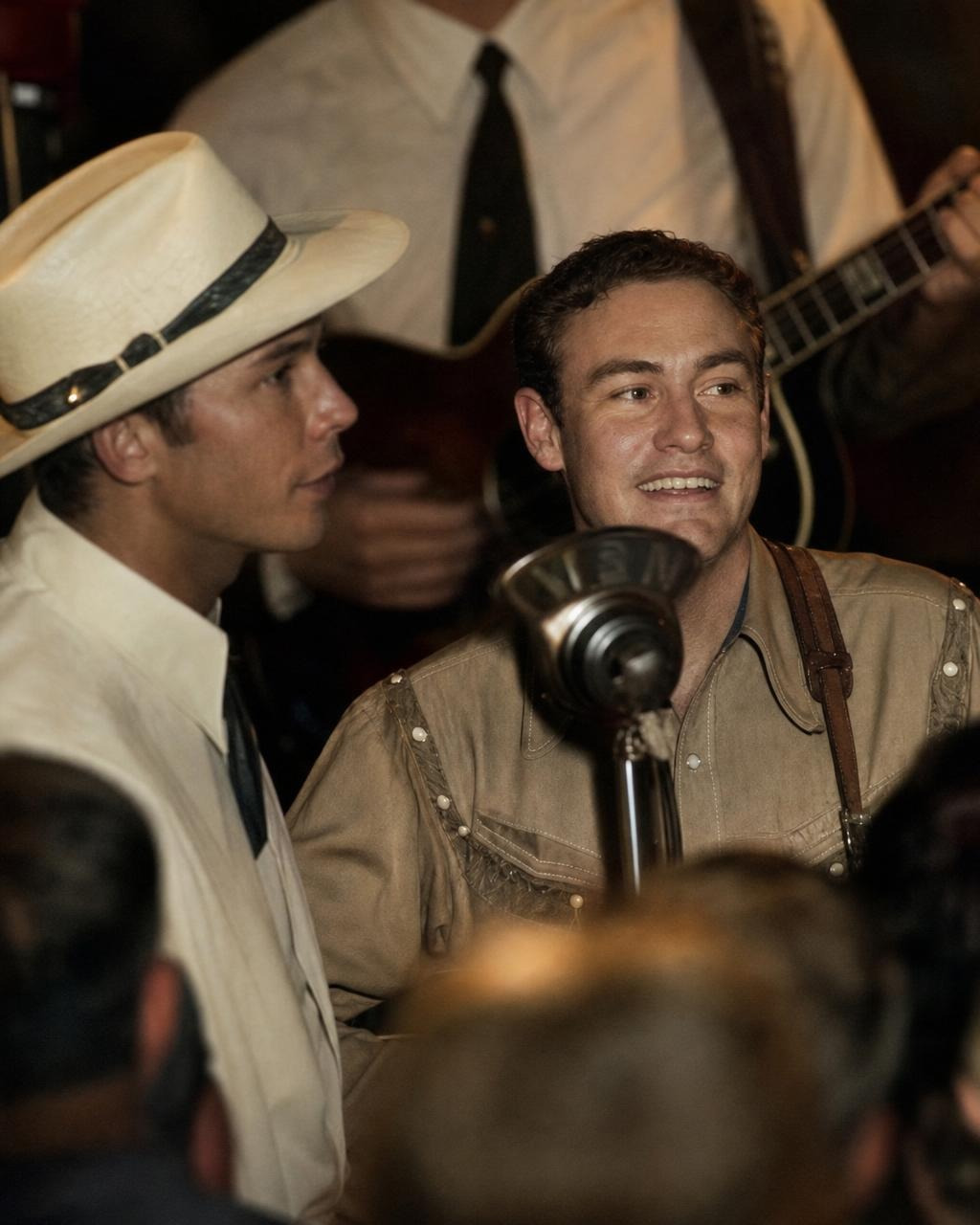
How Lefty Frizzell Pushed Hank Williams Into One of Country Music’s Most Intense Creative Moments
In 1951, country music was changing fast, and one young singer from Texas stepped right into the center of it. His name was Lefty Frizzell, and at just 23 years old, he did something no artist had done before: he placed four songs in the country Top 10 at the same time. It would not happen again until The Beatles in 1964.
That kind of success was not supposed to happen so quickly. Lefty Frizzell had a voice that sounded effortless, smooth, and deeply personal, and listeners connected with it immediately. His songs did not just climb the charts; they stayed there. “I Want to Be with You Always” sat at number one for 11 weeks, and “Always Late (With Your Kisses)” followed with 12 more weeks at the top. For a young singer, it was an extraordinary run.
The King of Country Was Already There
At the time, the man sitting on top of country music was Hank Williams. He was already a giant, and his songs had helped define the sound of the era. In April 1951, Lefty Frizzell and Hank Williams even toured together. Handbills promoted them as the “Kings of the Honky Tonks,” a title that sounded perfect for two artists carrying so much weight in the genre.
But behind the bright billing and packed shows, something else was happening. Lefty Frizzell was quietly moving into Hank Williams’ territory on the charts. The younger singer was not chasing Hank Williams with anger or open competition. He was simply singing songs that audiences could not stop playing.
“I Want to Be with You Always” and “Always Late (With Your Kisses)” did more than become hits. They signaled a shift in country music’s center of gravity.
So what did Hank Williams do when this kid from Texas started pushing him aside? He went back to work, and he wrote some of the strongest songs of his life. Among them were “Cold, Cold Heart”, “Hey, Good Lookin’”, and “I’m Sorry for You, My Friend”.
That last song carried a special layer of legend. Lefty Frizzell always claimed Hank Williams wrote it about him, a sign that the rivalry between the two singers had become part of country music folklore. Whether true or not, the story reflects the pressure and energy of that moment. Lefty Frizzell’s rise did not end Hank Williams’ greatness. Instead, it seemed to sharpen it.
A Rivalry That Raised the Bar
Country music in 1951 was not built on friendly comfort alone. It was built on voices that could cut through a room and songs that felt honest enough to live with people. Lefty Frizzell brought one kind of brilliance, and Hank Williams brought another. Together, they helped push the genre forward.
The result was one of the most productive stretches in Hank Williams’ short life. The pressure did not break him. It challenged him. And because of that challenge, country music gained some of its most lasting classics.
Looking back, the story of Lefty Frizzell and Hank Williams is not just about chart positions. It is about two major artists meeting at the same moment in history, each forcing the other to be better. Lefty Frizzell arrived as a young man with a voice the public could not ignore. Hank Williams answered with songs that still matter today. That is how legends shape each other.
Post navigation
When Country Music’s Strongest Love Songs Met Real Life
Few stories in country music feel as human, or as complicated, as the lives of Tammy Wynette and Loretta Lynn. One sang the unforgettable promise of devotion in “Stand by Your Man” and went through five marriages. The other delivered the sharp warning of “Don’t Come Home A-Drinkin’” and stayed married to Doolittle Lynn for 48 years. On paper, they seemed to represent opposite sides of the same story. In real life, both women understood something deeper: love is rarely as simple as a song.
Tammy Wynette and the weight of a famous lyric
When Tammy Wynette recorded “Stand by Your Man” in 1968, the song became one of the most recognized anthems in country music. It was bold, emotional, and unforgettable. But the public often treated the song like a direct statement about Tammy Wynette herself, as if one recording could explain an entire life.
It could not.
Tammy Wynette lived through heartbreak, pressure, and five marriages. She knew the tension between the ideal of loyalty and the reality of being a woman trying to survive love, fame, and personal pain. That is part of why her voice connected so deeply. Tammy Wynette did not sound like she was preaching from a perfect life. She sounded like someone who had lived through the mess of it all.
Loretta Lynn and the voice of hard truth
Loretta Lynn took a different path, but she was no less honest. In 1966, “Don’t Come Home A-Drinkin’” gave listeners a blunt message: a husband who comes home drunk should expect consequences. It was direct, funny, and fearless.
And yet Loretta Lynn stayed married to Doolittle Lynn for nearly half a century. Their marriage included struggles, arguments, cheating, and drinking. It was not a fairy tale. It was a real marriage, with all the pain and stubborn loyalty that real marriages can carry.
What made Loretta Lynn powerful was not that her life matched her lyrics perfectly. It was that she never pretended marriage was neat, tidy, or easy. She sang from experience, and the experience was complicated.
Not rivals, but sisters in the same tradition
It would be easy to frame Tammy Wynette and Loretta Lynn as opposites. One sang about staying. One sang about drawing the line. But that misses the truth. Both women were telling the story of women who had to make difficult choices in a world that often asked them to endure too much.
By 1993, that shared understanding brought them together with Dolly Parton to record Honky Tonk Angels. The session was remembered not for rivalry, but for laughter, warmth, and the easy comfort of old friends who knew they had survived the same kind of industry and the same kind of judgment.
“Tammy was my best girlfriend in country music,” Loretta Lynn said after Tammy Wynette’s death in 1998. “I loved her more than any other girl singer in Nashville.”
The lesson hidden in both songs
Tammy Wynette and Loretta Lynn left behind more than hit records. They left behind a clearer picture of women’s lives than many people expected to hear in country music. Their songs were not instructions for perfect relationships. They were windows into real ones.
Together, they remind us that a lyric can be powerful without being literal. A woman can sing about loyalty and still suffer heartbreak. Another can sing about limits and still stay. Both can be true. Both can be honest.
That is why Tammy Wynette and Loretta Lynn still matter. They did not just sing about love and marriage. They showed how difficult, emotional, and deeply personal both can be. And in doing so, they gave country music some of its most enduring truth.