HE WROTE ONE OF THE MOST BEAUTIFUL LOVE SONGS IN COUNTRY MUSIC — THEN DIED TRYING TO PROTECT THE OLD MAN WHO TREATED HIM LIKE A SON. Blaze Foley slept on couches, under pool tables, and sometimes inside dumpsters. He taped his boots together with duct tape and never had a record deal worth mentioning. But he wrote songs so devastating that Willie Nelson and Merle Haggard both recorded them. At 39, Foley confronted his elderly friend’s son for stealing the old man’s pension checks. The son shot him in the chest. The killer walked free. Self-defense, the jury said. At the funeral, his friends wrapped the casket in duct tape — because that’s how Blaze held everything together. His whole life. His boots. His guitar. And now, his coffin. He died nearly broke, nearly unknown, and defending someone who couldn’t defend himself. – Country Music
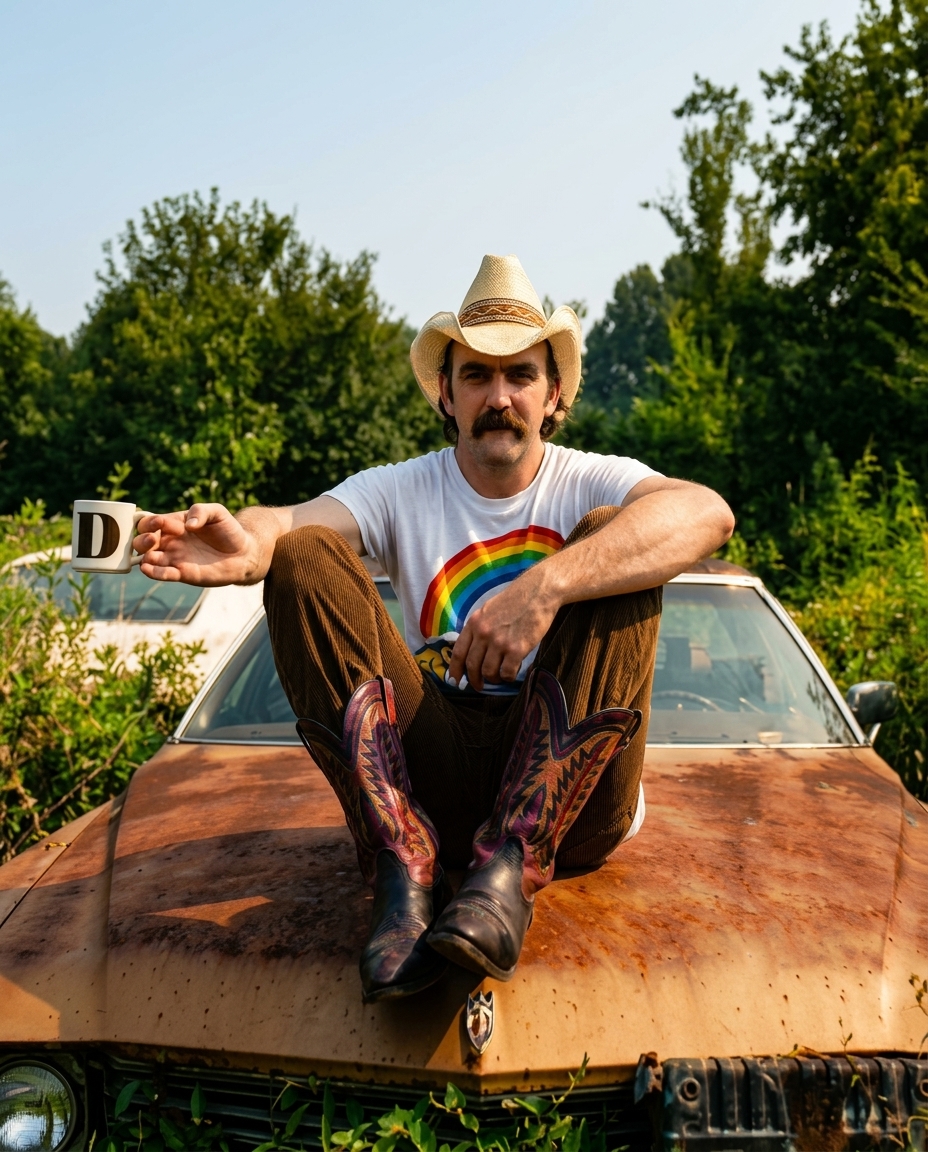
Blaze Foley Wrote a Love Song That Outlived Him
Some artists become famous because the world is ready for them. Others seem to arrive too early, too ragged, too honest, too impossible to package. Blaze Foley was one of those artists. Blaze Foley did not live like a star, and Blaze Foley did not die like one either. But somewhere between the duct-taped boots, the borrowed couches, the missed chances, and the nights spent playing for people who may not have understood what they were hearing, Blaze Foley wrote one of the most heartbreaking love songs country music has ever known.
That song was If I Could Only Fly. It does not beg for attention. It does not try to impress anyone. It simply opens a wound and lets the listener stand close enough to feel it. The song sounds like a man trying to speak plainly while carrying more hurt than language can hold. That is part of what made Blaze Foley so unforgettable to the people who loved his work. Blaze Foley never sounded polished. Blaze Foley sounded real.
And real life, for Blaze Foley, was never easy.
The Man Behind the Song
Blaze Foley lived on the edges of comfort and stability. Blaze Foley was known for sleeping wherever he could, sometimes on friends’ couches, sometimes in bars after closing time, sometimes in places most people would not even consider shelter. Blaze Foley patched boots with duct tape, decorated clothes with duct tape, and carried the rough humor of a man who knew how fragile everything really was. That look became part of the legend, but it was never just style. It was survival.
What made the story even more striking was the gap between Blaze Foley’s life and Blaze Foley’s gift. Here was a man who seemed to have almost nothing, yet could write songs that later found their way into the voices of giants. Willie Nelson recorded If I Could Only Fly. Merle Haggard did too. John Prine would later help bring even more attention to Blaze Foley’s writing. Long before the wider public caught up, songwriters already knew. Blaze Foley was not a curiosity. Blaze Foley was the real thing.
A Death That Still Feels Unfair
In 1989, Blaze Foley was killed at the age of 39. The circumstances were as grim and sad as the songs that carried Blaze Foley’s name through the years. Blaze Foley had confronted the son of an elderly friend during a bitter dispute over money that belonged to the older man. What followed ended with a gunshot to Blaze Foley’s chest. Later, the shooter was acquitted after claiming self-defense.
That ending still feels impossible to accept because it fits the hardest truth about Blaze Foley’s life: Blaze Foley seemed to step into danger not for glory, not for reward, but because somebody weaker needed someone to stand there. There is something painfully consistent in that. Blaze Foley lived without much protection, and in the end Blaze Foley died while trying to protect someone else.
Some people leave behind wealth. Some leave behind headlines. Blaze Foley left behind songs that made other grown men sound like they were telling the truth for the first time.
The Funeral Nobody Forgot
Even Blaze Foley’s funeral carried the strange, rough tenderness that followed Blaze Foley through life. Friends covered the casket in duct tape, turning the object most associated with struggle and repair into a final act of love. It was funny, heartbreaking, and deeply fitting all at once. Blaze Foley had spent years holding things together that were always close to falling apart. At the end, friends used the same symbol to say goodbye.
There is something unforgettable in that image. Not polished flowers and perfect silence, but grief wrapped in the language Blaze Foley actually lived in. It was not elegant in the formal sense. It was better than elegant. It was honest.
Why Blaze Foley Still Matters
Blaze Foley died nearly broke and largely unknown outside songwriter circles, but time has a way of correcting what the marketplace gets wrong. Today, Blaze Foley is remembered not because the story is tragic, but because the songs were true enough to survive the tragedy. If I Could Only Fly still lands like a confession whispered after midnight. It still feels human. It still hurts.
That may be the clearest measure of who Blaze Foley was. Blaze Foley did not leave behind an empire. Blaze Foley left behind evidence of a soul. And for many listeners, that matters more.
Somewhere in the long history of country music, Blaze Foley remains exactly where Blaze Foley belongs: among the artists who never had much, gave everything, and somehow made beauty from the parts of life most people try to hide.
Post navigation
They called Gene Watson “the singer’s singer” for a reason. In country music, that kind of title is not handed out because of flash, headlines, or carefully managed image. It is earned in quieter ways. It comes from the kind of voice that makes other performers pause backstage, lean toward the wings, and listen. It comes from the kind of artist who never needed to demand attention because the music did it for Gene Watson the moment Gene Watson opened his mouth.
What makes the story even more remarkable is how ordinary it began. Gene Watson was not raised inside the machinery of fame. Gene Watson came from a hard-working family, one of several children growing up with very little, including time spent living in a converted school bus. That detail alone says something important. This was not the polished beginning of a future celebrity. This was a life built on grit, long days, and learning early that nothing arrives just because you want it.
Before country audiences knew the name, Gene Watson spent his days fixing cars and working for a living. At night, Gene Watson sang in honky-tonks, chasing not fame but the chance to sing one more song, then another, and maybe leave a room just a little quieter than he found it. Nashville did not suddenly come running. There was no fairy-tale shortcut. Years passed before the rest of the world caught up to what local listeners already knew: Gene Watson had a voice that could stop time.
The Song That Changed Everything
Then came the song that altered everything. “Farewell Party” was not just another country recording. It was a heartbreak wrapped in restraint, a funeral scene imagined through the eyes of a man asking for one final act of mercy. In the song, the request is almost unbearable in its simplicity: when the time comes, let the woman who never truly loved him stand close and pretend, just for that moment, that she did.
It was not loud. It was not trendy. It was devastating.
That is part of why the song lasted. While other hits came and went with the mood of the moment, “Farewell Party” stayed behind in people’s lives. It became one of those songs that listeners did not just enjoy; they carried it with them. Over time, it earned a reputation few songs ever do, becoming one of the most requested selections at actual funerals across America. That says more than chart positions ever could. It means Gene Watson recorded something that reached beyond radio and into the private places where people remember, grieve, and try to say the things they never found a way to say out loud.
A Career Built on Respect, Not Hype
For all the power Gene Watson brought to country music, the major trophies never lined up the way some fans thought they should. No towering shelf of CMA or ACM wins defines the Gene Watson legacy. In a different industry story, that might sound like a slight. In this one, it almost feels beside the point.
Gene Watson became something rarer than an awards magnet. Gene Watson became a measuring stick. The admiration did not just come from crowds. It came from other singers, the people who understand exactly how difficult it is to stay true, stay sharp, and stay honest in a business that rewards reinvention more often than consistency. When artists stopped what they were doing to watch Gene Watson on the Opry stage, they were not just enjoying a performance. They were studying a standard.
And then there is the part of the story that feels almost unbelievable in modern music. After decades of singing, Gene Watson is still known for holding the same kind of vocal strength that defined the early years. While many careers are built around adaptation, Gene Watson built a legacy around endurance. The voice did not disappear. The voice did not surrender. The industry moved on, as it always does, chasing youth, novelty, and whatever seemed next. But Gene Watson kept singing with the kind of control and clarity that made the passing years seem almost irrelevant.
Why Gene Watson Still Matters
Some singers follow trends because that is the easiest way to survive. Some singers catch a moment and vanish with it. Gene Watson did something harder. Gene Watson became timeless by refusing to sound temporary.
That is why the nickname still fits. “The singer’s singer” was never just a compliment. It was a recognition that Gene Watson represented something essential in country music: discipline, feeling, humility, and a voice that never needed decoration. Gene Watson did not chase fame. Gene Watson chased the song. In the end, that may be the reason the songs still feel alive.
Long after trends have faded and louder names have come and gone, Gene Watson remains the kind of artist people return to when they want to hear what country music sounds like when it is stripped of pretense and left with only truth. And on a stage like the Grand Ole Opry, that truth is powerful enough to make even other stars stop and listen.