HE STARTED SINGING AT 3 YEARS OLD — 62 YEARS LATER, NASHVILLE LOST ONE OF ITS GREATEST HIDDEN VOICES. Ronnie Bowman first opened his mouth to sing in a tiny North Carolina church. He was barely three. By the time he was gone — at just 64 — his songs had reached millions, even if his face never did. He wrote “Nobody to Blame” for Chris Stapleton. It won ACM Song of the Year. He gave Kenny Chesney a #1 hit. Brooks & Dunn, Lee Ann Womack — they all recorded his words. Three-time IBMA Male Vocalist of the Year. A voice that defined ’90s bluegrass. Yet most people scrolling past this post have never heard his name. On March 22, 2026, Ronnie Bowman died after a motorcycle accident in Tennessee. Nashville wept. And millions of fans had no idea the man behind their favorite songs was already gone… – Country Music
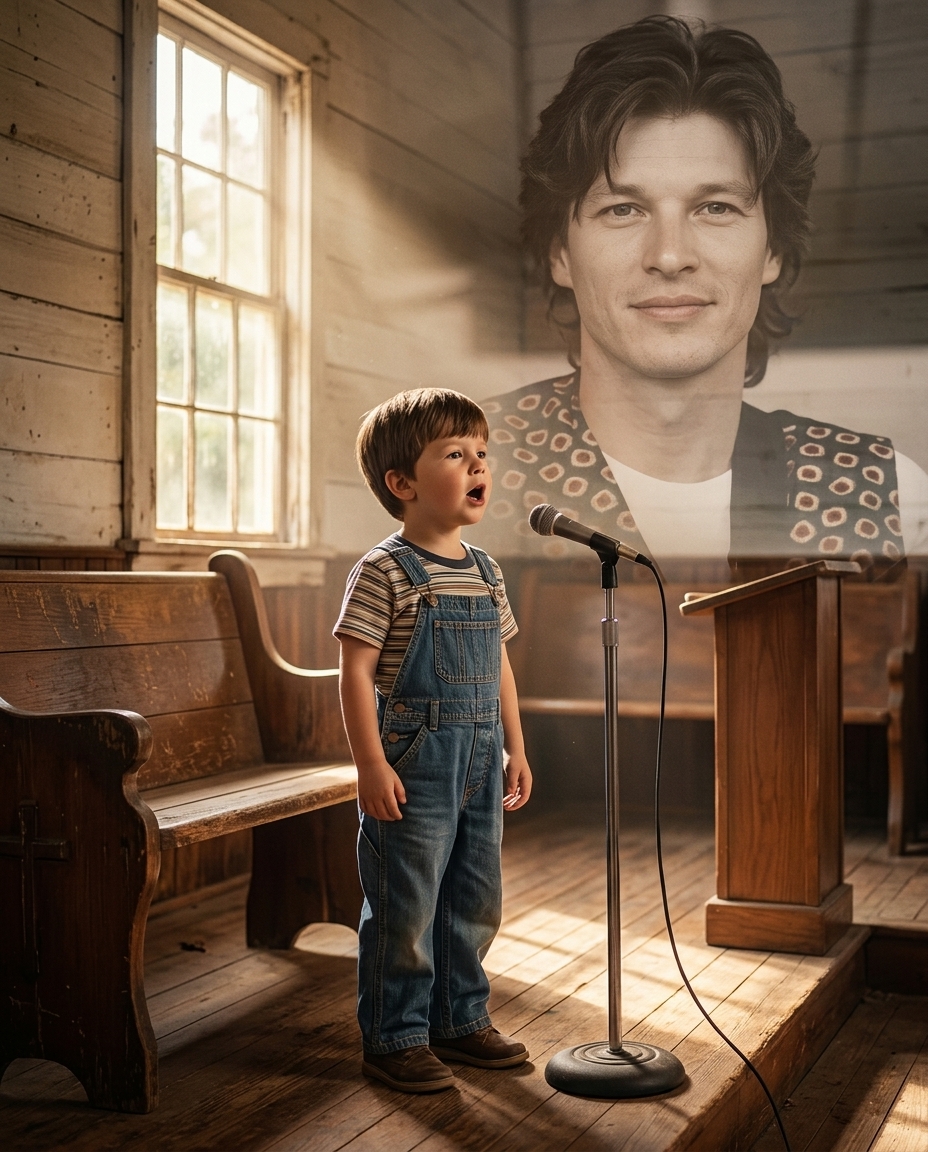
Ronnie Bowman first sang in a small North Carolina church. He was only three years old, standing where the wooden floor creaked and the voices echoed just enough to feel bigger than the room itself. No one in that moment could have imagined that the little boy with the steady voice would go on to shape the sound of country and bluegrass for decades.
And yet, for many people, Ronnie Bowman remained a name they never quite noticed — even as they sang along to his words.
A Voice That Lived Behind the Music
There are artists who chase the spotlight, and then there are artists who quietly build the very foundation others stand on. Ronnie Bowman belonged to the second group. His voice, rich with emotion and honesty, became a defining sound in 1990s bluegrass. He earned recognition from those who understood the craft — including being named Male Vocalist of the Year by the International Bluegrass Music Association three times.
But Ronnie Bowman’s true reach extended far beyond the stage.
He was a storyteller first. A writer who knew how to turn small human moments into something unforgettable. His songs found their way into the hands of some of the biggest names in country music.
Chris Stapleton recorded “Nobody to Blame,” a song that would go on to win ACM Song of the Year. Kenny Chesney turned another Ronnie Bowman composition into a number-one hit. Brooks & Dunn, Lee Ann Womack — they all trusted his words to carry their voices.
And for millions of listeners, those songs became part of their lives — road trips, heartbreaks, late-night drives, quiet mornings. The kind of songs people don’t just hear… but keep.
The Man Behind the Lines
What made Ronnie Bowman special wasn’t just talent. It was perspective. He wrote like someone who had lived every word, even when he hadn’t. His lyrics felt personal, almost like they belonged to whoever was listening.
He didn’t need the spotlight to prove his place in music. He let the songs do that for him.
In Nashville, that kind of quiet influence is deeply respected. It’s the difference between being famous and being essential.
And Ronnie Bowman was essential.
A Sudden Goodbye
On March 22, 2026, news spread through Nashville that Ronnie Bowman had died following a motorcycle accident in Tennessee. He was 64.
The reaction was immediate — not loud, but heavy. Songwriters, musicians, and those who had shared rooms, stages, and long nights with him felt the loss in a way that’s hard to explain. It wasn’t just about losing a colleague. It was about losing a voice that had quietly shaped so many others.
For those outside that circle, the moment passed more quietly. Many people continued listening to songs Ronnie Bowman had written without realizing the man behind them was already gone.
He gave his voice to the world… and left before most people ever knew his name.
The Legacy That Stays
There’s something almost poetic about a songwriter’s life. The songs remain. The voice lingers in recordings, in lyrics, in memories tied to moments we don’t forget.
Ronnie Bowman may not have been a household name, but his work lives in the fabric of country music. In every chorus that hits a little too close to home. In every line that feels like it was written just for you.
That’s the kind of legacy that doesn’t fade.
Some artists are remembered by headlines. Others are remembered every time someone presses play.
And somewhere, right now, someone is listening to a song Ronnie Bowman wrote — not knowing why it feels so real, only that it does.
Maybe that was always enough.
Post navigation
There are lives that feel carefully planned, and then there are lives that seem written like country songs—rough at the edges, honest in the middle, and unforgettable by the final verse. Merle Haggard’s story belongs to the second kind.
Merle Haggard was born on April 6, 1937, in Oildale, California, inside a converted boxcar. Even that detail sounds like the beginning of a ballad. There was no glamour waiting for him. No polished stage. No promise that life would be easy. He was raised in a working-class railroad family, surrounded by hardship, noise, and the kind of reality that would later pour into his songs.
What makes Merle Haggard’s story so powerful is not just where it ended, but how far it traveled. Before the fame, before the crowds, before the hits stacked up one after another, Merle Haggard was a young man in trouble. He drifted, fought authority, made reckless choices, and spent time in San Quentin by the age of 20. For many people, that would have been the whole story. For Merle Haggard, it became the turning point.
From San Quentin to the Top of Country Music
Merle Haggard did not arrive in country music with polish. He arrived with scars, memory, and a voice that sounded like it had lived through every word it sang. That was his power. He never needed to pretend. Listeners heard something real in him, and once they did, they stayed.
By the time Merle Haggard was 30, he had his first number one hit. That alone would have marked a remarkable comeback. But Merle Haggard did not stop there. Over the course of his career, Merle Haggard built one of the most respected catalogs in country music history, reaching 38 number one songs and becoming a voice for people who felt overlooked, worn down, proud, stubborn, or simply alive in complicated times.
Merle Haggard sang about workers, drifters, prisoners, lovers, and survivors. He sang like someone who knew all of them personally. That is why his music lasted. It was never just performance. It was recognition. In a Merle Haggard song, people could hear themselves.
The Final Recording, The Final Show
Even near the end, Merle Haggard was still doing what he had always done—making music. His final recording, “Kern River Blues,” was cut on February 9, 2016, with his son Ben playing guitar. There is something deeply moving about that image: father and son, side by side, still chasing one more song, still holding onto the sound that had carried a lifetime.
His last show came just four days later. By then, Merle Haggard’s health was fading, but the music was still there. The instinct was still there. The need to stand in front of people and tell the truth through song had not left him.
Then came the moment his family would never forget. Ben Haggard later shared that Merle Haggard had said he knew when the end was coming. It was not said for drama. It was said with the quiet certainty of a man who had spent a lifetime reading hard roads and harder truths.
“A week ago dad told us he was gonna pass on his birthday, and he wasn’t wrong.”
April 6, 2016
On April 6, 2016, Merle Haggard died on the same date he was born. That fact still stops people in their tracks. Not because it sounds neat or poetic, but because it feels almost impossible. A man born on April 6, 1937, leaves the world on April 6, 2016. Same date. Same name. Same voice still echoing after the silence.
It is tempting to call that symmetry fate. Maybe it was. Or maybe it simply reminds us why Merle Haggard still matters. His life was not clean or simple. It was messy, redeemed, hard-earned, and fully lived. That is what country music has always made room for—the broken, the brave, the regretful, the proud. Merle Haggard carried all of it.
Everything between those two April 6ths became music. Not perfect music. True music. And that is why Merle Haggard endures. Long after the last show, long after the final studio session, long after the headlines faded, the songs remained.
Merle Haggard did not just sing country music. Merle Haggard lived it. And when the final verse arrived, it closed on the very date where the first one began.