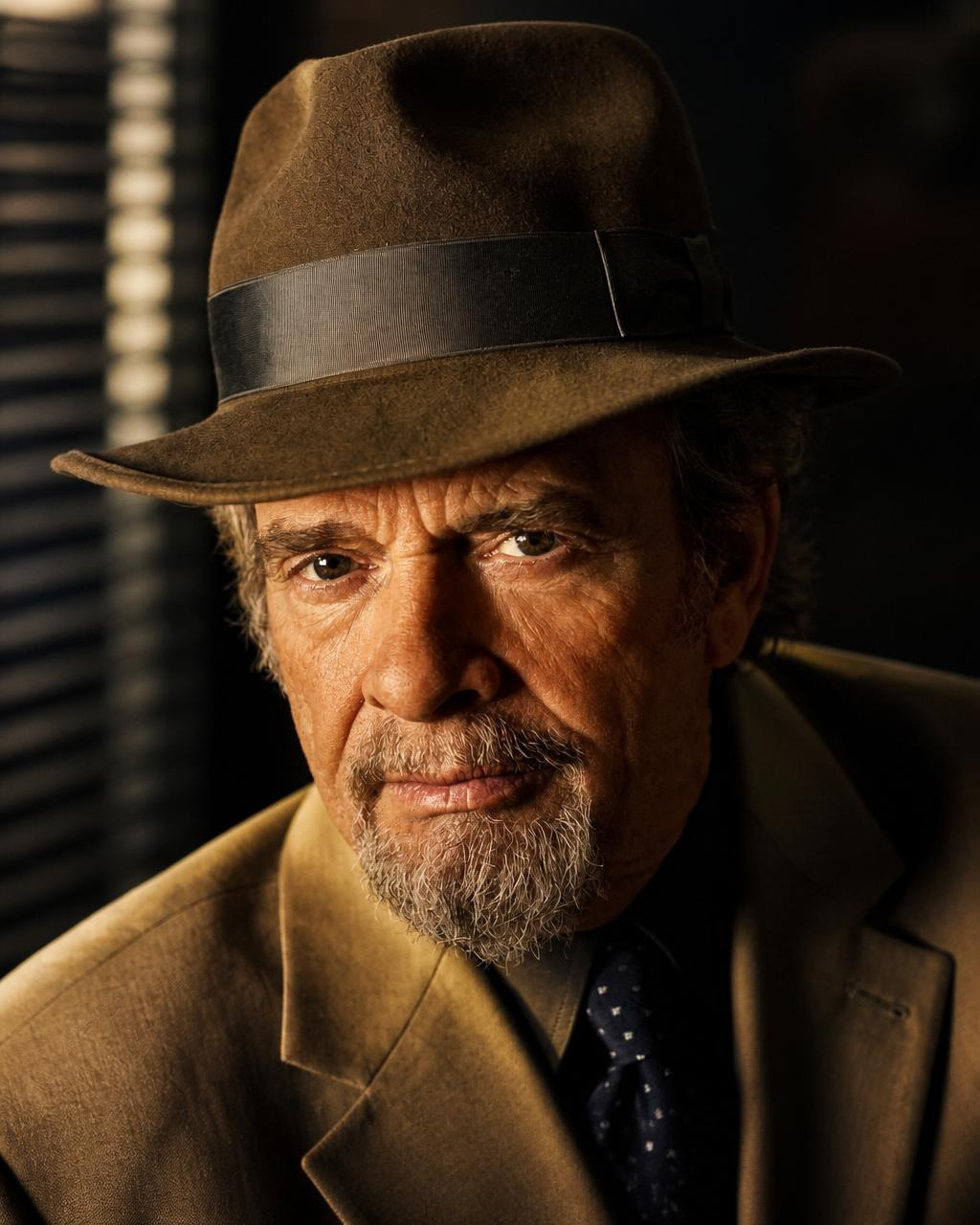
IF YOU TAKE “OKIE FROM MUSKOGEE” LITERALLY, YOU HAVE TO TAKE THIS ONE LITERALLY TOO. THAT’S THE PROBLEM WITH THE MAN THEY SPENT FIFTY YEARS CALLING A REDNECK. The verdict was set in 1969. Merle Haggard wrote the song the whole culture war rallied behind, and from that day forward everybody knew exactly what he was. Reactionary. The voice of the people who wanted the sixties to go away. Here’s what he wanted to release next. “Irma Jackson” is about a white man in love with a Black woman, and about the fact that the world won’t let it stand. He wrote it two years after the Supreme Court had finally made that marriage legal at all. He wanted it to be the follow-up single — the very next thing out of his mouth after Muskogee. Capitol said no. The world wasn’t ready, they told him. They handed him another patriotic anthem to sing instead, and he sang it. “Irma Jackson” got buried on an album three years later. Never a single. Thirty years on, Merle said it was the only time in his career a label ever interfered with his music. They judged him by the song he was allowed to release. What would they have called him if they’d heard this one first? – Country Music
For years, Merle Haggard was boxed into a single image. After “Okie from Muskogee” became one of his defining hits in 1969, a lot of listeners decided they already knew exactly who Merle Haggard was supposed to be: the plainspoken defender of tradition, the country singer standing against the chaos of the sixties. That version of Merle Haggard was easy to repeat, easy to argue about, and easy to remember. It was also incomplete.
There was another song waiting in the wings. It was called “Irma Jackson,” and it told a very different story. Instead of a political slogan, it centered on a love that society would not allow to live peacefully. The song dealt with an interracial relationship at a time when that kind of relationship still carried deep legal and social baggage, even after the Supreme Court’s 1967 decision in Loving v. Virginia made bans on interracial marriage unconstitutional.
A different direction after the big hit
The striking part is not just that Merle Haggard wrote “Irma Jackson,” but when he wanted the public to hear it. He reportedly hoped it would follow “Okie from Muskogee” as the next single. That would have been a sharp turn, almost a correction, from the image that had just been cemented in the public mind.
Instead, Capitol Records declined to release it as the follow-up. The label was concerned about the timing and about how it might affect Merle Haggard’s commercial image. Another song was issued instead, and “Irma Jackson” was left waiting until later, eventually appearing on the 1972 album Let Me Tell You About a Song. It was never pushed as a single in the way Merle Haggard had wanted.
That decision mattered because songs do not only tell stories; they also shape reputations.
The problem with a single label
What makes Merle Haggard such a complicated figure is that “Okie from Muskogee” was never the whole man, even if it became the loudest part of his public identity. “Irma Jackson” reveals that Merle Haggard could write from a place of tenderness and challenge at the same time. He was not locked inside one political costume. He was a songwriter trying to describe American life in all its contradictions.
That is why the old judgment feels too simple now. If a listener only heard “Okie from Muskogee,” it would be easy to place Merle Haggard in one camp and leave him there. But “Irma Jackson” complicates that picture immediately. It asks for a wider reading of his work, and it reminds us that artists are often larger than the single song that made them famous.
What “Irma Jackson” asks us to reconsider
It asks us to reconsider Merle Haggard’s public image.
It asks us to reconsider how record labels shape what audiences are allowed to hear.
And it asks us to reconsider how quickly a culture can turn one song into a permanent verdict.
Maybe that is the real story here. Merle Haggard was judged by the anthem the world was ready to accept, not by the fuller range of what he was writing. “Irma Jackson” does not erase “Okie from Muskogee.” It simply reminds us that the man behind the hit was more complicated than the slogan attached to his name.
He wanted no cameras, no crowd, and no grand Nashville goodbye. When the obituary ran, it was brief and direct: private family services had been held, and in place of flowers, donations were requested for the Wounded Warriors Project. That was the kind of exit he preferred — quiet, simple, and unforced.
But in a city like Nashville, silence does not always last long when a musician is gone.
Two weeks later, on September 15, a free tribute concert came together at Douglas Corner. There was no ticket price, no promoter waving a polished campaign, and no label machine behind it. Guitarist Richard Smith organized the night after hearing the news, saying the room was full of people who felt gutted and wanted to pay their respects in their own way.
The list of players told its own story. Brent Mason was there. Thom Bresh, son of Merle Travis, was there too. Jerry Roe, the artist’s own grandson, also stepped into the circle. It was less a performance than a gathering of hands, memories, and songs that had lived a long time in the bones of country music.
Joe Galante, the longtime Nashville executive who knew the power of a great record, said the man was distinctive in every way: the guitar playing, the writing, the voice, and the sense of humor. That was the thing people kept returning to. He was not just a player with a gift for picking; he was a storyteller with timing, wit, and a style that could make a room smile before it even realized it had been won over.
He wrote songs that traveled farther than his name at first. “Guitar Man” found its way to Elvis Presley. “A Thing Called Love” became part of Johnny Cash’s legacy. “Misery Loves Company” gave Porter Wagoner a No. 1 hit before many listeners even knew who had written it. Later, the recognition caught up. Three Grammy Awards followed, including two shared with Chet Atkins, the man who encouraged him to stop writing only for everyone else and to step forward as a singer himself.
He wanted no fuss when he went. The guitar players threw him a party anyway.
That may be the truest ending of all. He asked for privacy, and his family honored it. Then the musicians gathered, as musicians do, not to break the peace but to hold it for a little while longer. In Nashville, that was their way of saying goodbye.