FORGET THE AWARDS. FORGET THE RECORDS. ONE SONG CAPTURED CHARLEY PRIDE’S VOICE BETTER THAN ANYTHING ELSE HE EVER RECORDED. Charley Pride had 29 number-one hits. He won CMA Entertainer of the Year. He was the first Black superstar in the history of country music. But if you want to hear the purest version of that deep baritone voice — just one song will do. It wasn’t “Kiss an Angel Good Mornin'” — the crossover smash that hit number 21 on the pop charts. It wasn’t “Is Anybody Goin’ to San Antone” — the drifter anthem that made him a household name. It was something quieter. A song about a woman who traded real love for high society. And when Charley sang it, you could hear every ounce of who he was — a sharecropper’s son from Sledge, Mississippi, who never forgot where he came from. Ted Harris wrote it. Carl Belew recorded it first. But Charley Pride owned it forever. At his final CMA performance in 2020 — just 31 days before the world lost him — that voice still carried the same warmth it always had. The kind of warmth that no chandelier could ever light up. Some voices sing songs. Charley Pride became his. – Country Music
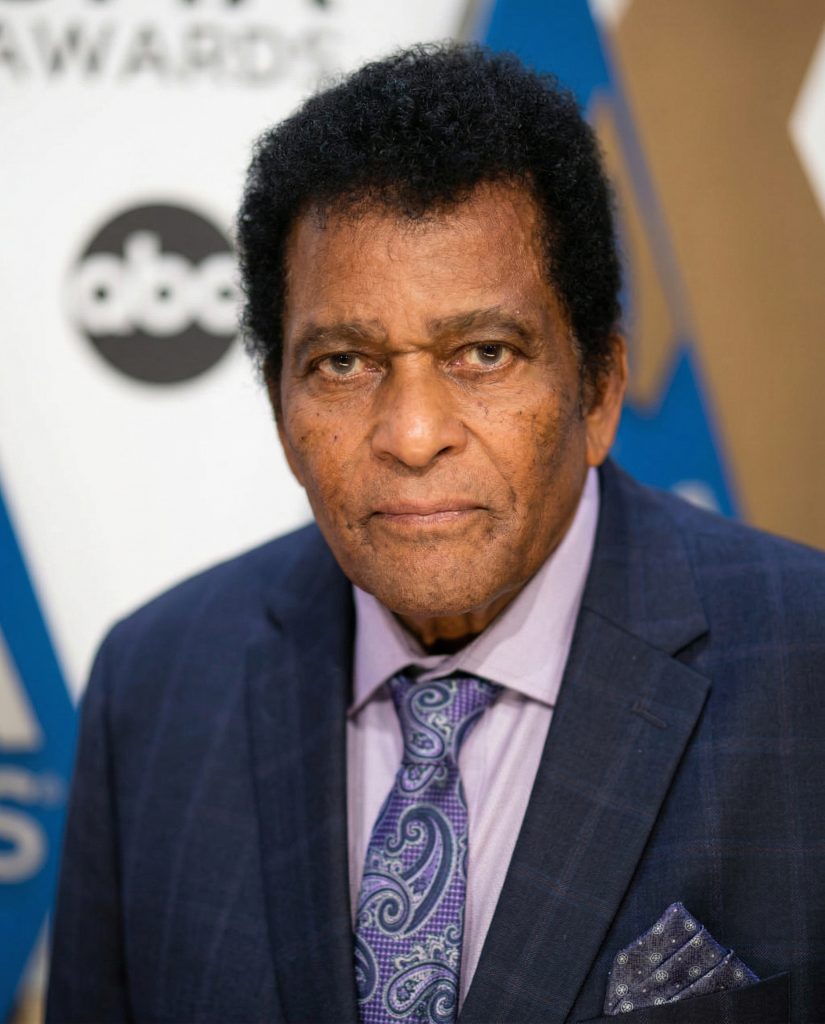
Forget the Awards. One Song Told the Whole Story of Charley Pride
Charley Pride recorded dozens of songs that changed country music forever.
There were the big hits. “Kiss an Angel Good Mornin’” turned Charley Pride into a national star. “Is Anybody Goin’ to San Antone” gave Charley Pride one of the most recognizable voices on country radio. By the end of his career, Charley Pride had collected 29 number-one singles, won countless awards, and made history as the first Black superstar in country music.
But none of those songs captured Charley Pride quite like “Crystal Chandeliers.”
It was never the loudest song in the room. It did not have the swagger of Charley Pride’s biggest hits. It moved slowly. Quietly. Almost like a conversation between two people sitting across a kitchen table long after midnight.
The song tells the story of a woman who leaves behind a simple life for wealth, parties, and polished society. She ends up surrounded by beautiful things, expensive rooms, and “crystal chandeliers.” But somewhere in all that luxury, something real disappears.
And when Charley Pride sang those words, it never sounded like an accusation. It sounded like heartbreak mixed with understanding.
A Song Written for Someone Else, But Meant for Charley Pride
“Crystal Chandeliers” was written by Ted Harris. Before Charley Pride ever touched it, Carl Belew had already recorded the song. It was respected. It had a strong melody and a memorable lyric. But it did not truly come alive until Charley Pride sang it.
There was something in Charley Pride’s voice that gave the song another layer.
Charley Pride grew up in Sledge, Mississippi, the son of sharecroppers. There were no crystal chandeliers in the house where Charley Pride was raised. There was hard work, long days, and the kind of life where people learned early that money could come and go, but dignity mattered.
By the time Charley Pride recorded “Crystal Chandeliers” in 1965, Charley Pride was still fighting to be heard in Nashville. Many people in the industry did not know what to do with Charley Pride. Some doubted whether country audiences would accept a Black singer performing traditional country songs.
But Charley Pride never changed who Charley Pride was.
That is why “Crystal Chandeliers” felt so different. Charley Pride sang the song like someone who understood both worlds. The world of people who chase status. And the world of people who know that the most important things cannot be bought.
“Crystal chandeliers light up the paintings on your wall…”
When Charley Pride reached that line, the voice was not angry. It was calm. Warm. A little sad. The kind of sadness that comes when someone you love becomes a stranger.
For decades, Charley Pride performed “Crystal Chandeliers” on stages across America. Audiences would cheer as soon as the first notes began. Some sang along softly. Others simply listened.
Because “Crystal Chandeliers” was more than a song. It was Charley Pride’s voice at its most honest.
As the years passed, that voice changed very little. It stayed deep and steady. There was still comfort in it. Still strength.
Then came November 11, 2020.
At the CMA Awards, Charley Pride stepped onto the stage one final time. The moment already felt emotional. Charley Pride was there to receive the Willie Nelson Lifetime Achievement Award. The room stood and applauded.
But what people remember most is the way Charley Pride sounded when Charley Pride began to sing.
Just 31 days before Charley Pride passed away, the voice was still there.
Older, perhaps. Softer in places. But still unmistakably Charley Pride.
The warmth had not disappeared. The honesty had not faded. It was the same voice that once sang about crystal chandeliers and lonely hearts. The same voice that carried a little bit of Mississippi, a little bit of pain, and a lot of grace.
Why “Crystal Chandeliers” Still Matters
Many singers have bigger songs than the ones that define them.
For Charley Pride, “Kiss an Angel Good Mornin’” may have been the biggest hit. But “Crystal Chandeliers” was the truest song.
Because underneath the fame, the records, and the awards, Charley Pride never stopped being the man from Sledge, Mississippi.
And in “Crystal Chandeliers,” you can hear that man clearly.
You can hear the quiet dignity. The heartbreak. The understanding that some people spend their whole lives chasing beautiful things, only to discover too late that warmth cannot be bought.
That is why the song still feels powerful today.
Crystal chandeliers may light up a room. But Charley Pride’s voice lit up something deeper.
Post navigation
35 Number-Ones, 75 Million Albums Sold — But One Song Meant More Than Any Other
Alan Jackson built one of the biggest careers in country music history.
Thirty-five number-one hits. More than 75 million albums sold. Songs that became part of American life.
There was “Chattahoochee,” the soundtrack to long summers and back-road memories. There was “Where Were You (When the World Stopped Turning),” the song that helped an entire country find words after September 11.
But if you ask Alan Jackson which song means the most, Alan Jackson does not talk about awards, record sales, or stadium crowds.
Alan Jackson talks about a plywood boat. A faded truck. A dirt road in Georgia. And a father named Eugene.
Before Alan Jackson became a country star, Alan Jackson was just a boy growing up in Newnan, Georgia. Life was simple. Money was tight. The days were filled with small things that seemed ordinary at the time.
There was an old plywood boat with a small outboard motor. There was a beat-up 1964 Ford truck. And there was Thigpen Road, the quiet stretch of dirt where Eugene Jackson taught his son how to drive.
Eugene Jackson was not a man who said much. Alan Jackson has often described Eugene Jackson as quiet, steady, and strong. The kind of father who did not give long speeches or dramatic lessons. Eugene Jackson taught through moments.
One of those moments stayed with Alan Jackson forever.
As a child, Alan Jackson would sit beside Eugene Jackson and put both hands on the steering wheel while the truck rolled slowly down Thigpen Road. For a few seconds, Alan Jackson did not feel like a kid.
Alan Jackson felt like he was in charge of the whole world.
“It was just an old half-ton short-bed Ford, my uncle bought new in ’64.”
When Grief Was Too Heavy to Write
In 2000, Eugene Jackson died suddenly from an aortic aneurysm.
The loss hit Alan Jackson harder than most people knew. Alan Jackson wanted to write a song for Eugene Jackson. Not because a record label asked for one. Not because an album needed another track.
Alan Jackson simply wanted to say something that had never been fully said.
Twice, Alan Jackson sat down and tried to write about Eugene Jackson’s death.
Twice, the songs became too painful.
The words felt heavy. The memories felt too close. Alan Jackson later admitted that every version sounded more like sadness than love.
So Alan Jackson stopped trying to write about death.
Instead, Alan Jackson started writing about driving.
About that old truck. About that boat. About those afternoons when a father quietly gave a little boy the feeling that he could do anything.
The Verse That Changed Everything
As the song came together, something still felt unfinished.
Then Denise Jackson, Alan Jackson’s wife, offered one simple idea.
Denise Jackson told Alan Jackson to add their three daughters into the final verse.
Suddenly, the song was no longer only about the past.
It became about what gets passed down from one generation to the next.
The little boy who once held the steering wheel had become a father himself. Now Alan Jackson was teaching his own daughters the same quiet lessons Eugene Jackson had once given him.
“Three girls in the back of a boat, smiling and laughing, just like Alan Jackson once did.”
That final verse changed the heart of the song. It turned grief into gratitude. It turned a goodbye into a memory that could keep moving forward.
A Number-One Hit That Was Never Meant for the Charts
When “Drive (For Daddy Gene)” was released in 2002, listeners immediately understood that this was something different.
The song climbed to number one and stayed there for four weeks. Fans wrote letters. Parents called radio stations. Grown men admitted that they cried the first time they heard it.
But Alan Jackson never wrote “Drive (For Daddy Gene)” to become a hit.
Alan Jackson wrote it for one man.
For the quiet father who never asked for attention. For the man who handed over the wheel for a moment and let a little boy feel like king of the ocean.
Years later, “Drive (For Daddy Gene)” still feels different from almost every other song in Alan Jackson’s career. It is not the loudest. It is not the most famous. It is not the song that gets played first at every concert.
But it may be the truest.
Some songs make an artist famous.
“Drive (For Daddy Gene)” made Alan Jackson real.