FOR FIVE DECADES WILLIE NELSON HAS OPENED HIS SHOWS WITH A SONG WRITTEN BY HIS OLD DRUMMER — A MAN NASHVILLE REFUSED TO RECORD. Johnny Bush kept time behind Ray Price’s Cherokee Cowboys and in Willie’s own band, the Record Men. Labels heard him sing and said he was too close to Ray Price to be worth a contract. Willie had heard a version of that verdict about himself, so in 1967 he paid for Bush’s first album on the small Stop label and gave him “You Ought to Hear Me Cry” to sing on it. That single scraped the chart at No. 69. Then “Undo the Right” reached No. 10 and “You Gave Me a Mountain” went to No. 7, and RCA signed Bush in 1972. His first single there was one he wrote himself: “Whiskey River.” Willie recorded it for Shotgun Willie the next year. Right then Bush’s voice began failing. It took years before anyone named it spasmodic dysphonia. RCA dropped him in 1974, and there were stretches when he could barely speak, much less sing. Willie kept opening every show with the song. Bush said the money it earned him “saved me through the spasmodic dysphonia years.” – Country Music
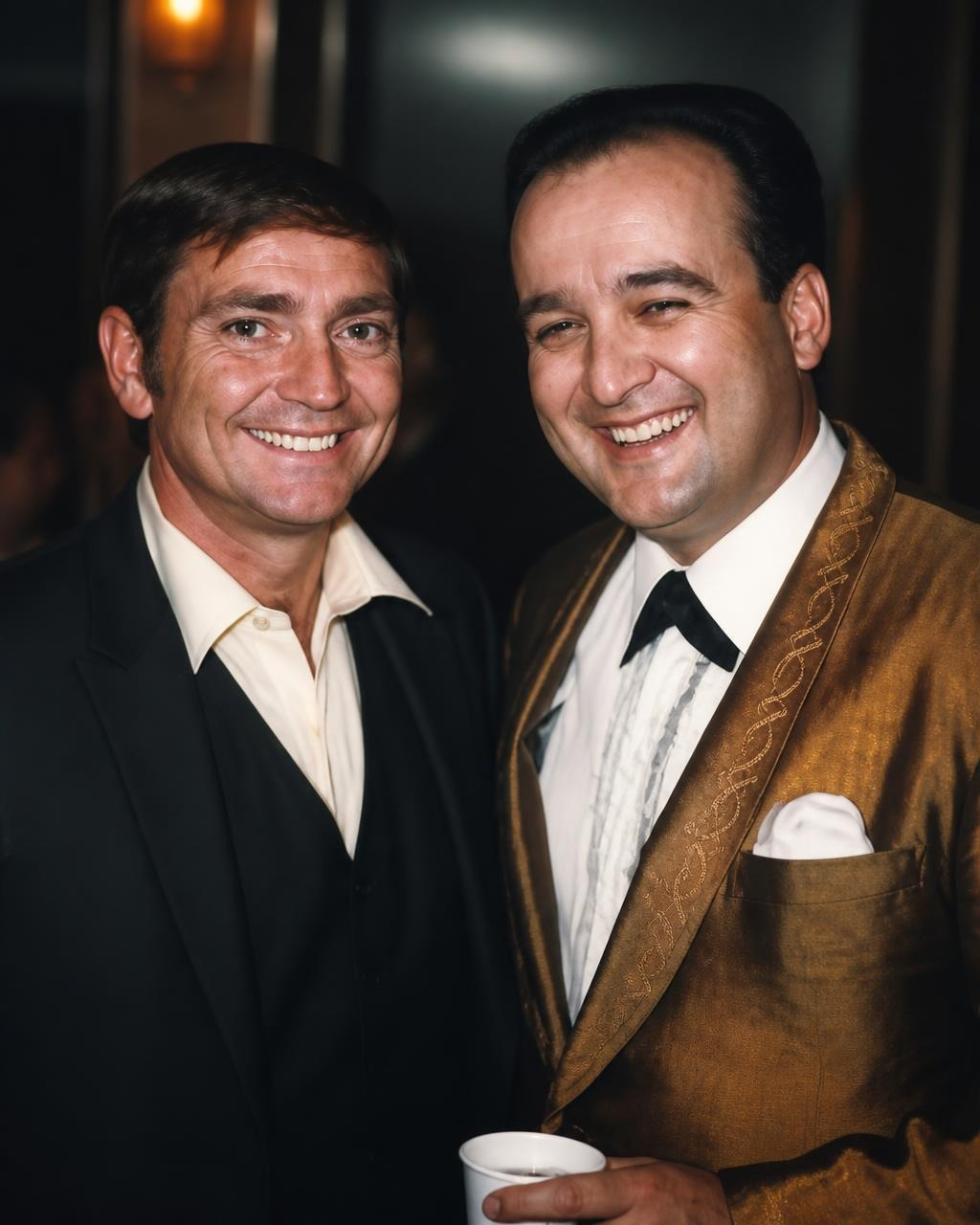
How Willie Nelson Turned Johnny Bush’s “Whiskey River” Into a Country Music Homecoming
For decades, Willie Nelson has opened his shows with a song written by a man Nashville once seemed unsure how to place. That song was “Whiskey River,” and the man behind it was Johnny Bush, a Texas singer with a powerful voice, a deep feel for classic country, and a career shaped as much by timing as by talent.
Johnny Bush first made his name keeping the beat, not standing in front of the microphone. He played drums for Ray Price’s Cherokee Cowboys and later worked in Willie Nelson’s band, the Record Men. In Nashville, though, success was never simple. Bush was often seen as too close to Ray Price’s style to be treated as a fresh new act, and that kind of label could slow a singer down before the public even got a chance to hear him.
Willie Nelson understood that problem. He had heard versions of it himself. So in 1967, he helped Johnny Bush get a start by paying for Bush’s first album on the small Stop label and giving him “You Ought to Hear Me Cry” to record. The record did not explode, but it opened a door. Later singles like “Undo the Right” and “You Gave Me a Mountain” performed better, and by 1972 RCA signed Johnny Bush. His first single for the label was a song he wrote himself: “Whiskey River.”
A song that found a second life
Willie Nelson recorded “Whiskey River” the next year for Shotgun Willie, and that is where the song’s destiny really changed. It became more than a single or an album track. It became an introduction, a ritual, a signal that a Willie Nelson concert had begun. Over time, fans came to associate the opening chords with the whole experience of seeing Willie Nelson live.
But Johnny Bush’s story took a painful turn just as his music should have been reaching wider audiences. His voice began to fail, and for years the reason was not fully understood. Doctors eventually identified the problem as spasmodic dysphonia, a neurological disorder that affects the muscles used for speaking and singing. RCA dropped Johnny Bush in 1974, and there were periods when he could barely speak, let alone perform the way he once had.
“The money it earned me saved me through the spasmodic dysphonia years.”
That is how Johnny Bush later described the gift of “Whiskey River.” The song did not erase hardship, but it gave him support when he needed it most. And in a business that can forget its own history, Willie Nelson kept the song alive night after night, year after year.
A quiet kind of loyalty
What makes this story endure is not just the hit record or the chart positions. It is the loyalty underneath them. Johnny Bush helped shape the sound around Willie Nelson. Willie Nelson, in turn, helped carry Johnny Bush’s name forward by making “Whiskey River” the first song audiences heard when he stepped onstage.
It is a reminder that country music often runs on memory as much as momentum. A song can begin as one singer’s struggle, then become another singer’s promise, and finally turn into a shared tradition. In the case of Johnny Bush and Willie Nelson, that tradition has lasted long enough to feel like part of American music itself.
Post navigation
Luke Combs was only four years old when he first fell in love with “Fast Car”, a song that would go on to become part of country music history in a new and unexpected way. Long before the cover version, long before the awards, and long before the standing ovations, there was just Tracy Chapman’s voice and a song that seemed to move quietly through the years, finding new listeners one by one.
From Boston coffeehouses to a defining debut
Tracy Chapman wrote “Fast Car” in the 1980s while she was a college student performing in coffeehouses around Boston. She released it in April 1988 as the lead single from her debut album, and the song immediately stood out for its storytelling, its emotional honesty, and its unforgettable chorus. It was not flashy. It did not need to be. The song had a kind of gravity that stayed with people.
For years, “Fast Car” lived as one of those rare songs that never seemed to age. It crossed genres, generations, and listening habits. Luke Combs later said he had loved it since childhood, and that early connection gave his version a personal meaning that fans could hear in the performance.
A cover that changed the chart story
In 2023, Luke Combs included his version of “Fast Car” on Gettin’ Old. The cover became a major country radio hit and reached No. 1, making Tracy Chapman the first Black woman with sole writing credit on a No. 1 country hit. That milestone carried enormous weight, not just for one song, but for what country radio had and had not celebrated over the decades.
What made the moment resonate even more was the care Luke Combs brought to it. He treated the song with respect, not as a rewrite of its meaning, but as a tribute to its original power. Fans embraced it, and the song found a new life without losing the shape that Tracy Chapman had given it decades earlier.
The CMA Awards and the quiet power of gratitude
At the CMA Awards in November 2023, Luke Combs won Single of the Year and thanked Tracy Chapman before anyone else, calling “Fast Car” one of the greatest songs of all time. It was one of those award-show moments that felt bigger than the trophy itself. Minutes later, Bill Anderson announced Tracy Chapman as Song of the Year, making her the first Black songwriter to win that honor since the CMAs began in 1967.
Tracy Chapman was not in the room. Sara Evans read Tracy Chapman’s note aloud, and the empty space on stage seemed to say as much as any speech could. The recognition was real, even in absence, and the audience responded to that truth.
A full-circle return at the Grammys
Then came the Grammys three months later, where Tracy Chapman walked out and sang “Fast Car” herself beside Luke Combs. It was the first time she had performed the song in years, and the performance carried a rare kind of emotional clarity. The room rose again, but this time Tracy Chapman was there to receive it.
That week, Tracy Chapman’s original 1988 recording reached No. 1 on the U.S. iTunes chart for the first time. After all those years, the song that began in Boston had found another circle to complete.
Some songs do more than travel. They return.
For Luke Combs, the story began with a childhood favorite. For Tracy Chapman, it became a reminder that a great song can wait patiently and still arrive with full force. “Fast Car” did not just cross from one artist to another. It connected two moments in music history, and in doing so, it reminded listeners why certain songs never really leave us.