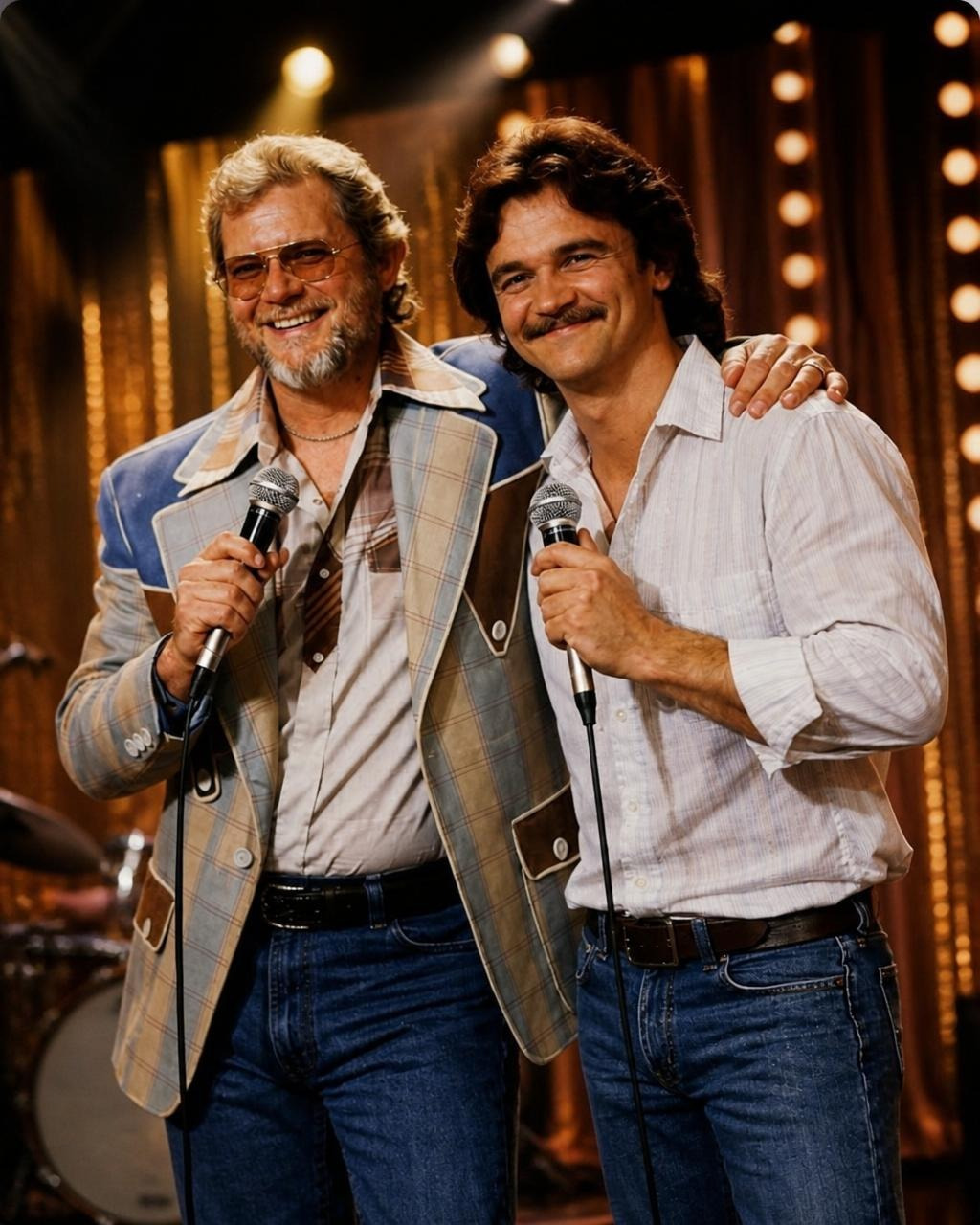
FOR 21 YEARS, JIMMY FORTUNE SANG TENOR FOR THE STATLER BROTHERS. HE GOT THE JOB BECAUSE THE MAN HE REPLACED HANDED IT TO HIM. Lew DeWitt had sung tenor with the Statlers from the beginning and written “Flowers on the Wall,” the crossover hit that won them their first Grammys. For years he’d been fighting Crohn’s disease, and by late 1981 it had put him in a hospital bed, facing a long recovery. Most people in his place would have held on to their seat. Lew did the opposite. He’d heard a young Virginia singer named Jimmy Fortune one night at a ski resort, and he gave the group Jimmy’s name. Jimmy auditioned in Nashville, played his first show in Savannah on January 28, 1982, and became a permanent Statler Brother that August. Over the next two decades he wrote three of the group’s number-one songs. Lew never got his stage back for good; Crohn’s disease took his life in 1990. But those 21 years of music, and the man who sang them, all began with a sick man choosing to open a door instead of closing it. – Country Music
How Jimmy Fortune Joined The Statler Brothers After Lew DeWitt Opened the Door
For fans of classic country harmony, the story of Jimmy Fortune and The Statler Brothers feels almost too perfect to be true. It begins with a great group, a beloved tenor, and a decision that changed two lives at once.
Lew DeWitt was there from the beginning. As one of the original members of The Statler Brothers, he sang tenor and helped define the group’s early sound. He also wrote one of their biggest crossover songs, “Flowers on the Wall,” a record that helped carry the group far beyond their church-harmony roots. But by the early 1980s, Lew DeWitt was fighting Crohn’s disease, and the illness had become serious enough that he had to step away from the stage.
That is where Jimmy Fortune entered the story. Lew DeWitt had heard a young Virginia singer named Jimmy Fortune perform and believed he had the right voice for the job. Instead of guarding his seat, Lew DeWitt recommended Jimmy Fortune to The Statler Brothers. It was a generous choice, and it turned out to be a lasting one.
Jimmy Fortune auditioned in Nashville and quickly proved he belonged. He played his first show with The Statler Brothers in Savannah on January 28, 1982, and later became a permanent member that August. What had started as a temporary opening grew into a 21-year run that would become one of the defining chapters of Jimmy Fortune’s career.
Once Jimmy Fortune joined the group, the harmony did not just continue — it evolved. He became more than a replacement. He became part of the band’s next great era, bringing a fresh songwriting voice to a legacy already full of memorable songs.
Over the years, Jimmy Fortune wrote three of The Statler Brothers’ number-one hits: “Elizabeth,” “My Only Love,” and “Too Much On My Heart.” Those songs helped keep the group strong on the charts and showed that Jimmy Fortune was not simply filling a gap. He was helping shape the future.
Sometimes the most meaningful doors in music open because someone chooses kindness over possession.
The Legacy Behind the Hand-Off
Lew DeWitt never fully reclaimed his place in the group. His illness remained a painful part of his life, and he died in 1990 at the age of 52. But his legacy did not end there. The choice he made in 1981 lived on every time The Statler Brothers stepped onstage with Jimmy Fortune singing tenor beside them.
That is what makes this story so moving. It is not just about a famous group or a chart-topping singer. It is about trust, humility, and a moment when one artist saw another’s future clearly enough to make room for it.
For 21 years, Jimmy Fortune sang tenor for The Statler Brothers. He got the job because the man he replaced handed it to him. In country music, where legacy matters deeply, that kind of story stays with people. It reminds us that great careers are sometimes built not only on talent, but on generosity.
There is something hauntingly familiar about The Statler Brothers’ “The Class of ’57.” It sounds like a real reunion song, full of names, hometown hopes, and the quiet ache of time passing. But the truth behind it is even more interesting: the class was never real. Don Reid and Harold Reid did not write from their own graduating year. They imagined an entire group of classmates and gave them lives that felt ordinary, specific, and heartbreakingly believable.
A Song Built From Memory, Even If the Memories Were Invented
Don Reid did not graduate in 1957. He finished high school in the early 1960s, years after the title year in the song. That distance matters, because it shows what the brothers were doing. They were not simply recalling old friends. They were creating a small American world: teachers, factory workers, people who stayed close to home, people who built steady lives, and people who ran into pain, drifted apart, or disappeared from the story altogether.
The genius of the song is that none of those characters needed to be real. They just needed to feel true. In that way, “The Class of ’57” became larger than a single graduating class. It became a mirror for anyone who has ever looked back and wondered what happened to the people they once knew, and what happened to the person they used to be.
Why Listeners Heard Their Own Lives in It
When the record came out in 1972, it connected immediately. Country music fans recognized the details, but they also recognized the emotional pattern. School ends with the illusion that life will follow a neat plan. Then the years begin to scatter everyone in different directions. Some people settle into the life they wanted. Some take harder turns. Some simply vanish from easy contact.
That quiet truth gave the song its power. It was not flashy. It did not need to be. It spoke with the kind of honesty that makes people stop and listen.
Success, Recognition, and a Lasting Echo
The song went on to earn major acclaim, including a Grammy Award for The Statler Brothers. It also drew admiration from outside country music. Kurt Vonnegut was said to love the song so much that he praised it in unforgettable terms, calling it something that should stand for the country for a while. That reaction makes sense. The song is more than nostalgia. It is a story about expectation, disappointment, resilience, and the long, surprising path between graduation day and adulthood.
“The Class of ’57” works because it never tries to be perfect. It simply tells the truth about how life unfolds, one person at a time.
More than fifty years later, the song still feels close to home. The Statler Brothers wrote about a graduating class that never existed, and in doing so, they gave voice to the one that lives in all of us: the class of people we used to know, the class we imagined becoming, and the class history quietly reshaped along the way.