EDDIE MONTGOMERY WATCHED HIS LITTLE BROTHER MAKE IT FIRST — THEN BUILT A COUNTRY SOUND TOO ROUGH TO BE CONFUSED WITH HIS. Before Eddie Montgomery had Montgomery Gentry, he had a last name Nashville already knew. His younger brother, John Michael Montgomery, broke through first — smooth, romantic, and built for the kind of country ballads people played at weddings and slow dances. Eddie was closer to the engine room. He had grown up in the same Kentucky music family, around bars, amps, late nights, and songs that sounded less polished than lived in. While John Michael’s voice was climbing the charts with “Life’s a Dance,” “I Love the Way You Love Me,” and “I Swear,” Eddie was still waiting for his own door to open. Then Troy Gentry stepped beside him, and the sound changed. “Hillbilly Shoes” did not sound like a love song waiting for a tuxedo. It sounded like boots on a barroom floor, a truck door slamming, and two Kentucky boys refusing to sand down their edges. Two brothers came from the same house. One sang the slow dance. The other brought the fight after closing time. – Country Music
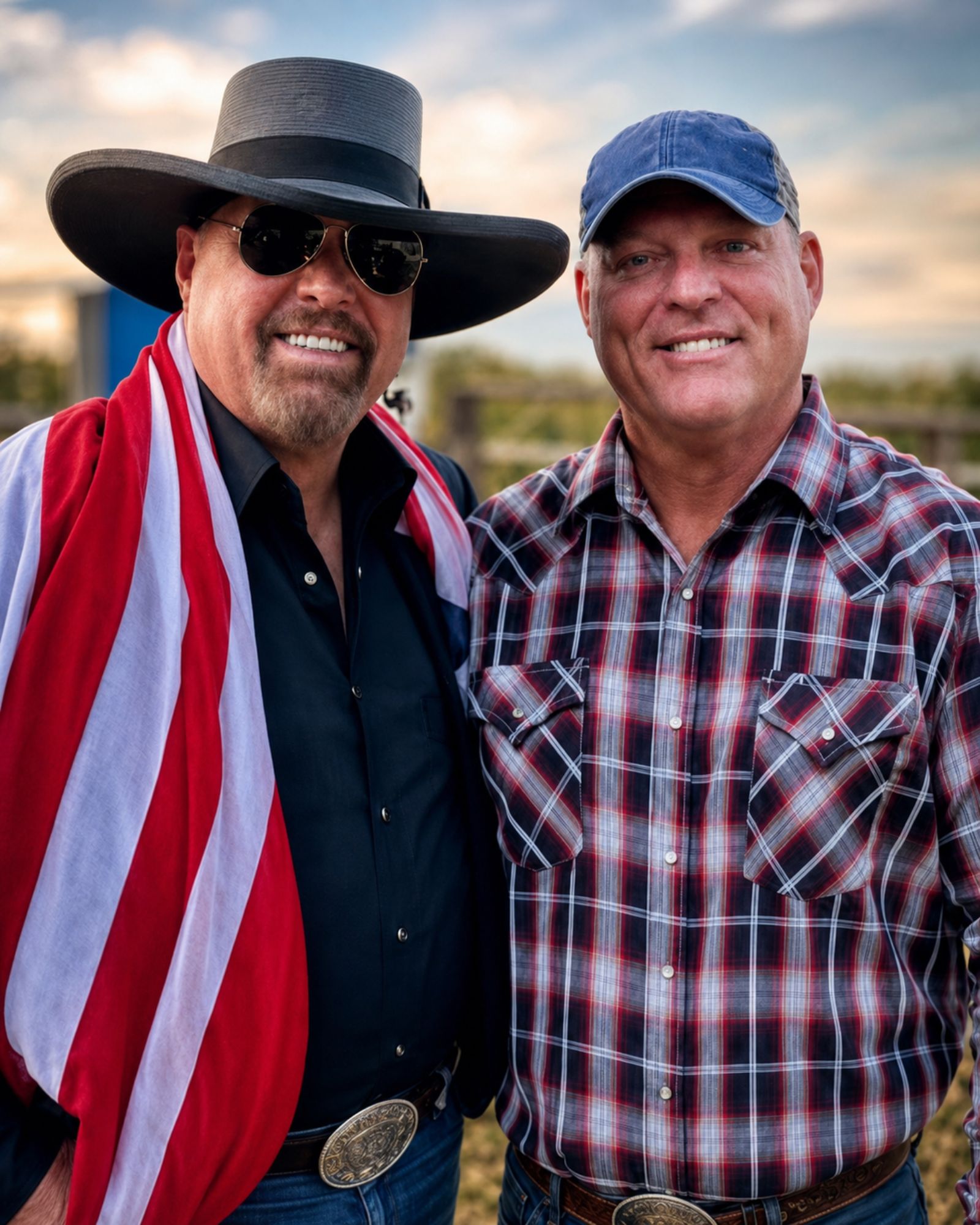
Before Eddie Montgomery had Montgomery Gentry, he had something even more complicated than a band: a family name already ringing out in Nashville. His younger brother, John Michael Montgomery, was the one who got there first. He was the smooth voice, the romantic one, the singer made for slow dances, wedding songs, and radio hits that felt instantly familiar.
Eddie, by comparison, came from a different corner of the same Kentucky music world. He was raised around bars, amps, late nights, and the kind of country music that sounded lived in rather than polished. The same roots shaped both brothers, but they did not grow into the same artist. Where John Michael Montgomery leaned into tenderness, Eddie Montgomery carried grit. He seemed built for the engine room, not the spotlight’s soft glow.
A Family That Already Knew Music
The Montgomery name was already becoming familiar in country music circles when Eddie Montgomery was still waiting for his own moment. That can be a blessing, but it can also be a burden. People hear the last name and start comparing before the new artist even gets a chance to sing. Eddie Montgomery lived with that reality, watching John Michael Montgomery rise with songs like “Life’s a Dance,” “I Love the Way You Love Me,” and “I Swear.”
Those songs were everywhere. They were the kind of records that made people stop what they were doing. They were romantic, emotional, and cleanly delivered. John Michael Montgomery’s success was real and deserved, but for Eddie Montgomery, it also meant standing in the shadow of a brother who had already found the door and kicked it open.
That kind of pressure can break a person, or it can sharpen them. Eddie Montgomery chose the second path.
Waiting for the Right Sound
Eddie Montgomery did not try to copy what was working for John Michael Montgomery. That would have been the easy road, and also the wrong one. Eddie Montgomery had a rougher voice and a tougher sense of rhythm. He seemed less interested in perfection than in honesty. The music in his blood needed dirt under its nails.
When Troy Gentry came into the picture, something clicked. Troy Gentry brought harmony, energy, and a kind of straight-ahead country confidence that matched Eddie Montgomery’s edge. Together, they formed Montgomery Gentry, and suddenly Eddie Montgomery had found the outlet that fit him best.
Some singers are built for polish. Some are built for scars. Eddie Montgomery was the second kind.
Then Came Montgomery Gentry
Montgomery Gentry did not sound delicate, and that was the point. When “Hillbilly Shoes” arrived, it made the statement immediately. This was not a song designed for satin tablecloths and candlelit receptions. It sounded like a truck door slamming, a barroom floor getting walked on, and two Kentucky boys refusing to smooth off the rough edges that made them real.
That sound mattered because it gave Eddie Montgomery his own identity. He was no longer simply John Michael Montgomery’s older brother. He became half of a duo that stood for a different side of country music: rowdy, proud, working-class, and unafraid to sound like the night had gotten a little louder than planned.
What made Montgomery Gentry work was not just volume or attitude. It was truth. Eddie Montgomery sang like someone who had seen enough life to know better than to pretend. The songs spoke to people who wanted country music with muscle in it, songs that could fit in a bar, on a back road, or in a pickup with the windows down.
Two Brothers, Two Different Roads
The story of Eddie Montgomery and John Michael Montgomery is not really a rivalry story. It is a story about two brothers from the same Kentucky house who took different roads and made those roads matter. One brother sang the slow dance. The other brought the fight after closing time.
That difference is what made Eddie Montgomery compelling. He did not need to out-smooth his brother. He did not need to out-romance the chart-toppers. He just needed to be unmistakably himself. And once Montgomery Gentry found its voice, there was no confusion anymore. Eddie Montgomery had stepped out of the family comparison and into his own legacy.
A Legacy Built on Grit
Eddie Montgomery’s career reminds us that success in country music does not always arrive in the same shape. Sometimes it is a tender ballad that wins the wedding crowd. Sometimes it is a rough-edged anthem that feels more like truth than entertainment. Eddie Montgomery made his mark by choosing the second path and owning it completely.
He watched his little brother make it first. Then he built a country sound too rough to be confused with his. That takes patience, confidence, and a strong sense of self. Eddie Montgomery had all three, and that is why his place in country music stands on its own.
Post navigation
Alan Jackson’s Memorial Day Performance: A Night America Will Remember
Tonight feels different. On the West Lawn of the U.S. Capitol, under the open sky and in front of a nation reflecting on sacrifice, Alan Jackson will step onto the stage and sing. For many viewers, it may be the first time they fully realize how rare this moment truly is.
Alan Jackson is living with Charcot-Marie-Tooth disease, a degenerative nerve condition that affects how the body moves and functions over time. It is not the kind of challenge that can be hidden for long, and it has changed the way he performs. Yet it has not taken away his voice, his presence, or the deep connection he shares with fans across America.
A Performance With Meaning Beyond Music
This is not just another concert. The 37th National Memorial Day Concert arrives during America’s 250th anniversary year, giving the evening even more emotional weight. Memorial Day always carries a solemn meaning, but this year the feeling is especially strong. It is a time to remember the men and women who gave their lives in service to the country, and the families who continue to carry that loss.
Alan Jackson’s appearance brings a personal layer to that remembrance. He is not there to chase headlines or promote a new tour. He is there to honor people who never came home. That simple truth gives the performance a quiet power.
“Tonight is bigger than one singer, one stage, or one song. It is about memory, gratitude, and the people who made the ultimate sacrifice.”
Joe Mantegna, Gary Sinise, and a Night of Tribute
The evening is being hosted by Joe Mantegna and Gary Sinise, two familiar and respected voices for military appreciation and public service. Their presence helps shape the concert into something more than entertainment. It becomes a national gathering, one that blends music, stories, and remembrance in a way that feels deeply human.
Joining Alan Jackson are artists like Jamey Johnson and Mickey Guyton, each bringing their own voice to the evening. Jamey Johnson’s background adds a special resonance to the concert, since he spent eight years in the Marine Corps before ever picking up a guitar in Nashville. That kind of history matters on a night built around service and sacrifice.
Mickey Guyton, known for her powerful voice and emotional honesty, will also contribute to the moment with a performance that helps widen the emotional range of the broadcast. Together, the lineup makes the concert feel layered, respectful, and unforgettable.
There is another reason tonight feels so significant. Alan Jackson’s final concert, “Last Call: One More for the Road,” is already sold out. The June 27 show at Nissan Stadium in Nashville drew massive interest, with 55,000 seats claimed. Fans know they are witnessing the end of an era.
Luke Bryan, Carrie Underwood, Eric Church, and Miranda Lambert are all expected to appear for that farewell event, turning it into a sendoff that honors not only Alan Jackson’s career, but the influence he has had on country music as a whole. For generations of listeners, his songs have been part of weddings, road trips, heartbreaks, and small-town memories.
Still, tonight’s Memorial Day concert carries a different kind of goodbye. It is quieter. More reflective. And in some ways, more moving.
Why This Moment Matters So Much
People are drawn to live television for many reasons, but every now and then, a performance becomes larger than the program around it. That is what is happening here. Alan Jackson standing on the West Lawn of the U.S. Capitol is not just a musical appearance. It is a reminder that courage can look like showing up, even when life has become more difficult.
For fans, the feeling is bittersweet. There is gratitude for the chance to hear him again, but also the knowledge that every performance now carries extra weight. Time changes everything, especially when health is involved. That is why this broadcast may feel like one of those rare nights people remember exactly where they were when they watched it.
And the best part is that no ticket is required. Viewers can watch on PBS from home, with nothing more than a television and a few quiet minutes to take it in. In a season filled with noise, that simplicity may be what makes the evening so powerful.
Alan Jackson may be fighting a condition that changes what his body can do, but tonight he will still do what he has always done best: stand before an audience and sing with honesty. For veterans, families, fans, and anyone who understands the cost of service, that is enough to make this Memorial Day performance unforgettable.