THEY BURIED HIM THE DAY AFTER HE DIED, IN A PRIVATE CEREMONY AT THE CAMPBELL FAMILY CEMETERY IN BILLSTOWN, ARKANSAS — POPULATION SMALL ENOUGH THAT MOST MAPS SKIP IT. NO CAMERAS. NO ANNOUNCEMENT UNTIL IT WAS ALREADY OVER. Six Grammys. Nine No. 1 songs. A Country Music Hall of Fame induction in 2005. The man who played guitar behind Sinatra, Elvis and the Beach Boys before anyone knew his name. The family posted the news to Facebook a full day later, thanking fans for an enormous outpouring of love. That was the whole announcement. Dolly Parton wrote that he was one of the greatest voices of all time. Brian Wilson, who had toured with him in the Beach Boys, wrote that he was at a loss. Brad Paisley thanked him for the grace and class he brought to country music. Two months before he died, his final album Adios was released — recorded in secret back in 2012, before the disease took too much. His daughter Ashley admitted the hardest part plainly: he had no idea the album existed. He had no idea when he won the Grammy. He recorded 64 albums. He was buried within walking distance of the house where he was born. – Country Music
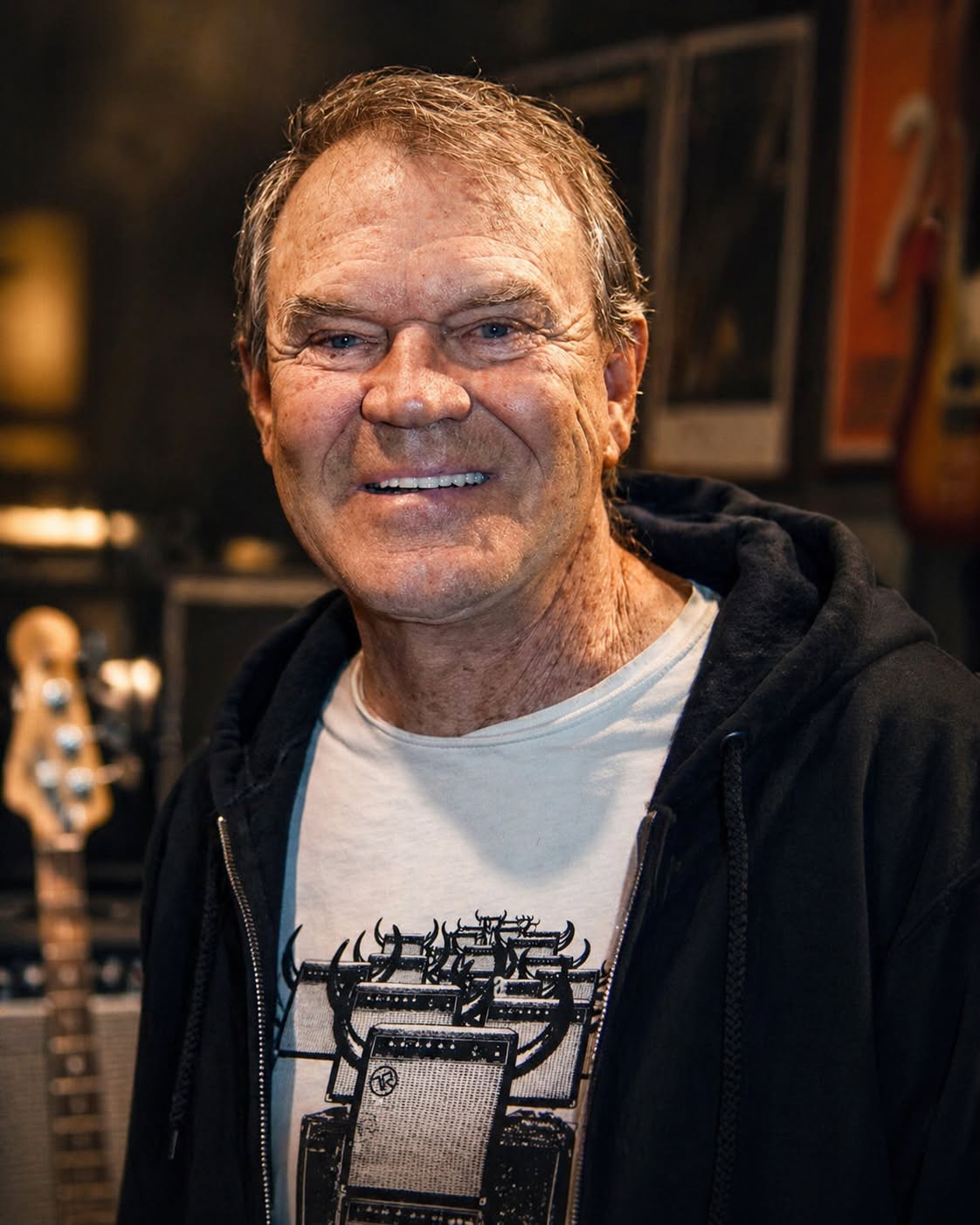
Glen Campbell’s Quiet Farewell: A Life in Music, Family, and Faith
Glen Campbell’s final goodbye was as private as it was moving. He was laid to rest in a small family cemetery in Billstown, Arkansas, close to the place where his life began. There were no cameras, no public ceremony, and no grand stage lights. The family shared the news a day later, simply thanking fans for the overwhelming love that had poured in. For an artist who spent so much of his life in front of millions, the silence around his burial felt deeply personal.
That quiet ending stood in contrast to a career that was anything but small. Glen Campbell earned six Grammys, placed nine songs at No. 1, and was inducted into the Country Music Hall of Fame in 2005. Long before many listeners knew his face, they had already heard his guitar work behind legends like Frank Sinatra, Elvis Presley, and the Beach Boys. He was one of those rare musicians whose sound reached people before his name did.
A Career Built on Talent and Endurance
Glen Campbell was more than a singer. He was a working musician with a remarkable range, recording 64 albums over the course of his career. He could move from session work to stardom without ever losing the feel of a player who understood the craft from the inside. Fans loved the polish, but they also loved the warmth. That combination made him feel both larger than life and unmistakably human.
In later years, his family faced the painful realities of his illness with honesty and grace. Two months before he died, Adios was released as his final album, even though it had been recorded in secret years earlier. Ashley Campbell later said plainly that her father did not know the album existed when it was made public, and he did not know when it won the Grammy. Those details gave the record an especially emotional weight. It was a final gift from a life that had already given so much.
Tributes That Spoke Volumes
After Glen Campbell’s death, tributes came quickly from the people who knew the size of his influence. Dolly Parton called him one of the greatest voices of all time. Brian Wilson, who had toured with him during the Beach Boys years, said he was at a loss for words. Brad Paisley thanked Glen Campbell for the grace and class he brought to country music. Each message pointed to the same truth: Glen Campbell was not only admired, he was loved.
In the end, Glen Campbell’s story was never just about charts or awards. It was about music that outlived the moment, family that held close, and a legacy buried near the soil that first knew his name.
He was buried within walking distance of the house where he was born. For many fans, that detail says everything. The man who traveled the world through song finally came home, resting in the place where his story first began.
Post navigation

Some songs arrive like entertainment. Others arrive like a confession.
“Chiseled in Stone” belongs to the second kind. The song tells the story of a man who storms into a bar after arguing with his wife, only to meet an older stranger who reminds him that he still has someone waiting at home. It is a simple scene, but the ache in it is enormous. What makes it unforgettable is that Max D. Barnes was not writing from a safe distance. Years earlier, in 1975, Max D. Barnes had lost his 18-year-old son, Butch, in a car accident. That kind of grief does not disappear; it changes the way a person hears every line about love, regret, and loneliness.
A Song Born From Real Loss
By the time Max D. Barnes was writing regularly with Vern Gosdin at Barnes’s home, both men understood that country music works best when it tells the truth without dressing it up. Out of those sessions came “Chiseled in Stone,” a song that feels less like a performance and more like a warning. It does not shout. It does not beg. It simply lays out the cost of taking someone for granted.
Vern Gosdin sang it with restraint, and that restraint is part of the song’s power. He never oversold the emotion. He let the words do the damage. That choice made the heartbreak land harder, because listeners were not pushed toward sorrow. They were quietly led there.
Why It Hit So Hard
The single reached No. 6 on the country charts, but chart positions only tell part of the story. In 1989, “Chiseled in Stone” won CMA Song of the Year, the first such victory of Max D. Barnes’s career. The award recognized what fans had already felt: this was not just a sad song, but a song that gave grief a shape people could recognize in their own lives.
People don’t always remember where a song peaked. They remember the line that made them stop breathing for a second.
Willie Nelson later called it the one song he needed to hear every week, which says a great deal about its reach. Some songs age into nostalgia. This one stayed alive because it spoke to something permanent: the shock of realizing too late what love was worth.
Why It Still Matters
“Chiseled in Stone” endures because it carries both craft and lived pain. Max D. Barnes knew the ache behind the story. Vern Gosdin knew how to sing it without decoration. Together, they created a song that has outlasted its era because it feels painfully human.
That is why so many listeners still return to it. The song does not simply describe regret. It gives regret a voice. And once that voice is heard, it is hard to forget.
Do you remember how you felt the first time you heard “Chiseled in Stone”?