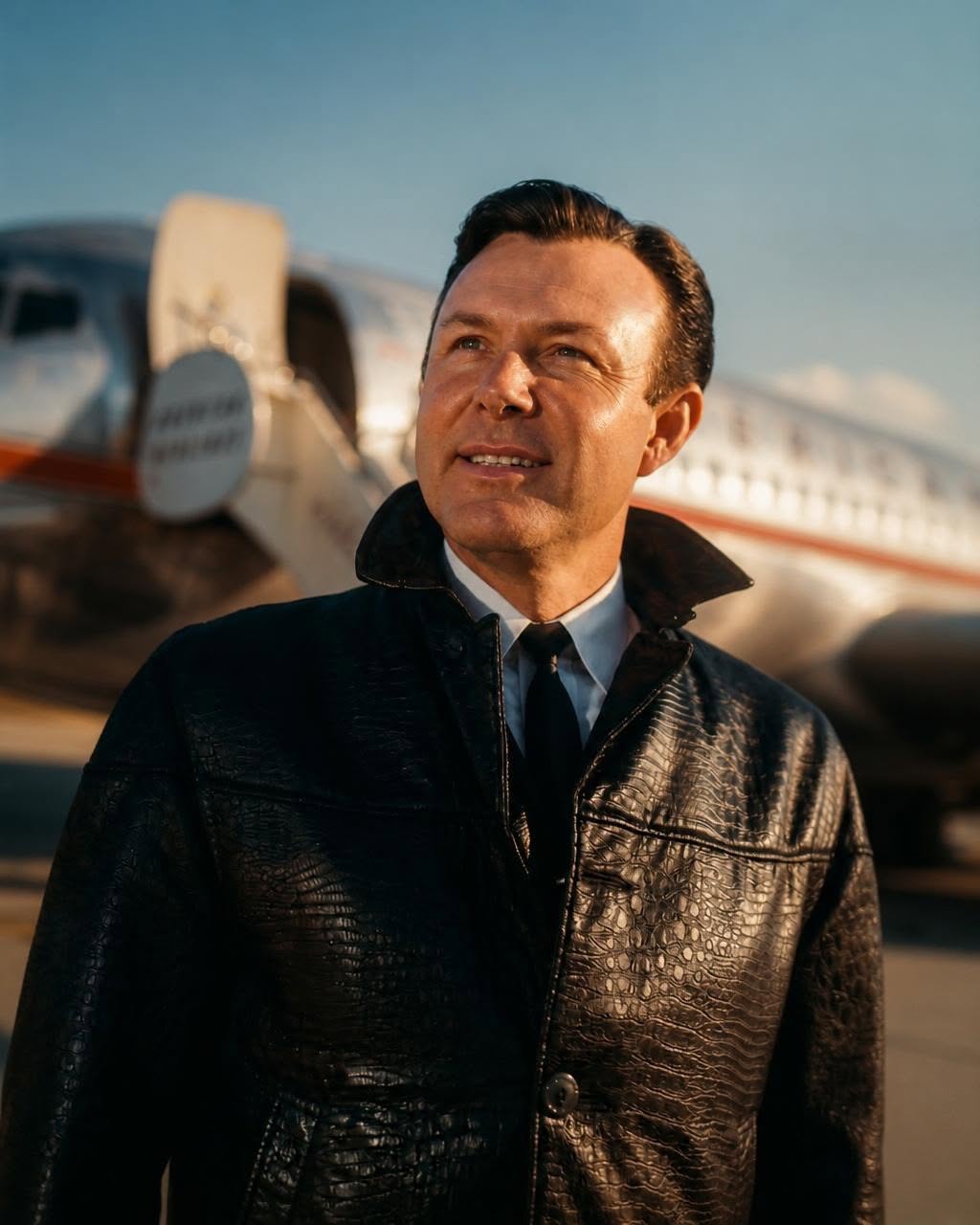
THEY HELD DOUBLE FUNERAL SERVICES IN NASHVILLE ON AUGUST 4, 1964 — ONE FOR HIM, ONE FOR THE PIANO PLAYER WHO DIED BESIDE HIM. THE COFFIN, BURIED UNDER FLOWERS SENT BY FANS, WAS DRIVEN THROUGH SILENT STREETS. THEN THEY TOOK HIM HOME TO TEXAS. Chet Atkins, Eddy Arnold, Ernest Tubb and Roy Acuff were there. They had been the ones searching the woods two days earlier, walking a twenty-square-mile grid alongside 700 volunteers, hoping to find him alive. The next afternoon in Carthage, hundreds filed past his casket at Hawthorn Funeral Home all morning. The Shreveport Times reported that the velvet-voiced singer drew his last packed house — that even in death, the Gentleman filled the room. They buried him on a two-acre plot off Highway 79, in the red hills where he grew up. Then the strangest thing happened. The records kept coming. Mary Reeves opened the vault, and the hits kept charting — for twenty more years. In 1967, the Country Music Hall of Fame elected him. Their inscription read that his rich voice brought millions of new fans to country music from every corner of the world. Thousands still drive out to that plot every year, from every state and dozens of countries. He never stopped filling the room. – Country Music
The Day the Music Stopped in Nashville — and Kept Going Afterward
On August 4, 1964, Nashville stood still for one of country music’s most heartbreaking farewells. Jim Reeves was given a funeral service in the city where his voice had helped shape a new kind of country sound, and the grief around him was deep enough to feel almost physical. Friends, fans, and fellow stars came to pay their respects, including Chet Atkins, Eddy Arnold, Ernest Tubb, and Roy Acuff. Only days earlier, some of those same men had joined the search in the woods after the plane crash that took Jim Reeves and his pianist Dean Manuel. What they had hoped would end in rescue ended instead in silence.
A final procession through a grieving city
The funeral was not a simple moment; it was a public pause. The coffin moved through streets lined with flowers sent by fans who had never met Jim Reeves but felt they knew him through the warmth in his songs. For many in attendance, this was the man whose smooth delivery had made heartbreak sound gentle and made the radio feel personal. In death, the same quiet dignity followed him.
After the Nashville service, Jim Reeves was taken home to Texas. He was buried in Carthage, on a two-acre plot off Highway 79, close to the red hills of East Texas where he grew up. That final return mattered. It brought the story full circle, from a boy in a small Texas town to one of the most widely loved voices in country music.
The voice did not disappear
What happened next may have seemed strange to outsiders, but it made perfect sense to fans. The records kept selling. Mary Reeves helped preserve and release his music, and the songs continued charting long after his burial. Jim Reeves had become more than a performer; he had become a lasting presence. His recordings kept finding new listeners, and his name remained alive in the business he had helped elevate.
That feeling was honored again in 1967, when the Country Music Hall of Fame inducted Jim Reeves. The recognition reflected what listeners had long understood: his rich voice carried country music to audiences far beyond its traditional borders. He helped make the genre feel broader, smoother, and more universal without losing its emotional center.
What remains in Carthage
Today, people still travel to Jim Reeves’s grave from across the United States and from around the world. They come not just for a famous name, but for the memory of a singer who made tenderness sound strong. The silence at that Texas plot says something the records never can: that some artists leave behind more than songs. They leave a space where memory keeps gathering.
Jim Reeves was mourned in Nashville, laid to rest in Texas, and carried forward by the music he left behind. The funeral ended, but the story did not. It still has listeners.
Before Loretta Lynn became a name that country music would never forget, she was a 28-year-old mother of four trying to turn one song into one chance. The story did not begin with comfort or confidence. It began with a seventeen-dollar guitar, a husband who believed in her, and a song written in about twenty minutes. That song was “I’m a Honky Tonk Girl.”
In early 1960, a small label in Hollywood cut the record. Nobody was planning a major campaign, so Loretta Lynn and Doolittle “Mooney” Lynn handled the work themselves. They mailed out thousands of copies and drove east from Washington State, stopping at radio stations along the way and asking DJs to play the record. It was a grass-roots push long before that kind of hustle had a name.
The effort paid off. By the summer of 1960, “I’m a Honky Tonk Girl” had climbed to number 14 on the country charts. That success brought an invitation that many singers dreamed about: an appearance at the Grand Ole Opry.
A Long Drive to Nashville
The trip to Nashville was not glamorous. Loretta Lynn and Doolittle arrived late and did not have enough money for a room. So Doolittle parked across the street from the Ryman Auditorium, and the two of them slept in the car. It was a hard night, but also the kind of night that seems to hold a whole future inside it.
When Loretta Lynn woke up, she could see the old tabernacle. Doolittle came back with a box of donuts, and soon they were ready for the biggest moment of their lives so far. On October 15, 1960, Loretta Lynn sang “I’m a Honky Tonk Girl” on the Grand Ole Opry stage.
Years later, Loretta Lynn said the main thing she remembered was tapping her foot the whole way through.
The Beginning of Something Bigger
That first Opry performance was not the end of the story. It was the start. Loretta Lynn was invited back again and again, and the Opry kept calling her for weeks. The response was not a one-night thank-you. It was a sign that something real was happening, something built on talent, persistence, and the plain courage to show up when the odds were not friendly.
What makes the story endure is not just the fame that came later. It is the image of a young mother, far from home, sleeping in a car before her debut and walking onto one of country music’s most respected stages the next day. That contrast says everything about the kind of life Loretta Lynn was living at the start: uncertain, practical, and full of determination.
Long before the awards, the landmark songs, and the legend, there was a parked car, a box of donuts, and a woman who kept going anyway. That is where the myth begins, but also where the truth begins.