HE WAS 32. THE NIGHT WAS JANUARY 7, 1967. THE LAST BLACK MAN TO STAND ON THAT STAGE HAD BEEN GONE FOR 26 YEARS. Charley Pride grew up in Sledge, Mississippi, second of eleven children on a sharecropper’s plot, listening to the Grand Ole Opry on his father’s Philco. At fourteen he ordered a ten-dollar guitar from the Sears catalog and learned Hank Williams songs off the radio. Then baseball. The Memphis Red Sox. The Army. A smelting plant in Montana. In January 1966, RCA released his first single and mailed it to disc jockeys with no publicity photo attached. For a year, country radio played a voice and never saw a face. Then January 7, 1967. He was 32. The only Black performer the Opry had known before him was a harmonica player named DeFord Bailey, and Bailey had been gone since 1941. Ernest Tubb introduced him. He sang two songs. The second was Hank Williams — “I Can’t Help It (If I’m Still in Love with You)” — the same song he’d taught himself in a sharecropper’s house, off that same radio show, twenty years before. He said later he was so nervous he never understood how he got through it. Twenty-nine number ones followed. Opry member in 1993. Hall of Fame in 2000. He died in December 2020 at 86, one month after singing at the CMA Awards. – Country Music
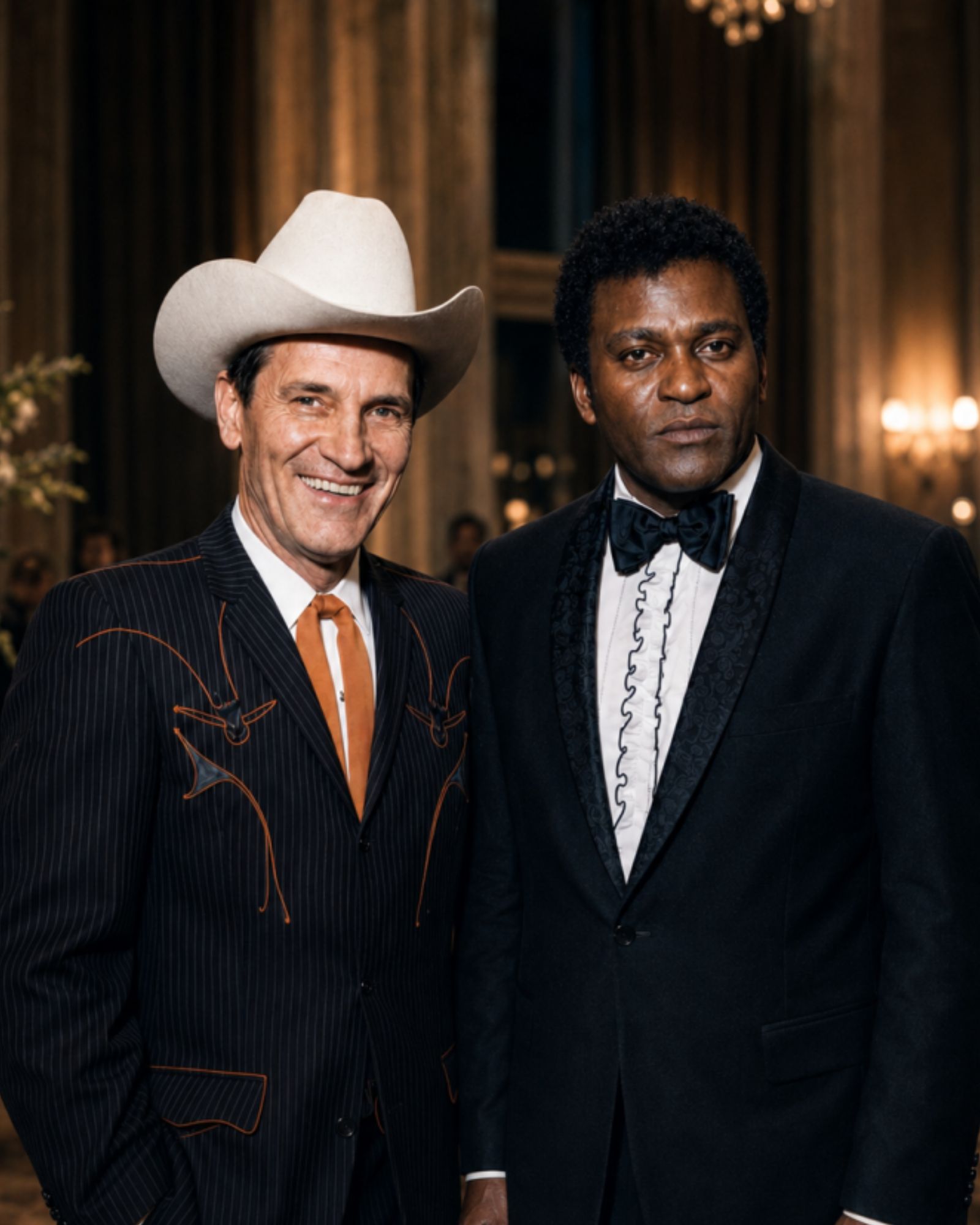
The Night Charley Pride Walked Into Country Music History
He was 32 years old when the lights came up on January 7, 1967, and the room felt bigger than the stage beneath him. Charley Pride had already lived more than one life by then. He had grown up in Sledge, Mississippi, the second of eleven children on a sharecropper’s plot, listening to the Grand Ole Opry on his father’s Philco radio. As a boy, he taught himself country songs by ear. By 14, he had ordered a ten-dollar guitar from the Sears catalog and started chasing the sound he heard on the radio every week.
Before the applause, there was baseball. There was the Memphis Red Sox. There was the Army. There was work in a smelting plant in Montana. Charley Pride did not arrive in Nashville by a straight road. He arrived there carrying pieces of several different American dreams, and none of them were small.
In January 1966, RCA released Charley Pride’s first single, “Snakes Crawl at Night,” and mailed it to country disc jockeys without a publicity photo attached. For a year, country radio played the voice and never saw the man. That detail matters, because the voice had to stand alone first. It had to earn trust before it earned recognition.
Charley Pride had learned country music from the same place many listeners had: the radio. He had absorbed the songs of Hank Williams, Ernest Tubb, and Roy Acuff long before he ever set foot on the Grand Ole Opry stage. The music was familiar. The world around the music was not.
January 7, 1967
When Charley Pride stepped onto the Grand Ole Opry stage, he was the only Black performer the Opry had known before had been DeFord Bailey, whose Opry career ended in 1941. That gap covered 26 years. It made the moment larger than one debut. It made it historical before Charley Pride even sang a note.
Ernest Tubb introduced him. Charley Pride sang two songs. The second was Hank Williams’ “I Can’t Help It (If I’m Still in Love with You),” the same song he had learned years earlier in a sharecropper’s house, listening to that same music on the radio. Later, Charley Pride would say he was so nervous he never understood how he got through it.
Some nights are not about comfort. They are about crossing a line you once thought was too far away.
That was what happened on January 7, 1967. Charley Pride did not just perform. He opened a door and walked through it with steady hands.
What Came After
The years that followed proved the debut was not a fluke. Charley Pride went on to score 29 number-one country hits. He became a member of the Grand Ole Opry in 1993. In 2000, he entered the Country Music Hall of Fame. By then, the voice that had once traveled without a face had become one of the most recognizable in country music.
Charley Pride died in December 2020 at age 86, only weeks after singing at the CMA Awards. But the night of January 7, 1967, still stands out because it was never only about fame. It was about perseverance, talent, and the quiet force of being ready when history called.
Charley Pride began as a boy in Mississippi listening closely to the radio. He ended as a landmark in American music. And somewhere between those two points, he turned a long, uncertain road into a story that still deserves to be told.
Post navigation
Don Williams was called the Gentle Giant, and plenty of listeners took that label as a slight. Too smooth, too calm, too easy, they said. The voice never seemed to strain, never clawed at the air, never asked to be noticed. To some ears, that sounded like country music for the background.
But then there is “Good Ole Boys Like Me,” released in March 1980 from the album Portrait. Written by Bob McDill, it reached No. 2 on the Billboard Hot Country Singles chart and became one of the clearest examples of what Don Williams could do better than almost anyone: make a song feel lived in, not performed. The track does not shout its meaning. It lets it arrive slowly, like a memory you did not realize you still carried.
A song about leaving, and never really leaving
“Good Ole Boys Like Me” is built on movement. It names literary figures, Southern icons, and the kind of childhood details that stay lodged in a person’s mind long after the house, the town, or the boyhood self is gone. At its center is a young man trying to step out of his origins, trying to learn a new way of speaking and a new way of being seen. But the song understands something painful: reinvention does not erase where you came from. It only teaches you how to carry it more quietly.
That is why Don Williams mattered so much on this record. A louder singer might have turned the song into a sermon or a confession. Don Williams does neither. He sounds almost conversational, but that calm is not emptiness. It is restraint. It is trust. He lets Bob McDill’s writing do the heavy lifting, and in doing so, he makes every line land harder.
Why the softness works
There is a reason the song still feels sharp decades later. It is not just about nostalgia or Southern identity. It is about class, embarrassment, ambition, and the strange ache of trying to become someone else without fully abandoning the person you were. That kind of emotional tension does not need a dramatic vocal. It needs honesty.
Sometimes the quietest voice is the one that tells the hardest truth.
Don Williams understood that better than most. His gift was not force. It was control. He could take a lyric that was already full of feeling and keep it from spilling over. In “Good Ole Boys Like Me,” that discipline gives the song its lasting weight.
What people hear now
So when someone says Don Williams’ records put them to sleep, the answer is simple: maybe they were listening for drama in the wrong place. “Good Ole Boys Like Me” is not sleepy. It is reflective, wounded, and wiser than it first appears. It hears the cost of leaving, the pull of home, and the way a past life can follow a man all the way into success.
That is why the song endures. Not because it is loud, but because it is true.