“YOU COULD HEAR THE SAME JOKE 100 TIMES AND STILL LAUGH AS HARD AS THE FIRST.” That’s how Jimmy Fortune remembers Harold Reid — the man behind country music’s funniest alter ego. In 1974, Harold created a character named Lester “Roadhog” Moran — the hopeless emcee of a tiny small-town radio show who couldn’t carry a tune to save his life. The Statler Brothers recorded an entire parody album in character as “Lester Roadhog Moran and the Cadillac Cowboys.” It became a cult classic that fans still quote decades later. But here’s what people forget: Harold Reid wasn’t just the comedian. He was the bass voice behind 58 Top 40 hits, three Grammys, and nine CMA Vocal Group of the Year awards. He wrote “Bed of Rose’s” — a song that reached a whole new generation through Grand Theft Auto: San Andreas. “His singing, his songwriting and his comedy made generations happy,” his family wrote. “He has taken a piece of our hearts with him.” After 47 years on the road, Harold retired to an 85-acre farm in Staunton, Virginia — the same small town where he was born. He never moved to Nashville. Not once. He once said: “Some days I sit on my porch and have to pinch myself. Did that really happen — or did I just dream it?” It was all real, Harold. Every laugh. Every note. – Country Music
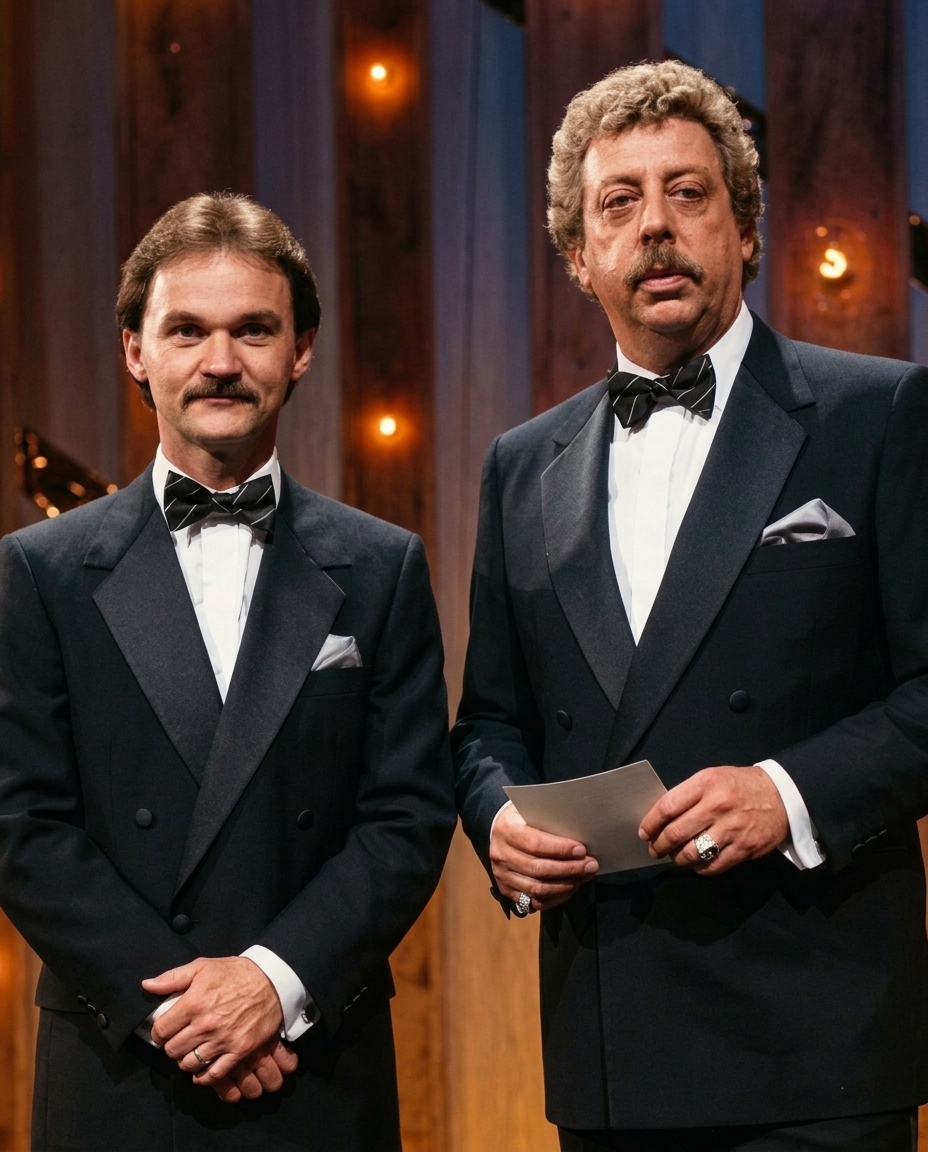
“You could hear the same joke 100 times and still laugh as hard as the first.”
That is how Jimmy Fortune once described Harold Reid, the beloved heart and humor of The Statler Brothers. For millions of country music fans, Harold Reid was impossible to forget. He could make a crowd laugh until tears rolled down their faces, then turn around and sing a line so deep and powerful that the room would suddenly go silent.
Most people knew Harold Reid as the booming bass voice standing at the end of the line with The Statler Brothers. But behind that voice was something even more unusual: Harold Reid had perfect timing. Not just as a singer, but as a comedian.
The Birth of Lester “Roadhog” Moran
In 1974, Harold Reid created one of the strangest and funniest characters in country music history: Lester “Roadhog” Moran.
Lester was supposed to be the hopeless host of a tiny local radio show. He talked too much, forgot names, stumbled through introductions, and sang like a man who had absolutely no business standing near a microphone.
That was exactly the joke.
The Statler Brothers fully committed to the idea. Instead of simply making a few comedy sketches, they recorded an entire album as “Lester Roadhog Moran and the Cadillac Cowboys.” The album sounded like an old-fashioned radio show from a dusty little town where everything was slightly falling apart.
Harold Reid disappeared completely into the character. Lester was awkward, loud, proud, and hilariously terrible. Fans loved every minute of it.
Even decades later, country music fans still quote lines from the album. The strange thing was that the jokes never seemed to get old. Harold Reid could tell the same story or deliver the same punchline for years, and people would still laugh like they were hearing it for the first time.
“You could hear the same joke 100 times and still laugh as hard as the first.”
Jimmy Fortune was right. Harold Reid had that rare gift.
Much More Than the Funny One
But Harold Reid sometimes faced a strange problem. Because he was so funny, people occasionally forgot just how talented he really was.
Harold Reid was not simply the comedian of The Statler Brothers. Harold Reid was one of the group’s foundations.
That deep bass voice helped power 58 Top 40 hits. Harold Reid stood beside Don Reid, Phil Balsley, Lew DeWitt, and later Jimmy Fortune through one of the most successful careers in country music history. Together, The Statler Brothers won three Grammy Awards and nine CMA Vocal Group of the Year awards.
Harold Reid was also a gifted songwriter. One of Harold Reid’s best-known songs was “Bed of Rose’s”, a heartfelt story-song that became one of The Statler Brothers’ signature hits.
Years later, the song unexpectedly found a new audience. When “Bed of Rose’s” appeared in Grand Theft Auto: San Andreas, younger listeners discovered Harold Reid and The Statler Brothers for the first time. Some of those players had never heard of the group before. Suddenly, they were searching for old records, live performances, and interviews.
It was proof that Harold Reid’s work could travel across generations without losing its magic.
The Farm in Staunton
After 47 years on the road, Harold Reid finally stepped away from the spotlight.
Many country stars spend their lives chasing the next city, the next stage, or the next award. Harold Reid did the opposite.
Harold Reid went home.
Harold Reid retired to an 85-acre farm in Staunton, Virginia, the same town where Harold Reid had been born. Even after decades of success, Harold Reid never moved to Nashville. Not once.
That detail says almost everything about the man Harold Reid was.
Harold Reid loved country music, but Harold Reid never seemed interested in becoming larger than life. Fame followed Harold Reid, but Harold Reid stayed rooted to the same quiet place where everything had started.
On that porch in Staunton, Harold Reid sometimes looked back at the journey and could hardly believe it himself.
“Some days I sit on my porch and have to pinch myself. Did that really happen — or did I just dream it?”
For Harold Reid, the answer may have felt impossible to believe.
But it was real.
Every sold-out crowd. Every joke. Every note sung in that unforgettable bass voice.
When Harold Reid passed away, Harold Reid’s family wrote words that perfectly captured what Harold Reid meant to so many people:
“His singing, his songwriting and his comedy made generations happy. He has taken a piece of our hearts with him.”
Harold Reid did leave with a piece of those hearts.
But Harold Reid also left something behind: laughter that still echoes, songs that still play, and the comforting feeling that somewhere, Lester Roadhog Moran is still standing behind a microphone, making everyone laugh one more time.
Post navigation
In early 1993, Johnny Cash stepped into LSI Studios in Nashville and did something both simple and quietly defiant: Johnny Cash recorded eleven original songs. No comeback campaign. No major label push. No promise that radio would care. Just Johnny Cash, a room, a microphone, and the kind of belief an artist has to carry alone when the world has stopped clapping.
By then, the industry had already started acting as if Johnny Cash belonged to another time. Country radio had drifted away. The charts were moving in a different direction. Johnny Cash had not had a major hit in years, and in Nashville, that kind of silence can feel like a verdict. Still, Johnny Cash kept writing. Johnny Cash kept recording. Johnny Cash kept showing up.
That may be the most remarkable part of this story. Johnny Cash did not make those songs because the market was asking for them. Johnny Cash made them because that is what songwriters do when the noise fades and the need to tell the truth remains.
A Lost Record From a Quiet Crossroads
Those 1993 recordings never became the album they might have been. Instead, they were shelved, tucked away while Johnny Cash moved into another historic chapter of his career. Not long after, the partnership with Rick Rubin would help introduce Johnny Cash to a new generation. The legend returned, but in a different form than Nashville had expected.
And so those eleven songs sat in the shadows for decades.
There is something haunting about that. Not tragic, exactly. More revealing than tragic. Because hidden inside that vault was a version of Johnny Cash standing at a crossroads: not the young rebel in black, not yet the late-career icon reclaimed by critics, but a working artist still searching, still shaping, still believing the songs mattered even when the business did not.
Songwriter Finally Arrives
More than thirty years later, the recordings finally found daylight. In June 2024, Johnny Cash’s son, John Carter Cash, and producer David Ferguson helped bring those sessions to life as Songwriter. The album did not feel like a gimmick or a half-finished relic. It felt intimate. Thoughtful. Unhurried. The kind of record that lets you hear the grain in the voice and the weight behind the words.
Musicians such as Vince Gill, Marty Stuart, and Dan Auerbach added their guitars, but not in a way that crowded the heart of the music. Their presence felt more like a bow than an interruption. The center of the album remained where it always belonged: with Johnny Cash, with the writing, with the calm force of a man who never needed to shout to sound certain.
Sometimes the most powerful album is not the one made at the peak of fame, but the one made when the artist had every reason to stop and chose not to.
Why Did the World Need So Long?
That is where the story becomes uncomfortable in the best possible way. Because once Songwriter arrived, many listeners and critics called it beautiful, moving, even masterful. And maybe it is. Maybe the praise is deserved. But it raises a harder question: where was that faith in 1993?
If Johnny Cash had released these songs then, would the same people have heard greatness? Or would they have dismissed the album as out of step, too plain, too serious, too stubbornly Johnny Cash for an industry chasing something newer and shinier?
It is easy to honor an artist once history has made the argument for us. It is harder to recognize value when it stands in front of us, unpolished and unfashionable, asking only to be heard.
That tension gives Songwriter its deeper emotional pull. The album is not just a collection of rediscovered songs. It is also a reminder of how often art gets validated too late. How often a voice must become untouchable before people admit it was always essential.
A Masterpiece, or a Mirror?
Maybe Songwriter is a masterpiece. Maybe that word fits. But perhaps the album also serves another purpose. Perhaps it holds up a mirror to the rest of us: to the industry that moved on, to the culture that forgot how to listen, to the habit of treating artists as timeless only after time has taken them away.
Johnny Cash did not need three decades to tell the truth. The songs were already there in 1993, waiting patiently in the dark. What changed was not the heart of the music. What changed was our willingness to hear it.
And that may be the most moving part of all. Johnny Cash never stopped being Johnny Cash. The world just took 31 years to catch up.