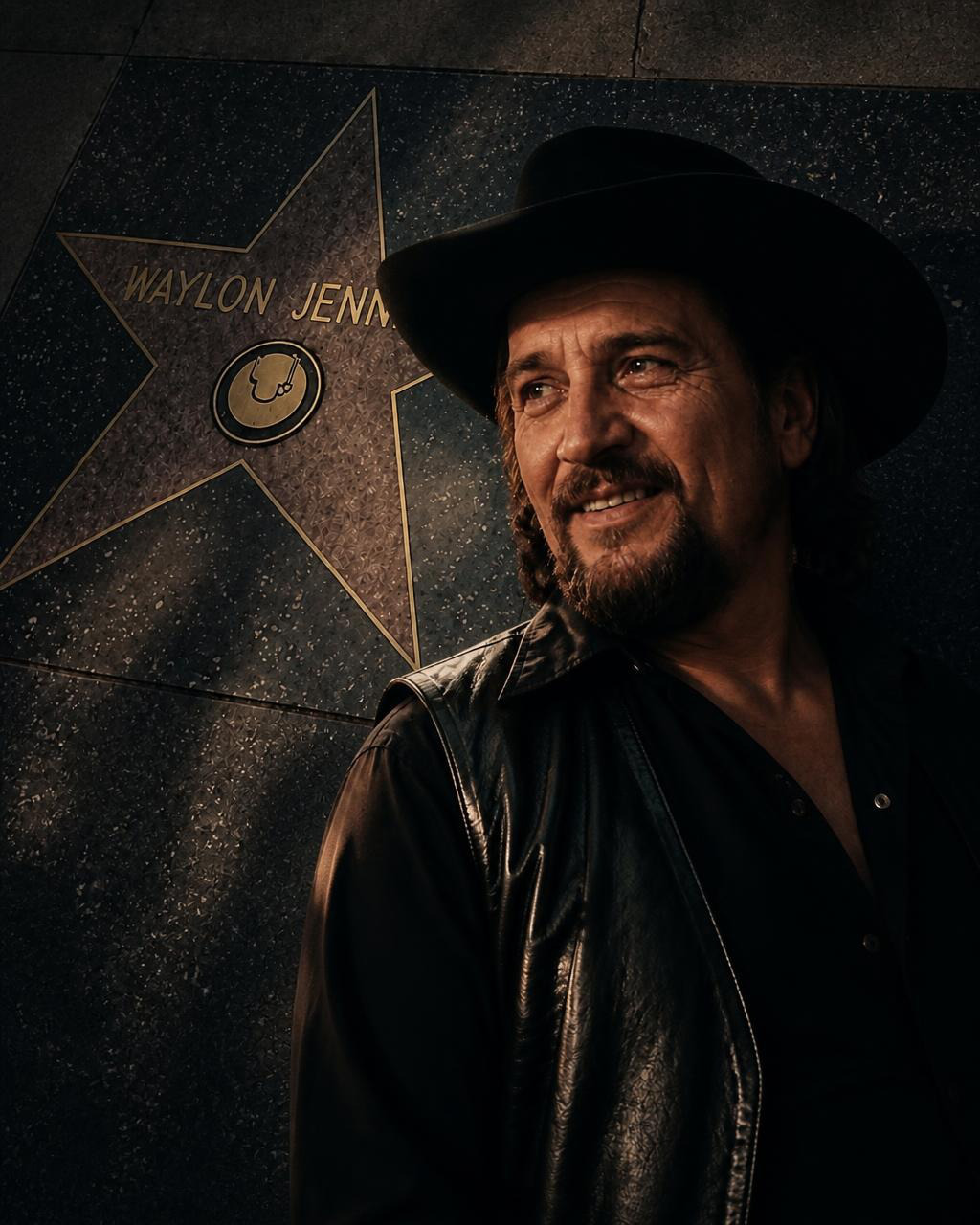
WAYLON JENNINGS NEVER NEEDED HOLLYWOOD’S APPROVAL. NEARLY 25 YEARS AFTER HIS DEATH, HOLLYWOOD FINALLY CAME LOOKING FOR HIM. The Hollywood Chamber of Commerce has selected Waylon for the Walk of Fame’s Class of 2027. Among 32 honorees, he is the only person being recognized posthumously. He joins the Recording category alongside the Ramones, Grandmaster Flash, and Sia. Sam Elliott is also part of the class, a pairing that will probably make more than a few country fans smile. Waylon was inducted into the Country Music Hall of Fame in 2001. He died the following year, long before Hollywood placed his name on its famous list. Now the man who spent his career refusing to play by the industry’s rules will finally have a star on Hollywood Boulevard. It is a fitting honor. The painful part is that the crowd will be there, the cameras will be there, and Waylon will not. Fans have known he belonged there for decades. – Country Music
Waylon Jennings spent his career acting like the rules were optional. He did not sound like a polished Nashville product, and he never dressed like one either. He built his legacy on instinct, grit, and a stubborn refusal to let the industry tell him who he was supposed to be. That is what makes the latest honor feel so powerful: nearly 25 years after his death, Hollywood has finally decided to place his name where millions of tourists will see it.
The Hollywood Chamber of Commerce has selected Waylon Jennings for the Hollywood Walk of Fame’s Class of 2027 in the Recording category. He is the only posthumous honoree in the class, which also includes names such as the Ramones, Grandmaster Flash, and Sia. Sam Elliott is part of the same class too, a pairing that feels right for anyone who has ever loved country music with a little dust on its boots.
A Long Wait for a Familiar Name
This recognition arrives after a long delay, but not because Waylon Jennings needed permission to matter. He already mattered. Waylon Jennings was inducted into the Country Music Hall of Fame in 2001, a formal acknowledgment of a career that had already changed the shape of country music. He died on February 13, 2002, following complications related to diabetes, leaving behind a catalog that still carries his voice, attitude, and emotional weight.
There is something bittersweet about the timing. The crowd will gather. The speeches will be made. The photographs will be taken. But the man at the center of it all will not be there to shrug it off, smile in that familiar way, or turn the moment into something more human than ceremonial.
Fans never waited for Hollywood to validate Waylon Jennings. They already knew he belonged.
The Outlaw Who Kept His Distance
Waylon Jennings earned his outlaw reputation by demanding creative control and refusing to be boxed in. He wanted the songs he wanted, the studio he wanted, and the musicians he wanted. That independence helped define outlaw country and gave generations of listeners a model for how an artist could stay true to himself without sounding defensive or distant.
That is why this star feels larger than a sidewalk tribute. It is a late recognition of a man who spent his life pushing back against the idea that success had to look a certain way. He never needed Hollywood’s approval to become an icon. He became one by staying unmistakably himself.
A Fitting Honor, Even If It Comes Late
There is real grace in the fact that Waylon Jennings is finally being added to the Walk of Fame. The honor does not change his story, but it does place him in a new frame for a new generation. It says that the music industry, and the entertainment world around it, still has room to catch up to people who were ahead of their time.
In the end, the star on Hollywood Boulevard will not be about arrival. Waylon Jennings arrived long ago. The star is simply Hollywood admitting it, at last.