Tracked by Phone, Found Behind Yellow Tape: Malcolm Harris’ Final Hours on Skyline Drive. – Daily News
The call started as irritation.

Then worry.
Then fear.
Malcolm Harris did not miss work.
He didn’t oversleep. He didn’t forget. He didn’t disappear without saying something. At 25, Malcolm was the kind of young man who called in if he was running five minutes late. Responsibility wasn’t forced on him — it was stitched into him.
So when his father couldn’t reach him Wednesday morning, something felt wrong.
By noon, wrong turned into urgent.
By evening, the family had already filed a missing person report.
“He is going to work,” his aunt, Tyronza Davis-Jackson, kept saying. “And if he’s not, he’s going to call.”
But Malcolm hadn’t called.
And his phone — that glowing digital lifeline we all depend on — had been sitting in one place since 10:49 a.m.
The location pinged from a quiet stretch of Skyline Drive.

A vacant house.
The kind people drive past without noticing.
That’s when the family did something that would later spark debate across the city: they went themselves.
Some say families shouldn’t investigate. They should wait. Let the system work.
But what parent, what aunt, what brother, waits calmly when their loved one vanishes?
Tyronza tracked the address, drove to Skyline Drive, and flagged down a nearby officer. She didn’t storm the house. She didn’t force entry. She simply pointed.
“This one,” she said.
Police entered.
Minutes later, the first strip of yellow tape went up.
Tyronza says she felt the weight before anyone spoke the words.
“When I saw that first piece of yellow tape go up,” she said, “it just weighed heavy on me.”
Inside the vacant home, Malcolm Harris was found dead from a gunshot wound.
He would have turned 26 that Saturday.
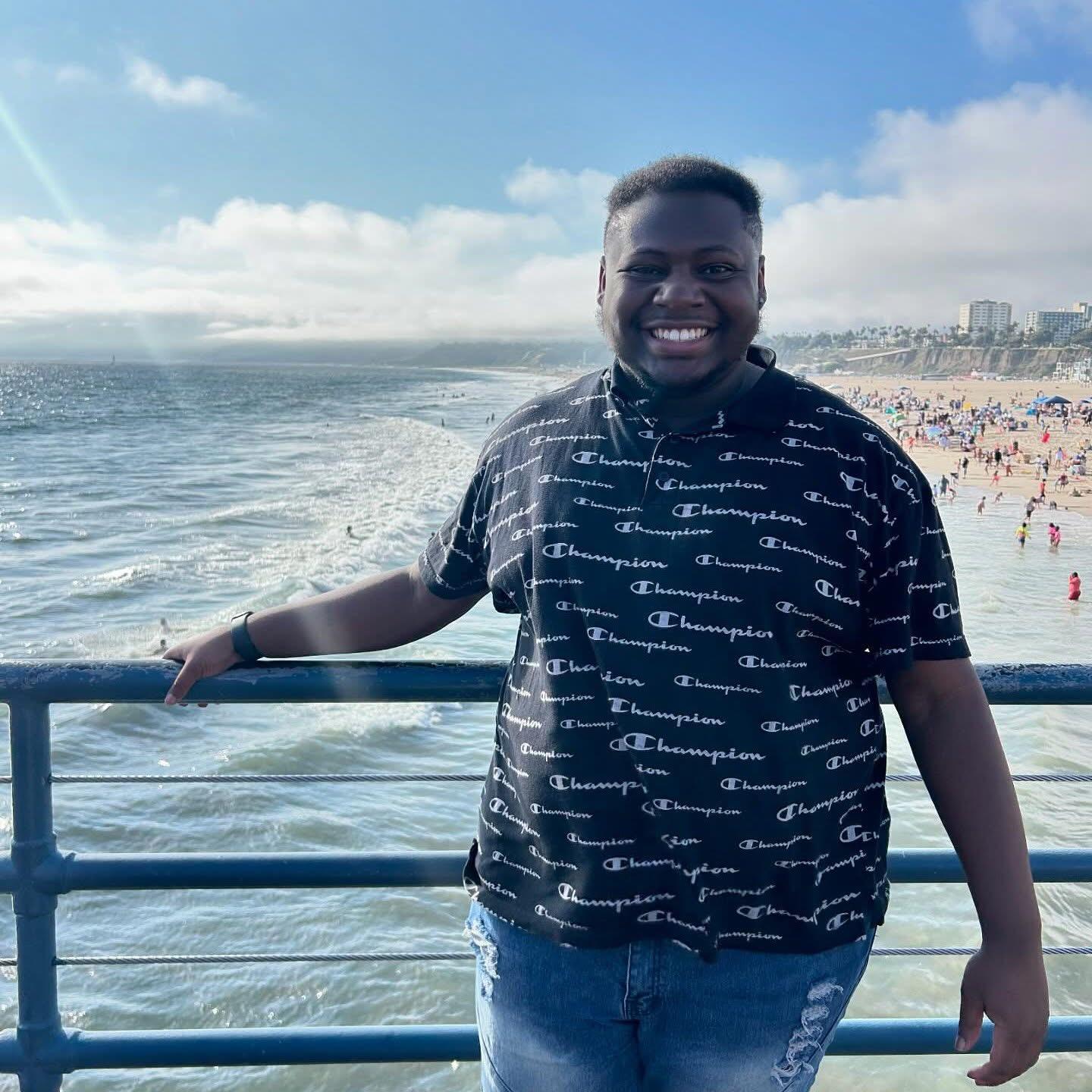
Just like that, a missing person case became a homicide.
And the questions began.
Malcolm’s gray 2020 Nissan Sentra was gone.
Stolen.
Police confirmed it.
But that only made the grief sharper.
“If you wanted something from him,” Tyronza said, her voice breaking, “Malcolm was just that type of person — he would give it to you.”
That statement has echoed across Jackson since.
Because Malcolm wasn’t described as reckless. Or combative. Or involved in street drama.
He was described as musical.
Faith-driven.
Church-focused.
“He loved to sing,” Tyronza said. “He was very focused in the church. But more so than anything — his smile. Malcolm would give you the clothes off his back.”
He was also his parents’ last surviving child.
His brother died eight years ago.
Malcolm wasn’t just a son. He was what remained.
And now he was gone.
For many in the community, the tragedy has reopened a painful, uncomfortable conversation: How many more young Black men have to die before something changes?
Jackson has battled violent crime headlines for years. Some residents say police response times are too slow. Others say families are forced to act because they don’t trust the system to move fast enough.
Was this another case of that?
Should the family have been the ones tracking his phone?
Should officers have acted sooner?
Or did they act exactly when they were told?
These questions ripple beneath the grief.
And then there’s the vacant house.
Who owns it?
Why was it accessible?
How does a young man end up dead inside a property no one was watching?
In neighborhoods across the city, abandoned homes have become silent witnesses to violence. They don’t scream. They don’t testify. They just stand there — boarded, forgotten, waiting.
Malcolm’s death now ties Skyline Drive to another story the city wishes it didn’t have.
But beyond policy debates and public frustration is something far more personal.
A family that searched.
A family that hoped.
A family that drove to that address believing — maybe he was hurt, maybe his phone was stolen, maybe there was some explanation.
No one drives to a pinged location expecting to watch crime tape go up.
No one prepares for that.
Tyronza has a message for the person responsible.
“You’re not God,” she said. “You don’t have that right.”
Her words weren’t polished. They weren’t political. They were raw.
And they’ve sparked another difficult conversation.
If this was about a car — a Nissan Sentra — was a life worth that?
If it was about robbery, could it have ended differently?
If Malcolm truly was the type to hand over what he had, what level of desperation or cruelty does it take to still pull the trigger?
In the days since, social media has filled with tributes. Church members posted clips of Malcolm singing. Friends shared photos of his grin — wide, open, unguarded.
People use words like “angelic.”
People always do.
But what makes this story controversial isn’t who Malcolm was.
It’s how it ended.
Some residents are furious at rising crime.
Some blame city leadership.
Some blame poverty.
Some blame guns.
Some blame individual choices.
Everyone agrees on one thing: another young man is gone.
And the pattern feels familiar.
A missing report.
A location ping.
A vacant property.
A gunshot.
A grieving family.
A stolen vehicle.
Police Chief Tyree Jones confirmed the investigation is active. Detectives are working leads. They’re searching for the gray Nissan Sentra.
But investigations move at the pace of procedure.
Grief moves at the pace of shock.
Malcolm’s birthday is Saturday.
Instead of planning candles, the family is planning something else.
His mother and father now face the unbearable truth that both of their sons are gone.
And that reality has reignited another debate: how families of victims are left to carry trauma long after headlines fade.
Counseling isn’t automatic. Financial support isn’t guaranteed. Community outrage burns hot — and then cools.
But for this family, there is no cooling.
There is only before Skyline Drive.
And after Skyline Drive.
In the end, Malcolm Harris becomes two stories at once.
He becomes the smiling, singing church kid who would give you anything.
And he becomes another statistic in a city fighting to outrun violence.
Both are true.
And that’s what makes it heavy.
Because the tragedy isn’t just that he died.
It’s that he died in a way that feels preventable.
If someone wanted his car.
If someone wanted money.
If someone wanted anything at all.
According to the people who loved him, he would have handed it over.
Instead, someone chose finality.
Now, a yellow strip of tape on Skyline Drive marks the spot where hope ended.
And a family is left asking the same question so many others have asked before them:
How many more?
They went to work like it was any other Thursday.

Clock in. Greet a coworker. Check the schedule. Think about dinner plans later.
Inside the Excel Industries plant in Hesston, the rhythm of machines hummed steadily. People focused on their shifts, unaware that within minutes, their workplace would turn into a battlefield.
By nightfall, three employees would never return home.
Their names now carry the weight of a community’s grief: Renee Benjamin, 30. Joshua “Josh” Higbee, 31. Brian Sadowsky, 44.
They were not headlines. They were people with families, routines, inside jokes, and plans for the weekend.
And they were killed at work.
The violence began with something that should have signaled protection.
At about 3:30 p.m., Cedric L. Ford, 38, was served with a Protection from Abuse order at the plant. It was paperwork — a legal boundary meant to prevent harm.
But ninety minutes later, that paper barrier meant nothing.
Ford left work, and by late afternoon, gunfire echoed across Harvey County. First, shots were fired from a vehicle in Newton. A man was hit in the shoulder. Minutes later, another victim was shot in the leg.
Then the gunman drove toward Excel Industries.
He shot someone in the parking lot.
Then he entered the building armed with an assault-style rifle and an automatic pistol.
Inside the plant, chaos erupted.
Workers who had been tightening bolts and operating machinery seconds earlier suddenly ran for cover. Some hid. Some froze. Some tried to help others.
The gunman did not target specific people. Authorities later said the shooting appeared random.
Random.
A word that offers no comfort.
Because randomness means anyone could have been next.
Renee Benjamin was one of them.
Thirty years old. A daughter. A friend. A coworker whose life ended in the middle of a shift.
Josh Higbee, 31, was another.
He had clocked in expecting a paycheck, not a gunman.
Brian Sadowsky, 44, was the third.
His family would later plan a candlelight vigil at the plant, standing under the same sky that darkened the day they lost him.
All three were killed inside the building where they worked.
Not on a battlefield. Not in a dangerous job zone.
Inside a workplace.
Hesston Police Chief Doug Schroeder was among the first responders. He entered the plant as shots rang out. According to Sheriff T. Walton, Ford was not going to stop shooting.
At 5:23 p.m., Schroeder exchanged fire with the gunman and killed him.
The threat ended.
But the damage had already been done.
Fourteen people were wounded. Six were treated at Newton Medical Center. One was transferred to Wesley Medical Center. One remained hospitalized in good condition.
Four people, including the gunman, were dead.
In the hours that followed, law enforcement response was described as “tremendous.”
Dozens of agents from the Kansas Bureau of Investigation, FBI, ATF, Kansas Highway Patrol, DEA, and local departments flooded the area.
Investigations began immediately.
Background checks revealed that Ford had a history of domestic violence, prior arrests for battery, DUI, obstruction, burglaries, fleeing from police, grand theft, and carrying a concealed weapon.
And here is where the outrage begins to rise.
How does someone with that history still obtain weapons?
How does a man served with a Protection from Abuse order return armed?
How does a workplace become a killing ground in less than two hours?
There were no specific targets. No manifesto. No explanation left behind.
Just devastation.
Counseling lines were set up. Donations were organized. Crisis hotlines were shared.
The Central Kansas Community Foundation created a fund for first responders and community services. Authorities warned residents to be cautious about GoFundMe accounts.
In the aftermath of tragedy, the machinery of response moves quickly.
But grief does not.
For the families of Renee, Josh, and Brian, there is no “ongoing investigation” that softens the blow.
There is only an empty chair at the table.
A closet that still smells like them.
A phone that will never light up with their name again.
Inside the plant, coworkers will forever remember the sound.
The confusion.
The disbelief.
One officer described walking into the building as “overwhelming.”
But for the workers who survived, it was something else.
It was betrayal.
Work is supposed to be ordinary.
Safe enough.
Predictable.
Instead, it became a crime scene.
And across the country, people asked the same question they have asked after so many mass shootings:
How many more?
How many protection orders served but not enforced with follow-up safeguards?
How many warning signs dismissed as someone else’s problem?
How many families forced to light candles instead of birthday cakes?
Renee Benjamin will not turn 31.
Josh Higbee will not reach 32.
Brian Sadowsky’s life stopped at 44.
Their names deserve more than statistics.
They deserve the fullness of who they were — not just how they died.
Yet the controversy lingers like smoke.
Was the system slow?
Were there red flags?
Could more have been done after the Protection from Abuse order was served?
These are not abstract policy questions. They are questions born from three coffins.
In Hesston, the vigil lights flickered against the February air.
Families stood shoulder to shoulder.
Some cried openly.
Some stared at the ground.
Some looked at the plant and wondered how they would ever walk back inside.
And still, the machines will hum again.
Shifts will resume.
Because life insists on moving forward.
But something permanent broke that day.
Trust.
Routine.
The illusion that violence is always somewhere else.
Renee Benjamin.
Josh Higbee.
Brian Sadowsky.
They were workers. Friends. Loved ones.
They did not choose to be symbols in a national debate.
They went to work.
And never came home.