THREE WEEKS BEFORE HIS DEATH, CHARLEY PRIDE WAS STILL MAKING PLANS. His son Dion remembered it clearly — sitting with his father, talking about what was coming next. More music. More stages. More of the only life Charley Pride had ever wanted to live. At 86, he was, by every account, surprisingly vigorous. Still recording. Still performing. Still that sharecropper’s son from Sledge, Mississippi who had walked into country music during the civil rights era and refused to walk back out. Nobody told him to slow down. He wouldn’t have listened anyway. Then, in late November 2020, he fell ill. The plans stopped. The conversations stopped. And Dion never heard his father’s voice clearly again. On December 12, 2020, Charley Pride died in Dallas from complications of COVID-19. He was 86. “It was hard,” Dion said later, “because it was so sudden. I never saw him coherent again.” A man who had spent 60 years proving he belonged — in a genre, in a country, in a world that kept making him fight for it — spent his final weeks in hospice, with his family beside him. He had never stopped moving forward. Right up until he couldn’t. – Country Music
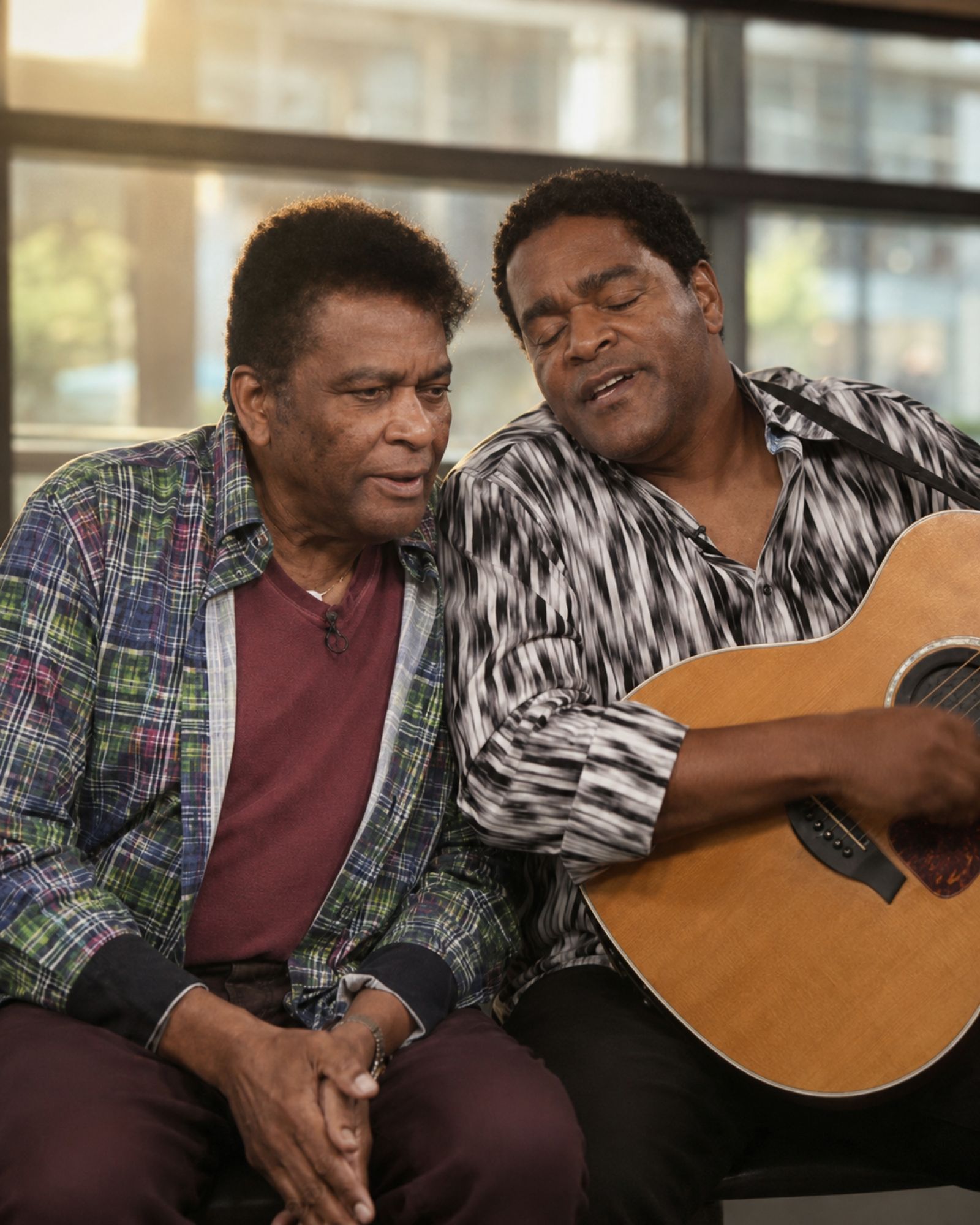
Three weeks before his death, Charley Pride was doing what he had done for most of his life: looking ahead. He was talking about music, about stages, about what still came next. He was 86, but he was not living like a man ready to be done. He was still recording, still performing, still carrying the same determination that had brought him from a sharecropper’s son in Sledge, Mississippi, to one of the most important voices in country music.
His son, Dion, remembered that time clearly. They sat together and talked about the future in the way families do when everything still feels steady. There were no dramatic goodbyes, no sense that the conversation would be the last one that mattered in this way. Charley Pride was still thinking in terms of progress, not endings. He had spent decades proving that he belonged in places where people did not always expect to see him, and even at 86, he was not interested in slowing down.
A Life Built on Forward Motion
Charley Pride’s story had never been ordinary. He came of age in the South during the civil rights era, and he entered country music at a time when the industry was not known for easy openness or quick change. But Charley Pride did not build his career by waiting for permission. He built it with discipline, talent, and a voice that connected with audiences across the country and far beyond it.
He became a star by doing the work. He showed up. He sang. He kept going. Over time, the awards came, the audiences grew, and the respect deepened. He became a beloved figure not only because he was successful, but because he had earned that success in a way that felt unmistakably real.
Even late in life, Charley Pride seemed to be carrying that same mindset. There was always another song, another appearance, another reason to keep moving. According to Dion, nobody had to tell Charley Pride to take it easy. He would not have listened anyway.
“It was hard,” Dion said later, “because it was so sudden. I never saw him coherent again.”
Then Everything Changed
In late November 2020, Charley Pride fell ill. The shift was sudden and deeply unsettling for the family. The man who had seemed so active and so determined only weeks earlier was now facing a medical crisis that changed everything. The plans stopped. The conversations stopped. The future that had felt open and active suddenly narrowed into a hospital room, then hospice, then silence.
For his family, the change was not only painful but hard to process because it came so quickly. That is often what makes loss feel heavier: the distance between what was expected and what actually happened. One moment, a person is still discussing what is next. The next, everyone is trying to understand how next became never.
On December 12, 2020, Charley Pride died in Dallas from complications of COVID-19. He was 86. The news landed with a special kind of sadness because his final weeks had not been marked by retreat, but by momentum. He had lived as a man committed to the long view, always reaching for another step forward.
The Weight of a Final Chapter
Charley Pride spent his final weeks in hospice, surrounded by family. That image matters because it reflects the human side of a public life. The performer known for strength, endurance, and grace was also a father, a family member, and a man whose loved ones had to watch a sudden decline unfold in real time.
For fans, the loss was about music. For his family, it was personal in the deepest way. The man they knew best was not only the artist on the stage, but the father who still had plans, still had hopes, still seemed to be moving toward tomorrow. The shock came from how much life was still being spoken into existence so close to the end.
Charley Pride had never stopped proving himself, never stopped pushing ahead, never stopped carrying the dignity of someone who knew exactly how much he had overcome. That is part of why his story still resonates. It is not only a story of fame. It is a story of persistence, of talent meeting opportunity, and of a man who kept showing up even when history made that difficult.
A Legacy That Still Moves Forward
Charley Pride’s final weeks remind us that legacy is not always a grand speech or a dramatic farewell. Sometimes it is a quiet conversation between a father and son, a set of plans for more music, more stages, more living. Sometimes it is the simple fact that a person stayed true to himself until the very end.
He left behind more than hit songs and awards. He left behind a model of courage, patience, and resolve. He left behind the memory of a voice that crossed boundaries and a career that helped expand what country music could be.
Three weeks before his death, Charley Pride was still planning the future. That may be the most Charley Pride detail of all. He was a man who had always believed there was more ahead. And right up until he could not, he lived like it.
Post navigation
There are some artists whose voices feel less like performances and more like home. Glen Campbell was one of them. Long before the world knew his name, he was a working musician in Los Angeles, a gifted session guitarist with a steady hand and a quiet reputation for excellence. He played behind stars who would later become legends, helping shape records that would be heard for generations.
Then came the songs that made Glen Campbell unforgettable. “Gentle on My Mind” opened the door. “Wichita Lineman” made people stop and listen more closely. And “Rhinestone Cowboy” turned him into something larger than a country star: a familiar presence in American music, the kind of artist people felt they could trust.
A Career Built on Skill and Feeling
Glen Campbell’s success was never just about fame. It was about craft. He had the rare ability to make a song feel effortless while giving it heart and warmth. Listeners heard the smoothness in his voice, but they also heard honesty. That combination is part of why his music lasted.
By the time he became a household name, Glen Campbell had already lived several musical lives. He was the kind of performer who made difficult work look easy, and that ease helped turn him into a star. But his story would later become something deeper than a story of success. It would become a story of courage, family, and the painful reality of Alzheimer’s disease.
The Truth Glen Campbell and His Family Shared
In 2011, Glen Campbell and his family told the world that he had been diagnosed with Alzheimer’s disease. The announcement was heartbreaking, but it was also brave. Rather than disappearing from public view, Glen Campbell chose to face the disease in the light.
He went back on the road for a Goodbye Tour, a journey that lasted 151 shows. It was not a polished farewell in the usual sense. Some nights his memory slipped. Some words were hard to find. At times, the band and his children stood close, helping guide him through the moment. But he kept going, show after show, because music still gave him a way to connect.
Even when language began to fade, the songs could still open a door.
When the Disease Took His Words
By August 2017, the disease had taken much of what people associated with Glen Campbell. Conversation became difficult. Recognition faded. The simple act of speaking with him had changed. For a family that had once known him through his voice, his stories, and his easy humor, this was a painful kind of goodbye.
And yet, the music remained close.
His family kept songs around him in those final days, not because music could reverse what was happening, but because it could still reach him in a way words could not. That is one of the quiet mysteries of music: sometimes it finds a person even when everything else has slipped away.
The Moment “Rhinestone Cowboy” Played
When “Rhinestone Cowboy” played softly near his bed, something in Glen Campbell’s eyes seemed to change. It was not a dramatic scene. It did not need to be. It was a small moment, tender and human, the kind families remember forever.
Maybe he recognized the melody. Maybe he felt the shape of a life he had lived. Maybe the crowd, the stage lights, and the long road of memory were still somewhere inside him. No one can fully know what passed through his mind in that moment. But those who were there could feel it: the music still knew him.
That is what makes Glen Campbell’s final days so moving. Alzheimer’s can take names, timelines, conversations, and certainty. But music can sometimes slip past the door and reach what remains.
A Farewell on August 8, 2017
On August 8, 2017, Glen Campbell died at the age of 81. The loss was felt far beyond country music. It was felt by anyone who had ever been comforted by his songs, anyone who had ever watched him sing with that calm, clear presence, and anyone who had followed his final brave years with respect.
Glen Campbell’s story was never just about how famous he became. It was about how he faced the end of his life with honesty, surrounded by family, and still connected to the gift that defined him.
What Remains
Alzheimer’s took the words. It took the memories. It took the version of Glen Campbell the world knew best.
But it never fully took the music.
For one brief flicker, “Rhinestone Cowboy” seemed to bring something back. Not everything. Not enough to make the disease disappear. But enough to remind those beside him that the deepest parts of a person can sometimes live on in sound.
And maybe that is why Glen Campbell’s final chapter feels so unforgettable. Not because it ended in silence, but because even near the end, the songs still found a way to speak.