THEY SPENT THEIR CAREER SINGING ABOUT MEMORY. THEN COUNTRY MUSIC SLOWLY TURNED THEM INTO ONE. The Statler Brothers did not just sing country songs. They sang about the things people were already afraid of losing — home, family, faith, old friends, small towns, and the kind of love that did not need to be loud to be real. That was their gift. They could make a simple memory feel sacred. A childhood room. A Sunday morning. A voice you had not heard in years. A life you did not realize you missed until their harmony brought it back. “Do You Remember These” was never just nostalgia. “The Class of ’57” was never just a school reunion song. They were quiet warnings that time was taking more from people than they knew how to name. But here is the part country music does not like to admit. The group that spent decades preserving America’s memories has slowly become one itself. Not forgotten by true fans. But pushed far enough back that too many people have to be reminded how much they mattered. Maybe that is the cruelest kind of tribute: becoming exactly what you spent your life singing about. – Country Music
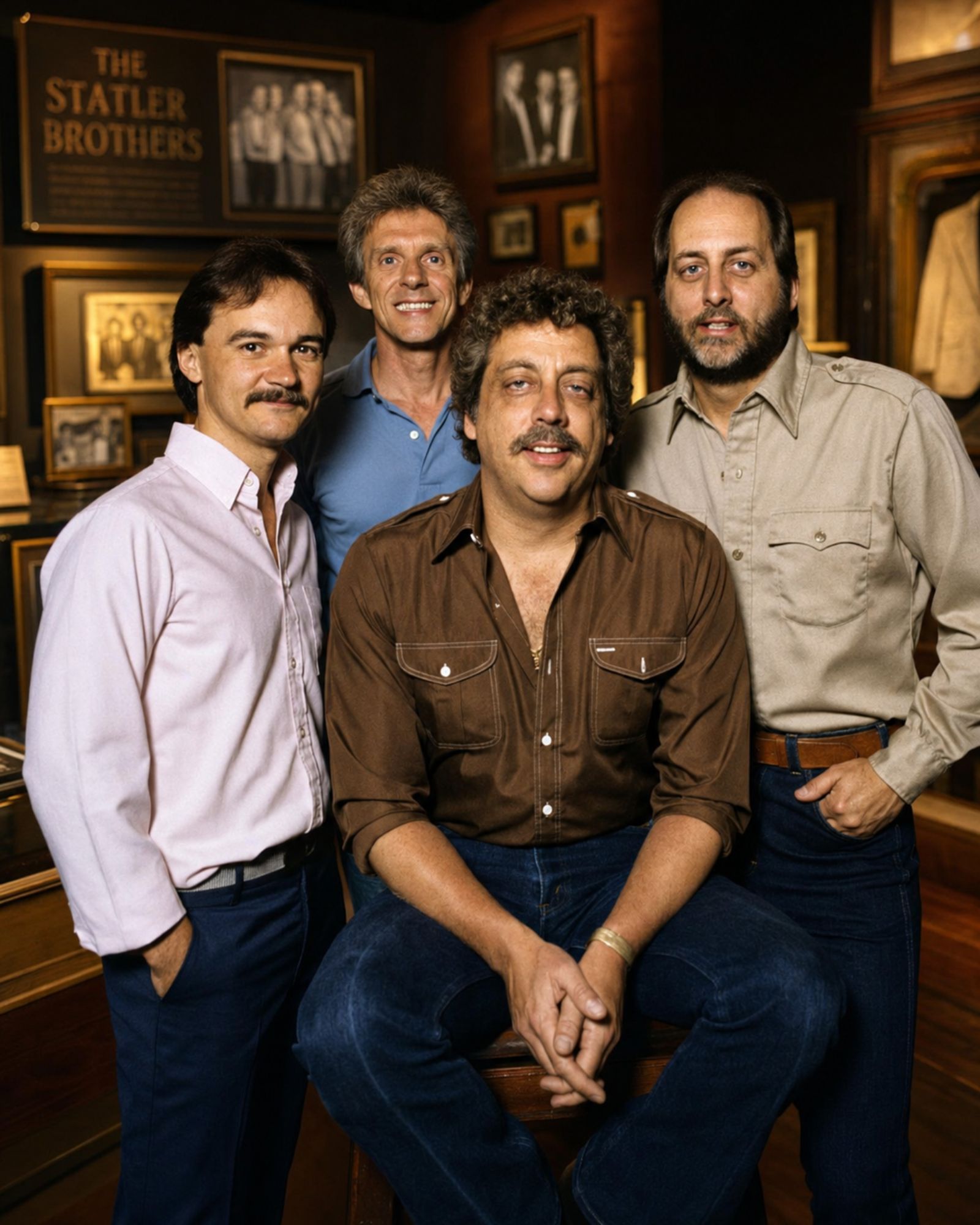
The Statler Brothers did not just sing country songs. They sang about the things people are most afraid of losing: home, family, faith, old friends, small towns, and the quiet kind of love that does not need to shout to be real. In a genre built on honesty, they had a rare gift. They could take a simple moment and make it feel sacred.
A childhood bedroom. A Sunday morning. A worn photograph. A voice heard again after years of silence. The Statler Brothers knew how to turn everyday life into something that felt like a memory you could hold in your hands. Their songs did not just entertain listeners. They reminded people of who they were, where they came from, and what still mattered.
The Sound of Remembering
When The Statler Brothers sang “Do You Remember These”, it was not just nostalgia for nostalgia’s sake. It felt like a question aimed straight at the listener’s heart. Do you remember the old movies, the soda fountains, the days when the world seemed slower and smaller? The song opened a door to the past without making fun of it.
And then there was “The Class of ’57”, a song that sounded like a school reunion but felt deeper than that. It was really about time, and how it changes everyone. Some dreams fade. Some lives turn out differently than expected. Some people disappear from view but never disappear from memory. That was the Statler Brothers’ strength. They understood that a life does not have to be famous to be meaningful.
They sang about ordinary people with extraordinary tenderness. Their harmonies carried warmth, humor, and a little sadness too. That mix made them unforgettable. You could hear a Statler Brothers song and feel both comforted and slightly heartbroken at the same time.
Why Their Songs Still Hit So Hard
The Statler Brothers never relied on big drama to make an impact. They trusted detail. A front porch. A family gathering. A church hymn. A small-town street. These were not just settings. They were emotional anchors. Their songs made listeners think about parents who are no longer here, friends who moved away, and versions of themselves that only exist in old memories.
That is why their music lasted. It was not built on trends. It was built on truth. Long after radio moved on to louder sounds and newer images, The Statler Brothers still had the power to make people pause. Their songs felt lived-in, like a photograph with the edges worn soft from being handled too many times.
“They could make a simple memory feel sacred.”
The Strange Fate of Beloved Artists
Here is the part country music does not always like to admit: the artists who spend their careers preserving the feelings of everyday people often become part of the very history they described. The Statler Brothers slowly turned into one of those names that true fans remember instantly, while newer listeners sometimes need a reminder of how important they were.
That is not because they lost value. It is because time is relentless. Music scenes change. New stars arrive. Old names drift toward the back shelf of public memory. But the songs remain. They sit quietly, waiting for someone to press play and rediscover what made them special in the first place.
Maybe that is the cruelest kind of tribute: becoming exactly what you spent your life singing about. The Statler Brothers spent decades protecting America’s memories, only to become one of them.
What They Left Behind
The good news is that real artistry does not vanish just because attention shifts. The Statler Brothers left behind songs that still feel alive. They left behind harmonies that still sound warm and human. They left behind a body of work that speaks to family, faith, loss, and the fragile beauty of ordinary life.
For longtime fans, their music is not something that needs defending. It is something that continues to live in kitchens, cars, churches, and quiet evenings at home. For newer listeners, it can still feel like a surprise: proof that country music once had room for softness, reflection, and deep emotional memory.
The Statler Brothers sang about remembering. Now, because of time itself, we are the ones doing the remembering. And maybe that is fitting. After all, they taught country music how to honor the past without making it smaller. That lesson still matters.
They did not just sing about memory. They became part of it.
Post navigation
Johnny Cash spent his life singing about trouble, faith, longing, prison, and the kind of heartbreak that never fully leaves a person. He could step onto a stage and turn pain into something strong. He could make a roomful of strangers feel like they were sitting inside his own story. But after June Carter Cash died in May 2003, there was one song that no longer fit anywhere in his world.
For decades, that song had been more than a hit. It had been a spark, a joke, and a promise all at once. Johnny Cash and June Carter Cash recorded it together in 1967, and it quickly became one of the most beloved duets in country music. It won a Grammy, climbed to No. 2 on the country chart, and turned into the moment crowds waited for whenever the two of them appeared together.
The Song That Lit Up Every Room
When Johnny Cash performed with June Carter Cash, there was always a special electricity in the air. He would smile, lean toward her, and begin with that famous opening line about getting married in a fever. June Carter Cash would answer with her quick timing and bright energy, and the audience would come alive before the chorus even began.
It worked because it felt real. The song was playful, but it also carried the private chemistry of two people who had lived enough life to understand each other completely. They did not need to act like a perfect couple. They just had to be themselves.
Some songs are not just performed. They are shared.
For years, fans expected that duet to appear. It became one of those rare performances that could lift a whole concert in a single moment. Johnny Cash knew exactly how to set it up, and June Carter Cash knew exactly how to make it land. The song belonged to both of them, and the crowd knew it.
After June Carter Cash Was Gone, Everything Changed
When June Carter Cash died in May 2003, Johnny Cash was already facing deep loss and serious fatigue. Still, he kept going. June Carter Cash had encouraged him to continue working, and he honored that wish the way he honored so many things in his life: by showing up.
He kept recording. He kept singing. He kept carrying the pieces he still had left. In July 2003, Johnny Cash performed his final public show at the Carter Family Fold, a place tied closely to June Carter Cash and her family’s musical legacy. It was a meaningful appearance, but the familiar duet was not part of that night.
And that absence said everything.
Why One Duet Could Not Survive the Loss
Johnny Cash could still sing about prison because he understood struggle. He could still sing about faith because he had spent his life wrestling with it. He could still sing about heartbreak because heartbreak had never really left him alone. But that particular duet had been built on something different. It depended on the chemistry of two living voices meeting in the same moment.
Without June Carter Cash, the song did not disappear from history, but it lost its place in Johnny Cash’s life. It became harder to treat it like a playful crowd favorite when the woman who gave it its rhythm, laughter, and reply was no longer there.
Some songs are tied to memory so tightly that they cannot be separated from the people who made them feel alive. This was one of those songs. It was never just about the lyrics. It was about the back-and-forth, the smile, the timing, and the shared glance that made audiences feel they were watching something honest.
A Final Chapter, Not a Final Note
Johnny Cash did not stop being Johnny Cash after June Carter Cash died. He remained an artist with a powerful voice and a deep emotional reach. But the duet became a reminder of what had been lost, not only in his life, but in the space between them on stage.
That is why the silence around the song can feel so powerful. It is the kind of silence that tells its own story. The chorus did not vanish from memory, and the recording still exists, full of warmth and life. Yet for Johnny Cash, it could no longer be the same kind of moment.
He kept singing because that was what he knew how to do. But some songs are made for two voices, and when one is gone, the heart of the performance changes forever.
In the end, Johnny Cash’s story with June Carter Cash was never only about a hit duet. It was about love, timing, partnership, and the strange way music can hold joy and grief in the same breath. That one song may have lost its place after June Carter Cash died, but the feeling behind it never left. It remains one of the most human moments in country music history: a song that once made the whole world laugh, and later became a quiet reminder of what can no longer be sung the same way.