THEY HELD HIS FUNERAL ON THE GRAND OLE OPRY STAGE. THE SAME BOARDS HE HAD STOOD ON FOR 66 YEARS. Country Music Hall of Fame. Sixty-six years on the Opry. The oldest living member on the night he last walked off that stage — December 20, 2014, the day after his 94th birthday — to celebrate with the only family he’d ever really claimed. On January 8, Brad Paisley served as emcee. His friend’s casket sat center stage while Vince Gill played guitar that had once belonged to Dickens’ late guitarist Jabbo Arrington. Carrie Underwood — visibly pregnant, standing in black — told the room how her mother had warned her before her very first Opry appearance: “Watch out for Little Jimmy Dickens, because he likes the pretty girls.” She broke into tears. Then she and Gill sang Go Rest High on That Mountain together. Gill had sung that same song on that same stage less than two years earlier, at George Jones’ funeral. At the close, Brad Paisley stopped mid-sentence to choke back tears: “At 94, your journey has ended — but we’ll take it from here, little buddy.” Then the whole house sang Will the Circle Be Unbroken — a tradition, they said, that Dickens himself had started. When it was over, the curtain came down. Little Jimmy Dickens left the Opry stage for the last time. – Country Music
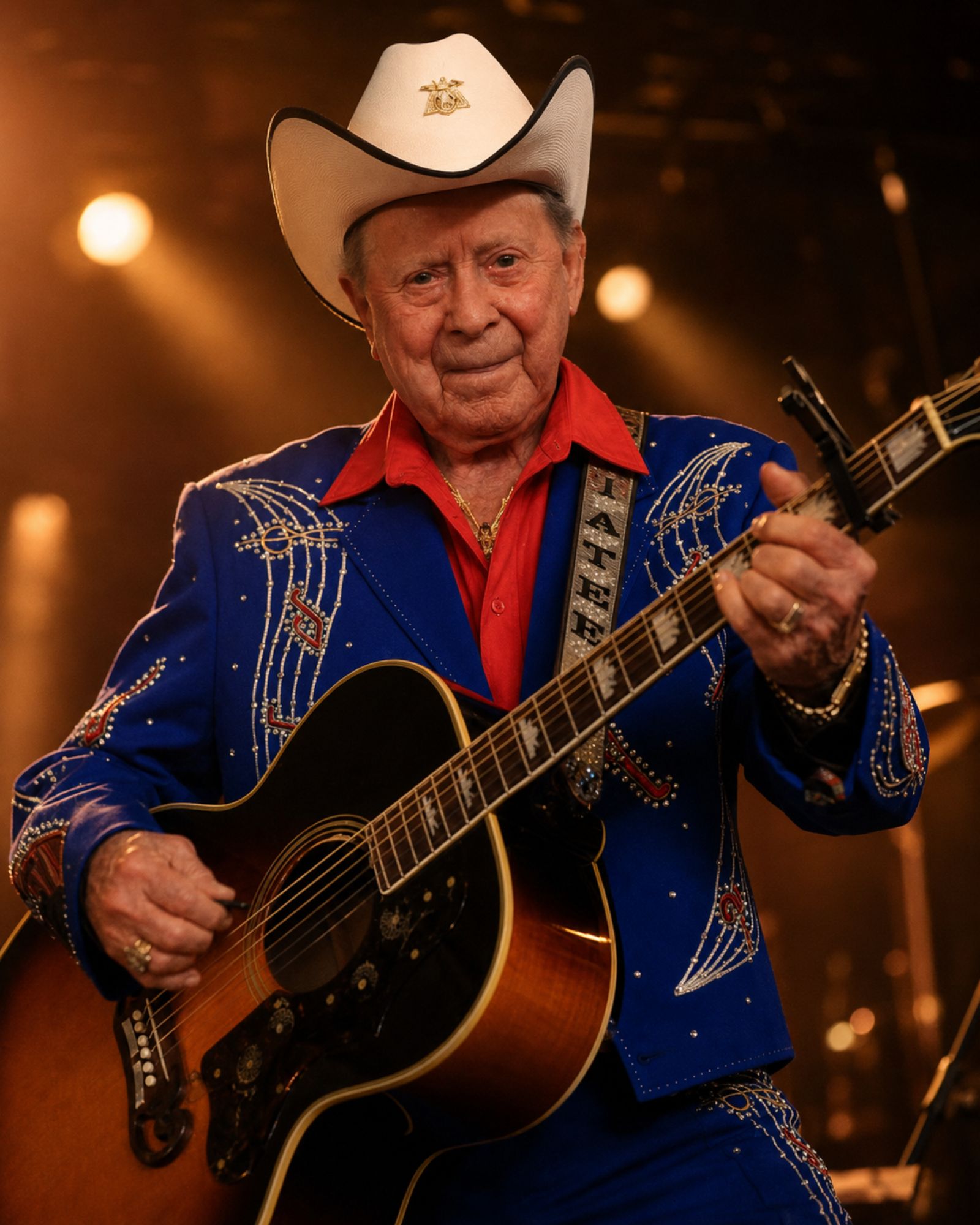
There are some goodbyes that feel too large for words. On January 8, the Grand Ole Opry did what it does best: it turned memory into music, and mourning into something the room could carry together. On that night, the casket of Little Jimmy Dickens rested at center stage, beneath the lights of the same historic boards he had stood on for 66 years.
For country music fans, the setting said everything. This was not just a funeral. It was a final return to home.
A Life Measured in Opry Appearances
Little Jimmy Dickens was more than a performer who visited the Grand Ole Opry. He was part of its living history. For decades, he had walked out into that circle and made generations laugh, cheer, and remember why country music feels so personal. He was known for his humor, his warmth, and the kind of stage presence that made even a huge hall feel like a front porch conversation.
He had been a Country Music Hall of Fame member. He had spent 66 years on the Opry. And on December 20, 2014, just one day after his 94th birthday, he stepped off that stage for the last time while still the oldest living member of the Opry family. He left not with fanfare, but with a sense of completion, heading off to celebrate with the only family he had ever truly claimed.
That detail mattered. Little Jimmy Dickens never seemed to belong only to one home, one town, or one era. He belonged to the music, and the music belonged to him.
Brad Paisley Opens the Tribute
When the service began, Brad Paisley served as emcee. The choice felt natural. In country music, respect is often shown through who is asked to speak, sing, and stand beside the family. Brad Paisley guided the room with care, knowing that this was not a show, but a farewell.
Little Jimmy Dickens’ casket sat center stage, and around it gathered artists, friends, and fans who had come to honor a man whose influence stretched across generations. The Opry stage had seen countless performances over the years, but on this night it held something heavier and more intimate: the weight of a life fully lived.
Carrie Underwood Remembers a Warning
One of the most moving moments came when Carrie Underwood spoke. Standing in black and visibly pregnant, she told the room about her mother’s warning before her very first Opry appearance.
“Watch out for Little Jimmy Dickens, because he likes the pretty girls.”
The line drew laughter at first, the kind that comes naturally when a beloved character is remembered honestly. But Carrie Underwood’s voice soon broke with emotion, and the laughter gave way to tears. She was not just remembering a funny story. She was remembering the kind of personality Little Jimmy Dickens carried into every room: charming, playful, unforgettable.
Then she joined Vince Gill in song, and together they performed Go Rest High on That Mountain. It was a tender, aching moment, the kind that makes a large audience go very still.
Vince Gill and a Song Already Loaded with Memory
Vince Gill’s presence carried extra meaning that night. He had sung Go Rest High on That Mountain on that same stage less than two years earlier at George Jones’ funeral. Now he stood there again, offering the song once more as a farewell.
He played a guitar that had once belonged to Jabbo Arrington, adding another layer of history to an evening already full of it. In country music, objects often carry stories, and this one seemed to hold the echo of more than one life. The performance was restrained, sincere, and deeply felt.
The Final Words
Near the close of the service, Brad Paisley struggled to finish his remarks. Then he stopped mid-sentence, choked back tears, and said what many in the room were already feeling.
“At 94, your journey has ended — but we’ll take it from here, little buddy.”
That line landed softly, but it stayed in the room. It sounded like a promise. It sounded like gratitude. It sounded like one musician handing a legacy to the next generation.
Then the crowd sang Will the Circle Be Unbroken, a tradition that, they said, Little Jimmy Dickens himself had started. There may not have been a more fitting closing. The song has always been about continuity, about loss balanced by belief that something good still remains.
A Curtain Falls, but the Story Does Not End
When it was over, the curtain came down. Little Jimmy Dickens left the Opry stage for the last time.
That sentence carries a sadness country music fans can feel in their bones, but it also carries honor. Not every artist gets to be remembered in the place where they mattered most. Not every life closes in the same room where it helped shape a tradition.
Little Jimmy Dickens did.
For 66 years, he stood on the Grand Ole Opry stage and made it his own. On that January night, the same stage held his farewell, and in doing so, reminded everyone present that country music is not only about songs. It is about fellowship, memory, humor, tears, and the people who make a place feel like home.
Little Jimmy Dickens may have taken his final bow, but the Opry will keep telling his story every time the lights go up.
Post navigation
On a quiet day in Hendersonville, Tennessee, First Baptist Church became the center of a nation’s grief. More than 1,000 mourners filled the pews, shoulder to shoulder, in the same church where Johnny Cash had said goodbye to June Carter Cash just four months earlier. The setting alone was enough to make the moment feel impossible. Inside those walls, love and loss seemed to echo back and forth across time.
Johnny Cash was buried in a black coffin with silver handles. No other color was ever considered. It was a simple detail, but it carried the weight of everything people knew about him: direct, unforgettable, and deeply tied to the kind of dignity he gave even in the hardest moments. The funeral ran for two and a half hours, and no one seemed eager to leave. The grief was too large, and the silence between the words said everything.
A Church Filled With Legends and Friends
The front rows told their own story. Vince Gill was there. Hank Williams Jr. was there. George Jones was there. Kid Rock, Emmylou Harris, Sheryl Crow, and former Vice President Al Gore were also seated close to the front. It was the kind of gathering that could only happen for someone who had touched music, culture, and public life in a way few people ever do. No cameras were allowed inside, and that choice gave the service a rare feeling of privacy. Everyone present understood that this was not a performance. It was a farewell.
Kris Kristofferson stood to speak, and his words landed with force. He said, “He represented the best of America. We’re not going to see his like again.” Then he paused and added that Johnny Cash was “Abraham Lincoln with a wild side.” The room did not need any explanation. Those lines captured something that people had felt for decades: Johnny Cash was both ordinary and larger than life, both wounded and strong, both deeply human and somehow bigger than the songs he sang.
Rosanne Cash’s Eulogy
His daughter, Rosanne Cash, delivered the eulogy. Reporters who were there later said they had covered many celebrity funerals, but had never felt heartbreak quite like that moment. That reaction made sense. This was not only the loss of a famous man. It was the loss of a father, a husband, a friend, and a voice that had carried comfort through generations.
Rosanne’s words gave the service its emotional center. She spoke not just for a family, but for everyone who had ever heard Johnny Cash sing and felt, for a moment, that he understood them. The church listened in complete stillness. Even in a room full of well-known names, it was the family’s grief that mattered most.
There are funerals that mark an ending, and then there are funerals that remind a city, a genre, and a country that something irreplaceable has gone.
The Music That Outlived the Man
Two months after the funeral, the CMA Awards handed out three trophies bearing Johnny Cash’s name. Each time his children walked to the stage to accept, the room rose to its feet. Every single time. That standing ovation was more than respect. It was a shared promise that his legacy would not fade quietly.
Johnny Cash had finished recording his last song one week before he died. He also left more than thirty unreleased songs behind, enough for Nashville to keep hearing his voice for years after he was gone. In a city that measures memory in songs, that mattered. It meant the story did not end at the cemetery. It continued in studios, on radio stations, in family homes, and in the hearts of listeners who would discover him long after that day in Hendersonville.
Why That Funeral Still Matters
Years later, people still remember that service because it felt like more than a celebrity funeral. It felt like the end of a chapter in American music. Johnny Cash had stood for something rare: honesty without polish, strength without arrogance, and sorrow without embarrassment. At First Baptist Church, surrounded by friends, family, and fellow artists, those qualities were remembered with love.
He had once said goodbye to June in that same church. Then, only months later, the church held his own farewell. That painful symmetry gave the day a lasting power. It reminded everyone that even legends are bound to the same human truths as the rest of us: love, loss, memory, and the hope that something good remains after the final song.
For Nashville, the funeral was not just about mourning Johnny Cash. It was about acknowledging that his voice had become part of the country’s soundtrack forever. And when the last notes faded, the silence did not feel empty. It felt like reverence.