THEY HELD HER FUNERAL AT THE HENDERSONVILLE CHURCH OF CHRIST. THE QUEEN OF COUNTRY MUSIC GOT ONE LAST STANDING OVATION. Twenty-five Top 10 hits. The first woman ever to top the country charts. From 1953 to 1968, every major poll in Nashville listed her as the No. 1 female country singer — fifteen years straight. On July 20, 2012, Marty Stuart, Connie Smith, Bill Anderson, Ricky Skaggs and the gospel group The Whites filled the pews to say goodbye. Eddie Stubbs — the voice of the Grand Ole Opry, who had once played fiddle for her — stood at the pulpit and asked the room to rise. Every person stood and applauded. Then he said: “It’s one thing to make a contribution in life. It’s another to make a difference. Kitty did both.” Ricky Skaggs and The Whites closed the service with I Saw the Light. When the last note fell, the casket was wheeled slowly from the church, her family following behind in tears. Loretta Lynn wrote that day: “Kitty Wells will always be the greatest female country singer of all time. She was my hero.” Charlie Daniels wrote: “A Queen died today. The lady who set the standard for all who followed.” She was buried at Spring Hill Cemetery in Nashville — the same city where, sixty years earlier, she had changed everything with one song and one voice nobody in Nashville had expected. – Country Music
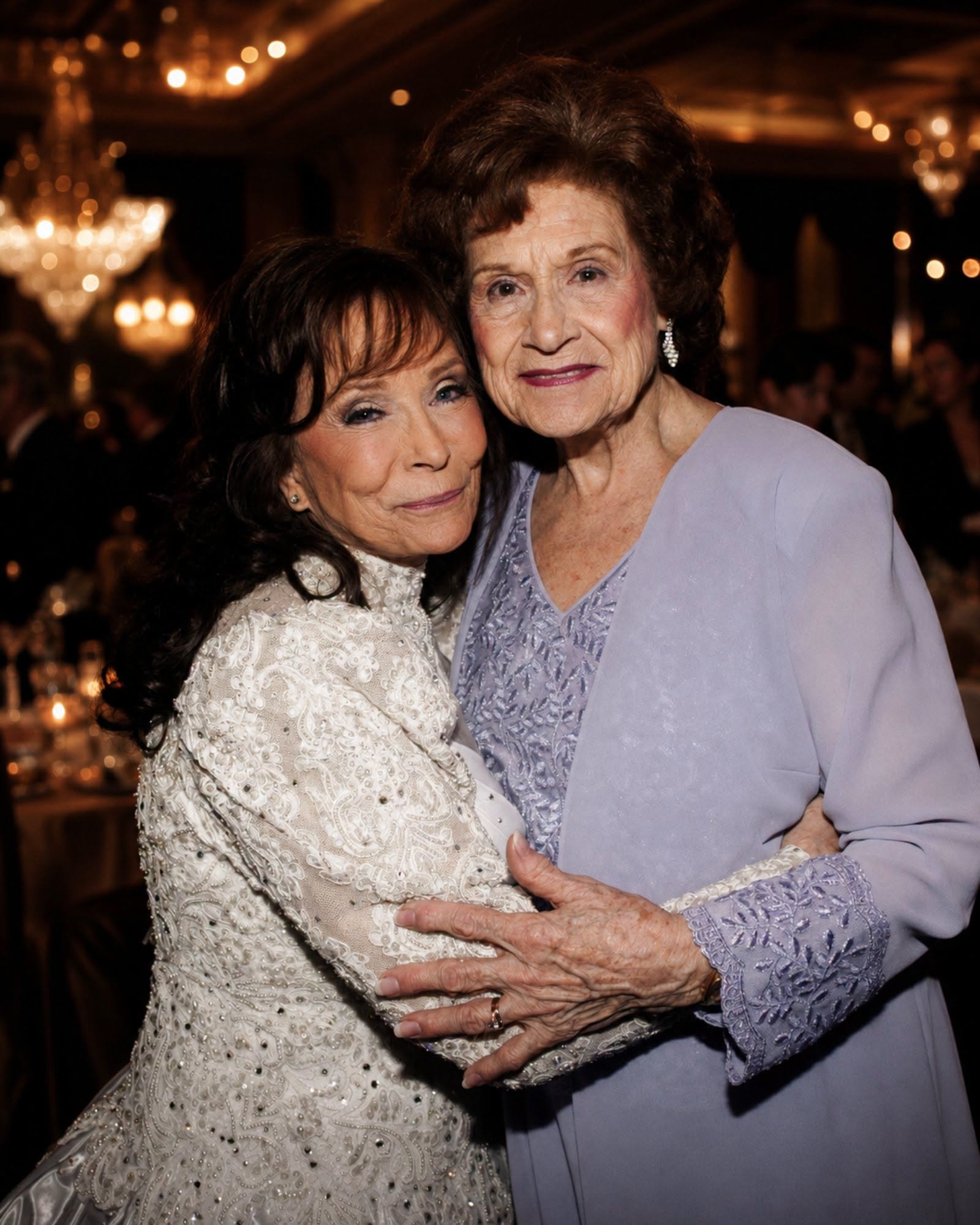
On July 20, 2012, the Hendersonville Church of Christ in Tennessee was filled with a kind of silence that felt heavy and sacred at the same time. People came to say goodbye to Kitty Wells, the woman many still called the Queen of Country Music. Inside those pews were friends, fellow musicians, and voices that had helped shape country music for generations. Marty Stuart was there. Connie Smith was there. Bill Anderson was there. Ricky Skaggs was there. The Whites were there too. They did not come for a performance. They came to honor a life that had changed the sound of American music forever.
Kitty Wells was more than a legend. She was the first woman ever to top the country charts, and from 1953 to 1968, every major poll in Nashville placed her at No. 1 among female country singers for fifteen straight years. That kind of run does not happen by accident. It comes from talent, grit, and the courage to keep singing when the world is not yet ready to listen.
A Voice That Changed the Rules
Before Kitty Wells, women in country music often had to fit into a narrow space. Then came a song that changed everything. With one voice and one recording, she challenged the idea that only men could lead the story in country music. Her breakthrough did not just make her famous. It opened a door.
That door mattered to everyone who came after her. The artists who filled the church that day understood what her success had cost and what it had made possible. There was respect in the room, but there was also gratitude. She had helped prove that a woman could stand at the center of country music and command the same attention, the same admiration, and the same lasting power as anyone else.
“It’s one thing to make a contribution in life. It’s another to make a difference. Kitty did both.”
Those words, spoken by Eddie Stubbs from the pulpit, seemed to capture the entire mood of the service. Eddie Stubbs, the voice of the Grand Ole Opry who had once played fiddle for Kitty Wells, knew exactly what he was saying. The room rose when he asked everyone to stand, and then came the applause. It was not loud in a celebratory way. It was reverent. A standing ovation for a woman who had earned it long before that final day.
The Music Stopped, But the Honor Remained
Ricky Skaggs and The Whites closed the service with I Saw the Light. The hymn carried through the church with a gentle ache, the kind that comes when music and memory meet. As the last note faded, the casket was wheeled slowly from the church, and her family followed behind in tears. There was no spectacle, only love, grief, and deep respect.
That moment mattered because it showed how country music remembers its own. Not only with awards and chart numbers, but with people gathering in a church to say thank you. Kitty Wells had spent her life giving the world songs that felt honest and unforced. In the end, the farewell was honest too.
What the Greats Said About Kitty Wells
The tributes that followed were heartfelt and direct. Loretta Lynn wrote that day, “Kitty Wells will always be the greatest female country singer of all time. She was my hero.” Charlie Daniels added, “A Queen died today. The lady who set the standard for all who followed.” Those were not empty compliments. They were the words of artists who understood the scale of what Kitty Wells had done.
She had stood in Nashville sixty years earlier and changed everything with one song and one voice nobody in Nashville had expected to matter so much. Yet it did matter. It mattered to the fans who heard themselves in her songs. It mattered to young women who wondered if there was a place for them in country music. It mattered to the entire industry, even when the industry was slow to admit it.
A Final Goodbye in the City She Changed
Kitty Wells was buried at Spring Hill Cemetery in Nashville, the same city where her story had become part of country music history. That felt fitting. Nashville was where she had broken through, where she had been tested, and where she had left a mark that would not fade.
Her funeral was not just the end of a life. It was also a reminder of how much one artist can change the world without ever needing to shout. Kitty Wells did it with songs, with poise, and with a voice that carried truth. When the people at Hendersonville Church of Christ rose to their feet and applauded, they were not only mourning her. They were recognizing a woman who had earned her place in history, and who had given country music a new future.
For fans, that final standing ovation was the right ending. Kitty Wells had spent her life making history. On that July day, history stood up for her one last time.
Post navigation
The Wall at 160 MPH: Marty Robbins, Richard Childress, and the Charlotte Decision That Changed Everything
On October 6, 1974, at Charlotte Motor Speedway, a split-second choice separated tragedy from survival. Marty Robbins was coming fast, close to 160 miles per hour, when a stalled car appeared broadside in front of him. Behind the wheel was Richard Childress, trapped and helpless on the track. In that moment, Marty Robbins had two seconds to decide what kind of man he would be.
He turned into the wall.
A singer who refused to slow down
By 1974, Marty Robbins was already a giant in American music. He had sixteen number-one country hits. He wrote “El Paso,” a song that became part of country music history. He sang at the Grand Ole Opry from 11:30 to midnight and then raced stock cars on weekends. For Marty Robbins, fame was not enough. He wanted speed, risk, and the roar of an engine.
His doctors did not understand that part of him. After a heart attack in 1969, they warned him that three major arteries were blocked. They told him he needed an experimental procedure, and even then, the odds were serious. Marty Robbins became one of the first men to undergo a triple bypass, and only three months later, he was back in a NASCAR stock car. Most people would have called that reckless. Marty Robbins called it living.
Marty Robbins lived like a man who knew time was precious.
That truth mattered on race day. He had already been told to stop racing. He had already been given warnings many people would have taken as final. But Marty Robbins kept going, carrying his country music success and his love of racing like two engines running at once.
At the Charlotte 500, the danger arrived with no warning. Richard Childress was in trouble, sitting dead in a stalled vehicle, broadside across the track. There was no room for a clean pass, no time for a long decision, and no safe answer waiting for Marty Robbins.
Up ahead was a human being in immediate danger. To the right was the concrete wall. Straight ahead was a collision that could have been fatal. Marty Robbins had only a moment to weigh the options, and the choice was as brutal as it was simple.
He turned into the wall.
That action saved Richard Childress. It also cost Marty Robbins dearly. The impact left him with 37 stitches across his face, a broken tailbone, broken ribs, and two black eyes. The scar between his eyes never fully faded. He carried it for the rest of his life, a permanent mark from the instant he chose another man’s life over his own safety.
What one decision meant
Richard Childress would later become one of the most important names in NASCAR history, eventually building a legendary team and owning Dale Earnhardt’s famous No. 3 car. But on that October day, none of that future was guaranteed. At that moment, Richard Childress was simply a driver in danger, and Marty Robbins was the man coming up behind him at speed.
That is what makes the story so powerful. It is not only about celebrity, or racing, or even courage in the abstract. It is about a human being with a damaged heart, a dangerous hobby, and a lifetime of pressure, making a choice when there was no time for hesitation.
If Marty Robbins had not turned, Richard Childress might not have survived. That is not drama. That is the weight of the moment.
The man behind the legend
Marty Robbins is often remembered for his songs, but stories like this show another side of him. He was stubborn, fearless, and deeply committed to doing what he loved. He did not live carefully. He lived fully. Sometimes that meant taking risks. Sometimes it meant ignoring the advice of doctors. And on one October afternoon in Charlotte, it meant choosing the wall over another person’s body.
People often ask what makes a hero. Sometimes it is not a grand speech or a planned sacrifice. Sometimes it is a driver with a split face, aching ribs, and a racing heart deciding that someone else matters more in the instant before impact.
Marty Robbins did not just leave behind hit records and racing stories. He left behind a moment of instinctive humanity that still echoes through NASCAR history. The wall took the hit. Richard Childress lived. And Marty Robbins carried the scar, a quiet reminder of the day he had two seconds to decide, and chose to save a stranger.