THEY HELD A PRIVATE WAKE FOR HIM IN DALLAS. NO OPEN DOORS. NO PUBLIC CEREMONY. COUNTRY MUSIC SAID GOODBYE THE ONLY WAY THE PANDEMIC WOULD ALLOW — FROM A DISTANCE. Twenty-nine No. 1 hits. Seventy million records sold. At RCA, only Elvis moved more. His last public appearance was November 11, 2020 — the CMA Awards stage, singing Kiss An Angel Good Mornin’ alongside Jimmie Allen. He told the crowd he was nervous as can be. Thirty-one days later, he was gone. The family held a private wake in Dallas. No cameras. No crowds. A man who had spent decades filling arenas left quietly, in the middle of a pandemic that denied him the farewell he deserved. Country music answered the only way it could. Dolly Parton wrote: “One of my dearest and oldest friends. Charley, we will always love you.” Darius Rucker wrote: “Heaven just got one of the finest people I know.” Eight months later, CMT assembled Garth Brooks, George Strait, Luke Combs, Alan Jackson, Gladys Knight and a dozen others on one stage for CMT Giants: Charley Pride. His widow Rozene said: “He would have been so happy.” Jimmie Allen said it plainest: “If there was no Charley Pride, there wouldn’t be Darius Rucker, me, Kane Brown, or any Black country artist on their way right now.” He changed the whole genre. He just never made a big deal about it. – Country Music
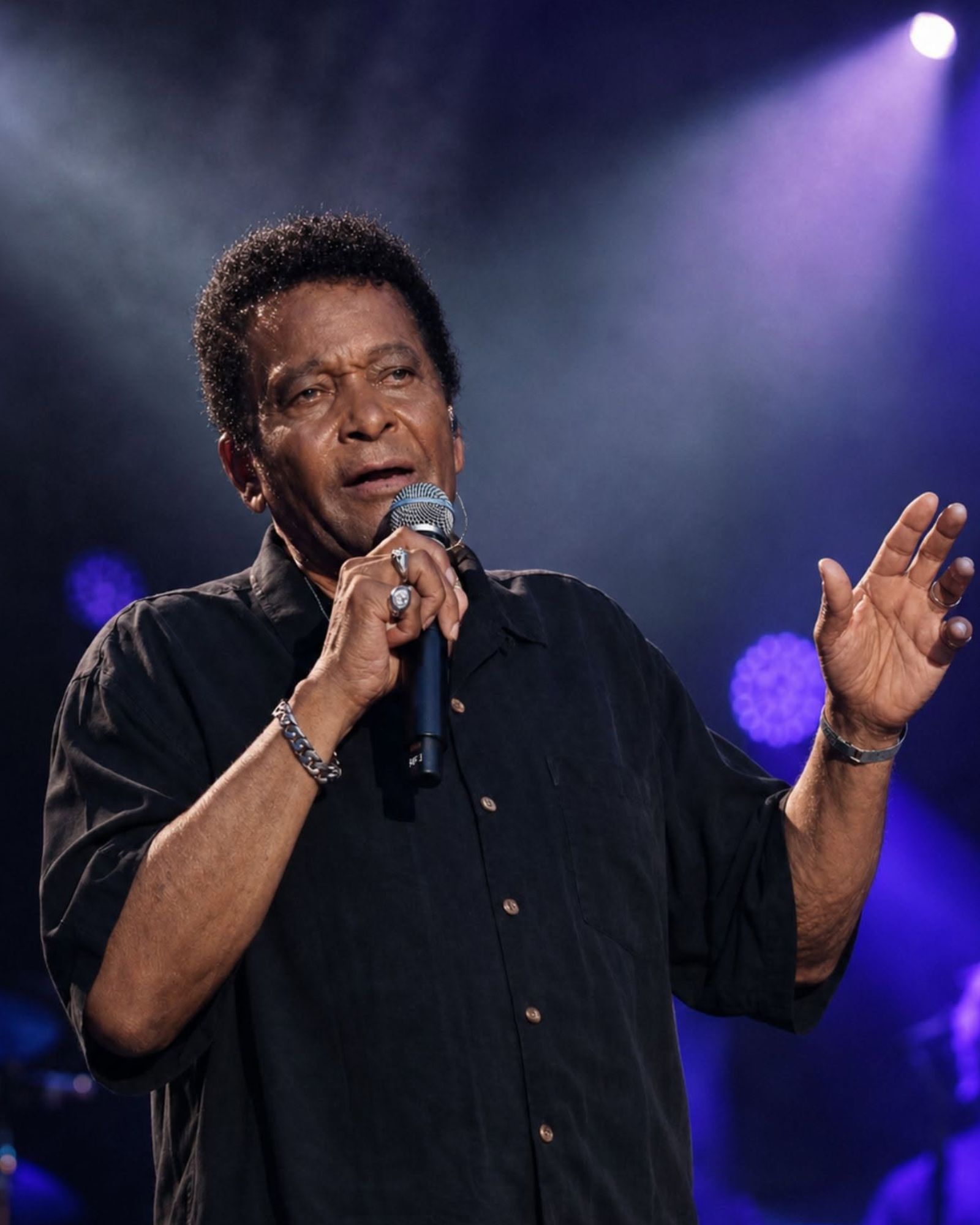
In the final chapter of Charley Pride’s life, there were no packed arenas, no roaring crowd, and no long public procession lined with fans holding signs. Instead, his family gathered quietly in Dallas for a private wake, the kind of farewell that fit the impossible moment the world was living through. No open doors. No public ceremony. No grand goodbye. Just family, memory, and a silence that felt heavy with love.
It was a painful ending for a man who had spent decades giving people reasons to sing. Charley Pride was more than a country star. He was a historic force in American music, a voice that helped shape the genre while breaking barriers that had seemed fixed for generations. He recorded 29 No. 1 hits and sold more than 70 million records. At RCA, only Elvis moved more. Those numbers tell part of the story, but they do not fully capture what Charley Pride meant to country music, or to the people who saw themselves in his success for the first time because of him.
A Final Public Moment
Charley Pride’s last public appearance came on November 11, 2020, at the CMA Awards. He stood on the stage and sang Kiss An Angel Good Mornin’ with Jimmie Allen, a performance that now feels almost unbearably tender in hindsight. Before singing, Charley Pride told the audience he was nervous as can be. He smiled, sang, and left behind a memory that would soon become one of the last gifts he gave the public.
Thirty-one days later, Charley Pride was gone.
The news landed with the kind of sadness that is hard to describe without sounding too small for it. This was not just the loss of a famous singer. It was the loss of a man whose presence had quietly changed the landscape of country music. He had not demanded attention. He had earned it. And because he was Charley Pride, he did it without making a spectacle of himself.
A Goodbye the Pandemic Would Allow
The pandemic changed everything, including how people could mourn. For Charley Pride’s family, that meant a private wake in Dallas and a goodbye carried out under limits that would have been unthinkable in any other year. Fans who had grown up with his songs, and musicians who had been inspired by his example, could not gather in one place to say thank you in person.
So country music did what it could from a distance. Messages poured in. Memories were shared. Respect traveled through screens and interviews and quiet tributes.
Dolly Parton wrote: One of my dearest and oldest friends. Charley, we will always love you.
Darius Rucker wrote: Heaven just got one of the finest people I know.
Those words carried the kind of weight only real admiration can carry. They were simple, honest, and deeply personal. They said what so many felt: Charley Pride had been part of the foundation.
The Artist Who Changed the Genre Without Asking for Credit
Months later, CMT assembled a powerful tribute for CMT Giants: Charley Pride. Garth Brooks, George Strait, Luke Combs, Alan Jackson, Gladys Knight, and many others came together to honor him on one stage. It was a tribute worthy of the man, but even that could not fully capture the scale of his influence.
His widow, Rozene, said it best: He would have been so happy.
That sentence carries a softness that feels right for Charley Pride. He was not known for demanding the spotlight, even though he lived in it. He changed country music by doing the work, night after night, song after song. He opened doors that had been closed for too long. He made room for others simply by being excellent.
Jimmie Allen put the truth in the clearest terms: If there was no Charley Pride, there wouldn’t be Darius Rucker, me, Kane Brown, or any Black country artist on their way right now.
That is the legacy. Not just the hit records. Not just the awards. Not even the historic firsts. It is the path he cleared without turning every step into a speech. He changed the whole genre. He just never made a big deal about it.
A Quiet End, A Lasting Echo
There is something heartbreaking about a private wake for a man whose voice once filled so many public spaces. But there is also something fitting in it. Charley Pride belonged to the people, yet he remained grounded in family, dignity, and steady grace. Even in death, he brought people together.
Country music did not get the farewell it would have planned for him in a different world. The pandemic took that away. Still, the love remained. It traveled through songs, stories, and the artists who followed in his wake.
Charley Pride left quietly, but his impact did not. It is still there in the music, in the people he inspired, and in every stage that became a little more open because he once stood on it and sang his heart out.
Post navigation
When Vern Gosdin died at 74 in a Nashville hospital, the world lost the man they called The Voice. For a long stretch of his life, though, it seemed as if the world had already stopped paying attention. Nashville had a habit of chasing the next bright thing, the next polished smile, the next sound built for radio. Vern Gosdin never really fit that pace. He did not sing like a man trying to impress anybody. He sang like a man telling the truth because he had no choice.
Years before he died, a stroke stole some of his strength and changed the shape of his days. Many performers would have disappeared quietly after that. Vern Gosdin did not. Even when the spotlight drifted away, he kept carrying the same voice, the same ache, the same hard-earned tenderness. He kept singing about the kind of life people often try to hide: heartbreak, loneliness, regret, faith, and the stubborn will to keep going anyway.
Born into Hard Work, Raised on Real Life
Vern Gosdin was born one of nine children in Woodland, Alabama, to parents who were known as rock farmers. That detail says a lot about the life he came from. This was not a world of comfort and polish. It was a world of work, grit, and people who learned early that survival depends on effort. In that kind of home, music was not a luxury. It was something deeper. It was a release, a comfort, a way to make sense of the week ahead.
His mother’s church piano became one of the first places Vern Gosdin found music that mattered. The notes were not just pretty sounds. They were part of a tradition of faith and endurance. You can hear that background in the way Vern Gosdin sang later in life. Even when he was singing about pain, there was always a hint that he believed pain did not get the final word.
A Singer Who Never Lied to the Listener
Vern Gosdin did not become famous by sounding cheerful or polished in the way the industry often prefers. He became memorable because he sounded real. He sang about heartbreak because he had lived it. He sang about loneliness because he had known it. He sang about God because he believed, and because belief was not an accessory in his life — it was part of the foundation.
“You don’t know about sadness ’til you faced life alone. You don’t know about lonely ’til it’s chiseled in stone.”
Those lines capture what made Vern Gosdin different. He did not just perform sadness. He understood it. He gave language to people who did not always have words for what sat heavy in their own lives. In empty bars, quiet kitchens, and pickup trucks parked at the edge of a long night, Vern Gosdin sounded like someone who had already been through the storm and come back with something worth sharing.
The Respect Came Late, But It Came
Nashville may have been slow to fully embrace Vern Gosdin, but the people who listened closely never forgot him. George Strait called him “one hell of a country singer.” Josh Turner called him a “singer of sad songs.” Those descriptions were accurate, but they still do not capture everything. Vern Gosdin was not only a sad singer. He was an honest singer. That is why the songs stayed with people.
There are entertainers who sell a moment, and then there are voices that follow listeners through the years. Vern Gosdin belonged to the second group. His songs did not demand attention with tricks or spectacle. They asked for patience. They asked the listener to sit still long enough to feel something real. In return, they offered comfort that was never fake.
A Voice That Outlived Fashion
By the time Vern Gosdin passed away, Nashville had moved on to newer styles and cleaner edges. But time has a way of sorting out what lasts. Fads disappear. Carefully packaged images fade. A voice like Vern Gosdin’s does not vanish so easily. It lingers where people are honest enough to need it.
That is why his legacy still matters. Long after the headlines fade, his songs remain in the places where life gets quiet enough for truth to speak. They remain in the ache of a divorce, in the stillness after a hard day, in the old memory of a church song, and in the private moments when a person is too proud to cry but too broken not to feel it.
The Kind of Voice the Angels Keep
Vern Gosdin was never just a name on a playlist or a footnote in country music history. He was a witness. He sang about what it means to lose, to wait, to believe, and to keep showing up anyway. That is a rare gift. It is also the reason his voice still matters.
Heaven did not need convincing. It already knew what Vern Gosdin was bringing. A voice like that does not simply entertain. It comforts. It tells the truth. It makes the broken feel seen. And in the end, that may be the highest kind of country singing there is.
Vern Gosdin left behind more than songs. He left behind proof that honesty can outlast trend, that sorrow can be shaped into beauty, and that a voice rooted in real life never truly disappears. Nashville may have taken its time. Heaven did not.