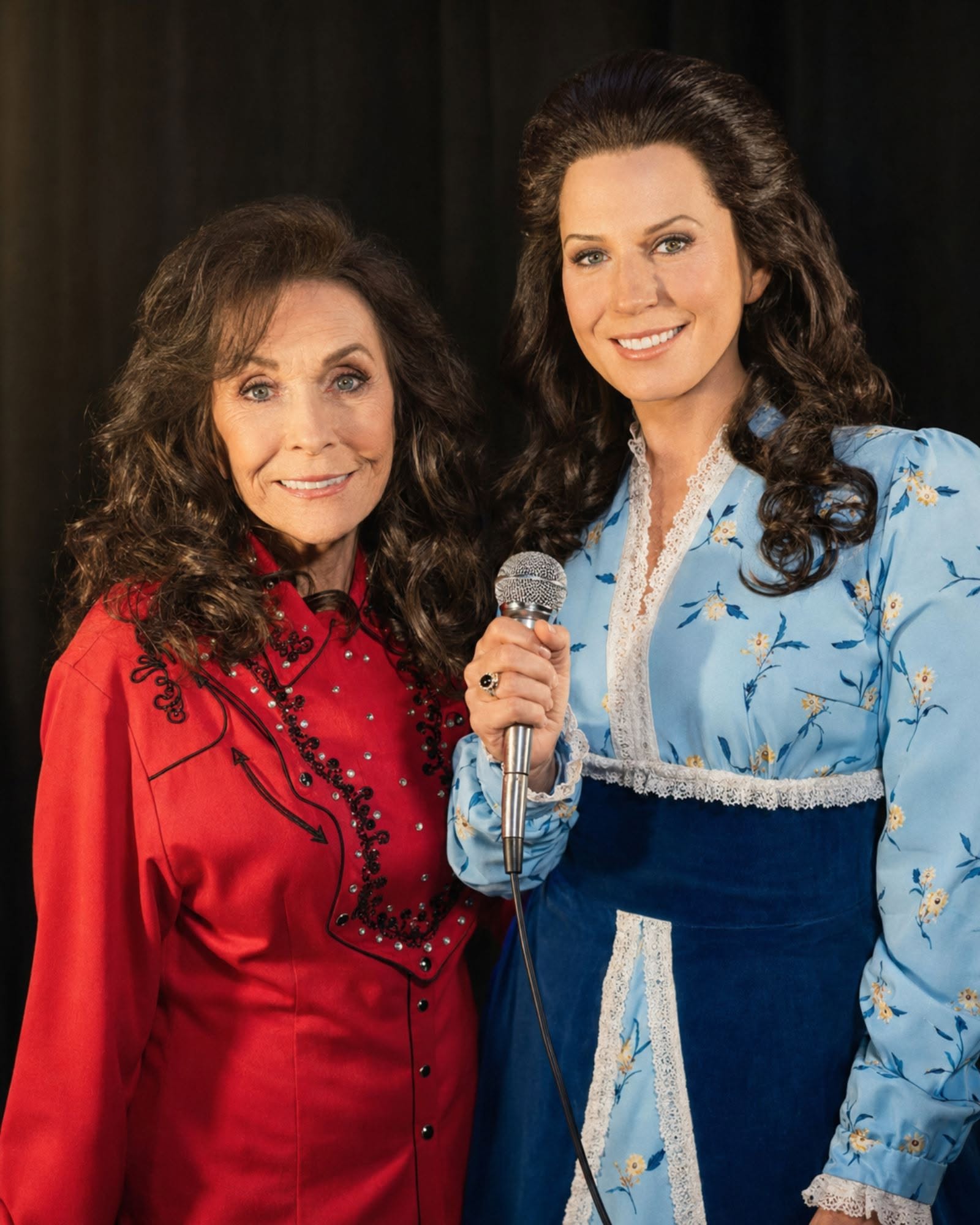
THEY GATHERED AT THE GRAND OLE OPRY TO SAY GOODBYE. ALAN JACKSON SANG THE SONG HE HAD WRITTEN FOR HIS OWN MOTHER. Loretta Lynn had come out of a Kentucky coal camp with almost nothing. She married young, raised children while still barely grown herself, learned guitar on a seventeen-dollar instrument, and eventually made country radio hear things women were not supposed to say out loud. Marriage. Poverty. Cheating. Birth control. Anger. Survival. On October 4, 2022, Loretta died at her home in Hurricane Mills, Tennessee. She was 90. Twenty-six days later, her family, friends and fans gathered at the Grand Ole Opry House for a public celebration of her life. George Strait sang “Don’t Come Home A-Drinkin’,” Loretta’s first No. 1 hit. Tanya Tucker sang “Blue Kentucky Girl.” Keith Urban played a voicemail Loretta had once left him before singing “You’re Lookin’ at Country.” Then Alan Jackson walked onto the stage. He did not choose one of Loretta’s hits. He chose “Where Her Heart Has Always Been,” the song he had written after losing his own mother. Before singing, Alan explained that Loretta had always reminded him of her — both women were sweet, genuine, outgoing, and never afraid to tell you exactly what they thought. For decades, America knew Loretta Lynn as the Coal Miner’s Daughter. That night, Alan Jackson remembered something simpler. She reminded him of Mom. – Country Music
When fans gathered at the Grand Ole Opry House to honor Loretta Lynn after her death on October 4, 2022, the room carried more than grief. It carried history. Loretta Lynn was 90 when she died at her home in Hurricane Mills, Tennessee, and the farewell that followed felt like a final chapter for one of country music’s most fearless voices.
Loretta Lynn’s story had always sounded larger than life, but it began in hardship. She rose from a poor Kentucky coal camp, married young, raised a family early, and taught herself guitar before turning her life into songs that were blunt, honest, and deeply human. She sang about marriage, poverty, heartbreak, and the hard truth of being a woman in a world that often expected silence.
At the celebration of life, the tributes came one after another. George Strait performed “Don’t Come Home A-Drinkin’,” Loretta Lynn’s first No. 1 hit. Tanya Tucker sang “Blue Kentucky Girl.” Keith Urban shared a voicemail Loretta Lynn had once left him, then performed “You’re Lookin’ at Country.” Each performance seemed to open another door into the same remarkable life.
He did not choose one of Loretta Lynn’s signature songs. Instead, Alan Jackson chose “Where Her Heart Has Always Been,” a song he had written after losing his own mother. Before singing, Alan Jackson explained that Loretta Lynn reminded him of her. He described both women as sweet, genuine, outgoing, and unafraid to tell the truth plainly.
A Song That Carried Two Goodbyes
That choice gave the moment extra weight. Alan Jackson had written “Where Her Heart Has Always Been” for his mother’s funeral, and the song already held private grief. Singing it for Loretta Lynn turned the performance into something wider, as if one farewell could carry another. It was not just a tribute. It was a personal act of remembrance.
Some songs are written for one person, but they find their way into many hearts.
For decades, Loretta Lynn was known as the Coal Miner’s Daughter. But on that night, the title was only part of the picture. She was also a mother, a storyteller, a survivor, and a woman who gave country music a sharper honesty. Alan Jackson’s song did not try to compete with that legacy. It honored it with restraint and feeling.
As the final notes faded, the room was left with a quiet truth. Loretta Lynn had spent her life telling the world exactly who she was. In return, the world gathered to say goodbye with songs, memories, and love. And Alan Jackson, standing at the center of it all, reminded everyone that the deepest tributes are sometimes the simplest ones.
Alan Jackson, Denise, and a Farewell That Felt Like a Full Circle Moment
By the time Alan Jackson stepped into Nashville’s Nissan Stadium for the final full-length concert of his touring career, the night already felt larger than a farewell. It felt like a memory being carefully opened, one piece at a time. Two days earlier, on June 25, 2026, Alan Jackson had released “Still the One,” a song that carried a very personal meaning. It was a tribute to Denise Jackson, the woman he first noticed decades ago when she was doing a cheerleading routine to that song. Long before the sold-out crowds, long before the stadium lights, Alan Jackson and Denise Jackson had built a life together, marrying on December 15, 1979.
The timing made the release feel intimate rather than promotional. It was not simply a new track dropping into the world. It was Alan Jackson looking back across nearly 50 years and choosing a song that belonged to the beginning of his story. That gesture mattered because the final concert was not just about ending a touring chapter; it was about honoring the road that had carried Alan Jackson away from home, and the family that had stayed with him through all of it.
A Night in Nashville
On June 27, 2026, more than 80,000 people filled Nashville for the concert. A storm delayed the show for about an hour, but when Alan Jackson finally reached the microphone shortly after 9:35 p.m., the mood shifted from waiting to witnessing. His steps were visibly stiff, a reminder of the Charcot-Marie-Tooth disease that had gradually affected his balance and mobility. Yet when the band launched into “Gone Country,” the voice was still there, steady and unmistakable.
George Strait joined Alan Jackson for “Designated Drinker” and “Murder on Music Row,” adding another layer of country history to the night. From the audience, Denise Jackson, their three daughters, and other family members smiled and sang along, sharing the moment in a way that made the stadium feel smaller and more personal. When the emotion began to swell too close to grief, Alan Jackson cut through it with a line that landed exactly right: “I’m not dead!”
The Last Songs, and the Meaning Behind Them
Alan Jackson performed for nearly two hours, moving through songs that had followed him through decades of country music. Fireworks rose during “Chattahoochee,” and by the time he reached “Mercury Blues” and “Where I Come From,” the night had become something more than a concert setlist. It became a goodbye to the highway life, and a quiet promise that music itself was not ending. Only the traveling was.
That is what made “Still the One” feel so important. It was not a random release. It was a love song returning to its original listener. It was Alan Jackson, at 67, closing one long chapter by turning toward the woman who had been there before the fame, before the arenas, and before the final stage lights. In the end, the story was not only about retirement. It was about recognition, loyalty, and a marriage that had lasted through everything country music could throw at it.
Alan Jackson was not leaving music behind. He was simply setting down the road and stepping back toward home. And for Denise Jackson, that meant hearing one more song that said what words sometimes cannot: after all these years, Alan Jackson still knew exactly who had been the one.