THEY DROPPED “WESTERN” FROM “COUNTRY & WESTERN.” AND WITH IT, THEY DROPPED HIM. In 1962, Billboard changed “Country & Western” to just “Country.” One word gone. An entire genre erased. Nobody lost more from that than Marty Robbins. 94 charting singles. 16 #1 hits. Two Grammys. “El Paso.” “Big Iron.” “Gunfighter Ballads and Trail Songs” — an album that defined what Western music sounds like. He didn’t follow Nashville. He followed the desert, the dust, and the stories his grandfather told him in a shack outside Glendale, Arizona. The Country Music Hall of Fame inducted him in October 1982. Eight weeks later, he was dead. His son Ronny said it best: “Nowadays history only goes as far back as Garth’s fifth album.” They gave Marty the plaque. They called him a “Renaissance man.” But they never called him what he actually was — the greatest Western voice Nashville chose to forget. – Country Music
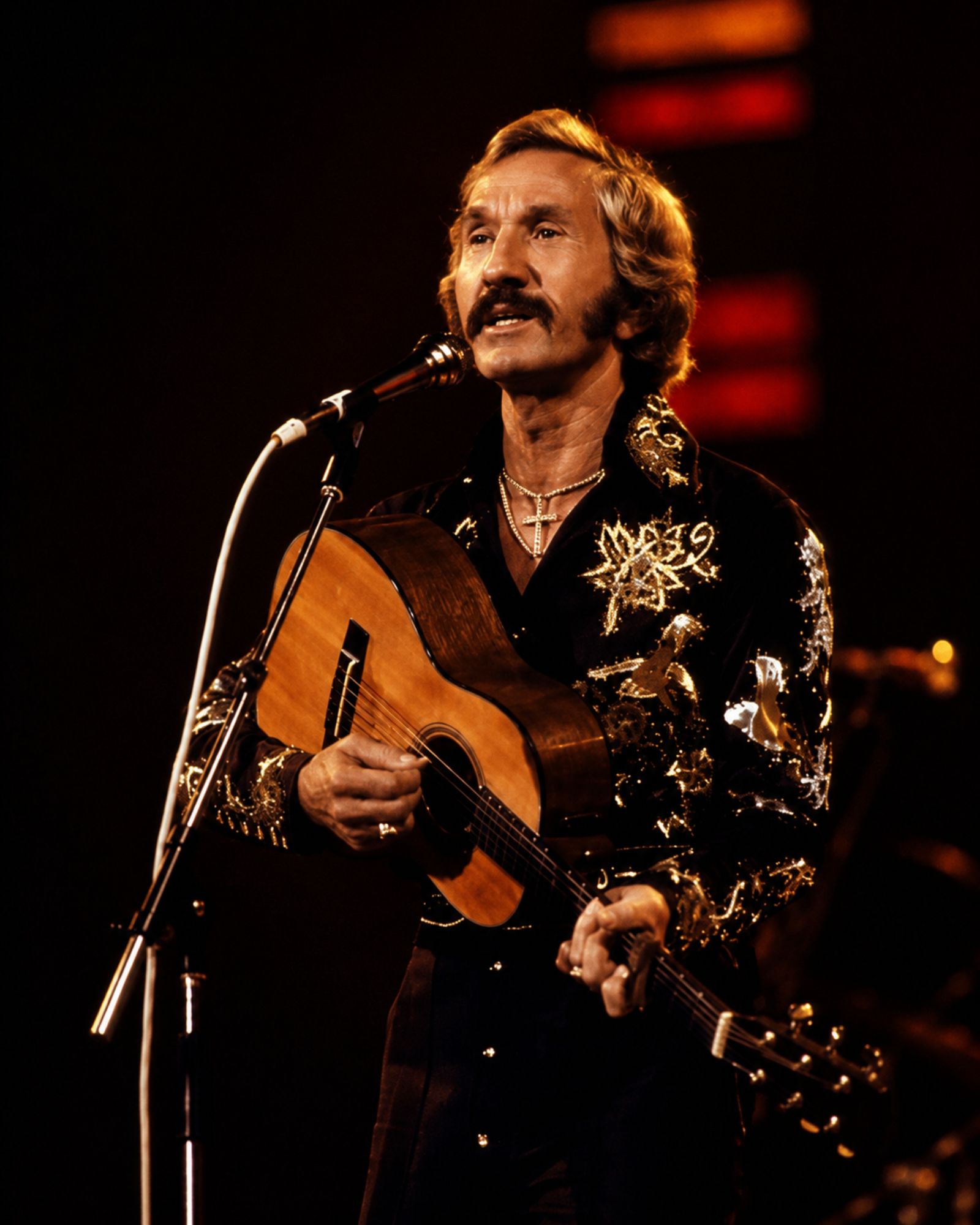
In 1962, a small change appeared on paper, but it carried a much bigger meaning in American music. Billboard dropped the word “Western” from “Country & Western” and shortened the label to just “Country”. On the surface, it looked simple. Cleaner. Modern. But for artists like Marty Robbins, that single word disappearing felt like a door quietly closing behind him.
Marty Robbins was never just another Nashville singer chasing the next trend. He was a storyteller, a balladeer, and a voice built for wide-open spaces. He had 94 charting singles, 16 number-one hits, and two Grammys. Songs like “El Paso” and “Big Iron” did more than climb the charts. They created a world. His album Gunfighter Ballads and Trail Songs became a defining work of Western music, the kind of record that seemed to carry dust, sun, and old frontier shadows inside it.
He Followed the Desert, Not the Trend
Marty Robbins did not build his career by copying whatever was fashionable in Nashville. He leaned into a different sound, one shaped by the desert and by the stories passed down through family. He grew up hearing tales from his grandfather in a shack outside Glendale, Arizona, and those stories stayed with him. They turned into songs about drifters, gunfighters, lonely roads, and broken hearts.
That was the magic of Marty Robbins. He could sing about love, but he could also sing about distance. He could sing about a town, a duel, a sunset, or a man riding alone toward trouble. His music had motion in it. It felt lived in. And when he sang, listeners believed every word.
“El Paso” was not just a hit. It was a short film in song form, a complete story that people still remember decades later.
The Genre Changed, and So Did the Spotlight
When the industry started calling the music simply Country, the label may have become easier to market, but something important was lost. The Western side of the genre, with its deserts, horses, gunfighters, and frontier drama, began to fade from the center of attention. That was the world Marty Robbins helped define, and it was the world many listeners still loved.
He was not forgotten by fans. Fans never truly let him go. But institutions and history books often reward what comes next, not what came first. As newer stars rose and the sound of country music shifted, Marty Robbins was increasingly treated like a chapter instead of a foundation.
His son Ronny Robbins later said it with painful clarity: “Nowadays history only goes as far back as Garth’s fifth album.” It was a sharp line, but it captured a real problem. Music history often moves fast. Too fast. And when it does, the artists who built the bridge can disappear from the story.
The Hall of Fame Came Late
The Country Music Hall of Fame inducted Marty Robbins in October 1982. It was a proud moment, but also a sobering one. He received the plaque, the honor, the recognition he had earned long before. Then, only eight weeks later, he was gone.
That timing gives his story an extra layer of sadness. It feels like the industry finally stopped long enough to say his name, but only after the years had already taken so much from him. He was praised as a “Renaissance man”, which was true in its own way. He sang, wrote, performed, and crossed styles with ease. But that polite label also softened the harder truth. Marty Robbins was not just versatile. He was one of the greatest Western voices Nashville ever produced.
Why Marty Robbins Still Matters
Today, it is easy to think of music history as a neat timeline. But real history is messier. It is shaped by labels, by marketing, by what gets remembered, and by what gets trimmed away. When “Western” vanished from the genre name, a piece of identity disappeared with it. Marty Robbins became one of the clearest examples of what was left behind.
And yet his music remains. “El Paso” still grabs attention. “Big Iron” still carries weight. Gunfighter Ballads and Trail Songs still sounds like a record made outside of time, by a man who understood that songs could be stories and stories could last.
Marty Robbins did not need the industry to tell him who he was. He already knew. He was the singer who followed the desert, the dust, and the old tales. He was the voice that gave Western music its lasting shape. They may have dropped the word from the label, but they could never fully erase the man who made it matter.
Post navigation
On October 2, 2022, Loretta Lynn did something that looked ordinary at first glance. From her ranch in Hurricane Mills, Tennessee, she picked up her phone and shared a Bible verse with the world. There was no big announcement, no farewell statement, no hint that this would be one of the last times her voice would reach fans in such a quiet way.
She posted John 3:20-21, a passage about truth and light: “Everyone who does evil hates the light… But whoever lives by the truth comes into the light.” For people who had followed Loretta Lynn for years, it seemed familiar. She had often shared verses on Sunday mornings. It was part of who she was — plainspoken, deeply rooted, and unafraid to speak from the heart.
A Final Message That Seemed Ordinary
At the time, most people did not read too deeply into it. Fans liked the post, left comments, and moved on with their day. That is often how the internet works: even the most meaningful moments can pass by quietly when nobody knows they are final.
But two days later, on the morning of October 4, 2022, Loretta Lynn died peacefully in her sleep at the age of 90. She passed away in the house she loved, on the land she had protected for most of her life. Then her last message took on a new weight.
What had looked like a simple verse suddenly felt like a closing thought. A woman who had lived through hardship, fame, grief, survival, and reinvention had spent her final public moment pointing toward truth.
The Truth Was Always Part of the Story
Loretta Lynn’s life was never polished into something easy. She came from poverty and worked hard before the world ever knew her name. She built a career in country music by telling stories that many people were afraid to say out loud. Her songs spoke about marriage, motherhood, struggle, desire, disappointment, and strength.
That honesty was part of her power. She did not sound like a star trying to impress anyone. She sounded like someone who had lived long enough to know that life is messy, and that truth matters more than image.
“Every song I wrote came from my heart.”
Those words fit her entire career, but they also feel especially haunting now. She did not spend her life hiding behind a public mask. Even when the music business tried to make her softer, safer, or more predictable, Loretta Lynn kept her edge. She kept her voice. She kept telling the truth in the only way she knew how.
Why That Last Verse Matters
John 3:20-21 is about more than religion; it is about living honestly. That is what made Loretta Lynn’s final post so striking after her death. It was not dramatic. It was not designed to be a spectacle. It was quiet, sincere, and deeply in character.
In hindsight, the message feels like a final reminder from someone who had spent a lifetime refusing to pretend. She had endured personal loss, serious health challenges, and the pressure that comes with being a woman who speaks too boldly for some people’s comfort. Through it all, she remained herself.
That final Bible verse was not a performance. It was a reflection of how Loretta Lynn lived: with faith, with honesty, and with a stubborn willingness to stand in the light.
People Looked Back and Understood
After her death, fans and admirers revisited that post with a different heart. What had once seemed ordinary now felt almost like a farewell. People remembered the way Loretta Lynn carried herself, not as a distant legend, but as someone real enough to laugh, hurt, sing, and speak plainly.
She had outlived so many chapters of her own story. She survived poverty, a difficult marriage, a stroke, a broken hip, and decades in an industry that could be unforgiving. And yet, in her final hours, she was still doing what she had always done: offering something honest, something simple, something true.
A Life That Did Not Need to Be Rewritten
There is something deeply moving about that kind of ending. No grand speech was needed. No final spotlight was required. Loretta Lynn’s last message was enough because it matched the life behind it.
She did not stop being Loretta Lynn at the end. She remained the woman who sang from the heart, spoke without apology, and believed in the power of truth. Even now, that final post feels less like a goodbye and more like a signature.
Two days before her death, Loretta Lynn left the world a message that many did not understand right away. But once the news came, the meaning became clear. She had spent her life living in the light, and in the end, she pointed everyone else there too.