THEY COULDN’T KEEP THEIR MARRIAGE TOGETHER. BUT FOURTEEN MONTHS AFTER THE DIVORCE, A SONG ABOUT A FAILED MARRIAGE TOOK “MR. AND MRS. COUNTRY MUSIC” BACK TO NO. 1. George Jones and Tammy Wynette divorced in 1975 after six difficult years together. Yet country fans still refused to see them as separate people. At Tammy’s solo shows, some audience members reportedly interrupted her songs by shouting, “Where’s George?” Then came “Golden Ring.” Bobby Braddock and Rafe Van Hoy wrote the story of a wedding ring sitting in a Chicago pawn shop. A young couple buys it, gets married, begins fighting, and eventually separates. The ring ends up behind the glass again, waiting for another couple who still believes love will be enough. George later admitted that recording with Tammy again was not his idea. Working beside her brought back memories he did not want to revisit. But when Billy Sherrill started the session, George and Tammy still knew exactly how to sing together. Their marriage was over, yet neither voice competed with the other. They listened. They answered. They left space for the pain both of them understood. Released fourteen months after their divorce, “Golden Ring” reached No. 1 in August 1976. Years later, their daughter Georgette said, “Mom loved him until the day she died.” She believed George had been the love of her mother’s life. The couple once known as “Mr. and Mrs. Country Music” could not build a peaceful home together. But inside one three-minute song, they still sounded as if they belonged in the same room. Do you remember how you felt the first time you heard “Golden Ring”? – Country Music
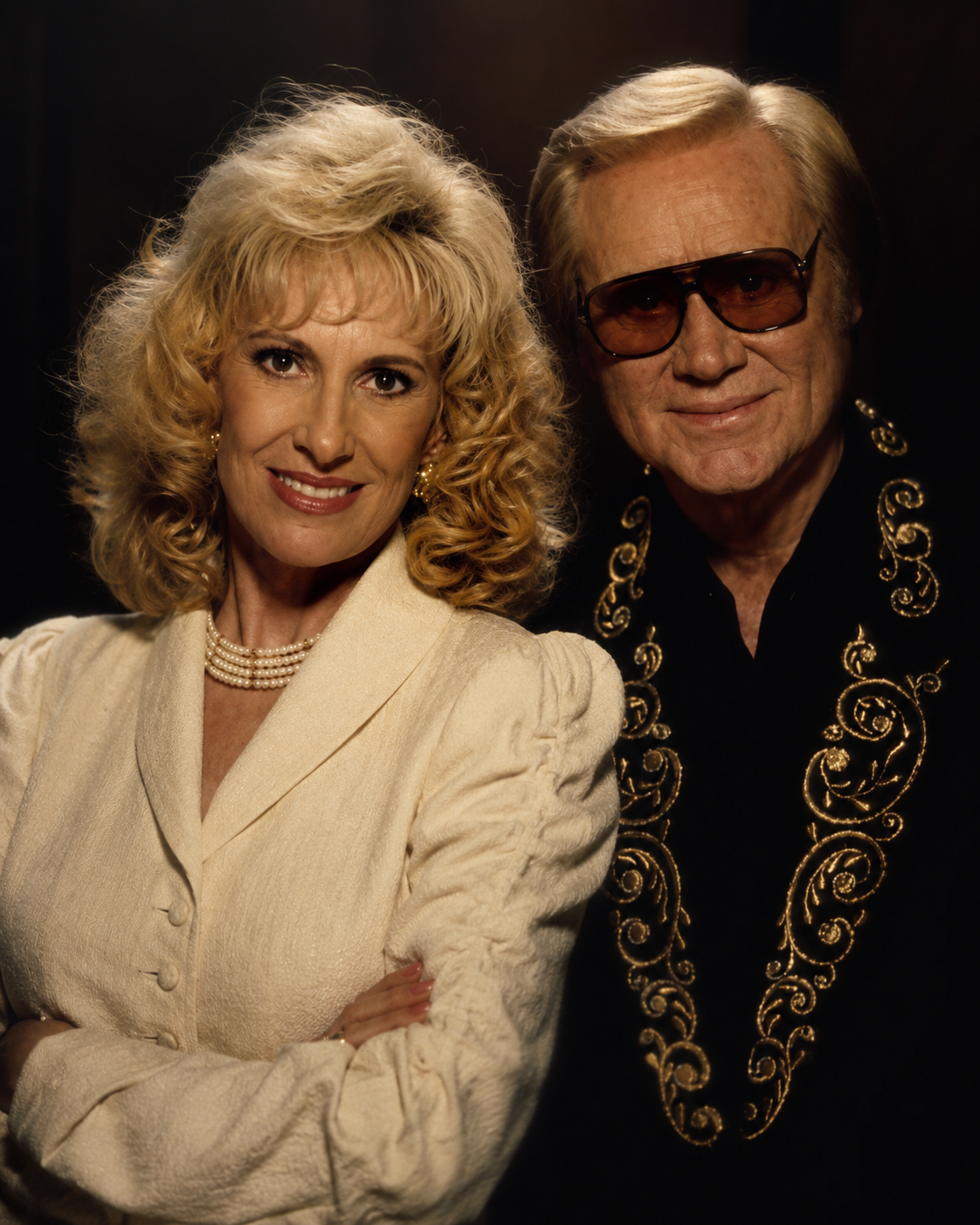
How “Golden Ring” Gave George Jones and Tammy Wynette a Second Life on the Charts
George Jones and Tammy Wynette were never just another country duo. By the time their marriage ended in 1975, they had already become a symbol to fans: imperfect, electric, and impossible to separate in the public imagination. Even after the divorce, people still wanted the pair together, as if the story of George Jones and Tammy Wynette belonged to country music itself.
That made “Golden Ring” feel almost unbelievable when it arrived. Written by Bobby Braddock and Rafe Van Hoy, the song tells the life of a wedding ring as it passes from hope to heartbreak and back again. It begins in a Chicago pawn shop, moves into a young couple’s wedding, and ends where it started, waiting behind the glass for someone else to believe love will last.
For George Jones, recording with Tammy Wynette again was not a sentimental reunion. He later said it was not his idea, and it is easy to understand why. A duet like that could stir up memories neither singer needed to revisit. But when the session began, something undeniable happened. George Jones and Tammy Wynette knew how to sing around each other with rare ease. They did not overpower one another. They listened. They answered. They made room for silence, and that silence carried some of the pain.
What makes “Golden Ring” so moving is not only the lyrics, but the history behind the voices. George Jones and Tammy Wynette had lived through the kind of broken love the song describes. Their marriage may not have worked, but their musical chemistry never really left them. That tension gave the record its power.
The marriage was over, but the harmony still sounded like truth.
Released fourteen months after the divorce, “Golden Ring” reached No. 1 in August 1976. It was a reminder that sometimes the deepest duets come from people who understand each other too well. Fans did not hear a clean ending. They heard two lives colliding inside one song, and they recognized something honest in it.
Years later, their daughter Georgette said that her mother loved George Jones until the day she died. That detail lingers because it helps explain the ache behind the music. George Jones and Tammy Wynette could not build a peaceful home together, but in three minutes of song, they still sounded like they belonged in the same room.
Do you remember the first time you heard “Golden Ring”?
Post navigation
Loretta Lynn, “Fist City,” and the argument country music was having with itself
When Loretta Lynn sang “Fist City” for the first time at the Grand Ole Opry, she was not trying to be polite. She was singing like a woman who had already learned that life could be hard, public, and unfair all at once. The song came out sharp, funny, and dangerous in the way only a truly direct country song can be. It sounded like a warning because it was one.
In 1968, that warning was not easy for everyone to accept. Some radio stations refused to play the record. The idea of a woman threatening another woman in a country hit felt too bold for some listeners, too confrontational for the people who still wanted their women singers sweet, quiet, and grateful. But Loretta Lynn had never built her career by waiting for permission.
She had already become known for writing from inside her own life, not from some safe distance. She was a mother of four before the age of twenty, and she stayed in a marriage that was complicated, painful, and impossible to explain in a neat line. What she could control was the song. So she turned anger into rhythm, and humiliation into a performance people could not ignore.
The man in the middle of the story
The modern complaint about “Fist City” is that the song aimed at the wrong target. Doolittle Lynn was the one cheating, and yet the threat in the lyrics lands on the other woman. That criticism is fair as far as it goes. But it also misses the full picture. Loretta Lynn was not writing a courtroom argument. She was writing a survival song. She was capturing the way betrayal feels when it enters a house and changes the air in it.
That is part of why the song lasted. It was not just gossip dressed up as music. It was a woman taking control of the story everyone else was already telling about her life. Loretta Lynn did not apologize for that. She turned conflict into a chorus.
She was not asking anyone’s permission — not radio’s, not Nashville’s, not her husband’s.
Banned, rejected, and still a hit
The irony is that the outrage helped prove the point. “Fist City” was controversial, and it still reached No. 1 in the country world. In the same year, it was treated as too much and loved enough to win anyway. That tension is part of the record’s history: banned by some, embraced by many, and impossible to dismiss.
Years later, Loretta Lynn described her marriage with the kind of bluntness that made her writing feel so alive. She said her old man was sleeping out on her, and he ended up making her a lot of songwriting money by doing it. That is not a neat sentiment. It is not a polished confession. It is Loretta Lynn doing what she always did: telling the truth in a sentence that lands like a verse.
Some people call “Fist City” bitter. Others call it funny, fearless, or plain old country. Maybe it is all of those things. Maybe it is what happens when a woman refuses to be invisible and writes herself into the middle of her own mess.
What do you call it when a song is banned, attacked, and still climbs to the top? Maybe you call it a hit. Or maybe you call it something rarer: a moment when Loretta Lynn took the shame, the anger, and the gossip, and turned them into a record that still sounds alive because it never pretended to be harmless.