THEY CALLED HIM THE GENTLE GIANT. BUT STAYING 57 YEARS ISN’T GENTLE — IT’S A CHOICE YOU MAKE EVERY MORNING. Don Williams didn’t chase fame. He worked oil fields, drove trucks, collected debts. Just a kid from Texas trying to figure things out. Joy Bucher married him in 1960. Before the hits. Before Nashville. Before “I Believe in You” became the love song millions would never forget. She worked as a secretary so he could keep chasing the music. And when the music finally came — 17 number ones, the Hall of Fame, sold-out arenas — Joy stayed exactly where she’d always been. Not backstage. Not in interviews. Not in photographs. Home. Don walked onstage with a cup of coffee and sat on a barstool. No flash. No theatrics. Just a voice that made you believe everything would be okay. He loved the same way. In 2016, he hung up his hat. Said it was time for some quiet at home. Joy already knew about quiet. She’d been keeping it for 56 years. Not every love song needs a stage. Some just need someone who stays. – Country Music
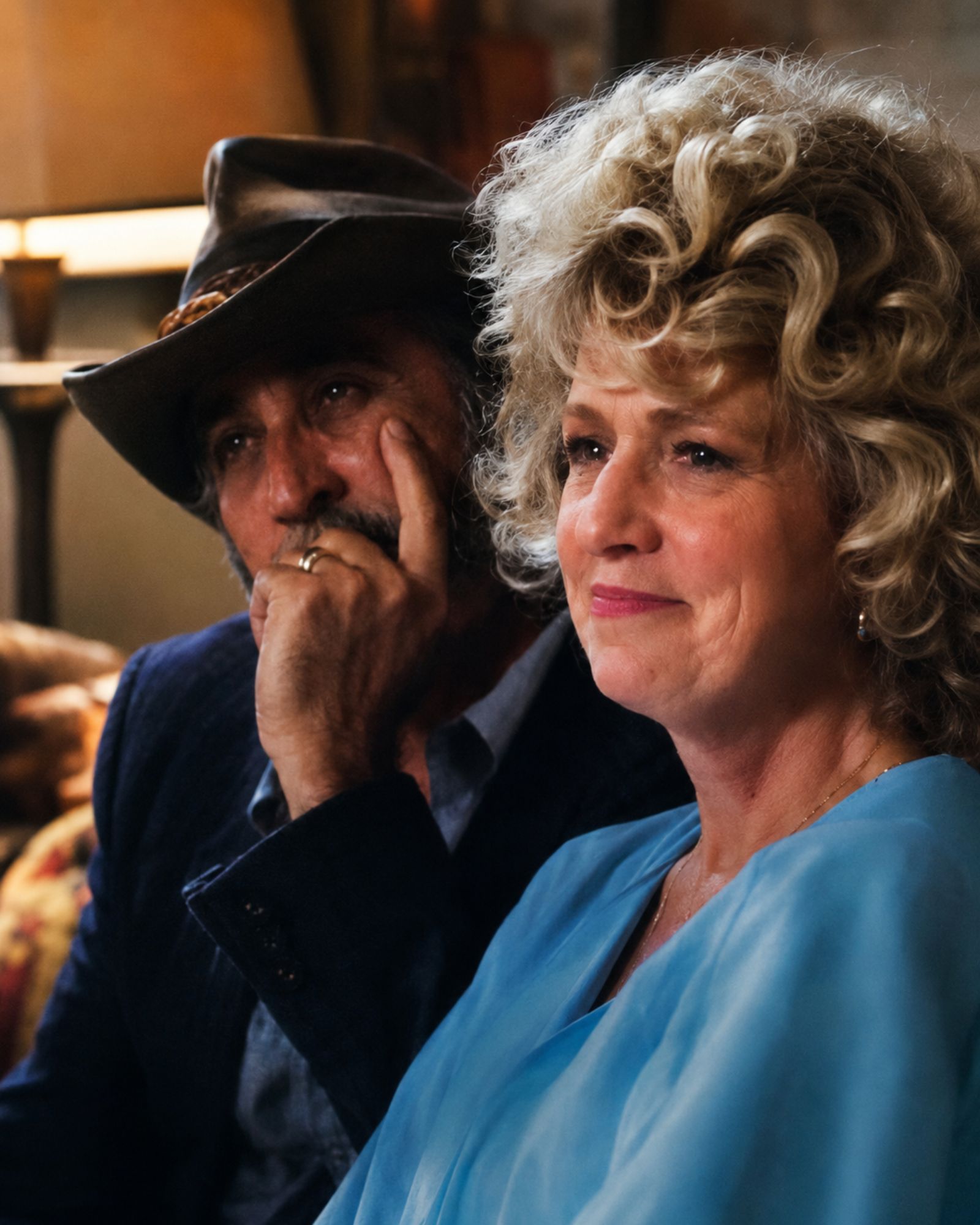
Don Williams was never the loudest man in the room. He did not arrive like a storm, and he did not build his life around attention. Long before the awards, long before the sold-out arenas, he was just a kid from Texas trying to figure out what kind of man he wanted to become. He worked oil fields. He drove trucks. He collected debts. He learned what hard days felt like, and he learned something else too: there is value in steady hands and a calm voice.
That calm voice would one day make him one of country music’s most beloved stars. But before the hits, before Nashville, before millions heard I Believe in You and felt like the song had been written just for them, Don Williams had already made one of the most important decisions of his life.
In 1960, he married Joy Bucher.
Before the fame, there was a promise
Joy married Don Williams before the spotlight, before the charts, before anyone called him the Gentle Giant. She was there when life was still uncertain and the future had not yet taken shape. While Don Williams kept chasing music and trying to turn a dream into a career, Joy worked as a secretary so the two of them could keep moving forward together.
That kind of support does not always get applause, but it builds something stronger than applause. It builds a life.
There is a temptation to tell stories like Don Williams’ as if success arrived fully formed, like he stepped into greatness and simply remained there. But the truth is more human than that. Behind every song, every performance, every quiet moment onstage, there was a partnership that had already learned how to wait, how to trust, and how to keep going.
Not every love story is made of grand gestures. Some are made of ordinary days, repeated with care.
The voice that made people feel safe
When Don Williams finally found his place in music, the world responded. Seventeen number-one songs followed. The Hall of Fame came. The arenas filled. Fans came not because he shouted the loudest, but because he offered something rare: peace.
Don Williams walked onto the stage with a cup of coffee and sat down on a barstool. No flash. No theatrics. No trying to impress anyone. He looked like a man who had already made peace with himself, and somehow that made everyone else feel a little more at ease.
That was the magic of Don Williams. He did not perform in a way that demanded your attention. He earned it by being steady. His songs felt honest. His presence felt kind. And in a world that often rewards noise, Don Williams proved that gentleness could be powerful.
But the same word people used to describe his music also applied to the life he built at home. Gentle did not mean effortless. Gentle did not mean accidental. It meant choice. Every day, for 57 years, someone had to choose that life again.
Joy Bucher stayed where the real story lived
Joy Bucher never needed the stage to matter. She did not chase interviews or stand in the spotlight of fame. She stayed where she had always been: home. She lived the part of the story that rarely gets written in songs, the part where love is measured in patience, routine, sacrifice, and trust.
While the world knew Don Williams as a country legend, Joy Bucher knew him as a husband. That difference matters. Fame can make a person look larger than life, but marriage brings life back down to earth. It asks simple questions: Will you show up? Will you listen? Will you stay?
Joy Bucher stayed.
And staying, after all those years, was not passive. It was not something small. It was a daily decision made through changing seasons, shifting schedules, and the long, ordinary stretches where love has to be lived, not announced.
When the music slowed down, the quiet remained
In 2016, Don Williams hung up his hat and said it was time for some quiet at home. For many people, that would sound like an ending. For Don Williams, it sounded like a return. He had spent years giving the world his voice, and now he was going back to the place that had carried him all along.
Joy Bucher already understood quiet. She had been keeping it, protecting it, and sharing it with him for 56 years by then. She knew that a long marriage is not built on perfect days. It is built on continuity. On showing up. On weathering life without turning every challenge into a performance.
That is why the story of Don Williams is bigger than music. It is about a man who found success without losing his calm, and about a woman who built a home beside him while the world looked elsewhere. Together, they created something lasting.
Some love songs do not need a stage
People remember Don Williams for his voice, his hits, and the easy confidence he brought to every song. But maybe the deeper truth is this: the real masterpiece was not just what he sang. It was the life he kept choosing.
He did not chase fame for its own sake. He worked, he loved, he waited, and he stayed. Joy Bucher did the same. Their story reminds us that lasting love is not always loud. Sometimes it looks like a woman in the background and a man on a barstool, carrying coffee and a quiet kind of grace.
Not every love song needs a stage.
Some just need someone who stays.
Post navigation
On September 28, 2024, Kris Kristofferson died peacefully in Maui, Hawaii at 88, surrounded by family. The world remembered a legend: a Grammy-winning songwriter, a Country Music Hall of Fame member, a respected actor, and one of the most influential voices in American music. His songs shaped generations, and his presence helped define an era.
But the most meaningful part of his legacy was never only about awards, records, or fame. Long before the tributes, long before the headlines, something deeper had already been passed on. It lived in his daughter Casey Kristofferson, and it showed up in a way no will could ever describe.
A Childhood Built Around Music, but Not Defined by It
Casey Kristofferson’s life began in the center of music history, but she did not grow up chasing the spotlight. She went on her first tour at just seven weeks old, a life that placed her close to stages, dressing rooms, and famous faces from the very beginning. That kind of childhood can create a performer, but it can also create someone determined to run in the opposite direction.
And Casey Kristofferson did exactly that.
Instead of leaning into the Nashville path that many expected, Casey Kristofferson explored styles and scenes that felt far away from her father’s world. She moved through punk rock, classical ballet, go-go dancing, and ska bands. She kept searching for something that felt like hers alone. It was not rebellion for the sake of rebellion. It was the honest effort of a daughter trying to build an identity that belonged to her and not to the famous last name she carried.
“I have always avoided the spotlight,” Casey Kristofferson once admitted.
That single line says a lot. It suggests someone who understood the weight of expectation and spent years trying to step outside of it. Yet even as Casey Kristofferson kept her distance from the public gaze, the music never truly let go of her.
The Name She Tried to Avoid Found Its Way Back
By 2019, Casey Kristofferson was 45 years old, and something had changed. After years of moving through different art forms and lifestyles, she formed the Casey Kristofferson Band and recorded Dirty Feet. It was not an act of imitation. It was not about recreating the past. It was about stepping forward as herself, with her own voice and her own choices.
Then came the moment that surprised many people who had followed the Kristofferson family story for decades. Casey Kristofferson sang “Me and Bobby McGee.”
For most listeners, that song carries a powerful history all on its own. It is tied to American music memory, to deep emotion, and to the kind of storytelling that Kris Kristofferson helped make legendary. For Casey Kristofferson to sing it was never just a performance. It felt like a quiet return, a daughter reaching into the family legacy without being swallowed by it.
She did not sing it as a shadow. She sang it as herself.
What Inheritance Really Means
People often think inheritance is measured in documents, property, or public honors. Those things matter, but they are not the whole story. Sometimes inheritance is a voice that shows up years later. Sometimes it is a rhythm, a memory, a way of feeling a song before the first note is finished.
That seems to be the case with Casey Kristofferson. She spent much of her life resisting the obvious path, yet the artistry remained beneath the surface. When she finally stepped into her own creative identity, it became clear that Kris Kristofferson’s greatest legacy was not only what he built in public. It was also what he passed down privately, through blood, instinct, and the simple fact of being his daughter.
There is something moving about that. A life spent running can still circle back home. A family name can feel heavy for years, then suddenly become a source of strength. In Casey Kristofferson’s story, the inheritance was not a trophy or a headline. It was the courage to sing in her own voice and still carry the fire of where she came from.
A Legacy That Kept Growing
Even after Kris Kristofferson’s death, his influence did not end. It continued in the songs, the memories, and in the people who carry his spirit forward. Casey Kristofferson’s journey makes that legacy feel personal. It reminds us that the most powerful gifts a parent leaves behind are not always visible right away.
Sometimes they appear late. Sometimes they arrive after years of resistance. Sometimes they emerge in a song sung by a daughter who once tried to stay far away from the stage.
And sometimes, that is when the inheritance becomes the most beautiful.