THEY BURIED HIM IN A PRIVATE GRAVESIDE SERVICE IN MESA, ARIZONA. NO FANFARE. NO CROWDS. THAT WAS HIS FINAL WISH. Sixteen No. 1 singles. Sixty albums. Greatest Hits sold four million copies in 1979 — rare for any country artist in that era. In October 2001, Nashville inducted him into the Country Music Hall of Fame. He didn’t show up to accept it. Waylon Jennings never had much patience for ceremonies. Four months later, he was gone. His family held a private burial in Arizona, then scheduled a public memorial at the Ryman Auditorium for March 23. The same stage where he had played his final concert two years earlier — seated on a stool, foot already failing, still singing like the fight wasn’t over. He called that last tour Never Say Die. He meant it. Emmylou Harris said: “He had a voice and a way with a song like no one else. He was also a class act as an artist and a man.” George Jones called it “a great loss for country music.” Because Waylon died in February 2002 — while the country was still raw from September 11 — the press barely stopped to notice. One of the architects of outlaw country left quietly, in the middle of a world too distracted to say goodbye properly. The Ryman gave him the farewell he deserved. Nashville just took six weeks to get there. – Country Music
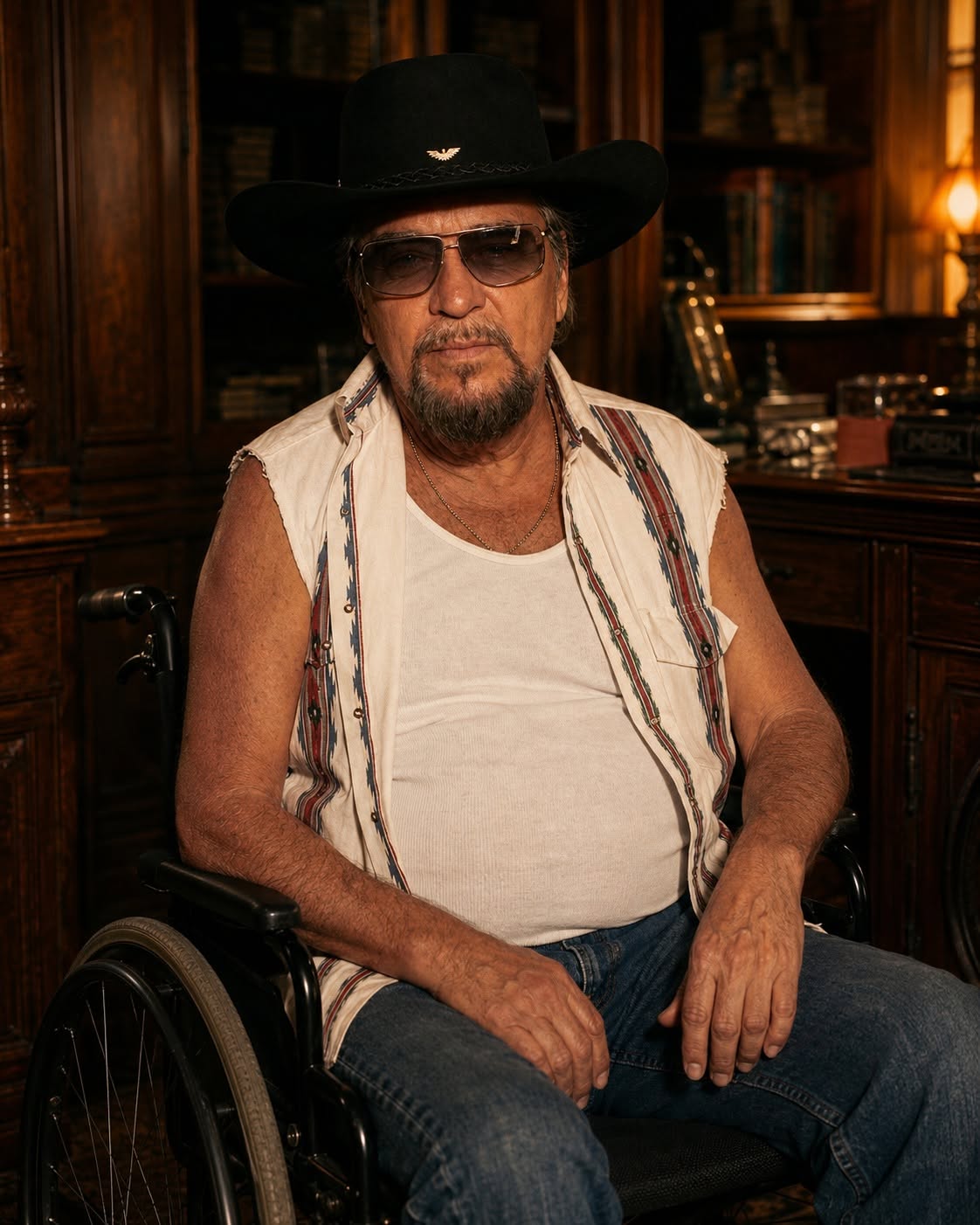
Waylon Jennings: The Quiet Burial, the Loud Legacy
They buried him in a private graveside service in Mesa, Arizona. No fanfare. No crowd. No spotlight. That was Waylon Jennings’ final wish, and for a man who spent much of his life pushing back against rules, expectations, and polished industry manners, it felt completely in character.
Waylon Jennings had never been easy to package. He was a country star, but he was also a rebel. He built a career on grit, honesty, and a sound that helped define outlaw country. He scored 16 No. 1 singles, released 60 albums, and in 1979, Greatest Hits sold four million copies, a rare milestone for any country artist at the time. He did not just sing songs. He lived a story people wanted to believe in.
A Career Built on Independence
By the time Nashville inducted him into the Country Music Hall of Fame in October 2001, Waylon Jennings had already become larger than the ceremony itself. He did not even show up to accept the honor. That absence said something about him. He respected music, but he never cared much for formalities. He had spent decades doing things his own way, and he was not about to pretend otherwise at the end.
His fans understood that. They had followed him through the hard edges, the big wins, and the long road that made him a legend. He was never trying to be anyone else. That was part of the appeal. He sounded like a man who had lived every line he sang.
Four months after the Hall of Fame induction, Waylon Jennings was gone. But before that final chapter, he gave the world one last performance worth remembering. Two years earlier, he had played his final concert seated on a stool, his foot already failing him, yet still singing with that unmistakable strength. He called the tour Never Say Die. He meant it.
That last tour carried a kind of bravery that fans could feel in the room. It was not about perfection. It was about presence. Waylon Jennings showed up, gave what he had, and refused to let pain or age define the moment. That was the man people came to admire: stubborn, real, and deeply committed to the music.
“He had a voice and a way with a song like no one else. He was also a class act as an artist and a man.” — Emmylou Harris
“A great loss for country music.” — George Jones
A Goodbye Delayed by History
Waylon Jennings died in February 2002, in a time when the country was still emotionally raw from September 11. The news did not travel with the force it should have. The press barely paused. The world was distracted, heavy, and moving through its own grief. For someone who had shaped so much of country music, the silence around his passing felt strangely incomplete.
His family honored his wishes with a private burial in Arizona, keeping the graveside service intimate and respectful. There was no spectacle, no public performance, no need to turn his death into an event. But the story did not end there.
The Ryman Auditorium Tribute
A public memorial was scheduled for March 23 at the Ryman Auditorium in Nashville, the same stage where Waylon Jennings had played his final concert. That detail mattered. The Ryman was not just any venue. It was sacred ground in country music, and for Waylon Jennings, it became the place where friends, peers, and fans could finally say goodbye properly.
It was a farewell that came late, but it came with feeling. Nashville had taken six weeks to get there, but when it did, the tribute carried the weight his private burial could not. It gave shape to a loss that many people had not fully processed. It reminded everyone that a giant had left the room quietly, even if his music never would.
The Legacy He Left Behind
Waylon Jennings remains one of the defining voices of country music because he made room for honesty. He did not soften himself for approval. He brought steel to the songs, heart to the stories, and a sense of lived-in truth that still resonates today. His life was not polished, and neither was his art. That was exactly why people trusted both.
His burial in Mesa, Arizona, may have been private, but his legacy was never small. It lived in every song he recorded, every boundary he pushed, and every fan who heard in his voice something unfiltered and unforgettable. No fanfare was needed at the graveside. The music had already said enough.
Post navigation
They called Vern Gosdin “The Voice,” and not just because he could sing well. He had the kind of voice that sounded lived-in, like it had seen enough heartbreak to understand the difference between pain that passes and pain that stays. That is exactly why “Chiseled in Stone” hit so hard. It was not only a great country song. It was a song that made people stop and listen to their own lives for a minute.
At first, “Chiseled in Stone” seems simple enough. It opens like a familiar country story: a man walks into a bar after trouble at home, carrying frustration, regret, and a heavy heart. He is angry, maybe lonely, and maybe trying not to think too much about what went wrong. That setup feels ordinary. It sounds like something that could happen anywhere, to anyone.
Then the song changes. An older man starts talking, and the meaning suddenly deepens. What felt like one man’s bad night becomes something bigger and more permanent. The song stops being only about an argument at home and starts becoming about loss, memory, and the things people cannot undo.
The Turning Point That Made the Song unforgettable
The brilliance of “Chiseled in Stone” is in that turn. The man with the fight at home still has options. He can go back. He can apologize. He can try again. But the old man in the song does not have that chance anymore. His story is finished. His name is the only thing left, carved into stone and remembered by whoever stops long enough to look.
That difference is what makes the song so powerful. Vern Gosdin understood that some loneliness can be repaired, but some loneliness becomes permanent. Some regret can still be answered, while some regret arrives too late. The song does not shout that idea. It lets it land quietly, which makes it even harder to ignore.
“Chiseled in Stone” is not just a story about sorrow. It is a reminder that time can be merciful, but it can also be cruel.
That kind of truth is part of why Vern Gosdin connected so deeply with country music fans. He never sang like he was trying to impress anyone. He sang like he was telling you something he already knew, something that cost him to understand. When he delivered a line, it did not feel polished in a distant way. It felt close, personal, and real.
Why Vern Gosdin Made It Sound Personal
Vern Gosdin had a gift for making songs sound lived rather than performed. Even when the pain in the lyrics belonged to fictional characters, he made the feeling feel honest. That was the quiet genius behind his work. He did not need to overdo it. He trusted the story, trusted the words, and trusted his voice to carry the truth.
That trust is what made “Chiseled in Stone” such a defining moment in his career. The song won CMA Song of the Year in 1989, and it deserved the honor because it reached beyond a single listening experience. It stayed with people. It made them think about the conversations they had delayed, the apologies they had not yet given, and the people they hoped to still reach in time.
There is a reason listeners remember this song even years later. It does not rely on a dramatic twist for shock value. It uses the twist to reveal something deeply human. The man in the bar may feel trapped by a bad night, but the old man’s story reminds us that some doors close forever. That is a heavy idea, but Vern Gosdin handled it with grace.
A Song That Still Feels Timely
Part of what keeps “Chiseled in Stone” alive is its honesty. It speaks to anyone who has ever assumed there would always be time to fix something later. The song gently challenges that assumption. It says, in effect, do not wait too long to care, to speak, or to make peace when you can.
That message is timeless, and Vern Gosdin delivered it in a way that felt human instead of preachy. He never sounded like he was lecturing. He sounded like a man who understood how fragile life can be. That is why the song still matters. It meets listeners where they are and leaves them with something to think about.
Vern Gosdin did not make “Chiseled in Stone” unforgettable by singing louder than everyone else. He made it unforgettable by singing with enough feeling that the truth became impossible to dodge. That is what great country music does at its best. It tells a story, then quietly asks whether you are really listening.
And in Vern Gosdin’s hands, “Chiseled in Stone” became more than a song. It became a warning, a memory, and a reminder that some words should be spoken while they still can be.