THEIR FATHERS WERE ONE OF THE MOST AWARDED GROUPS IN COUNTRY MUSIC. PEOPLE STILL ASK THEM, “SO WHAT DO YOU DO?” Wil and Langdon Reid have spent more than 30 years making music together, writing songs, playing stages, opening for George Jones, stepping onto the Grand Ole Opry, and carrying traditional country harmony into rooms that still know every word their fathers sang. But the question always comes back the same. “So, you’re the Statler Brothers’ sons?” They could have hidden behind that name. They did not. Wil Reid, son of Harold Reid, and Langdon Reid, son of Don Reid, took their own middle names — Wilson and Fairchild — and built something that had to stand without the safety of the Statler name on the front of the ticket. That is not easy when your fathers helped define country harmony. It is even harder when the world keeps treating your own career like a footnote to someone else’s legacy. In 2007, they honored their fathers at the Statler Brothers’ Hall of Fame induction. Years later, after Harold was gone, the music did not stop. With Statler Made and now their own sons, Jack and Davis, joining them onstage, the family sound has reached a third generation. Some names are inherited. But respect is not. And that is the part Wilson Fairchild has been earning one stage at a time. – Country Music
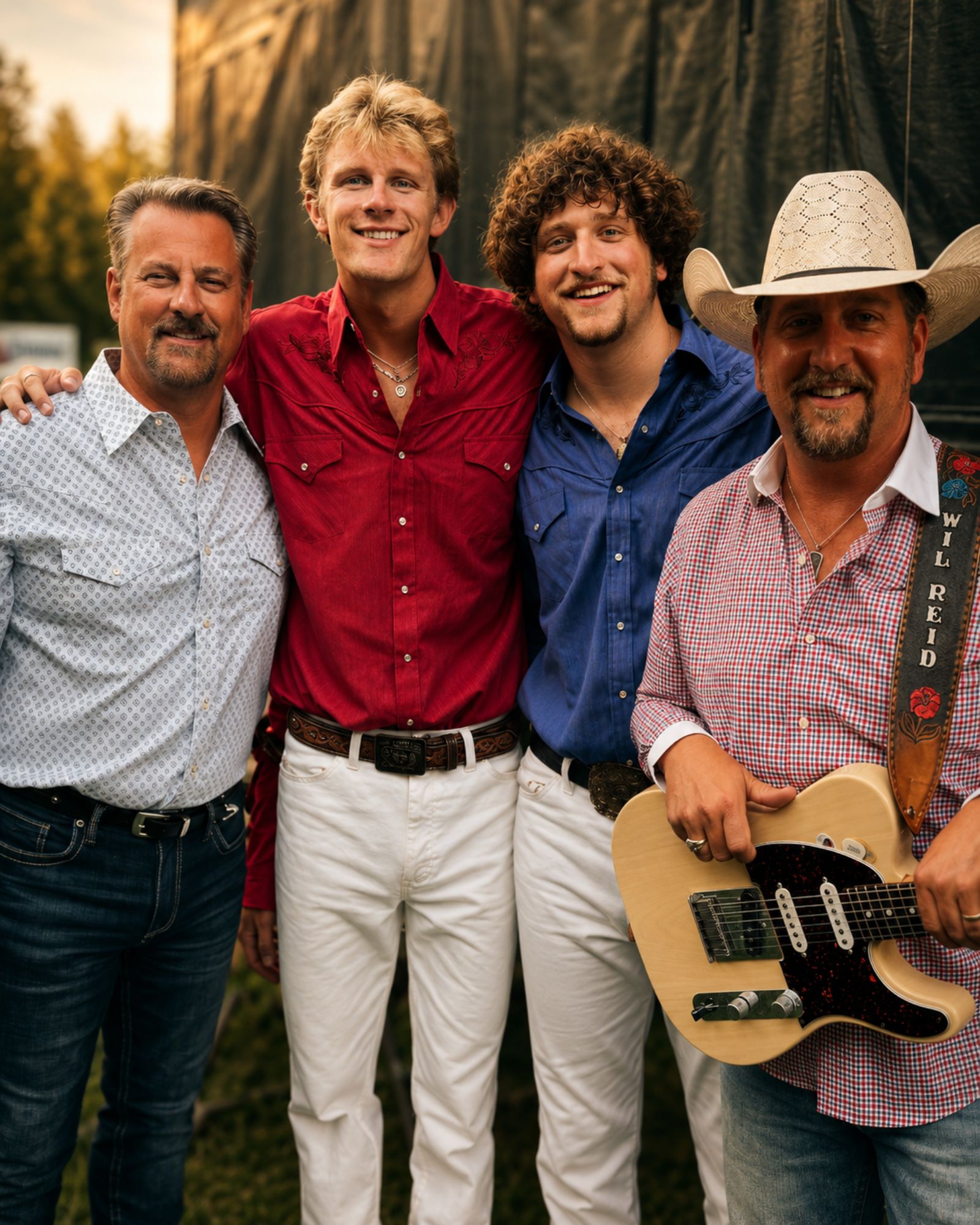
For more than 30 years, Wil and Langdon Reid have lived inside a question they never seem able to escape: “So what do you do?”
It is not a cruel question. Usually, it comes with a smile, a little curiosity, and then the real follow-up: “You’re the Statler Brothers’ sons, right?”
Yes, they are. Wil Reid is the son of Harold Reid, and Langdon Reid is the son of Don Reid. Their fathers helped build one of the most awarded and beloved groups in country music. The Statler Brothers were not just famous; they were part of the foundation. Their harmonies, humor, and storytelling shaped generations of listeners.
But being born into a famous name does not automatically tell the whole story. In fact, for Wil and Langdon Reid, it may have made the story harder to tell.
Growing Up in the Shadow of Greatness
When your father is one of the voices people still remember years later, there is no simple way to step into music. People already think they know what your life looks like. They assume you have an easy path, that the doors open by themselves, that the applause is waiting before you even sing a note.
The truth is more complicated.
Wil and Langdon Reid had to figure out who they were as artists while carrying a name that meant a great deal to country music fans. They could have leaned on the family brand and let that do the talking. Instead, they chose a different road.
They took their own middle names — Wilson and Fairchild — and formed Wilson Fairchild. It was a smart move, but also a brave one. It meant they were not asking to be judged as Statler Brothers replacements or copies. They were asking to be heard as their own act.
Making a Career That Had to Stand Alone
That decision did not make the work easier. It made it honest.
Wilson Fairchild spent decades writing songs, performing live, and carrying traditional country harmony into places where audiences still appreciate a real blend of voices and a song that tells the truth. They played stages across the country, opened for George Jones, and even stepped onto the Grand Ole Opry, a moment that carries deep meaning for any country artist.
Those are not small accomplishments. They are the result of years on the road, years of learning how to connect with a crowd, and years of proving that talent can stand on its own feet even when the family tree is famous.
“We never wanted to just be the sons of somebody. We wanted to earn the right to be remembered for our own music.”
That kind of mindset matters. It is easy to inherit attention. It is much harder to earn respect. Wil and Langdon Reid understood that from the beginning.
The Statler Brothers Legacy Still Lives On
In 2007, Wil and Langdon Reid honored their fathers at the Statler Brothers’ Hall of Fame induction. It was a proud family moment, but also a reminder of how deep the roots go. The Statler Brothers had already become legends, and the next generation was standing right there, carrying the feeling forward in a new way.
Then time moved on, as it always does. Harold Reid passed away, and the family had to keep living, keep singing, and keep the music close. For many families, that would mean the end of something. For Wilson Fairchild, it became part of the next chapter.
Music, after all, is often how families remember each other.
And in this case, the story did not stop with one generation. With Statler Made and later with their own sons, Jack and Davis, joining them onstage, the Reid family sound reached a third generation. That is more than nostalgia. It is a living tradition.
What They Do, and Why It Matters
So what do Wil and Langdon Reid do?
They sing. They write. They honor tradition without living inside a museum. They work hard to keep classic country harmony alive in a world that often moves too quickly to sit still and listen.
They also do something more personal: they show that a legacy can be respected without being copied. They prove that family history can be a starting point, not a final answer.
Some names are inherited. But respect is not.
That is why Wilson Fairchild continues to matter. Not because the Reid brothers came from a famous family, but because they stayed with the music long enough to build a story of their own.
And after all these years, maybe the real answer to “So what do you do?” is simple:
Wil and Langdon Reid keep country music alive, one harmony at a time.
Post navigation
That was always the kind of man Kris Kristofferson was.
In a world that often rewards attention-seeking and spectacle, Kris Kristofferson moved the other way. He made a lifetime out of showing up with purpose, saying less than most people expected, and leaving behind words that lasted far longer than the moment they were spoken.
A Quiet Return to the Spotlight
In April 2023, at the Hollywood Bowl in Los Angeles, Kris Kristofferson made what would become his final stage appearance. He had already retired from performing. By then, years of health struggles had made public appearances rare and unpredictable. Memory loss, painful spasms, and the slow, frustrating reality of aging had pulled him away from the road and the spotlight he once knew so well.
No one expected him to be there.
But Willie Nelson was turning 90, and Kris Kristofferson did not miss it.
When Kris Kristofferson walked out midway through Rosanne Cash’s solo performance, the crowd reacted instantly. It was not a dramatic entrance. There was no flash, no grand announcement, no attempt to turn the moment into a personal comeback. He simply appeared, quiet and unhurried, as if he had come to keep a promise.
Some people enter a room to be seen. Others enter to honor someone else. Kris Kristofferson spent a lifetime being the second kind of person.
Rosanne Cash and Kris Kristofferson stood together and sang one of the songs he had written more than fifty years earlier. The line still carried the same weight it always had: “Loving her was easier than anything I’ll ever do again.”
Rosanne Cash kept her arm around Kris Kristofferson the whole time. It was a tender, protective gesture, and the audience could feel the emotion in the air. When the last note faded, Rosanne Cash walked off that stage in tears.
That moment said everything. It was not just a performance. It was a farewell without anyone calling it one.
The Man Behind the Songs
Kris Kristofferson was never just a musician. He was a Rhodes Scholar, a Golden Gloves boxer, an Army helicopter pilot, a poet, a film actor, and a songwriter whose work crossed generations and genres. His life could have been split into separate biographies, each impressive on its own. Instead, it all seemed to feed one extraordinary body of work.
Before the fame, he once worked as a janitor at a Nashville recording studio just for the chance to hand Johnny Cash a demo tape. That detail still feels almost unbelievable, because it captures something essential about Kris Kristofferson: ambition without entitlement, confidence without arrogance, and patience in the service of a dream.
He was willing to start at the bottom if it meant getting close to the music.
And when the music came, it was impossible to ignore.
Truth in Every Line
Kris Kristofferson’s songs had a directness that made them feel lived-in from the first listen. They did not pretend to be perfect. They felt honest, bruised, tender, and human. That is why so many of them became standards. They were not written to chase trends. They were written to tell the truth.
Willie Nelson once said, “There’s no better songwriter alive. Everything he writes is a standard.”
That was not just praise. It was recognition.
Some songwriters write for the moment. Kris Kristofferson wrote for the life that comes after the moment, when the applause is gone and the words still have to mean something. His songs stayed because they were built to stay.
A Final Goodbye in Maui
Seventeen months after that night at the Hollywood Bowl, Kris Kristofferson passed away peacefully at his home in Maui, Hawaii, on September 28, 2024. He was 88. He was surrounded by family. There was no final tour, no dramatic farewell concert, no attempt to turn his death into a production.
Just a quiet morning on an island.
Just a man who had already given the world enough of himself to last.
It feels fitting, somehow, that the last time Kris Kristofferson ever stood on a stage, he was there for Willie Nelson, for Rosanne Cash, for the music, and for the life they shared. He did not need the moment to belong to him. He only needed to be present.
That presence mattered.
What Remains
Kris Kristofferson leaves behind a catalog that feels less like a collection of songs and more like a public memory. His writing held heartbreak, redemption, loneliness, grit, and grace without ever sounding forced. He made honesty sound timeless.
And now, every one of those standards belongs to the rest of us.
That is the strange, beautiful thing about artists like Kris Kristofferson. They leave quietly, but they do not really leave at all. Their final appearances become part of the story, and the songs keep doing what they always did: telling the truth long after the voice is gone.
Kris Kristofferson stood on that stage one last time for somebody else. In the end, that was the clearest way to understand him.
He lived for the song, but he loved the people around it.