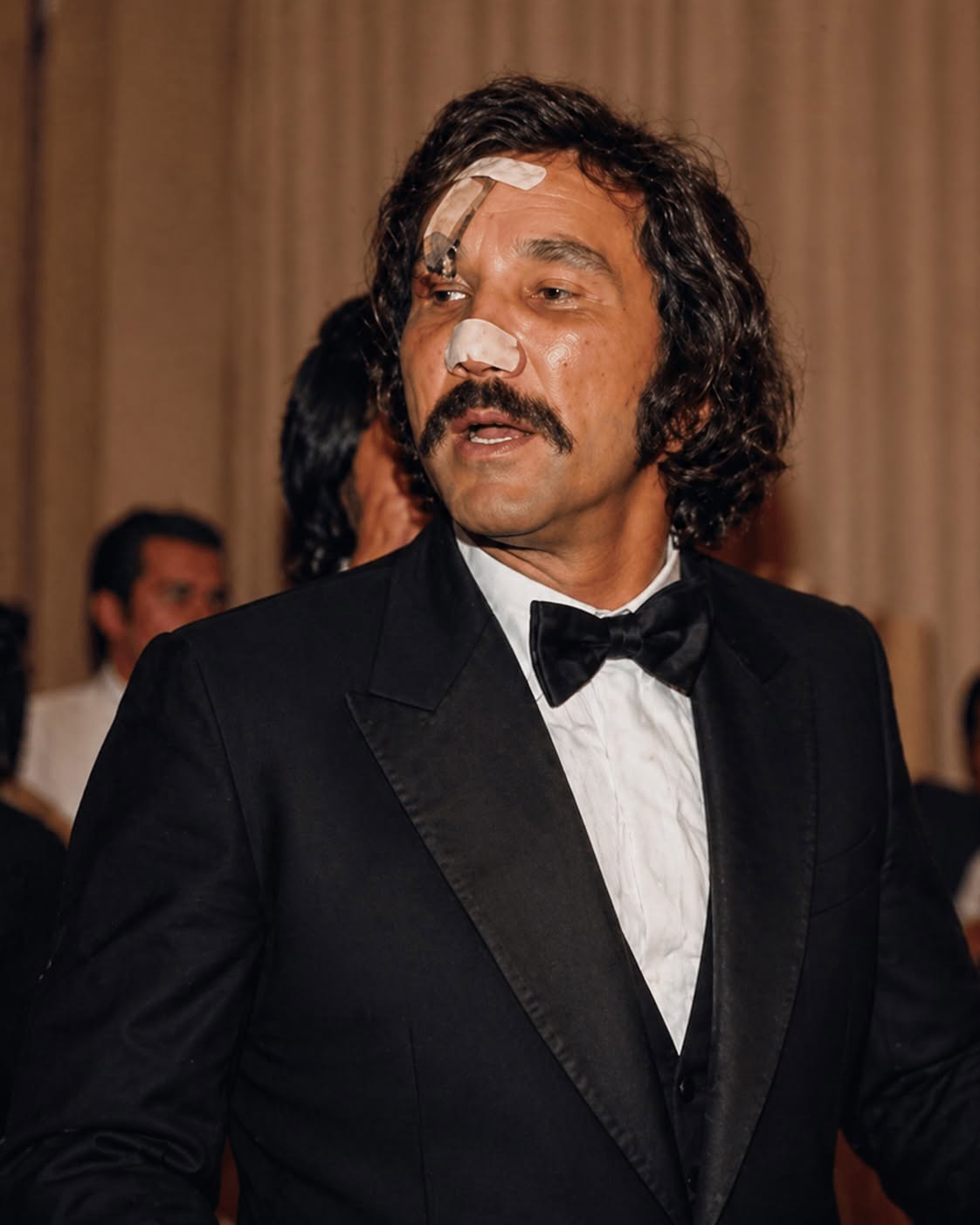
THE WALL AT 160 MPH — CHARLOTTE MOTOR SPEEDWAY, OCTOBER 1974 “If Marty hadn’t turned into the wall, it’s highly likely I might not be here today.” — Richard Childress Marty Robbins had two seconds to decide. Five years earlier, in 1969, he’d had his first heart attack. Doctors told him three major arteries were blocked and gave him a year to live without an experimental new procedure. He became one of the first men in history to undergo a triple bypass — and three months after surgery, he was back behind the wheel of a NASCAR stock car. He sang at the Grand Ole Opry from 11:30 to midnight. He raced at 145 mph on weekends. He had sixteen #1 country hits. He wrote “El Paso.” His doctors begged him to stop racing. He didn’t. At the Charlotte 500 on October 6, 1974, a young driver named Richard Childress — the man who would later own Dale Earnhardt’s #3 car — sat dead in his stalled vehicle, broadside across the track. Marty was coming up behind at 160 mph. He could T-bone Childress and probably kill him. Or he could turn into the concrete wall. Marty turned into the wall. He took 37 stitches across his face, a broken tailbone, broken ribs, and two black eyes. The scar between his eyes never faded — he carried it for the rest of his life. Richard Childress went on to build one of the most legendary teams in NASCAR history. What does a man owe a stranger — when he has two seconds, a wall on his right, and his own life already running on borrowed time? – Country Music
The Wall at 160 MPH: Marty Robbins, Richard Childress, and the Charlotte Decision That Changed Everything
On October 6, 1974, at Charlotte Motor Speedway, a split-second choice separated tragedy from survival. Marty Robbins was coming fast, close to 160 miles per hour, when a stalled car appeared broadside in front of him. Behind the wheel was Richard Childress, trapped and helpless on the track. In that moment, Marty Robbins had two seconds to decide what kind of man he would be.
He turned into the wall.
A singer who refused to slow down
By 1974, Marty Robbins was already a giant in American music. He had sixteen number-one country hits. He wrote “El Paso,” a song that became part of country music history. He sang at the Grand Ole Opry from 11:30 to midnight and then raced stock cars on weekends. For Marty Robbins, fame was not enough. He wanted speed, risk, and the roar of an engine.
His doctors did not understand that part of him. After a heart attack in 1969, they warned him that three major arteries were blocked. They told him he needed an experimental procedure, and even then, the odds were serious. Marty Robbins became one of the first men to undergo a triple bypass, and only three months later, he was back in a NASCAR stock car. Most people would have called that reckless. Marty Robbins called it living.
Marty Robbins lived like a man who knew time was precious.
That truth mattered on race day. He had already been told to stop racing. He had already been given warnings many people would have taken as final. But Marty Robbins kept going, carrying his country music success and his love of racing like two engines running at once.
At the Charlotte 500, the danger arrived with no warning. Richard Childress was in trouble, sitting dead in a stalled vehicle, broadside across the track. There was no room for a clean pass, no time for a long decision, and no safe answer waiting for Marty Robbins.
Up ahead was a human being in immediate danger. To the right was the concrete wall. Straight ahead was a collision that could have been fatal. Marty Robbins had only a moment to weigh the options, and the choice was as brutal as it was simple.
He turned into the wall.
That action saved Richard Childress. It also cost Marty Robbins dearly. The impact left him with 37 stitches across his face, a broken tailbone, broken ribs, and two black eyes. The scar between his eyes never fully faded. He carried it for the rest of his life, a permanent mark from the instant he chose another man’s life over his own safety.
What one decision meant
Richard Childress would later become one of the most important names in NASCAR history, eventually building a legendary team and owning Dale Earnhardt’s famous No. 3 car. But on that October day, none of that future was guaranteed. At that moment, Richard Childress was simply a driver in danger, and Marty Robbins was the man coming up behind him at speed.
That is what makes the story so powerful. It is not only about celebrity, or racing, or even courage in the abstract. It is about a human being with a damaged heart, a dangerous hobby, and a lifetime of pressure, making a choice when there was no time for hesitation.
If Marty Robbins had not turned, Richard Childress might not have survived. That is not drama. That is the weight of the moment.
The man behind the legend
Marty Robbins is often remembered for his songs, but stories like this show another side of him. He was stubborn, fearless, and deeply committed to doing what he loved. He did not live carefully. He lived fully. Sometimes that meant taking risks. Sometimes it meant ignoring the advice of doctors. And on one October afternoon in Charlotte, it meant choosing the wall over another person’s body.
People often ask what makes a hero. Sometimes it is not a grand speech or a planned sacrifice. Sometimes it is a driver with a split face, aching ribs, and a racing heart deciding that someone else matters more in the instant before impact.
Marty Robbins did not just leave behind hit records and racing stories. He left behind a moment of instinctive humanity that still echoes through NASCAR history. The wall took the hit. Richard Childress lived. And Marty Robbins carried the scar, a quiet reminder of the day he had two seconds to decide, and chose to save a stranger.
Post navigation
There are stories people try to hide because they think humility means silence. Loretta Lynn never accepted that rule. She was born in Butcher Hollow, Kentucky, a place shaped by dirt roads, tough labor, and families who learned early that life would not be easy. Her father came home covered in coal dust. The house was crowded. The days were long. Nothing about that beginning looked glamorous, and Loretta Lynn never pretended otherwise.
That is exactly why “Coal Miner’s Daughter” mattered so much. Loretta Lynn did not write it to dress poverty up in prettier clothes. She wrote it because she knew what it meant to come from a place other people judged without understanding it. She knew the sting of being looked down on before she even had a chance to speak. And instead of hiding, Loretta Lynn turned the truth into a song that would travel farther than shame ever could.
A Childhood Built on Hard Work
Long before fame, Loretta Lynn lived a life that demanded resilience. Her world was shaped by family, responsibility, and the kind of grit that does not show up in polished stories. She was one of many children, raised in a home where survival mattered more than comfort. In those years, no one was handing out easy paths. People worked, helped each other, and kept moving.
That background stayed with Loretta Lynn. It gave her an ear for honest language and a heart that understood ordinary people. When she later became a star, she did not sound like someone trying to escape her roots. She sounded like someone carrying them proudly.
“Coal Miner’s Daughter” did not ask listeners to admire hardship. It asked them to respect the people who lived it.
Too Young to Be Finished, Too Strong to Quit
Loretta Lynn was married young and became a mother before most girls had even had time to imagine their adult lives. By the time she was twenty, she already had four children. From the outside, some people might have assumed her story was already decided. A poor Kentucky girl. A young wife. A mother. A life small enough for others to label and dismiss.
But Loretta Lynn refused to let the world close the book that early. She kept going, even when the odds were not in her favor. She did not wait for permission to tell her story. She did not soften the edges to make it more acceptable. She spoke in the plain, direct way real life is often lived.
That honesty became part of her power. People believed her because she sounded like herself.
The Song That Became a Statement
When Loretta Lynn wrote “Coal Miner’s Daughter,” she was doing something bigger than writing a hit. She was making a declaration. She was saying that her beginning was not a flaw to be hidden. It was the foundation of everything that followed. She did not need to apologize for where she came from. She needed to honor it.
That kind of confidence has a way of changing the meaning of a story. What once seemed like a disadvantage becomes a source of strength. What once felt like a burden becomes identity. Loretta Lynn made her roots unforgettable because she refused to speak about them with embarrassment.
And that is why the song lasted. It was not built on fantasy. It was built on truth. People heard it and recognized something in it, whether they grew up in coal country or not. Everyone understands the feeling of being underestimated. Everyone understands the quiet pride of surviving something difficult.
Why Loretta Lynn Still Matters
Loretta Lynn’s legacy is not only that she became famous. It is that she brought her whole self with her when fame arrived. She did not sand down the rough edges of her background to fit in. She carried Butcher Hollow into the spotlight and let it stand there with dignity.
That is what makes her story so enduring. Loretta Lynn took a name that could have been used against her and turned it into a symbol of strength. She showed that where you come from does not have to limit what you become. Sometimes it becomes the very thing that gives your voice power.
Some people inherit money. Some people inherit grit. Loretta Lynn inherited grit, and she made it last longer than every cruel assumption made about her. She turned survival into art. She turned memory into music. She turned a coal miner’s daughter into a title the world would never forget.
Loretta Lynn did not outgrow her beginnings. She outshined the shame others tried to place on them.