THE SONGS RADIO REFUSED — OR THE CLASSICS THAT CAME TOO EARLY? In the 1970s, as country music chased polish, shine, and easy hooks, Vern Gosdin went the opposite way. He stepped out on his own, signed with small labels, and released album after album that barely touched radio playlists. Not because the songs were weak — but because they were too honest. Country was selling fantasy. Vern was selling truth. His songs moved slow. They hurt quietly. No glitter, no bravado, no big chorus begging for applause. Just loneliness, regret, and love that didn’t end cleanly. Programmers called it “too sad.” Executives whispered “too old, too heavy, too real.” Radio didn’t know where to put a voice that refused to smile on cue. Here’s the uncomfortable debate: did Vern Gosdin fail radio — or did radio fail country music? Many of those ignored songs later became revered, studied, and quietly worshiped by singers who finally caught up emotionally. So were they uncommercial… or simply ahead of a genre that wasn’t brave enough yet? – Country Music
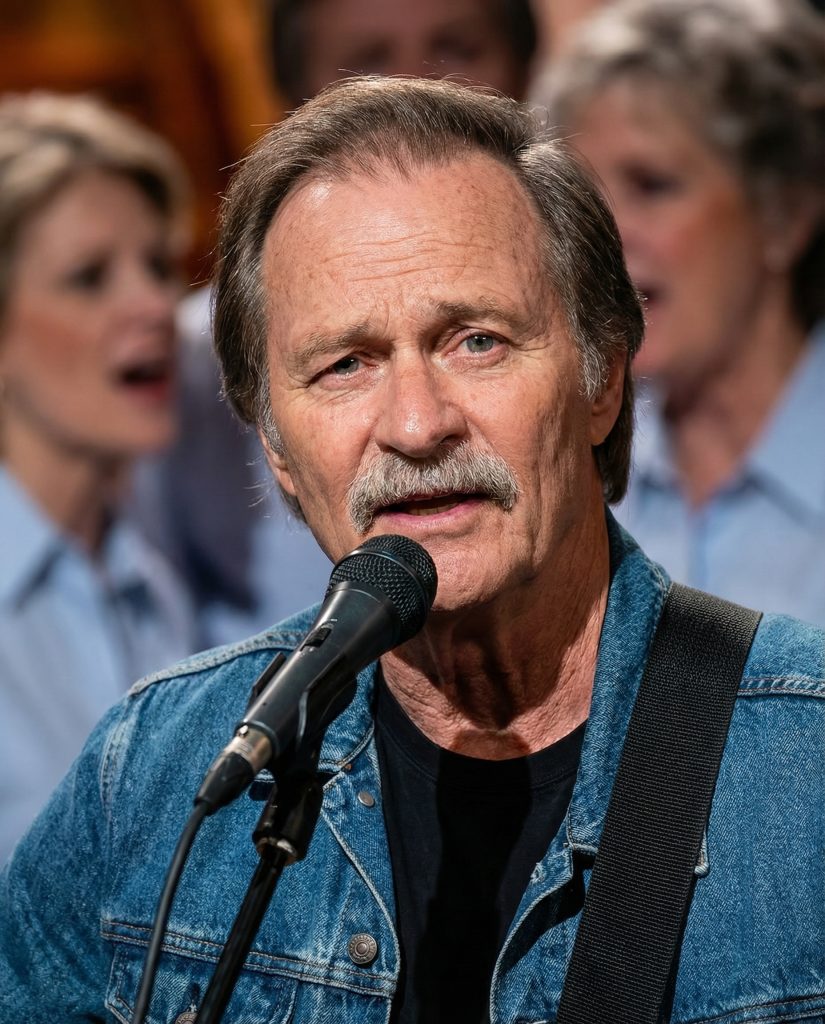
In the 1970s, as country music chased polish, shine, and easy hooks, Vern Gosdin moved in the opposite direction. While the industry leaned toward crossover appeal and radio-friendly charm, Vern stepped away from the spotlight and into something far riskier: emotional honesty. He signed with smaller labels, released album after album, and watched as many of his songs barely grazed radio playlists. Not because they lacked craft or melody—but because they told the truth too plainly.
Country music at the time was selling reassurance. Songs wrapped heartbreak in charm, softened regret with clever lines, and promised resolution by the final chorus. Vern Gosdin didn’t offer that comfort. His songs lingered in the uncomfortable spaces. They moved slowly. They didn’t rush toward forgiveness or redemption. Love ended badly. Loneliness stayed. Regret didn’t apologize. Radio programmers listened and hesitated.
A VOICE THAT REFUSED TO SMILE ON CUE
Vern Gosdin sang like a man who had lived the lines before writing them. There was no bravado in his delivery, no wink to the audience. His voice carried patience, restraint, and a quiet ache that demanded attention rather than applause. To many executives, that was the problem. Songs were labeled “too sad,” “too heavy,” or “too real.” The industry didn’t know where to place music that didn’t beg to be liked.
Radio formats were tightening. Playlists grew smaller. Risk became something to avoid. Songs that made listeners uncomfortable—songs that didn’t fit neatly between commercials—were quietly passed over. Vern Gosdin wasn’t chasing trends, and radio wasn’t chasing truth. The two simply missed each other.
WHEN HONESTY BECOMES A LIABILITY
Behind closed doors, the whispers grew familiar. Vern Gosdin sounded “too old.” His material felt “out of step.” There was concern that listeners would change the station rather than sit with songs that reflected their own unresolved feelings. Radio wanted momentum. Vern offered reflection.
Yet something curious happened over time. As years passed and tastes shifted, those same songs—once deemed unplayable—began to resurface. Younger artists discovered them late at night. Songwriters studied them closely. Fans spoke of them in hushed, reverent tones. What radio once rejected slowly became a benchmark for emotional credibility.
THE DEBATE NO ONE WANTS TO SETTLE
That raises the uncomfortable question still debated today: did Vern Gosdin fail radio, or did radio fail country music? If success is measured by chart positions alone, the answer seems obvious. But if success is measured by influence, endurance, and emotional truth, the picture changes.
Many of the songs radio ignored in the 1970s now feel timeless. They weren’t tied to production trends or fashionable sounds. They weren’t written for a season. They were written for anyone who had ever loved imperfectly or lost without closure. In hindsight, they don’t feel uncommercial. They feel patient—waiting for listeners to catch up.
Sometimes music doesn’t miss its moment. Sometimes the moment misses the music.
A LEGACY THAT GREW QUIETLY
Vern Gosdin never reshaped himself to fit radio’s demands. He kept writing. He kept singing. And he kept trusting that honesty would eventually find its audience. That audience arrived slowly, often after the fact, but it arrived deeply invested.
Today, his catalog stands as a reminder that not all classics announce themselves loudly. Some arrive early, speak softly, and wait. Radio moved on. Trends came and went. But the songs stayed—circulating quietly, finding new ears, proving that truth doesn’t expire.
So were they songs radio refused? Or were they classics that came too early? The answer likely sits somewhere in between, where discomfort meets courage. And in that space, Vern Gosdin still sings—unrushed, unpolished, and undeniably real.
Post navigation
There are artists who spend their final chapters chasing one more headline. One more tour. One more “historic” moment for the cameras. Don Williams never belonged to that kind of story.
The last years of Don Williams weren’t about goodbyes — they were about quiet. And in a way, that quiet said everything.
Don Williams had already said everything that mattered. Not in grand speeches, not in dramatic announcements, but in the steady way Don Williams always worked: a calm voice, a plain truth, and a kind of warmth that never needed extra volume.
A Man Who Never Needed to Prove Anything
In his seventies, Don Williams still had the voice. It was there when he stepped up to a microphone—warm, even, familiar. But he sang less. He spoke less. And when Don Williams did speak, people leaned in, as if the room itself knew not to interrupt.
Don Williams never chased the spotlight. Don Williams never raised his voice to be heard. On stage, Don Williams could stand almost perfectly still, as if movement might distract from the only thing that mattered: the song and the person listening to it.
That stillness was not weakness. It was confidence. Don Williams didn’t perform like someone begging to be remembered. Don Williams performed like someone who knew the music had already settled into people’s lives—into kitchens, long drives, late-night radios, and quiet moments nobody posts online.
Stepping Back Without Disappearing
When Don Williams stepped back in the final years, it didn’t feel like a vanishing act. It felt like a boundary. A gentle decision to protect what he had built.
There was no comeback left to announce. No farewell tour shaped by drama. No manufactured speeches about “one last ride.” Don Williams didn’t turn his life into a countdown. Don Williams simply chose less noise.
And that choice carried its own kind of dignity. Don Williams understood something many people learn too late: silence doesn’t erase a legacy. Silence can protect it.
Fans would still share stories of seeing Don Williams live—how the venue would grow unusually attentive, not because anyone was told to be quiet, but because people wanted to be quiet. There’s a difference. With Don Williams, the hush wasn’t forced. It was earned.
When the Rumors Started
As time passed, word began to spread that Don Williams was not doing well. It traveled in the way news travels when people care: softly. Not as gossip. More like concern passed from hand to hand.
There was no shock in Nashville when the whispers grew louder. Only gratitude. That might sound strange, but it fit Don Williams. Don Williams had never belonged to the category of “larger-than-life.” Don Williams belonged to the category of “always there.” And when someone like that starts to fade, the first emotion isn’t disbelief. It’s appreciation for how long the steadiness lasted.
Friends and listeners didn’t talk about “what could have been” or “what he still owed the world.” They talked about what Don Williams had already given: a calm kind of honesty, delivered without flash.
The Kind of Goodbye Don Williams Would Choose
When Don Williams was gone, it didn’t feel like a headline. It felt like a room going quiet after the last note of a song you didn’t want to end.
People mourned, of course. But many described the feeling differently than they would for other artists. It didn’t feel like chaos. It didn’t feel like a loud ripping-away.
It felt like a calm voice finally choosing rest.
“Some people leave with fireworks. Don Williams left with peace.”
There’s something rare about that. In an era where everything is amplified, Don Williams reminded listeners that steady can be powerful, and quiet can be unforgettable.
Why the Quiet Still Matters
The legacy of Don Williams doesn’t depend on constant celebration. It survives in the small places where music actually lives: a song playing low while someone cooks dinner, a voice coming through a car speaker on a lonely road, a familiar line arriving at the exact moment someone needs it.
That’s why the last years of Don Williams make sense when you think about the kind of artist Don Williams always was. Don Williams didn’t disappear from music. Don Williams stepped back from the noise, as if to say: the songs will speak for themselves. Don Williams had already said everything that mattered.
And maybe that’s the most Don Williams ending possible—no drama, no spectacle, no frantic final statement. Just quiet. The kind that doesn’t feel empty.
The kind that feels protected.