The Scam That Took Two Lives. – Daily News
The phone rang, and everything that followed unraveled from that single sound.
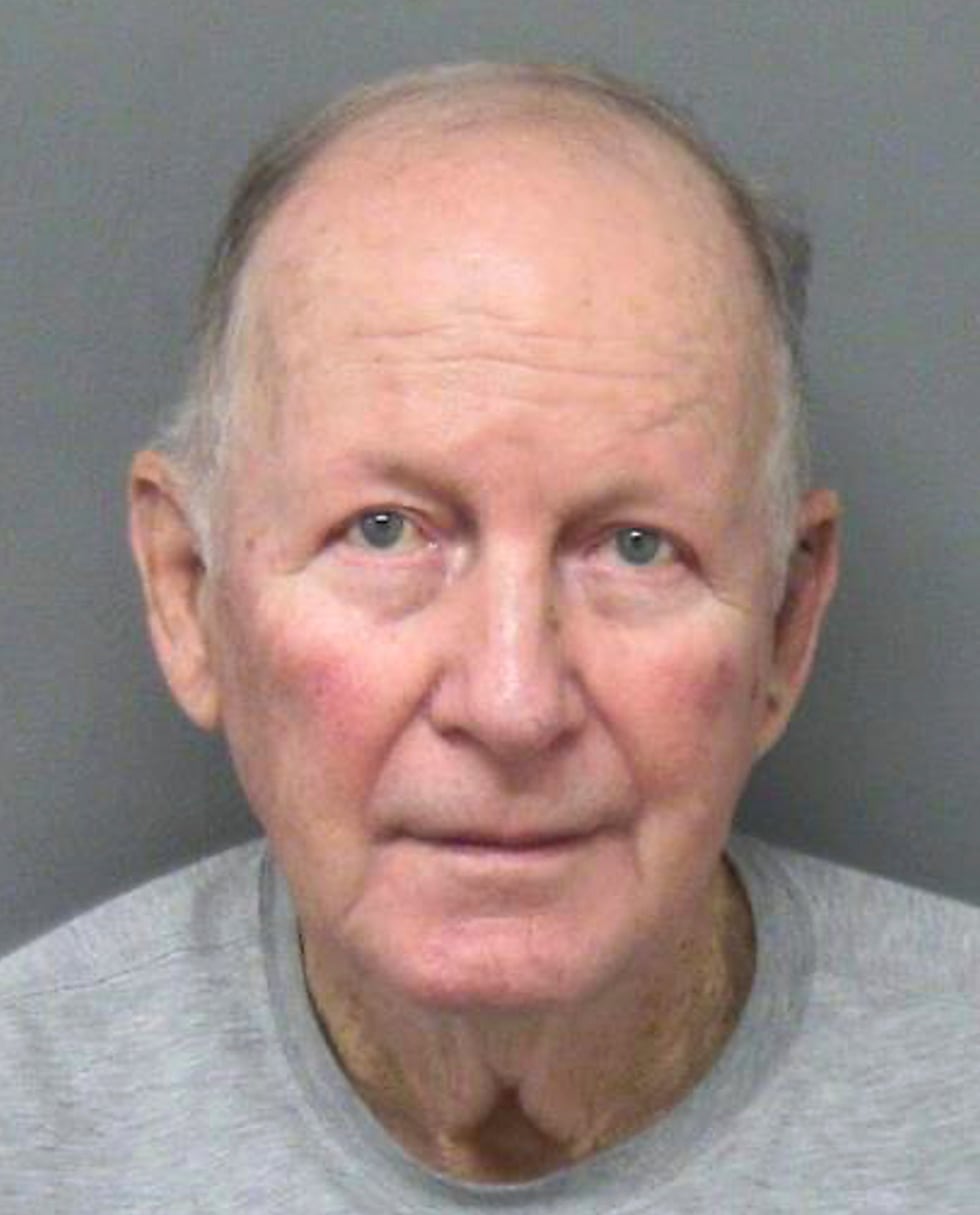
William J. Brock was 83 years old, living quietly in South Charleston, Ohio, when the call came. On the other end was a voice filled with urgency and menace, telling him that a loved one was in trouble and that money—$12,000 in bond—was needed immediately. The caller threatened harm. The details were convincing. The fear was real.
Brock believed it.
He did not know that the voice on the phone belonged to a scammer, someone who had already perfected the art of turning panic into profit. He did not know that this same scammer was reaching out to someone else at the exact same time—an Uber driver who believed she was simply doing her job.
Her name was Lo-Letha Toland-Hall.
She was 61 years old, from Dublin, a suburb of Columbus. A mother. A grandmother. A woman who drove for Uber to earn extra income, the way so many people do—trusting an app, a destination, and the assumption that a routine pickup would end safely.
Investigators say the scammer instructed Hall to drive to Brock’s home to pick up a package for delivery. She was told nothing about threats. Nothing about fear. Nothing about a man on the other end of the line being told his family was in danger.
She was walking into the same lie.
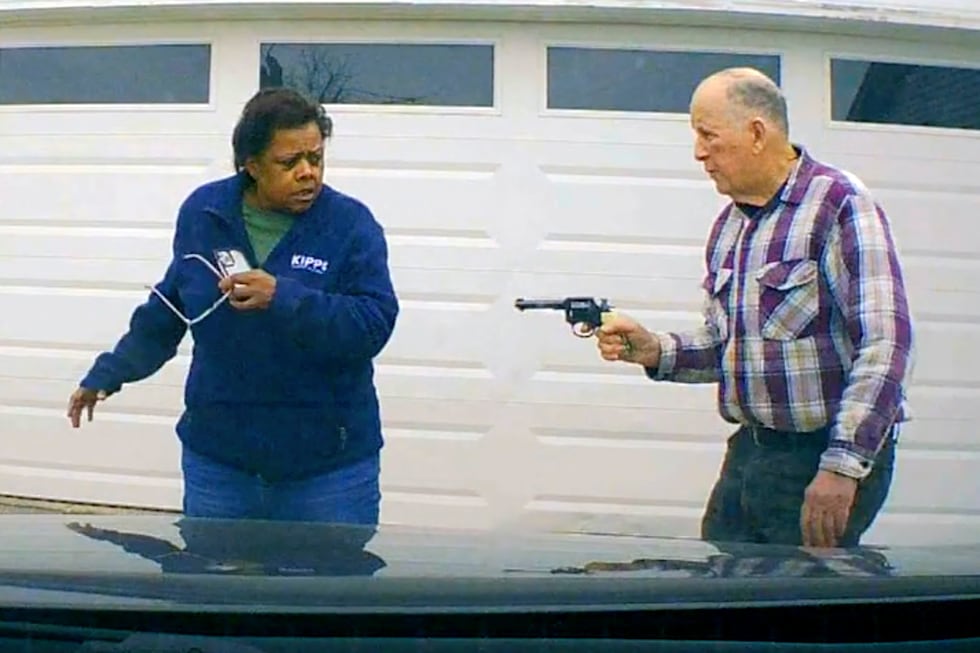
On a March day in 2024, Hall arrived at Brock’s home, just as she had been directed. Dashcam video from her Uber vehicle would later show the final moments—an image now frozen in court records and public memory. Brock confronted her outside his house, holding a firearm.
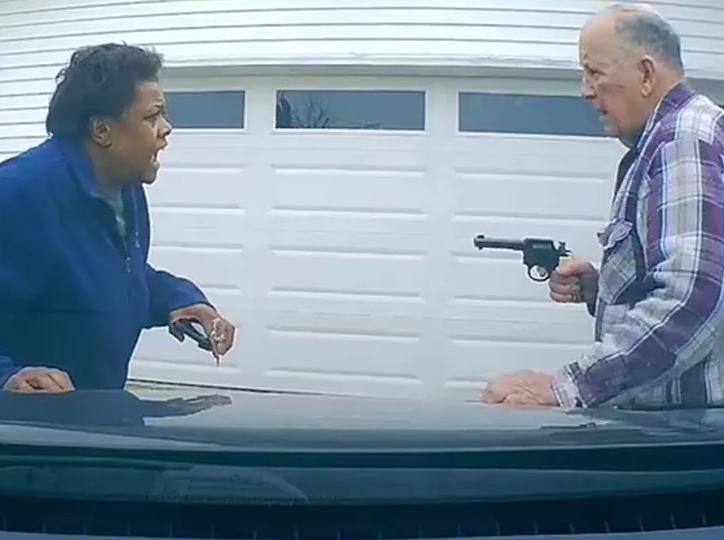
In Brock’s mind, the story the scammer had spun was already complete. He believed the driver was part of the plot. He believed she was there to take his money. He believed he was protecting himself and his family.
Seconds mattered. Fear moved faster than reason.
Authorities say Brock fired six shots.
Lo-Letha Toland-Hall was unarmed. She posed no threat. She had no idea why the man she had come to meet was pointing a gun at her.
She died there, in a place she had never been before, because she trusted a job assignment that should have been ordinary.
When police arrived, the truth began to surface—but too late to save anyone.
Investigators uncovered the scam call Brock had received. They pieced together how the same criminal had manipulated both sides of the encounter, placing them on a collision course without either understanding what was happening. Brock had been terrified. Hall had been unsuspecting.

Two people, strangers to each other, bound together by a crime committed remotely—by someone who never showed their face and has still not been caught.
The case moved slowly through the justice system. Brock was charged, and his defense argued that he had acted in self-defense. His attorney said the scammer had threatened Brock and his family, leaving the elderly man convinced he was in immediate danger.
Brock testified that he felt his life was at risk when Hall arrived.
Prosecutors told a different story.
They emphasized that Hall was an innocent victim—unarmed, unaware, and simply doing her job. They argued that fear, no matter how intense, did not justify what happened next. That a mistake fueled by deception still carried irreversible consequences.
This week, a jury agreed.
On Wednesday, Brock was convicted of murder, felonious assault, and kidnapping. He is scheduled to be sentenced next week.
For the courtroom, the verdict brought legal closure. For the families involved, it brought something far more complicated.
Clark County Prosecutor Daniel Driscoll addressed reporters after the verdict with words that reflected the weight of the case.
“The really sad part about this,” he said, “is that we know there are still criminals out there. We know that the scammers, the folks who started this, haven’t been brought to justice.”
His words underscored the quiet truth at the center of the tragedy: the person who orchestrated it all never had to pull a trigger. Never stood in the driveway. Never saw the fear on either face.
Yet two families lost loved ones.
Lo-Letha Toland-Hall’s family lost a woman who should have come home from work. A driver who expected another routine fare. Someone whose life ended because of a lie she never even heard.
William Brock’s family lost a man who will now spend the end of his life defined not by decades lived, but by one moment shaped by fear and deception.
Both were victims.
The scammer remains free.
Across the country, similar scams continue to spread—calls claiming relatives are in jail, demands for cash, threats meant to override logic. Law enforcement agencies warn about them constantly. But warnings often arrive after damage is done.
This case has become a cautionary story not just about violence, but about how modern crime works—how criminals exploit trust, age, technology, and fear from a distance, leaving devastation behind while remaining invisible.
An elderly man answered a phone.
A driver accepted a job.
A criminal set the stage and disappeared.
Nothing about the encounter had to end the way it did. And yet, once fear took control, there was no rewind.
In the end, a jury delivered accountability where it could. But justice, in its fullest sense, remains incomplete.
Because the person who caused it all—the voice on the phone—has not been found.
And because no verdict can restore what was lost.
This was not just a murder case. It was a reminder of how fragile safety can be when fear is weaponized, and how easily ordinary lives can be pulled into extraordinary tragedy by a crime that begins with nothing more than a ringing phone.
The house is quieter now.

Not the peaceful kind of quiet that comes at night, but the hollow kind—the kind that presses in on the chest and refuses to leave. For Lashanna Guines, silence has become the loudest reminder of what was taken from her on a day that should have been ordinary.
Her daughter, Mikiylia Guines, was seven years old.
Seven years old is supposed to be small shoes by the door, laughter spilling from the next room, questions asked just to hear the answer. It is not supposed to be memorial photos, police reports, and a mother learning how to breathe through grief that feels unbearable.
But that is where Lashanna now lives—inside a reality she never chose.
On a day that ended in terror, Daricka Moore, 24, allegedly went on a shooting spree across multiple locations in Mississippi. By the time it ended, six people were dead—including Mikiylia, Moore’s own father, brother, and uncle. Others were wounded. Families were broken beyond repair.
For Lashanna, the horror was not something she heard about later on the news.
She witnessed it.
“I saw my baby die right in front of my other two children,” she said, her voice heavy, cracked, and raw. “That’s something I can’t unsee. Ever.”
Those words alone have sparked fierce debate across the community and online. Some ask how such violence could unfold in front of children. Others ask why warning signs weren’t stopped sooner. Many ask questions that have no answers—and some that people are afraid to ask at all.
Lashanna asks only one.
Why?
“What ever it was,” she said through tears, “even if he would have just took it out on me and not my 7-year-old… why? Why my baby?”
There is no explanation that makes sense of a child’s death. No motive that softens it. No legal charge that fills the space left behind.
In the moments after the shooting, Lashanna says her mind fractured under the weight of what ifs.
“I can’t help but feel like I could have did more,” she said. “I tried to help her. I tried to save them. But I couldn’t.”
That guilt—common among survivors, devastating in its persistence—has become one of her constant companions.
“What if I did this? What if I did that?” she asked. “Would it have been a better outcome? I don’t know. I tried. I tried.”
Psychologists say this kind of self-blame is a natural response to trauma, especially for parents. But knowing that doesn’t make it stop.
“I just want my baby back,” Lashanna said quietly. “And I can’t have her back. Because she’s gone.”
The shooting spree has ignited controversy not only because of the number of victims, but because of how deeply intertwined the families were. Moore allegedly killed relatives—his own blood—before taking the life of a child who shared that same family tree.
That fact alone has left many struggling to understand how violence reached so far inward.
Authorities say Moore now faces a long list of charges: three counts of capital murder, three counts of first-degree murder, attempted murder of a child, attempted sexual battery, burglary of a dwelling, and multiple vehicle-related felonies. If convicted, he could spend the rest of his life in prison—or face even harsher penalties.
But for Mikiylia’s family, justice in court does not equal healing.
The child’s grandfather, Clemmie Guines, has stepped into a role no grandparent should ever have to assume—holding together a family ripped apart by grief.
“We just have to stay prayerful,” he said. “Keep our head in the Lord’s hands. That’s where we gonna get our strength to carry on.”
Faith has become a lifeline for some in the family. For others, it has raised painful questions.
How does faith coexist with this much loss?
How does prayer make sense after a seven-year-old is shot?
How does a community reconcile forgiveness with rage?
These are the questions fueling debate far beyond West Point.
Some community members are calling for deeper conversations about gun access, warning signs, and mental health interventions. Others caution against politicizing tragedy. Online, arguments flare—about responsibility, about accountability, about whether violence like this is preventable or inevitable.
Lashanna listens to none of it.
Her world has narrowed to memories.
She remembers Mikiylia’s smile. Her voice. The way she laughed without restraint. The way she moved through the world believing it was safe.
“She was just a baby,” Lashanna said. “She didn’t deserve none of this.”
Those who knew Mikiylia describe her as gentle, playful, and curious. The kind of child who wanted to be near her siblings, who asked questions, who still believed adults could fix everything.
Now, those siblings must learn to live with what they saw.
Experts warn that children who witness extreme violence—especially the death of a sibling—carry invisible wounds that can last a lifetime. Trauma does not end when the sirens fade.
It settles in.
For Lashanna, the nights are the hardest.
Sleep comes in fragments. Memories intrude without warning. Silence becomes unbearable, then overwhelming.
And yet, she speaks.
She speaks because staying silent feels like losing Mikiylia twice.
“I don’t want nobody else to feel this,” she said. “Nobody.”
That statement, too, has stirred controversy. Some hear it as a call for change. Others hear it as grief searching for meaning. But no one can deny its weight.
Six people are dead.
A family is shattered.
A community is reeling.
A mother is asking why.
And in the center of it all is a seven-year-old girl who should still be alive.
As the legal process moves forward, as charges are read and hearings scheduled, one truth remains unchanged: nothing will bring Mikiylia back.
Not a verdict.
Not a sentence.
Not public outrage.
Not prayers alone.
What remains is a mother learning how to live with unimaginable loss—and a question that may never be answered.
Why wasn’t it stopped?
Why did it reach her child?
Why does grief like this exist at all?
For Lashanna Guines, the world did not just break.
It stopped.
And every day since, she wakes up inside that moment—still reaching for her daughter, still whispering her name, still asking the question no parent should ever have to ask:
“Why my baby?”