The Night Japanese Fans Taught the World a Lesson in Respect. – Daily News
When the final whistle blew at the opening match of the 2022 FIFA World Cup in Qatar, 70,000 fans began to rise from their seats, cheering, laughing, and rushing toward the exits.

The air was filled with noise — camera flashes, chants, and the rustling of flags waving in celebration. The match between Qatar and Ecuador had just ended, and for most spectators, the night was over.
But not for everyone.
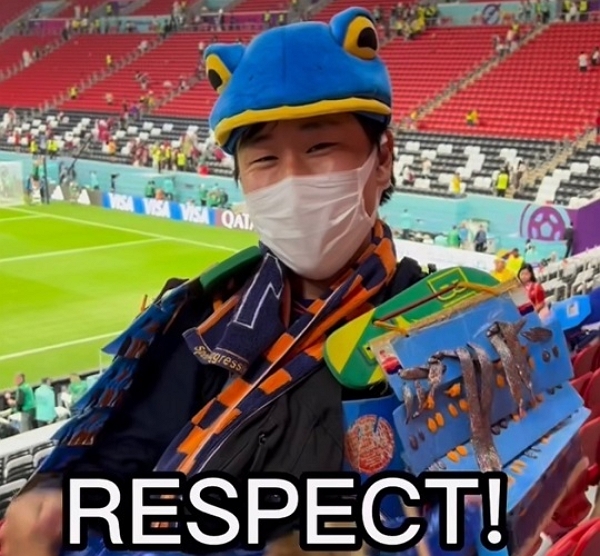
In the midst of the departing crowd, a small group of people stayed behind. They weren’t taking photos or celebrating. They were bending down — picking up trash.
They were Japanese fans, and what they did that night quietly became one of the most powerful moments of the entire World Cup.
Even though Japan wasn’t playing that day, dozens of Japanese supporters had come to watch the opening match simply to experience the excitement of the tournament. When it was over, instead of joining the sea of people leaving the stadium, they reached into their bags, pulled out blue trash sacks they had brought from home, and began to clean.

They started with their own seats. Then the rows behind them. Then the aisles.
Plastic bottles, food wrappers, confetti, and flags — everything left behind was collected carefully and respectfully. They didn’t complain, didn’t speak loudly, and didn’t wait for anyone to notice. One by one, they worked together, passing bags around, laughing softly as they went.
Nearby fans looked on in disbelief. A few people started recording videos, capturing this unexpected act of quiet kindness. Within hours, those clips would travel around the world — shared by news outlets, athletes, and even FIFA itself.

One journalist wrote:
“The match is over, but something far more important is happening here. These Japanese fans are showing us what true respect looks like.”
The New York Post, BBC, and dozens of international media outlets covered the story. “Japanese fans clean up the stadium — again,” one headline read. “No team pride required. Just pride in themselves.”
What made the act so striking was that Japan hadn’t even played. They were cleaning up after other people’s celebration — after a match between Ecuador and Qatar. They could have easily walked away, just like everyone else. But they didn’t.
For them, cleaning up wasn’t an extraordinary act of heroism. It was simply a reflection of their values.
Back home, tidiness, responsibility, and community respect are woven into daily life.
Children in Japan are taught from a young age to clean their classrooms, wipe their desks, and take care of shared spaces. It’s not seen as punishment — it’s seen as pride. The idea is simple: you leave a place better than you found it.
And that night in Qatar, that lesson shone brighter than any fireworks in the sky.
As one fan told a reporter, “It’s not about who won or lost. The stadium belongs to everyone. We should all take care of it.”
For over an hour after the final whistle, they continued cleaning — even picking up trash that had been left by fans from other countries. Security guards and stadium workers stood by, unsure whether to intervene or to simply admire them.

Eventually, as the last of the crowd disappeared and the stadium grew quiet, the Japanese fans tied up their trash bags neatly, stacked them by the exit, and finally left — the very last spectators to go.
By the next morning, videos of their actions had gone viral. People from around the world praised them, calling their behavior “humbling,” “inspirational,” and “a glimpse of true humanity.”
It wasn’t the first time this had happened. During the 2018 World Cup in Russia, Japanese fans made international headlines for doing the same thing — staying after matches to clean the stands, even after Japan’s heartbreaking elimination from the tournament.
The BBC ran a story then titled, “Japanese Fans Win the World’s Hearts With Their Cleaning Habits.”
But this time, it was different. This wasn’t about national pride or celebrating victory. It was about gratitude — for the experience, for the game, for simply being there.
In a tournament that cost billions and drew fans from every corner of the planet, it wasn’t a goal or a trophy that left the deepest impression that night. It was the image of ordinary people with trash bags, bending down to pick up after others.
As one Qatari volunteer said later, “They reminded us that respect is a universal language. You don’t need words for it — only action.”

When the lights dimmed and the stadium emptied, the seats shone clean and quiet under the floodlights — a testament to a culture that believes small actions speak louder than applause.
And somewhere, long after the cameras stopped rolling, the world remembered that greatness isn’t just measured in goals scored or matches won. Sometimes, it’s found in the simple, humble act of cleaning up when no one else will.
There are few sights more touching than a baby elephant — small, wrinkled, unsteady on its feet, yet full of life and curiosity. But for many calves orphaned by poaching, drought, or human conflict, survival without their mothers is nearly impossible.
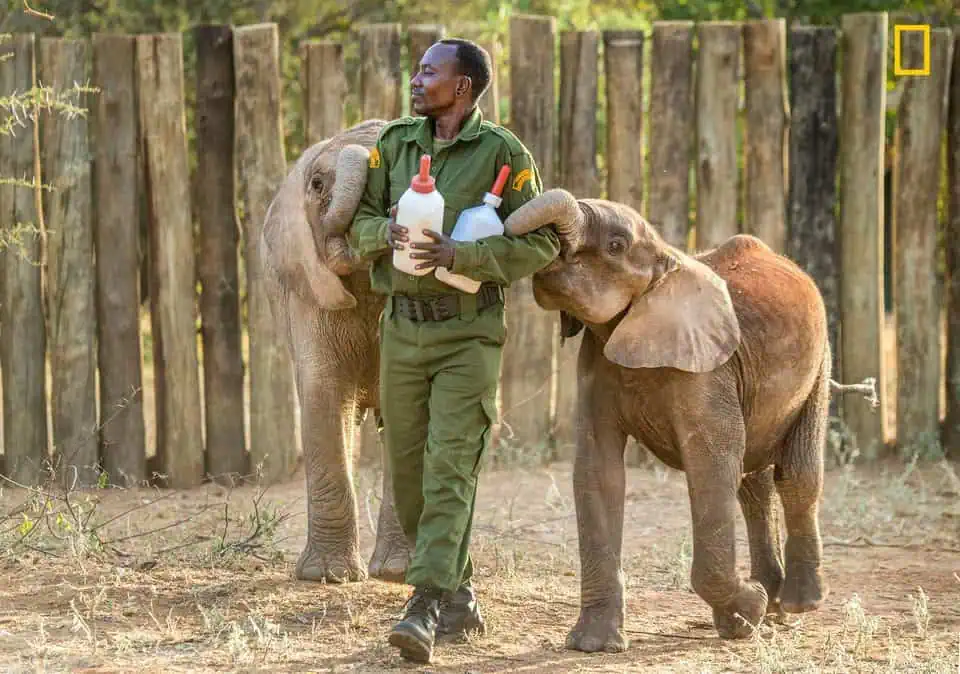
That’s where a special kind of human love steps in — the love that builds families across species.
Raising a baby elephant from a fragile four-month-old to a confident four-year-old is no small task. It is a journey that demands patience, tenderness, and a deep understanding of what it means to care — not as a zookeeper or trainer, but as family.
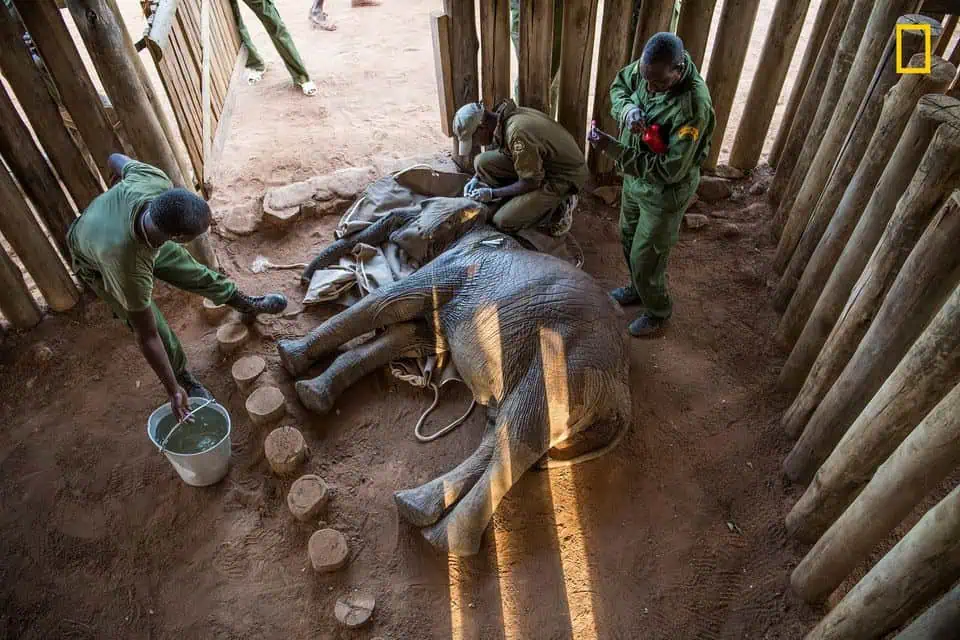
When a rescued calf first arrives, it is often weak, dehydrated, and emotionally traumatized. Elephants, like humans, are deeply social creatures. Losing a mother — the center of their world — leaves a wound that goes far beyond the physical.
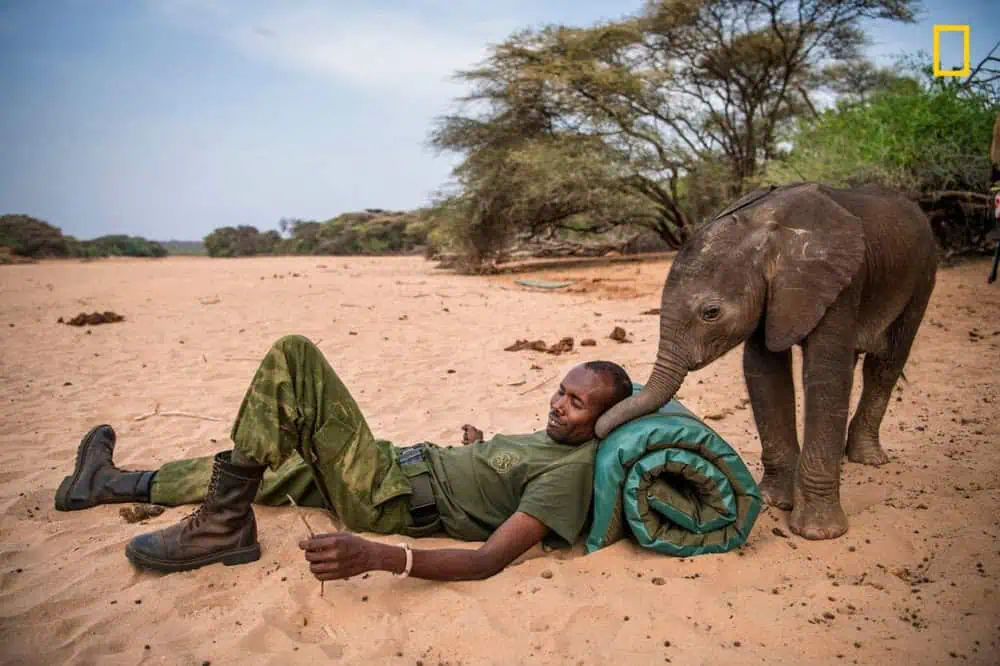
They mourn, refusing to eat, often crying softly for days. Caretakers know that the first step toward healing isn’t just feeding — it’s comforting.
Someone stays by the calf’s side every hour of the day and night. They gently touch its trunk, speak softly, and stay close enough for the baby to feel a heartbeat nearby. For elephants, touch is language — a way to say you’re safe now.
At this stage, the calf relies completely on milk. Caretakers mix special formula every few hours, even through the night, warming it to just the right temperature. They carry the large bottles into the enclosure, calling the calf by name. Over time, the baby begins to recognize those voices — and trust returns, one feeding at a time.
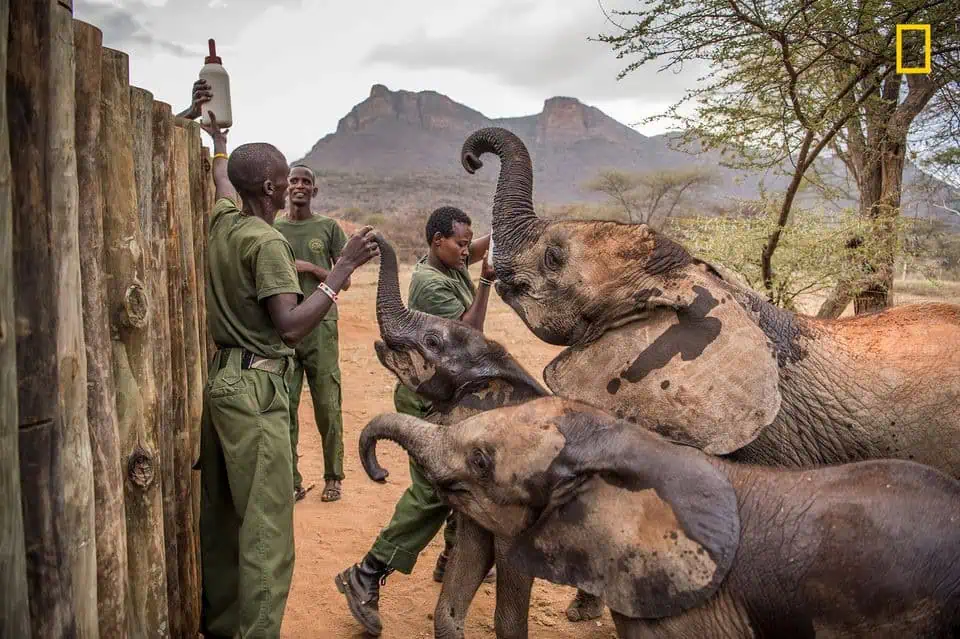
Once that trust is built, the real journey begins.
Each day is filled with small adventures. Morning walks through the grass, playful rolls in the mud, and naps under the trees that remind them of the wild. Caretakers encourage them to explore but always remain nearby, just like a herd would.
They teach them to use their trunks — how to pick up fruit, toss dust, or splash water. Sometimes, the calves are clumsy, spraying water everywhere or tripping over their own feet. But laughter fills the air; patience is endless.
Beyond the physical care lies something even more important: the emotional and social development that defines elephant life. Young elephants learn through imitation and companionship, so sanctuaries form small herds of calves, allowing them to grow up together. They play, wrestle, and nap side by side, trumpeting joyfully as they begin to feel like part of something again.
Caretakers often describe these herds like classrooms — each elephant learning not just survival, but empathy. They comfort one another when frightened, share food, and even wrap their trunks around a friend who’s crying. It’s this emotional intelligence that makes elephants so extraordinary — and so heartbreakingly human.
By the time the calves reach one year, they’ve developed personalities as distinct as any child. One may be fearless and curious, wandering ahead on every walk. Another might be shy, always sticking close to its human family. There are troublemakers too — the ones who steal fruit, splash mud, and tease the caretakers at every opportunity.
But as they grow older, the caretakers’ role shifts from protection to preparation. At two years old, the young elephants begin to rely less on formula and more on natural foods — tender leaves, fruit, bark, and grasses. Their bodies strengthen, and their tusks begin to show.
They learn to communicate more, using low rumbles that vibrate through the ground, forming their first “conversations” with each other.

And always, there are lessons about the wild — how to dig for water in the dry season, how to read the wind for danger, how to follow the matriarch’s lead. These skills, patiently taught by their human guardians and older elephants, will one day guide them back to freedom.
At four years old, the transformation is extraordinary. The timid baby that once clung to its caretaker now stands tall — curious, social, and brave. It plays fiercely with the others, splashing through rivers and trumpeting in triumph. It has become, at last, an elephant again.
For the caretakers, these milestones are bittersweet. They’ve poured their hearts into raising each calf — sleepless nights, years of bottle feedings, countless walks through the savanna. And yet, when the time comes, they know they must let go.
Some elephants are reintroduced to protected wild reserves, joining established herds. Others remain under sanctuary care, helping raise new orphans just as they were once raised. In every case, the bond between human and elephant never truly fades.
Caretakers tell stories of returning years later, calling out softly into the bush — and hearing an answering rumble.
Out from the trees comes a towering young elephant, now wild and free, but still remembering the voice that once sang it to sleep.
These reunions prove something extraordinary: that love, given selflessly, is never forgotten.
The journey from a four-month-old calf to a four-year-old juvenile is more than a story of animal rescue. It is a reflection of everything that connects us — patience, compassion, and the universal desire to nurture life.
Because when a baby elephant learns to trust again, to play, to love, and to walk fearlessly into the wild, it reminds us of something timeless — that even the smallest acts of care can restore the balance of an entire world.