The Mother Who Delivered More Than Food. – Daily News
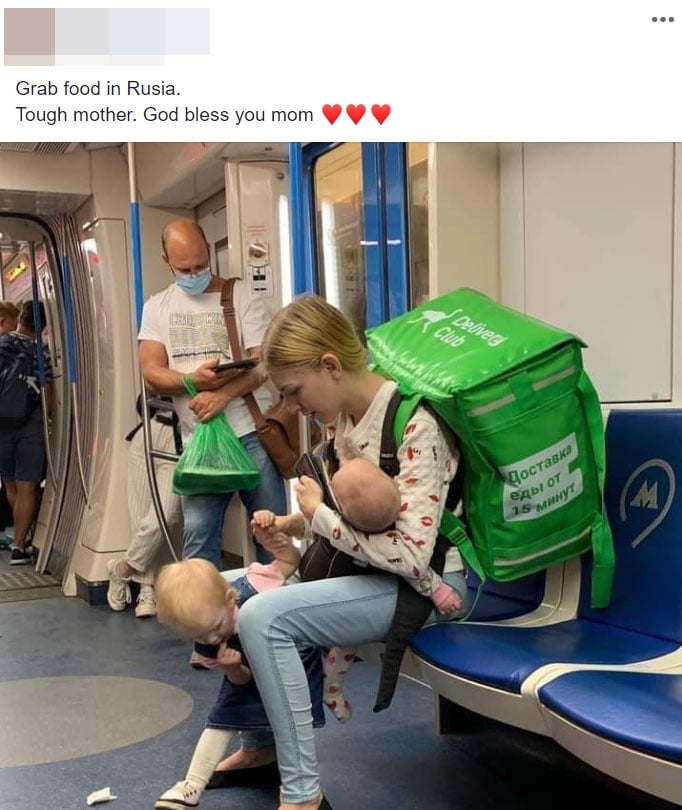
The train doors sighed open, and the city exhaled its usual rush of feet and headlines and half-finished thoughts. Somewhere between the blur of briefcases and shopping bags, she stepped in—small, steady, a green delivery pack rising over her shoulders like a bright hill. The baby lay tucked against her chest in a soft carrier, a hand no bigger than a plum curling and uncurling near her collarbone. The older one, hair the color of tea with milk, clung to her knee with one hand and to a stuffed rabbit with the other. The rabbit’s ear had been mended twice. The woman’s heart had been mended more times than she could count.
No one announced her. No one had to. She moved with that quiet, unmistakable aura of a person who carries three lives with two hands.
She settled onto the plastic seat as the train lurched forward. The bag was heavy tonight—orders stacked inside: soup, bread, a box of tea, one bouquet of daisies someone would pretend was spontaneous. She slid the strap from her shoulder and kept the baby close. The older child dropped the rabbit, scrambled, picked it up, and pressed her cheek to the woman’s thigh without looking up—as if the thigh itself was home.
The woman smoothed the child’s hair with a quick, practiced touch. She didn’t say, “Stay close.” She didn’t have to. The train said it for her every few seconds in the way it staggered through turns and hummed warnings in blue light.
She had counted fares in coins again. Counted kilometers in the ache of her back. Counted meals in discounts and the grace of strangers who clicked “tip” without thinking. She had learned the city by the rhythms of doors—how some opened onto warmth, how others opened onto voices that asked her to wait outside because the baby was crying and “this is unprofessional.” She had learned that fatigue is a river that never empties; it just changes depth.
The baby stirred. Without looking, she shifted, nudged the tiny mouth toward her shoulder, and hummed something low, something learned from her grandmother during long-ago summers when the hardest thing was a thunderstorm rolling in at dusk. The baby’s lashes quieted again. The older child traced circles on the woman’s shoe with one sneaker toe, as if drawing maps of a future she insisted on believing in.
Across from them, a man scrolled through a screen, paused, lifted his eyes. It is difficult, the man thought, to know where to place your gaze when a person’s courage is happening right in front of you. He looked at the baby instead. He looked at the rabbit. He looked at the way exhaustion had turned the woman’s shoulders into parentheses around the whole scene.
The carriage swayed. The speaker crackled. A cluster of teenagers boarded, laughing, sharing a single pair of headphones. One of them glanced at the woman, then quickly away—the sudden, embarrassed knowledge that your life is mostly songs and hers is mostly prayers.
The woman’s phone buzzed. Another order. She glanced at the map, measured the distance in seconds, then in children. Could she make it before the next nap, before the next meltdown, before her own body reminded her that hunger can sound like a subway too? She accepted the order anyway. A small joy bloomed across the older child’s face each time the green bag opened. She liked to name the items—“bread,” “milk,” “flowers”—as if they were charms she could stitch into the day.
They were between stations now—the long dark tunnel where time stretches like a yawn. The baby fussed. The older child tried to entertain her with the rabbit, but the baby wanted a different moon. The woman kissed the soft head under her chin and reached for the bottle she’d tucked into the bag’s side pocket earlier, exactly where her fingers would find it without sight. The milk was still warm, the way the baby liked. She tilted it just so; the baby latched; the train hummed its approval.
For a moment, the world steadied.
Years from now, the older child will remember that silence—how the whole carriage seemed to lean toward them and soften. She will not remember the brand of the stroller they could not afford, or the number of stairs her mother climbed that winter when the elevator was broken. She will remember the way the bottle warmed the air, the way the green bag made a tent around them both, the way strangers’ faces changed when they realized they were witnessing love work.
The man with the phone stood. He hesitated, then opened the little string bag he’d been carrying and pulled out a tangerine. He knelt to be level with the older child. “For you,” he said in careful, respectful Russian, the same respect you might use at a border crossing.
The child looked at her mother.
The woman smiled. “Say thank you.”
“Spasibo,” the child whispered, then turned the tangerine in her hands as if the sun had finally agreed to be held.
The train arrived at another station. The doors opened. People flowed out and in, the way water moves around a stone. The woman adjusted the baby again, shifted the bag. Her fingernails were neat. Her shoes were scuffed but clean. There was dignity in every movement—a choreography learned in kitchens and on night buses, in clinic waiting rooms and under streetlights that flickered like they were learning to speak.
A seat freed up beside her. An older woman took it, breathless. She glanced sideways, smiled in that small, shy way people do when they recognize a younger version of themselves. “You’re doing well,” the older woman said.

The delivery mother nodded. She did not cry. She had already spent today’s tears at dawn when the baby’s fever spiked for twenty minutes and then fell like a curtain. Instead, she said what mothers say when they are too tired to lie: “There’s no other way.”
The older woman slid a wrapped candy into the child’s palm. “For later,” she said, then added, “For the mother,” and slipped another to the woman herself. The paper crackled like a secret pact.
When the train pulled into the next station, a group near the doors raised their voices about something trivial—who had taken whose seat, whose bag was too big for the aisle. The older child pressed closer. The woman’s arm came down like a bridge. Calm settled beneath it. This, too, is a job: to be a shield that never clocks out.
A poster above them showed a tropical beach. The woman glanced up at it and almost laughed. She had once dreamed of the sea, of learning another language, of standing behind a bakery counter sliding warm loaves onto paper. That was Before. Before the baby. Before the leaving. Before the calculations of rent and heat and shoes for growing feet. The sea was still there. So were the loaves. Dreams do not disappear; they just learn to wait their turn.
The train slowed. Her stop. She gathered the child, the baby, the bag, the rabbit—the entire small nation of her life—and rose. People parted without speaking. She stepped into the doorway, then turned around, as if remembering something. She looked at the faces—tired, kind, curious, guarded—and nodded. The gesture didn’t ask for help. It offered thanks for not making it harder.
On the platform, the air was cooler, tasting faintly of metal and wet stone. She kissed the older child’s crown and adjusted the straps one more time. The phone buzzed again. The client wrote: “Please hurry.”
Please hurry. As if she wasn’t.
She took the stairs two at a time, the child matching her pace with determined little hops. Outside, the city’s noise bounced off glass and sky. Bicycle bells. A vendor rearranging apples. A siren some streets away that would not be theirs today, please, not today. She started toward the address, heart forward, feet knowing the path.
On the corner, a busker played a violin whose varnish had been loved off by years. The melody slid into the street like warm soup. The older child tugged her sleeve and stopped, just for a breath. The woman closed her eyes. She allowed herself three seconds of music. Four. Five. Then they moved again.
At the door she buzzed, waited, pressed the intercom. The voice that crackled back belonged to someone who would carry the bag up two flights and say nothing more than “Thanks.” That was fine. Not every kindness announced itself.
Delivery done, coin purse heavier by a little, they sat on a low wall near a patch of orphan grass and shared the tangerine. The child peeled it solemnly, gave a piece to her mother, tucked one against the baby’s lips for a moment so she could taste the orange light.
“Sweet,” the child declared.
The woman nodded. “Sweet.”
They rested there, the three of them, a small island existing precisely long enough to be remembered.
Back on the train, the man with the phone would think of them as he ate his dinner alone. The older woman would recount the scene to her sister over tea. The teenagers would post, then scroll on. The city would forget and remember and forget again.
But somewhere in a green bag, a receipt would curl like a bookmark. Somewhere in a child’s pocket, a candy would wait. Somewhere in a mother’s ribs, a prayer would keep playing the way the violin kept singing: not louder than the street, but steadier.
She stood, hoisted the bag, kissed one head, then the other. The day wasn’t finished. But neither was she.
Some heroes wear capes. Some wear aprons. Some wear delivery packs the size of small mountains and walk through subway cars like quiet weather. They are not waiting to be seen.
They are busy loving.
He was the king — the one the world expected to fear, admire, and bow to. His roar shook the ground, his presence silenced the grass, and every creature in his territory understood one law: step lightly around the lion.

But inside the quiet boundaries of a zoo enclosure, behind the glass and fences that separated wild from human eyes, something happened that reminded everyone — even a king can be brought to his knees by the ones he loves.
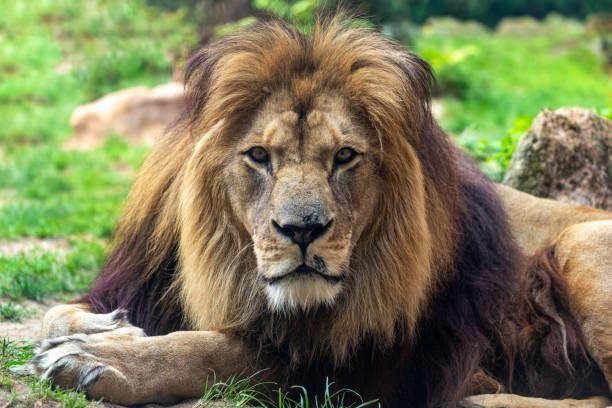
His name was Luke — a full-grown male African lion, a father of seven, a giant built of muscle, instinct, and authority. Tourists who came to the National Zoo in Washington D.C. saw him as a symbol of power: the mane, the golden stare, the slow, commanding pace that made it clear he never needed to rush.
But his cubs did not see majesty.
They saw a playground.

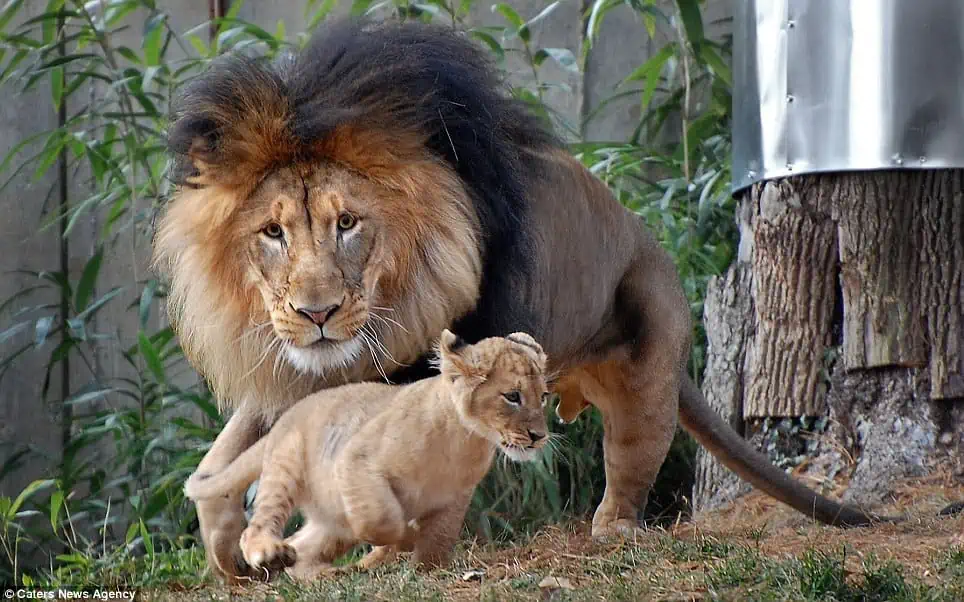
They saw a tail to chase, paws to climb, a giant chest to pounce on. And among the cubs, one in particular — a bold, fearless little lioness named Lusaka — had decided that the best game in the world was biting her father’s tail and running before he could react.
Again and again, she tugged. Again and again, Luke ignored her, pretending the same way human fathers pretend not to notice little hands stealing their hat, their glasses, their patience.
For a while, it was harmless fun.
But cubs, like children, don’t always know when the line is crossed.
And fathers — even gentle ones — sometimes snap without meaning to.
So on that quiet afternoon, with sunlight stretching across the enclosure and families watching from behind the railing, Lusaka bit the tail one time too many. Luke turned, growled playfully, and pinned her with a giant paw — not to hurt her, not to punish her, just to show her who was stronger.
It lasted only seconds.
But that was enough for someone else to notice.
There was a rustle from the far side of the rock wall. A shape rose from the shade — not large like the male, not loud like a roar, but powerful in a different way entirely.
The lioness was coming.
Her name was Naba — mother to the cubs, mate to Luke, queen not by dominance but by responsibility. And from the moment she saw her daughter pinned beneath the weight of the father — even in play — something fierce and ancient ignited inside her.
She did not hesitate.
She did not pause to think whether the cub was hurt, whether Luke meant harm, whether she might be overreacting.
She simply charged — a blur of muscle and instinct, a mother defending her child in the only language the wild respects.
What happened next stunned everyone watching.
Luke — the lion who could tear a zebra down in seconds — backed away.
Not in fear of being attacked.
Not because she was stronger than him.

But because in that moment, authority meant nothing beside motherhood.
He lowered his head.
He stepped away from the cub.
He accepted the reprimand without protest — the way a father lowers his voice when a mother says, “Enough.”
The cub, freed, scrambled back behind her mother’s legs, wide-eyed but unharmed. The lioness stood over her like a shield, tail stiff, eyes locked on Luke with a message no one needed words to understand:
She is not your prey. She is your daughter.
Luke blinked, licked his paw, pretended to be distracted by something in the distance — the oldest trick in the world, used by every father, human or animal, when he’s been scolded and doesn’t know how to recover.
Visitors laughed — softly, tenderly. Because suddenly, this wasn’t wildlife behind glass.
This was a family.
A father who played too rough.

A mother who stepped in too fast.
A child who never realized how close she’d come to getting in trouble.
A scene so familiar that it didn’t belong to lions alone — it belonged to every household, every playground, every memory of childhood.
Even the photographer, Jennifer Lockridge, who captured the moment, said later:
“It felt like I was watching a human argument — the cub bothering dad, dad reacting, mom swooping in to defend.”
Because nature, in its wildest forms, still reflects us.
The lioness didn’t roar. She didn’t hurt Luke. She just stood there, steady and unmovable, embodying the one truth that every species knows:
You can be king of the world —
but you will never outrank a mother protecting her child.
.jpg/250px-Lion_(15433888440).jpg)
For minutes, no one moved. Then slowly, the tension eased. The cub began to play again. The mother relaxed. And Luke — still pretending he wasn’t embarrassed — lay down a short distance away, choosing peace over pride.
But something had changed.
The cub now stayed closer to her mother.
The lioness kept one eye on Luke, one on her child.
And Luke — perhaps for the first time — seemed to realize that power wasn’t just a matter of strength.
It was a matter of trust.
He wasn’t just a predator.
He wasn’t just the lion with the deepest roar.
He was a father — one still learning who he had to be in a world where love could come in the form of a warning growl.
Hours later, when the zoo closed and visitors walked away, the story stayed. It lived through the photos. It lived through the whispers. It lived because the wild — even inside fences — still teaches lessons the world forgets:
That strength is not always loud.
That love is not always gentle.
And that sometimes, the bravest thing a king can do…
…is step back.
The pictures spread online — a lion cowering, a lioness scolding, a cub running free — and people laughed, shared, commented. But beneath the humor, something deeper moved:
A reminder.
That in every family — animal or human — the roles we play may change, but the love behind them does not.
The father learns.
The mother protects.
The child grows.
And the world keeps watching — not because of the roar…
…but because of the tenderness hidden inside it.