THE FORGOTTEN CALIFORNIA SINGER WHO HEARD MERLE HAGGARD BEFORE AMERICA DID. Before Merle Haggard became the poet of the working class, he was just a young man from Oildale trying to outrun a prison number and find a place near the music. Wynn Stewart already had one. He was shaping the California country sound before Bakersfield became a legend — sharper guitars, harder drums, less Nashville shine, more barroom truth. And somewhere inside that world, Merle got close enough to be heard. He played bass in Wynn’s band. Not as a star. Not as the man who would one day write “Mama Tried.” Just a young ex-con standing behind someone else’s songs, hoping music might give him a second life. Then Wynn gave him “Sing a Sad Song.” Merle recorded it in 1963. It didn’t make him famous overnight, but it gave him his first step onto the country chart — the first proof that radio might listen. Before America heard Merle Haggard, Wynn Stewart did. And sometimes, the first person who believes in you never gets remembered as loudly as the life they helped begin. – Country Music
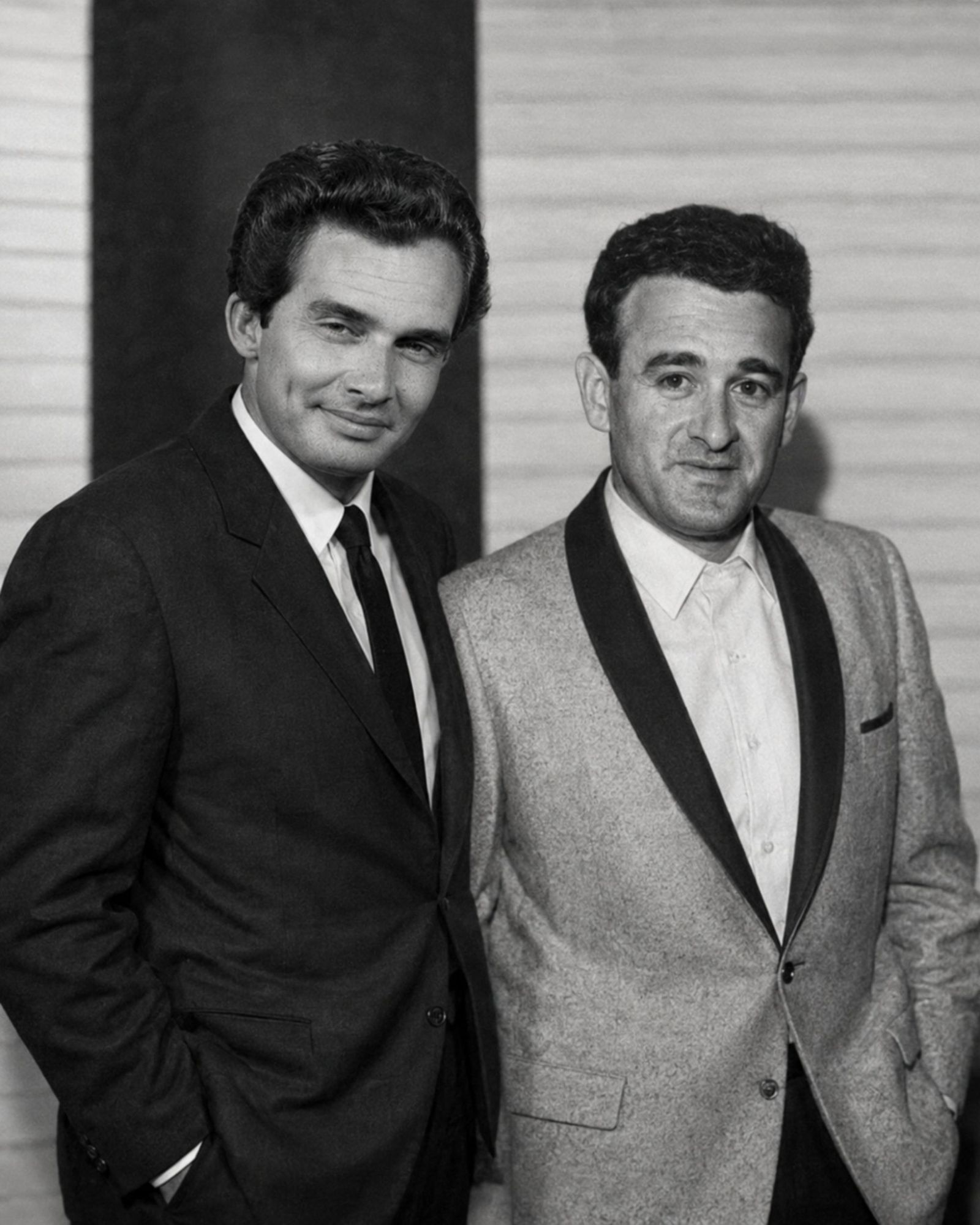
Before Merle Haggard became one of the most important voices in country music, he was just a young man from Oildale trying to survive his own past and find a future in music. Long before the awards, the headlines, and the songs that would define an era, Merle Haggard was simply trying to get close enough to the stage to matter.
And in that moment, someone already knew he had something real.
Wynn Stewart Saw the Spark Early
That someone was Wynn Stewart, a California country singer who helped shape the Bakersfield sound before the rest of America fully understood what was happening out West. While Nashville was polishing country music with smooth strings and studio gloss, Wynn Stewart was leaning into something rougher and more direct. His music carried the sound of hard work, smoky rooms, sharp guitars, and the kind of truth that did not need to be dressed up.
Wynn Stewart was not chasing trends. He was building a sound that felt like California itself: restless, honest, and a little bit stubborn. In that world, he noticed a young Merle Haggard before most people knew the name.
Merle Haggard was not yet a star. He was not yet the writer of Mama Tried or the voice of the working class. He was a former inmate trying to move forward, carrying his history with him and hoping music might offer a way out. Wynn Stewart gave him a place near the music, and that alone changed everything.
From the Bass Line to the Spotlight
Merle Haggard played bass in Wynn Stewart’s band. That detail matters because it says a lot about where Merle was in those years. He was not front and center. He was not the man with the spotlight. He stood behind another artist, learning the rhythm of the road, the discipline of performing, and the fragile hope that comes from being close to a dream.
For many musicians, those early years can disappear into legend. But this was the part where Merle Haggard absorbed the language of California country from the inside. He heard how Wynn Stewart worked a crowd. He watched how the songs landed. He learned what kind of honesty made people stop talking and listen.
In that sense, Wynn Stewart was more than just a bandleader. Wynn Stewart was an early guide.
The Song That Opened the Door
Then Wynn Stewart handed Merle Haggard a song that would quietly change the course of his life: Sing a Sad Song.
Merle Haggard recorded it in 1963, and while it did not turn him into a household name overnight, it gave him something essential: a first real step onto the country chart. That meant radio was beginning to pay attention. That meant listeners were beginning to hear the voice that would one day become impossible to ignore.
It is easy, looking back, to think that great careers arrive all at once. They do not. More often, they begin with a small opening, a single song, and one person willing to take a chance. Wynn Stewart did that for Merle Haggard. He heard something worth investing in before America had any reason to look.
Before the fame, before the myth, before the stories got bigger than the man, there was a song and a hand offered in the right direction.
Why Wynn Stewart Matters
Wynn Stewart deserves to be remembered not only as a talented singer, but as one of the people who helped shape Merle Haggard’s path. He helped build the Bakersfield sound, helped define a California version of country music, and helped make room for an artist like Merle to grow into himself.
That kind of influence is easy to overlook because it does not always come with the loudest legacy. The names that change music are not always the ones that stay brightest in memory. Sometimes the forgotten artist is the one who first recognizes the future standing quietly in the back of the room.
Wynn Stewart did that. He heard Merle Haggard before most of America did.
The Beginning of a Bigger Story
Merle Haggard would go on to become one of country music’s defining voices, but every legend starts somewhere smaller and more fragile than the final story suggests. For Merle Haggard, part of that beginning ran through Wynn Stewart’s band, Wynn Stewart’s songs, and Wynn Stewart’s belief.
That is what makes this chapter so powerful. It is not just a story about success. It is a story about recognition. About one musician seeing another before the world caught up. About a forgotten California singer helping open the door for one of country music’s greatest names.
Sometimes the first person who believes in you never gets remembered as loudly as the life they helped begin. But the truth is still there, hiding in the roots of the music.
Before America heard Merle Haggard, Wynn Stewart did.
Post navigation
John Denver had a rare gift. He could sing about a road, a mountain, a morning, or a patch of sunlight and make millions of people feel like they had already lived there. His songs did not just describe places. They created a feeling of belonging. They reminded people of something warm, familiar, and quietly hopeful.
“Take Me Home, Country Roads” did more than name a state. It sounded like every place a person had ever missed. “Rocky Mountain High” felt like fresh air after a long, difficult stretch. “Annie’s Song” turned love into something open and simple, like nature itself. John Denver had a way of making the ordinary feel sacred.
A Voice That Opened Doors
John Denver was born Henry John Deutschendorf Jr., and like many artists who become unforgettable, he did not arrive fully formed. He worked, he struggled, and he searched for his place in the world. Music became the place where everything finally made sense. It gave him a language for the things he felt most deeply: love, wonder, loneliness, and the wish to belong somewhere real.
When John Denver sang, he sounded honest. That honesty mattered. His voice was gentle, but it was never empty. It carried trust. People did not just hear a singer; they heard someone who seemed to understand what it meant to miss home, to hope for peace, and to keep going anyway.
The Songs People Carried With Them
Some artists are known for noise, shock, or power. John Denver became beloved for something quieter. His songs moved through kitchens, car radios, family gatherings, school events, and late-night moments when a person needed comfort. They became part of daily life.
“Country roads, take me home, to the place I belong”
That lyric worked because it felt bigger than geography. It spoke to the human need for shelter, memory, and return. People sang it with friends, strangers, and entire crowds, and for a few minutes, everyone seemed to share the same feeling.
His music had that effect again and again. John Denver knew how to write about nature without making it feel distant. Mountains were not just scenery. Sunshine was not just weather. A river, a road, or a breeze could become part of a person’s emotional life. That was his gift: he helped listeners see beauty in the world and in themselves.
The Private Search Behind the Public Smile
Behind the calm image was a man who was still trying to understand his own life. Fame gave John Denver success, but it did not make him untouched by pain. There were broken marriages, complicated relationships, and periods of loneliness that sat quietly behind the music. The same person who could write so beautifully about home was also trying to keep his own life steady.
That tension gives his story its depth. It is easy to assume that artists who write comforting songs must live comfortably too. John Denver’s life showed something more human. He was not a finished answer. He was a person in motion, learning as he went, carrying both joy and uncertainty.
That may be why his songs still matter. They were not written from perfection. They were written from longing. And longing is something almost everyone understands.
Why His Music Still Feels Close
Even now, John Denver’s music still feels close enough to touch. It does not belong to one era only. It belongs to anyone who has looked out a window and wished for peace. It belongs to anyone who has loved a place, a person, or a memory so much that it felt like home.
His songs endure because they are sincere. They do not try to impress with distance. They invite listeners in. In a loud world, that kind of gentleness can feel revolutionary. John Denver reminded people that tenderness is not weakness. He showed that beauty can be direct, and that hope can be simple.
More Than a Singer
John Denver did not just sing pretty songs about beautiful places. He gave people a place to rest, even when his own heart was still looking for one. That is what makes his legacy so moving. He made the world feel softer, warmer, and less alone.
For many listeners, his music still feels like a familiar road home. And maybe that is the greatest sign of all. Long after the spotlight fades, the feeling remains. John Denver sang about home so well because he understood, deep down, how deeply people need it.